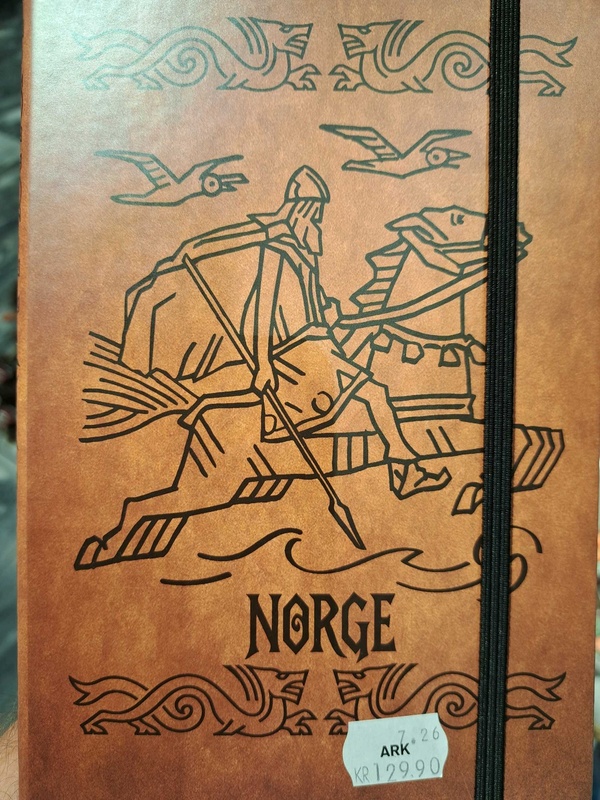
Notebook with a stylised depiction of Odin holding Gungnir while riding Sleipnir. Huginn and Muninn follow from the sky. The notebook also has decorative dragons on both top and bottom, and "Norge" (Norway) written in a runic inspired font. For sale at Oslo Gardarmoen airport.
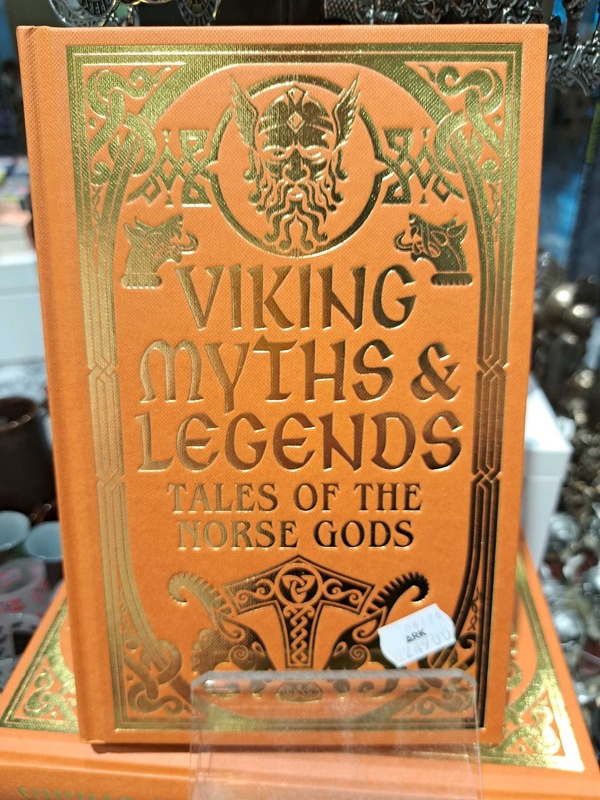
Picture of a book on "Viking Myths and Legends - Tales of the Norse Gods", by George Stephens and Rasmus B. Anderson. The title uses a font inspired by the uncial majuscule script, and the cover is decorated with Norse motifs. At the top, a depiction of Odin with a winged helmet, then two beasts, and at the bottom Thor's hammer Mjölnir flanked by Thor's goats.
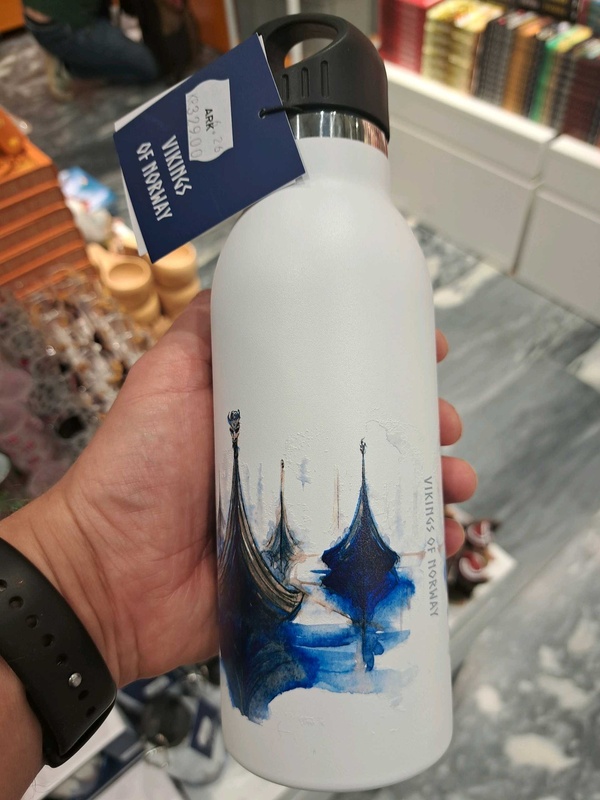
Water bottle decorated with several Viking ships. The artwork is in a style reminiscent of watercolours. The ships are painted from the front, and have decorative prow-heads.
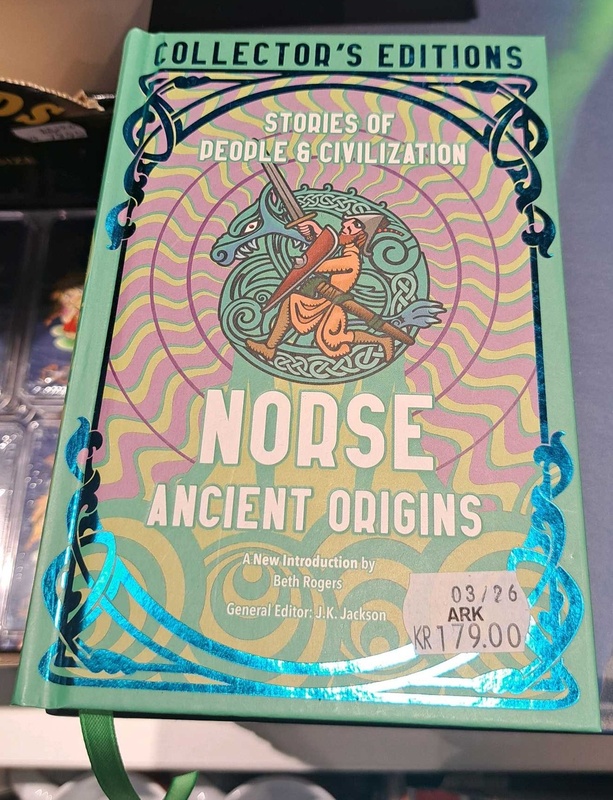
Book titled "Norse Ancient Origins", author unknown. The cover features a warrior in full kit stabbing upwards, behind him is a beast. This may be a nod to the legend of Sigurd killing the dragon Fafnir, as the iconology of this episode has Sigurd stabbing upwards into Fafnir's stomach.
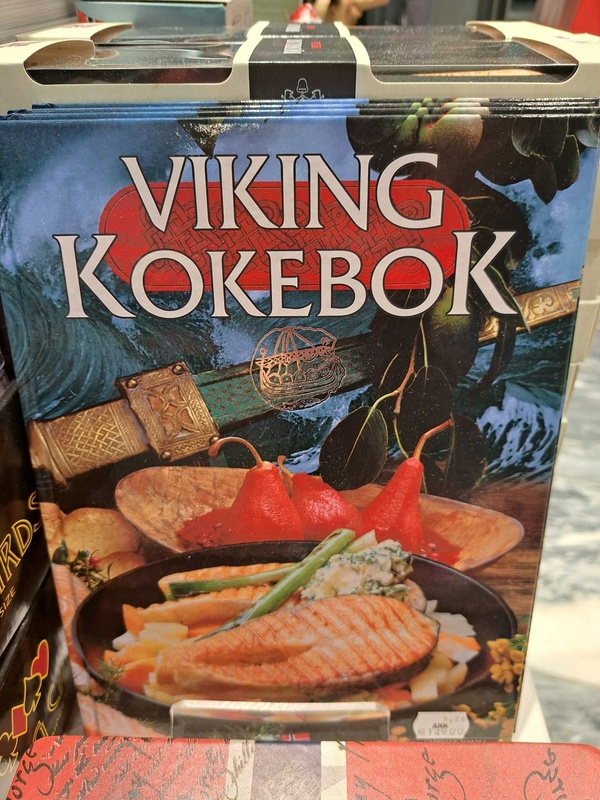
Picture of a cookbook reportedly about Viking food. The cover is a collage of what looks like traditional Norwegian food, a sword, a Viking ship, the sea, and Norse motifs.
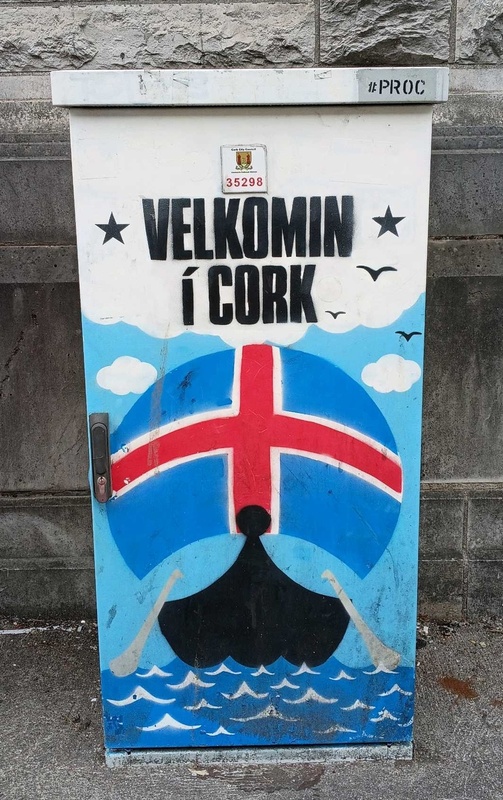
Street art welcoming people to Cork in Icelandic by Garreth Joyce. It depicts a Viking ship with the Icelandic flag as its sail. The concept for this artwork was conceived when a direct flight between Cork and Reykjavík was established. The connection has since been withdrawn, but the artwork and its message remain. This is part of a broader street art initiative by the group The People's Republic of Cork.
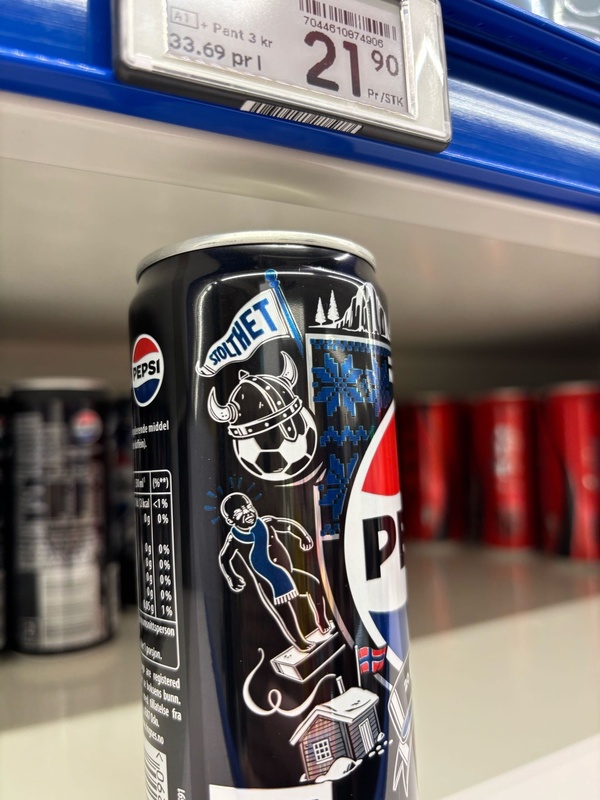
A can of Pepsi from Norway, with typical Norwegian motifs based around the theme "stolthet" (pride) made for the World cup: a fotball with a horned viking helmet, Vigeland's The Angry Boy wearing a football scarf, a cabin with the Norwegian flag on its roof, mountains, a forest, and the Selburose pattern.
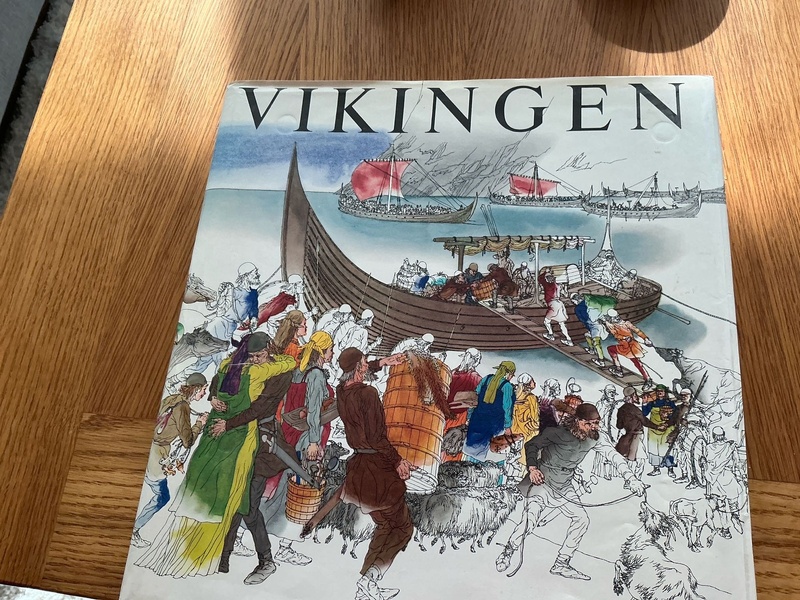
"Vikingen" (The Viking)- book providing a comprehensive look at Viking history, culture, and daily life. Author / Chief Contributor: Bertil Almgren (along with an international team of Scandinavian and English scholars)
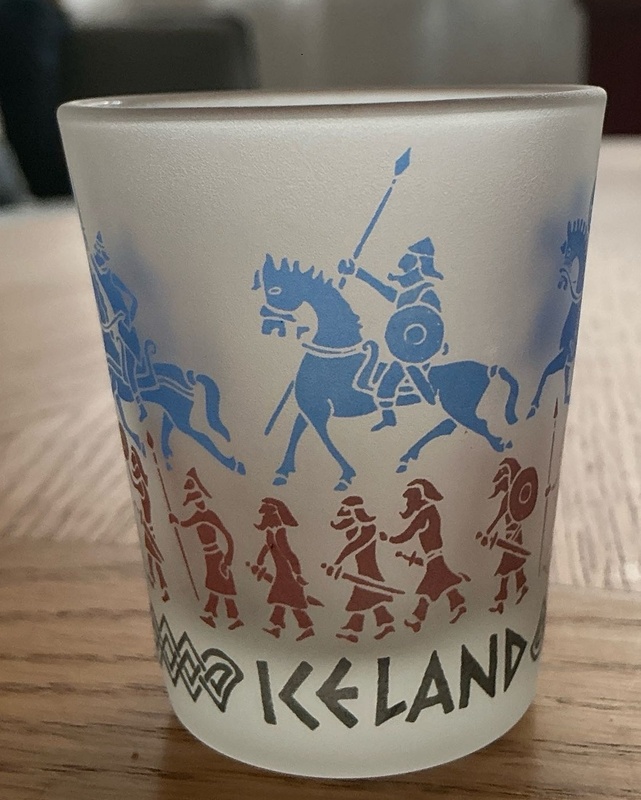
Frosted shot glass with patterns including Vikings on horses and warrior Vikings holding shields, swords and spears. Inscription says "Iceland" with a runic inspired print and pattern.
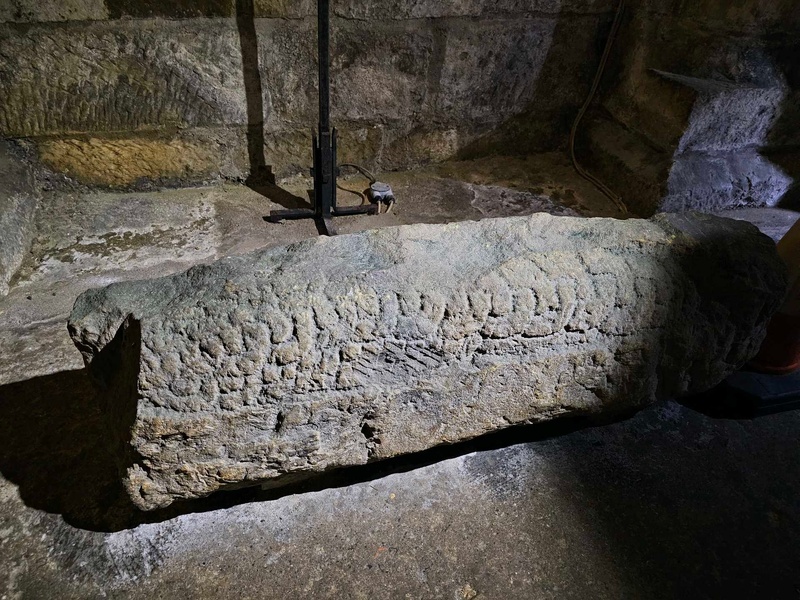
Tenth-century Anglo-Scandinavian hogback stone featuring a carving of a bear and displayed in the crypt in St Mary's Church, Lastingham (England). Hogbacks are house-shaped grave markers particular to Norse areas of settlement in the north of England and southern Scotland.
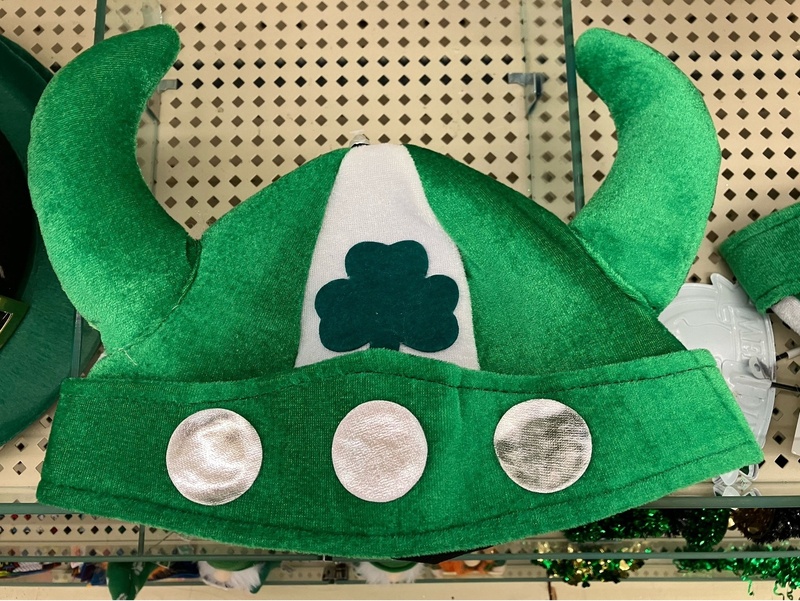
Green and white velvet Shamrock Viking hat which features horns, a white center panel with a dark green shamrock, and silver circular accents along the brim.
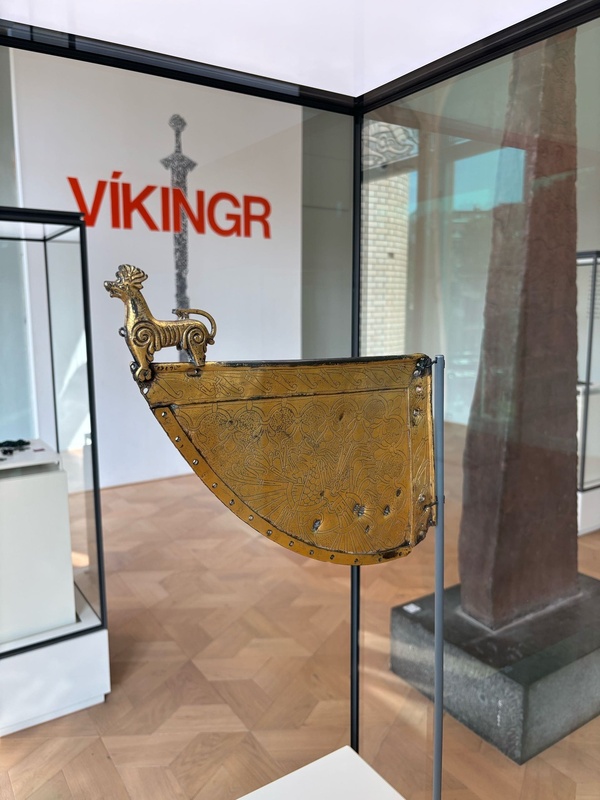
The Heggen weather vane, also known as Heggenfløyen, is a gilded copper alloy weather vane dating back to around 1050 CE. Originally mounted on a Viking longship, it was later placed atop the spire of the Heggen church in Norway. The vane features intricate engravings depicting battles between real and fantastical beasts, showcasing the Ringerike style of Norse art. It is now on display at the Museum of Cultural History in Oslo.
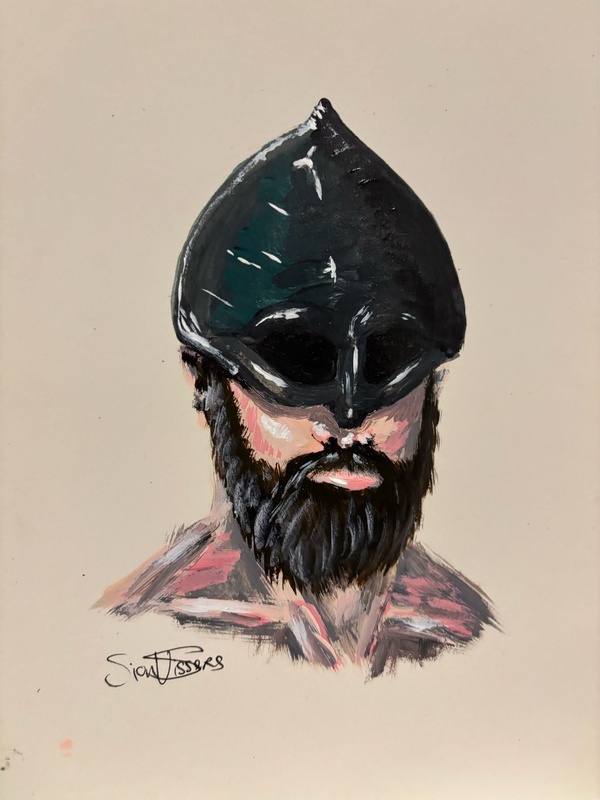
The portrait depicts a bearded man wearing a dark possibly Gjermundbu-style helmet featuring a distinctive prominent brow and eye-guard mask. Artwork is an original painting, and also signed by, by Sion Vissers.
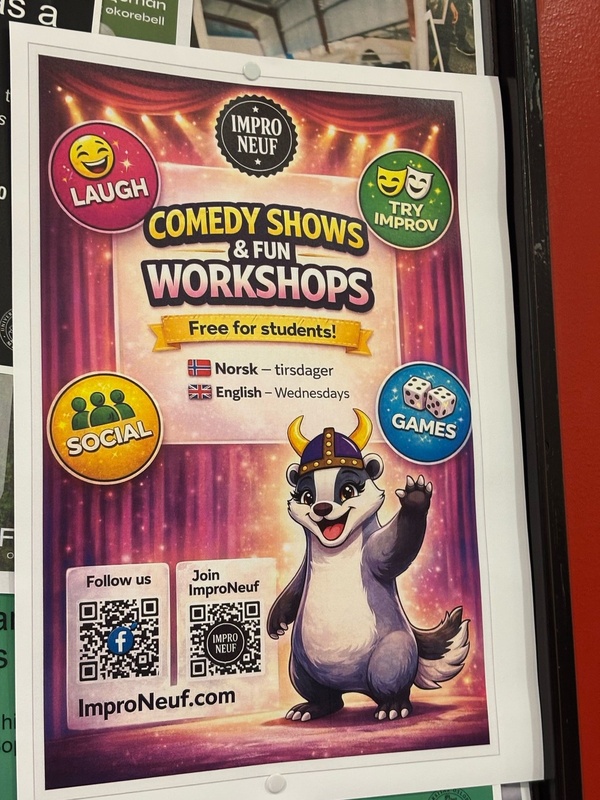
Poster advertising free comedy shows and improv workshops for students. Poster includes an image of a squirrel wearing a horned helmet. More information here: https://improneuf.com/dt/web/.
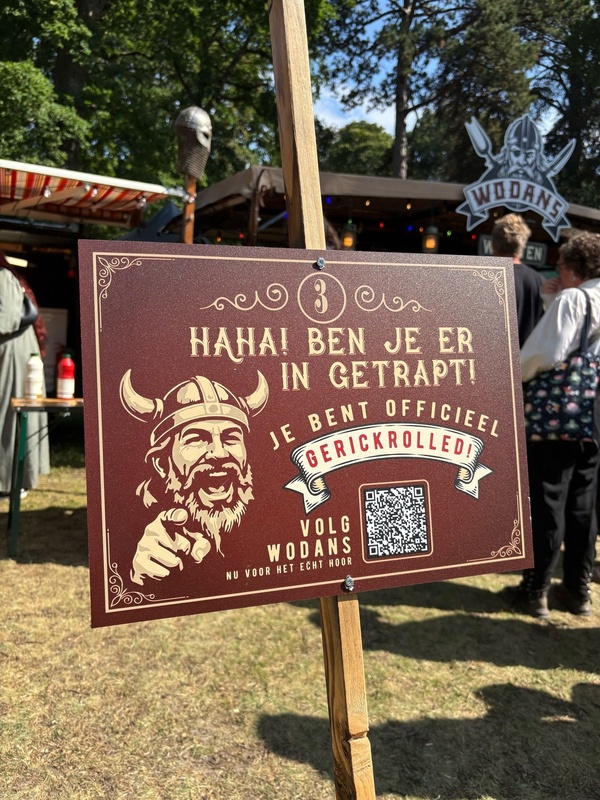
The sign features a humorous Dutch message that translates to: "Haha! You fell for it! You've officially been Rickrolled! Follow Wodans for real now."The Joke ("Gerickrolled") uses a Viking illustration paired with a playful spin on the famous internet prank ("Rickrolling"). This sign however is instead a promotional sign by Wodans (a Viking-themed food truck) and when scaning the QR code you are direct to their Facebook page (https://www.facebook.com/wodansvoedsel/).
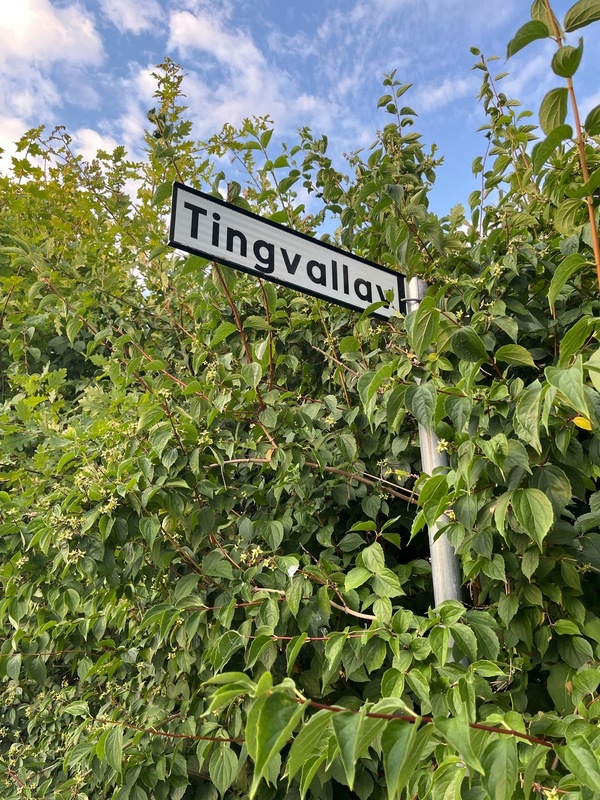
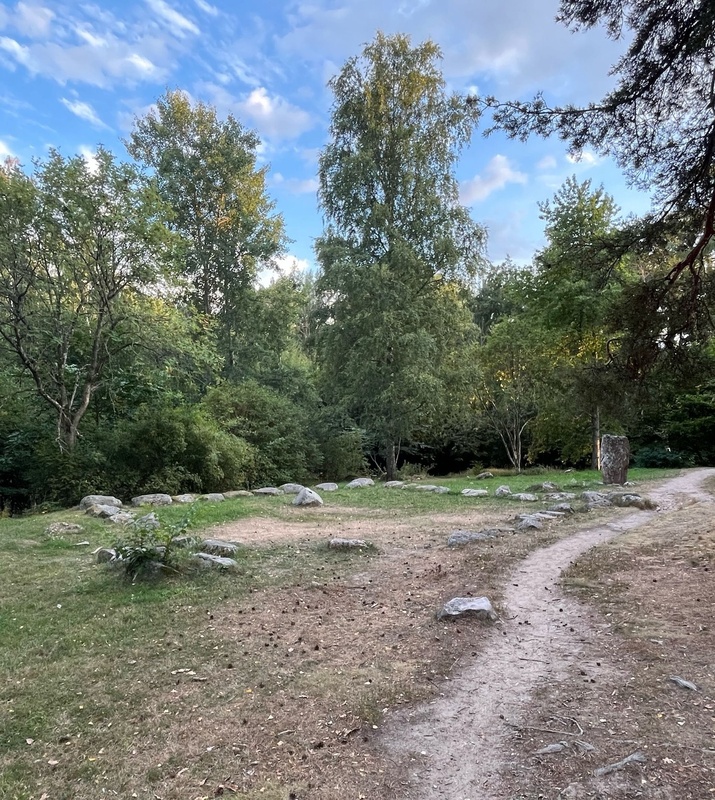
Tingvallav. street sign found in Sweden. Tingvalla translates to "the field of the assembly" or "meeting place of the thing" coming from Old Norse (þingvǫllr).
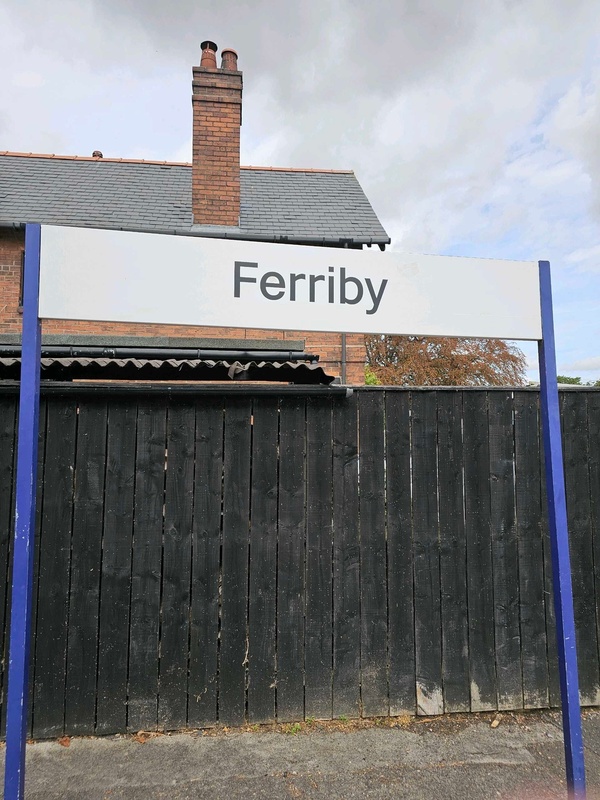
Ferriby comes from the Norse 'ferja bȳ', which means 'farm / homestead / settlement' by the ferry'. North and South Ferriby are on opposite banks of the Humber Estuary, an important raiding and trading route into Northern England.
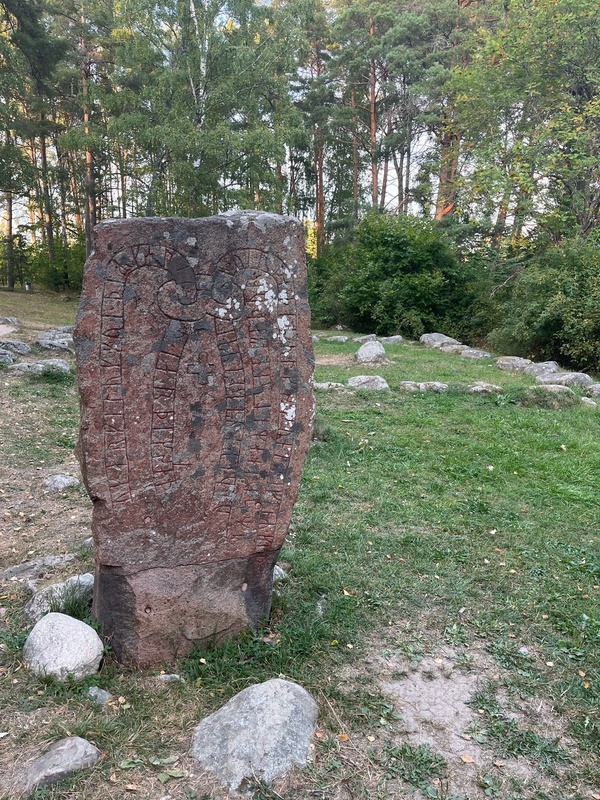
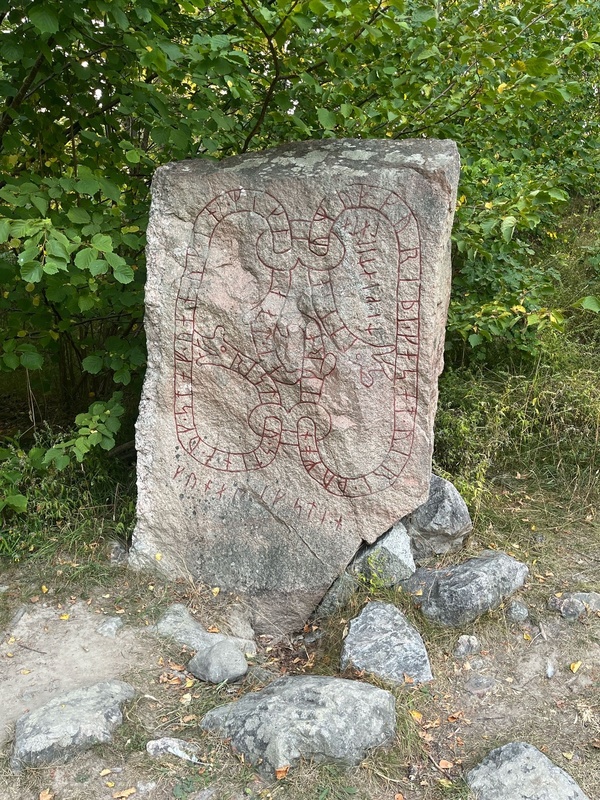
Arkils tingstad, a historical Viking Age assembly or meeting place (thing) located in Uppland, Sweden. It consists of a square stone setting with ten-meter sides and two of the Skålhamra family's runestones. The site was built by the Skålhamra clan in the 11th century to serve as a local judicial and political meeting place for the region. More information available here: https://www.vallentuna.se/runriket/runrikets-platser/arkils-tingstad/.
Runestone U225 found at Arkils Tingstad ( . Dating to approx. 980–1015 AD. Features a cross and states the following in Swedish:
Ulvkel och Arnkel och Gye de gjorde här tingsplats... Ej skall en större minnesvård finnas än den Ulvs söner gjorde efter (honom), raska svenner, åt sin fader.
English translation:
Ulvkel and Arnkel and Gye made this to a thingwall. No greater memorial shall exist than the one Ulv’s sons—valiant youths—raised for their father.
Forms a monument together with U 226. Executed by the same carver who signed that stone: Gunnar.
Runestone U226 found at Arkils Tingstad. Dating to approx. 1010-1050 CE. States the following in Swedish:
De reste stenar, och gjorde staven (?), också den höga, till hederstecken. även Gyrid älskade maken. Därför i tårar ska talas om honom. Gunnar högg stenen.
English translation:
They raised stones and made the staff (?), the tall one, too, into a memorial. Gyrid, too, loved her husband. Therefore, he shall be spoken of with tears. Gunnar carved the stone.
Forms a monument together with U 225.
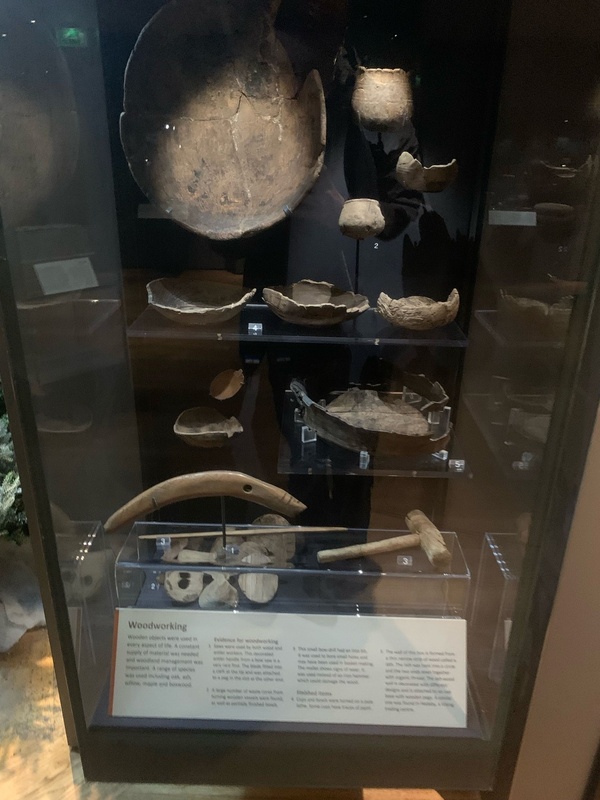
Viking-Age wooden bowls, vessels and woodworking tools recovered from excavations in York, illustrating the importance of woodworking in everyday life and the variety of woods and techniques used by Viking-Age craftspeople.
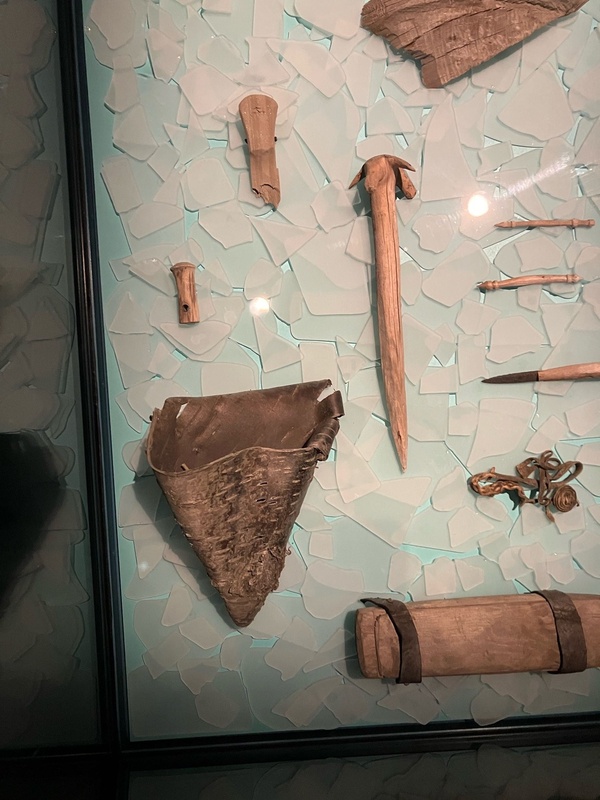
Viking-Age basketry, wooden objects and tools preserved in mountain ice around Lom, Norway, displayed in the 'Frozen in Time' glacial archaeology exhibition at Norsk Fjellsenter.
Covering more than 2 square kilometres, the Gardberg (Gardbergfeltet) site in Vestre Slidre is estimated to contain around 1,000 burial mounds, although only 550 have been investigated. More than 900 finds from the site date from a period spanning the Roman Iron Age through to the Viking Age (c. 800 CE).
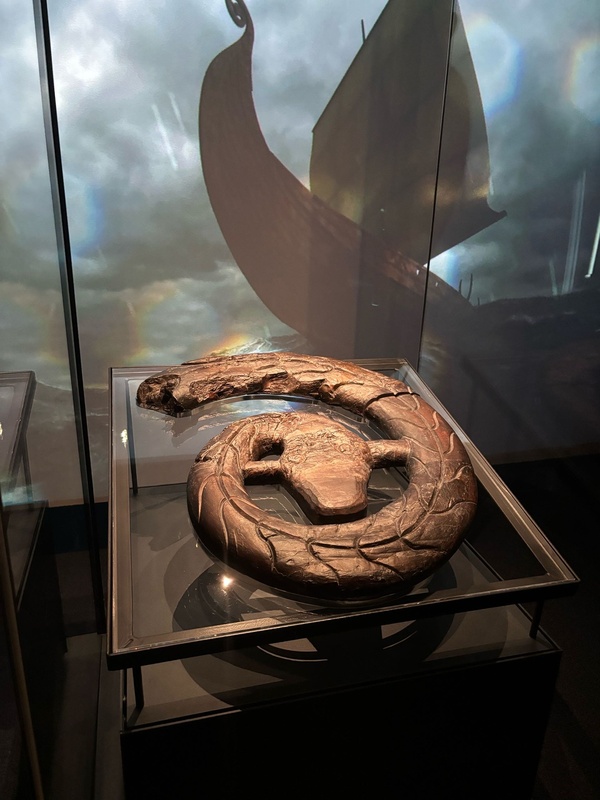
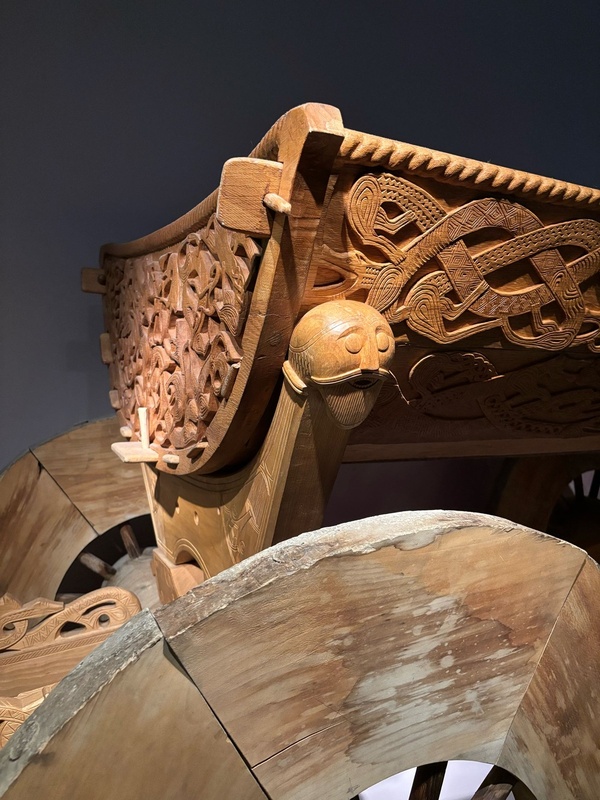
Richly carved wooden wagon from the Oseberg ship burial in Norway, dating to the ninth century and excavated in 1904. One of the best-preserved wagons from the Viking Age, it forms part of the collection of the Museum of the Viking Age in Oslo, due to reopen in November 2027.
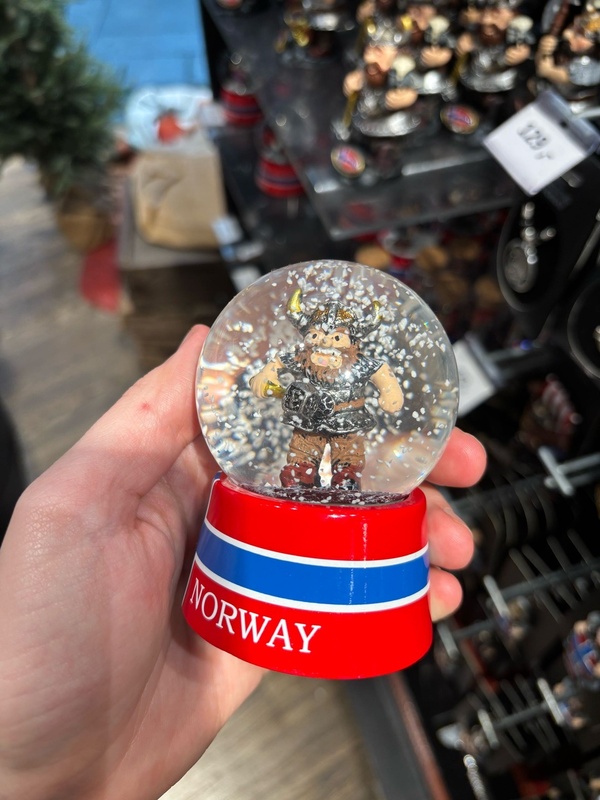
Norway-themed souvenir snow globe featuring a stylised Viking warrior wearing a horned helmet, sword and shield, set on a base decorated with the colours of the Norwegian flag.
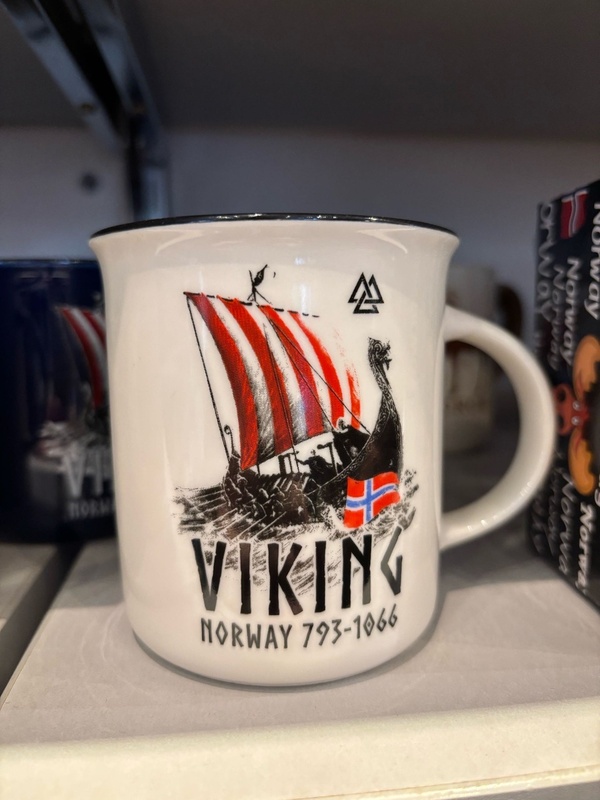
Norway-themed souvenir mug featuring a Viking longship with a red-and-white striped sail, the Norwegian flag and a Valknut symbol, alongside the dates 793–1066, commonly used to represent the Viking Age.
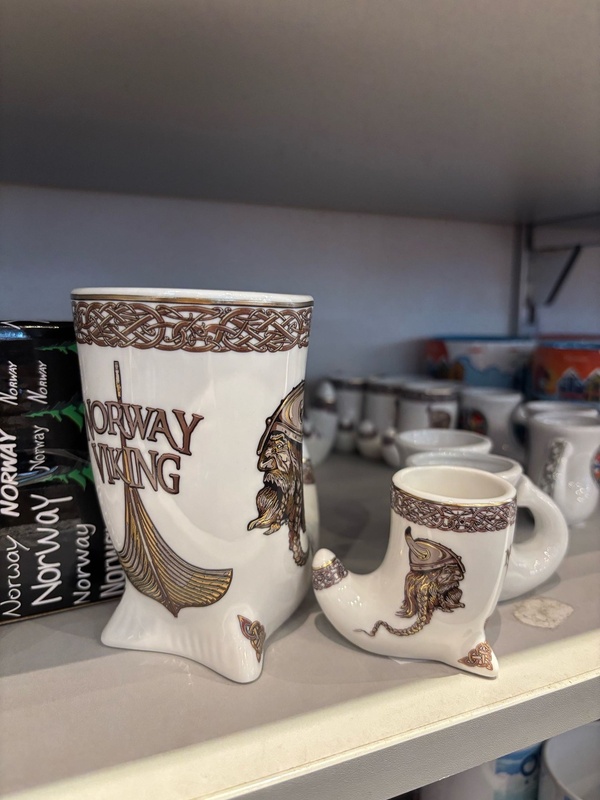
Norway-themed ceramic drinking vessels shaped like Viking drinking horns, decorated with stylised Viking warriors, a longship and interlaced knotwork inspired by Norse ornamentation.
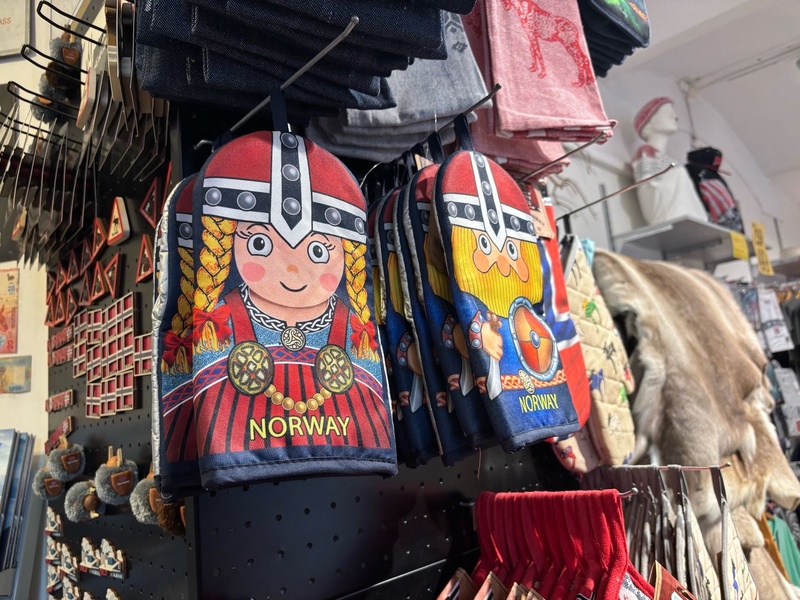
Norway-themed souvenir oven mitts featuring colourful cartoon Viking figures in stylised clothing and helmets, combining popular Viking imagery with modern Norwegian tourism merchandise.
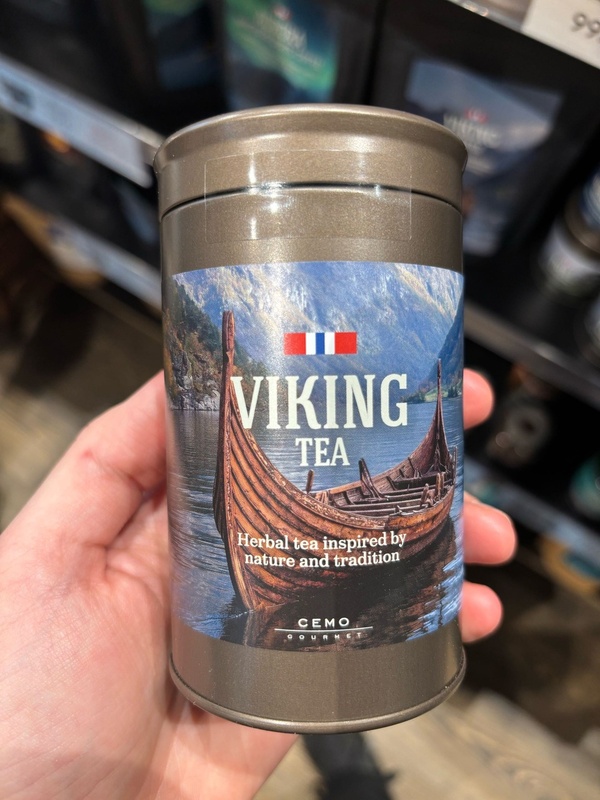
Viking-themed herbal tea by Cemo Gourmet, marketed as inspired by nature and tradition, with packaging featuring a Viking longship against a Norwegian fjord landscape.
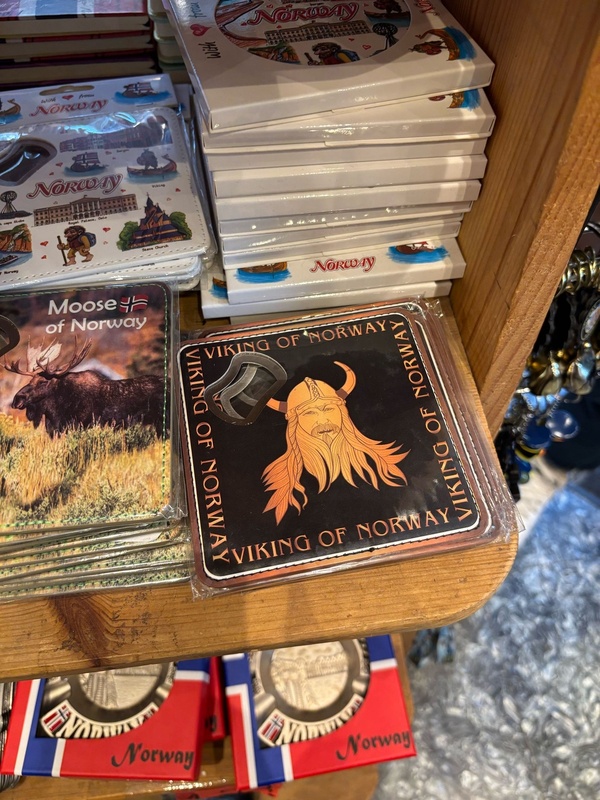
Norway-themed souvenir bottle opener featuring a stylised Viking warrior with a horned helmet and beard, surrounded by repeated “Viking of Norway” lettering.
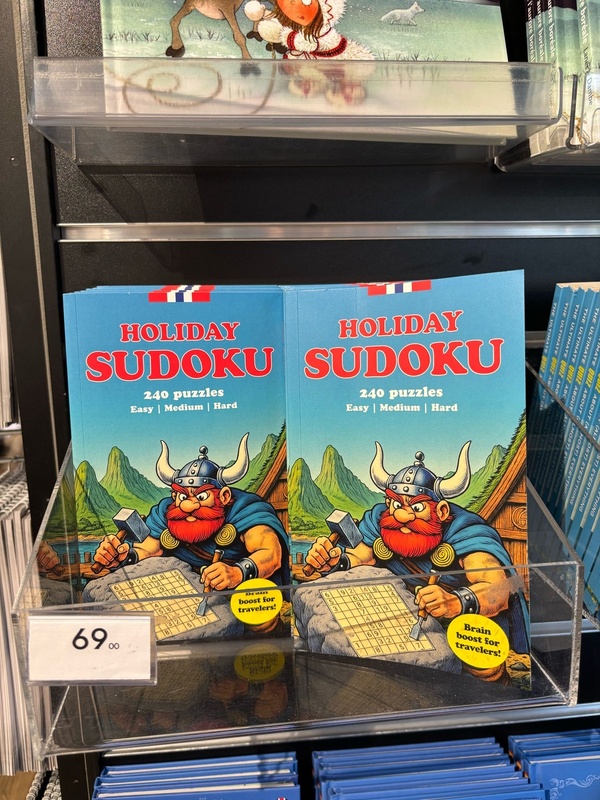
Norway-themed Sudoku puzzle book featuring a cartoon Viking warrior wearing a stereotypical horned helmet and holding a hammer, set against a mountainous Nordic landscape.
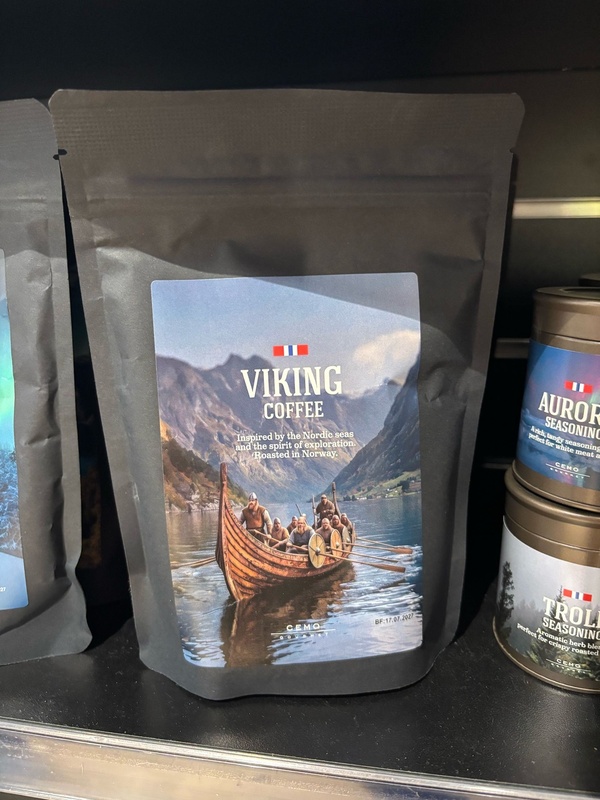
Viking-themed coffee by Cemo Gourmet, roasted in Norway and marketed as inspired by the Nordic seas and the spirit of exploration, with packaging depicting Viking warriors aboard a longship in a Norwegian fjord.
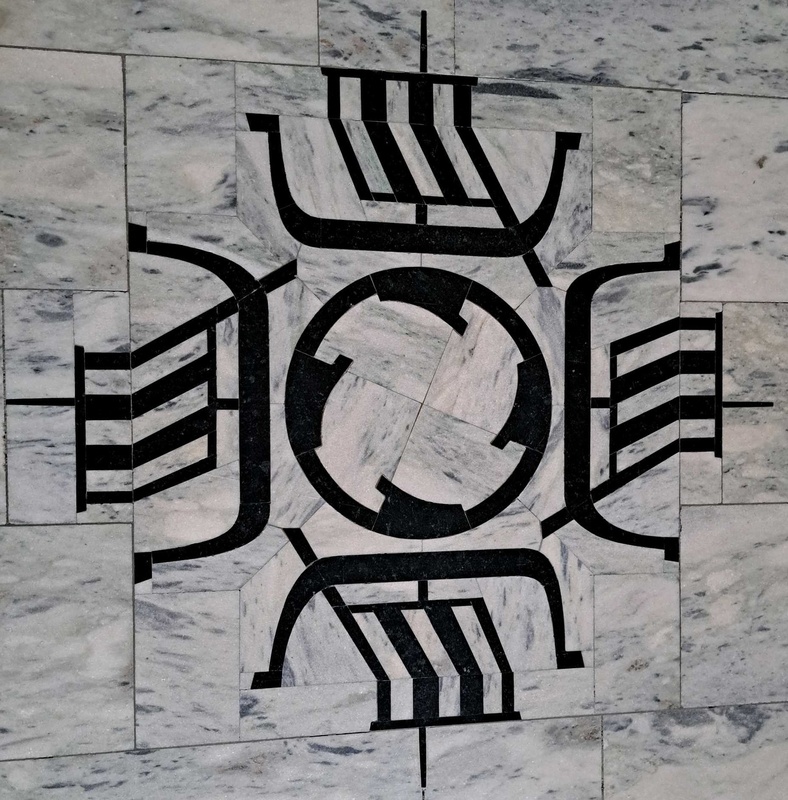
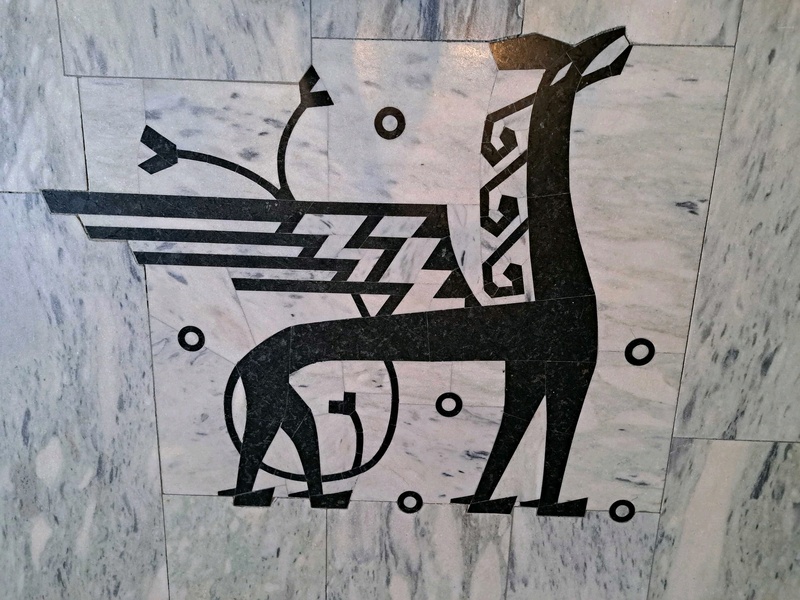
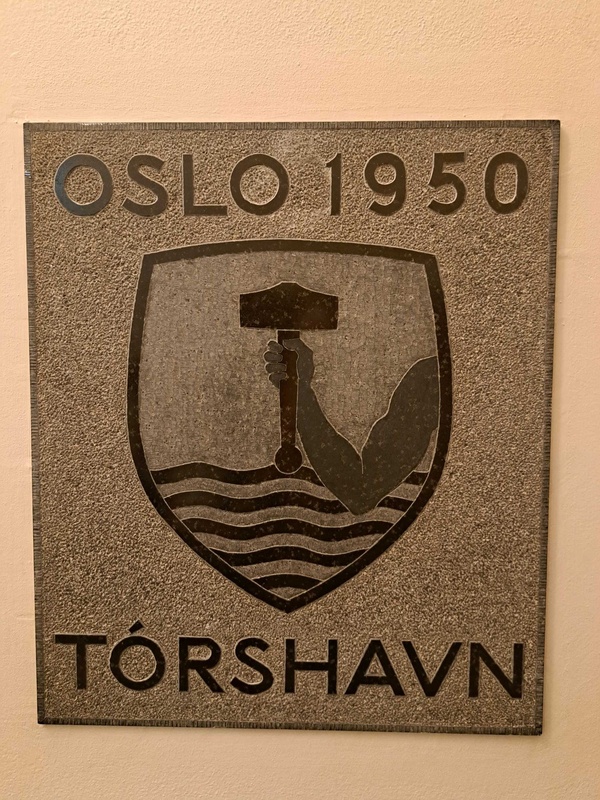
Plaque celebrating the opening of Oslo City Hall in 1950, and depicting the coat of arms of Tórshavn, featuring a Thor's hammer (and relating to its name meaning 'Thor's harbour').
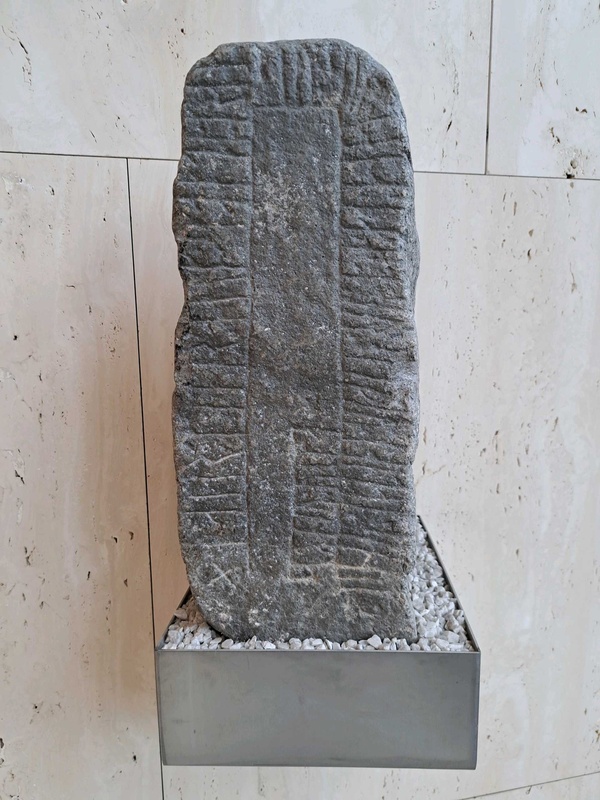
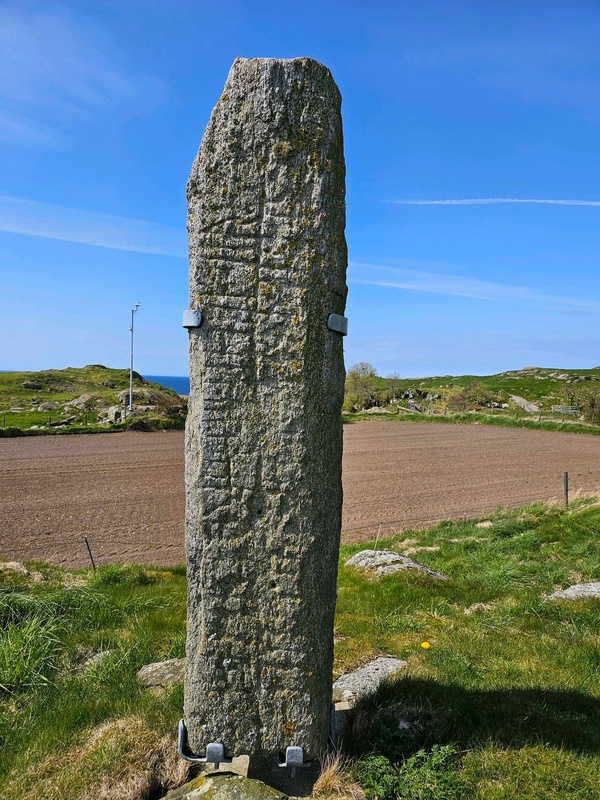
Runestone N 29 from Nørstebø, on display at the entrance to Oslo University Library, Blindern Campus.
Details from Runor:
Runic Text
× þair : finr : auk : skofti : rais(t)u : s(t)in : þena : þa : es : (þ)air : s(k)iþtu : lantom : sinum : saʀn(e)r : uala ×
Old West Norse Text
Þeir Finnr ok Skopti reistu stein þenna, þá er þeir skiptu lǫndum sínum, synir Vála.
English
Finnr and Skopti, Váli's sons, they raised this stone when they divided their land(ed property).
Photograph of runestone from Helland, Sola sogn, Rogaland (Norway) with the sigla N 244.
From Runor:
Runic Text
× skarþi : risti : stin : þana : iftir :: biafa : sun : sin : harþa : kuþan : man :
Old West Norse
Skarði reisti stein þenna eptir Bjalfa, son sinn, harða góðan mann.
English
Skarði raised this stone in memory of Bjalfi, his son, a very good man.
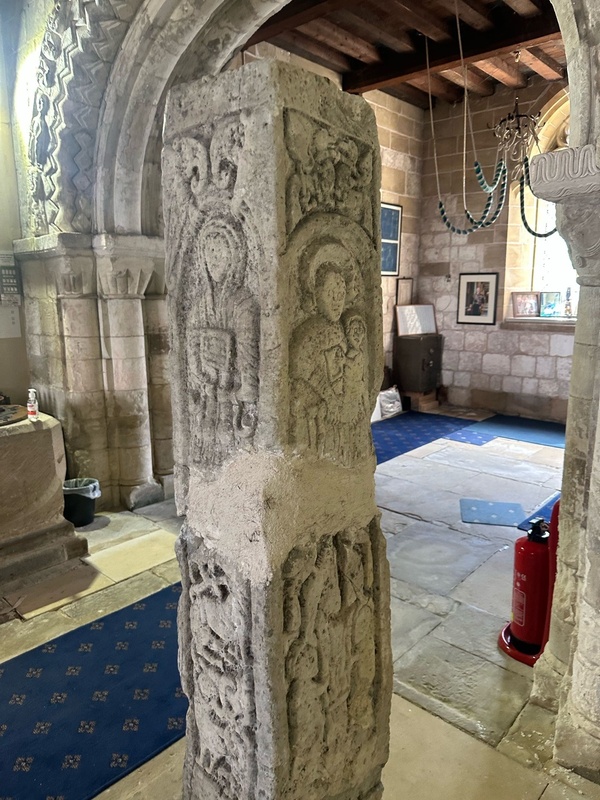
The late Anglo-Saxon cross shaft at St James Church, Nunburnholme includes some Norse-influenced imagery, including a depiction of Sigurd and the dragon Fafnir, and a warrior with Viking sword.
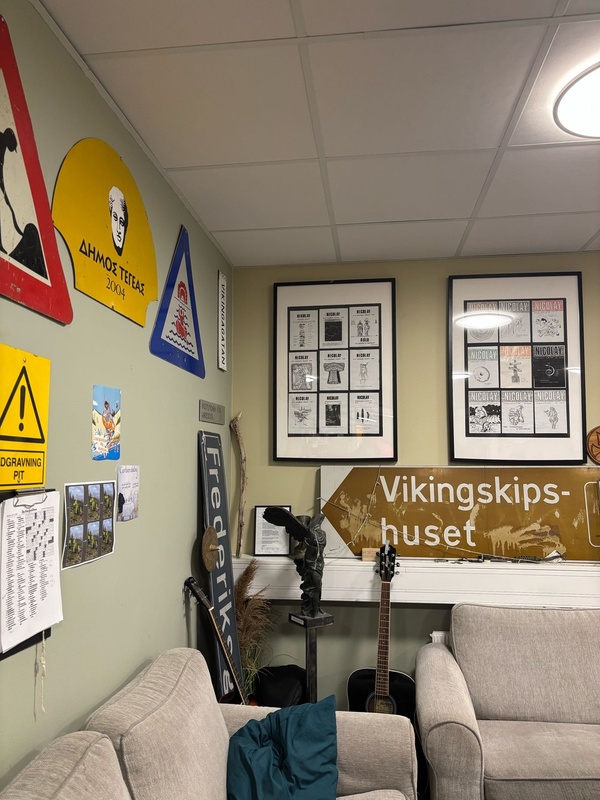
Brown sign on the right wall reads "Vikingskipshuset", which translates to The Viking Ship Museum. Museum is currently closed but is anticipated to reopen in 2027 under the name of the Viking Age Museum.
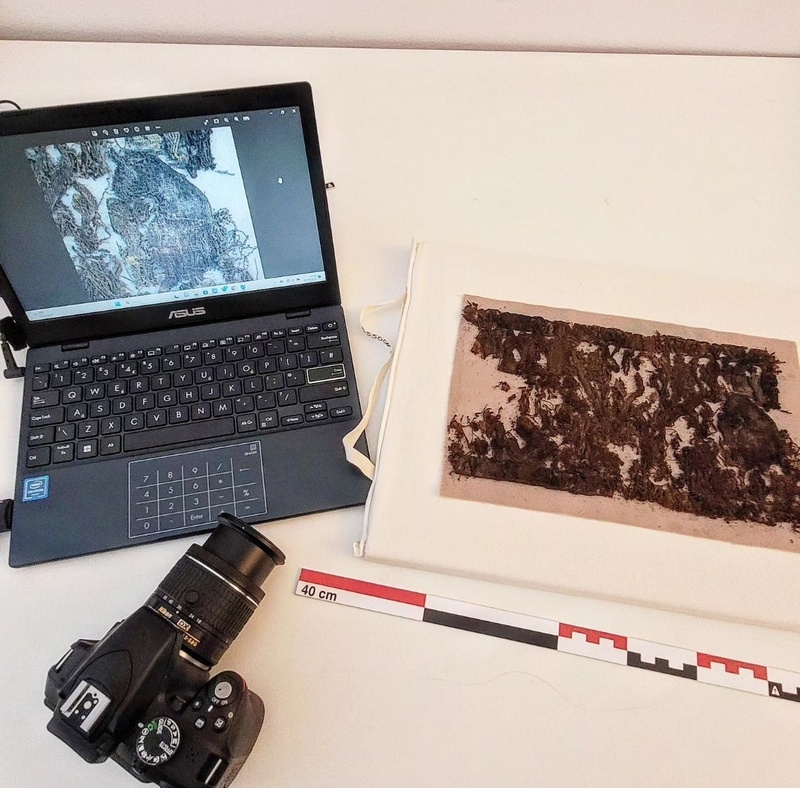
The Oseberg Tapestries Fragment 4 is an early 9th-century Viking Age textile fragment discovered in the famous Oseberg ship burial near Tønsberg, Norway, showcasing stylized figures and horses processed in a ritualistic or mythological scene. The original is poorly preserved. This is a reconstruction drawn by Stig Saxegaard, Storm Studios, in 2018.
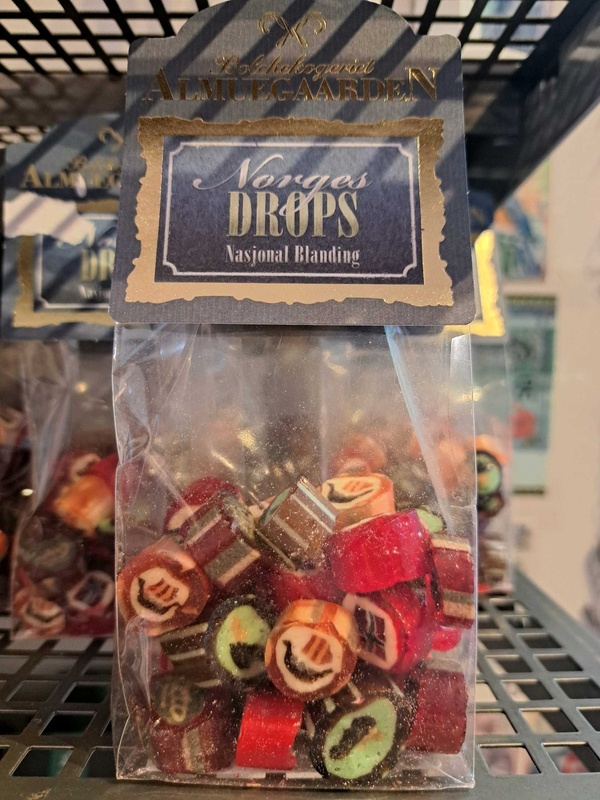
Norges Drops Nasjonal Blanding boiled sweets handcrafted by the Danish confectioner Almuegaarden, featuring traditional Norwegian-themed patterns and some Viking, such as ships, inside each candy piece.
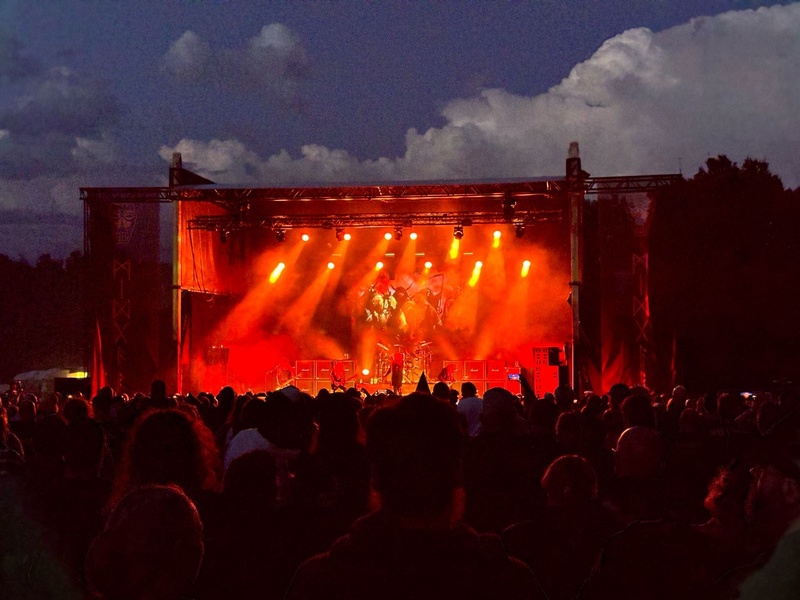
Performance from the Midgardsblot festival in 2026. It is an annual metal and neofolk music festival held in August at the historic Borre burial mounds outside the Midgard Viking Center in Norway.
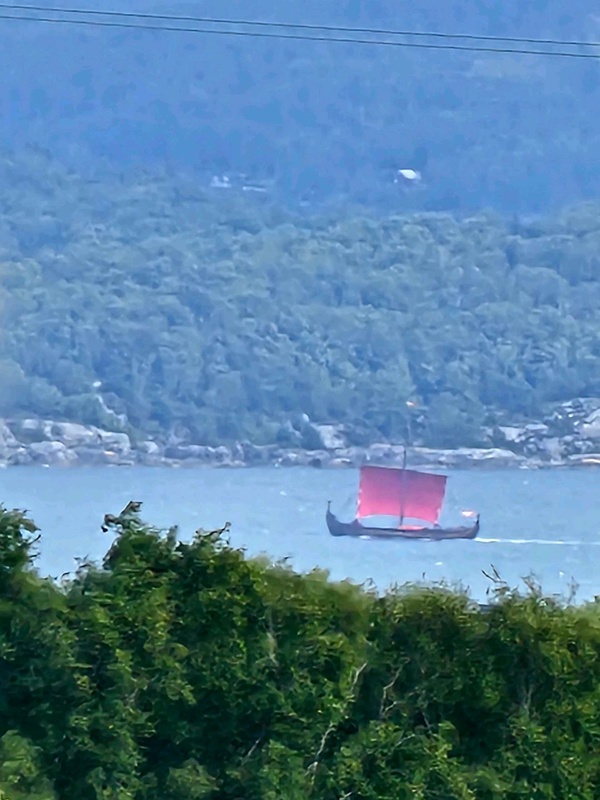
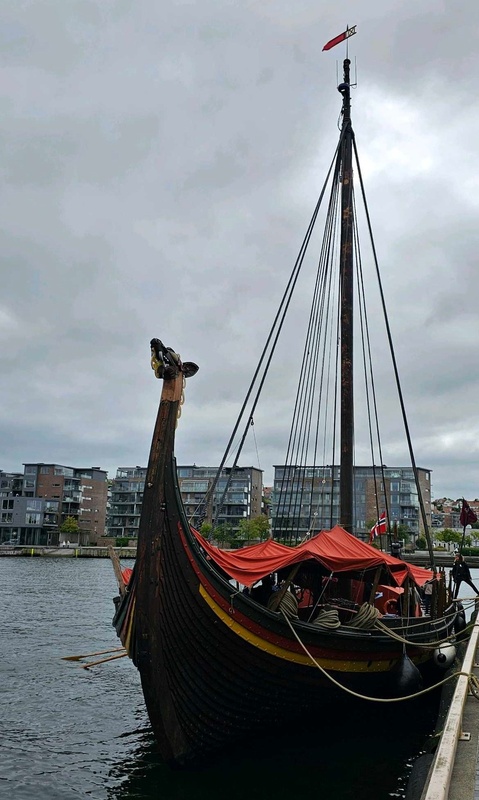
The Draken Harald Hårfagre seen in the distance in Byfjorden (Rogaland, Norway). This modern, ocean-crossing longship is not a faithful reproduction of a Viking longship, but it is heavily inspired by living Norwegian boat-building traditions hailing back to the Viking Age. In 2016 the Draken Harald Hårfagre sailed from Haugesund (Norway) to the USA, and in 2026 it featured as Odysseus' ship in Christopher Nolan's "The Odyssey".
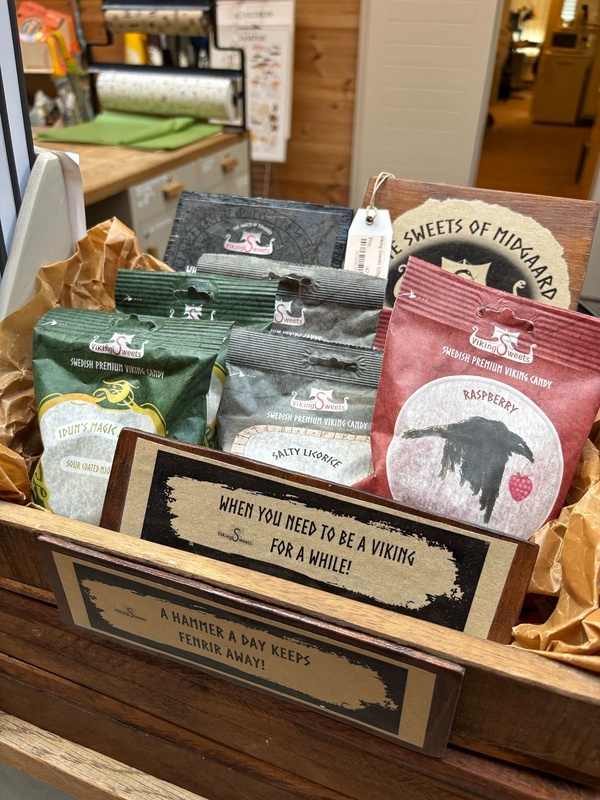
A basket of different types of candies from the Swedish company "Viking Sweets" accompanied by slogans such as "When you need to be a Viking for a while" and "A hammer a day keeps Fenrir away". The bags of candy pictured are in the flavours raspberry, salty licorice, and "Idun's magic apples".
The logo of the Vikingology Podcast which features the microphone icon in a blue circle surrounded by the Futhark sequence. The podcast is run by historians Terri Barnes and C.J. Adrien.
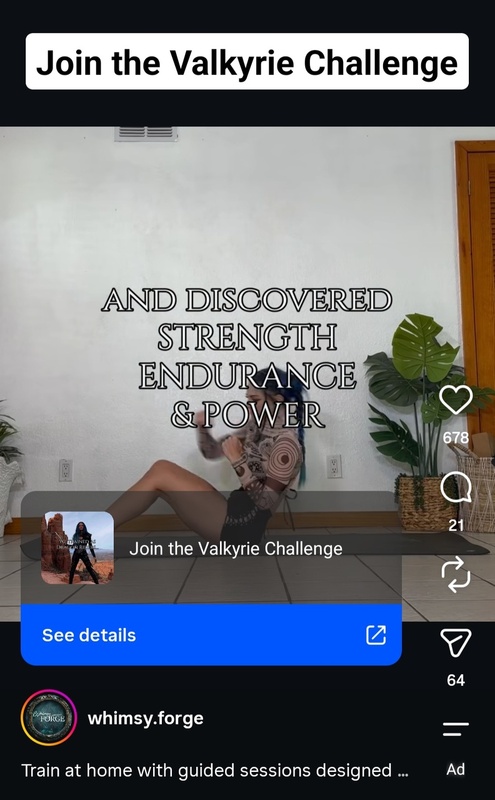
Ad for the "Valkyrie Challenge", a training programme targeted to women by company Whimsy Forge. The Valkyrie Challenge is one of several training programmes offered by Whimsy Forge, who specialise in "fantasy-infused fitness", with challenges and training paths inspired by popular fantasy books, as well as world mythologies.
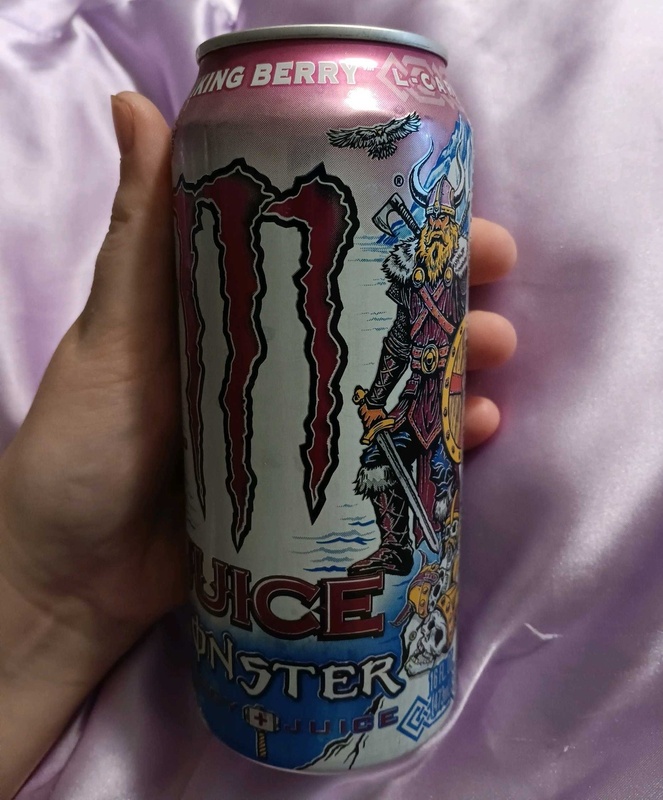
A can of Viking Berry flavored Monster Energy Drink. The side pictured shows a stereotypical Viking warrior with horned helmet, sword, axe, fur and shield. Above him flies a raven, underneath him is a pile of skulls, ice and sea pictured in the background. The other side has a stereotyped depiction of a Viking warrior woman in warrior clothing with fur, holding an axe and a shield. Above her is a raven, a wolf to her side, and a longship in the background.
The description on the back reads "The Vikings were valiant warriors who loved a good drink! They saved the very best of what they gathered, grew, bartered, and pillaged for their celebratory feasts. Inspired by the wild Nordic berries and Scandinavian fruit comes Juice Monster Viking Berry.
Like nothing you've ever tasted, Viking Berry blends real fruit juices and exotic flavors for a whole new taste experience.
Loaded with our world-famous Monster Energy blend to power you through your next adventure.
Grab your drinking horn and take a swig, skol!"
Draken Harald Hårfagre moored in Sandnes (Rogaland, Norway). This modern, ocean-crossing longship is not a faithful reproduction of a Viking longship, but it is heavily inspired by living Norwegian boat-building traditions hailing back to the Viking Age. In 2016 the Draken Harald Hårfagre sailed from Haugesund (Rogaland, Norway) to the USA, and in 2026 it featured as Odysseus' ship in Christopher Nolan's "The Odyssey".
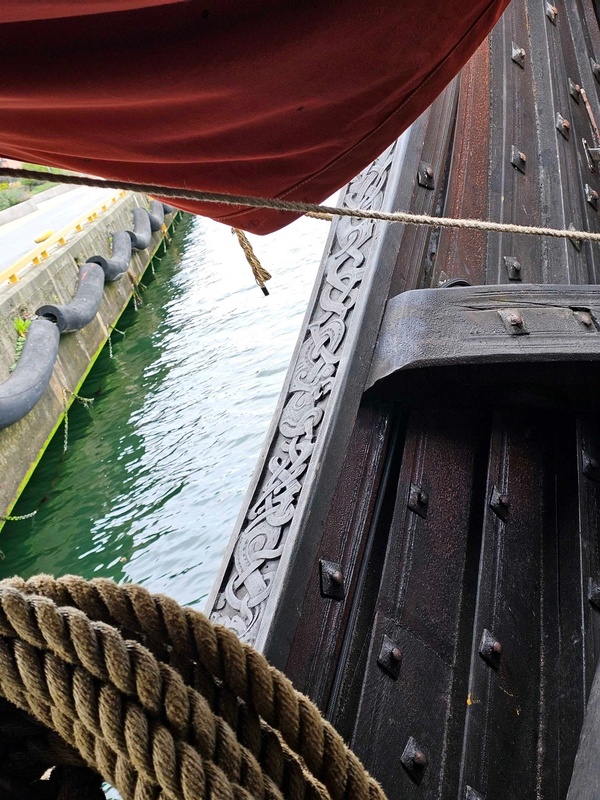
Decorative carving on the side of the Draken Harald hårfagre. This modern, ocean-crossing longship is not a faithful reproduction of a Viking longship, but it is heavily inspired by living Norwegian boat-building traditions hailing back to the Viking Age. In 2016 the Draken Harald Hårfagre sailed from Haugesund (Rogaland, Norway) to the USA, and in 2026 it featured as Odysseus' ship in Christopher Nolan's "The Odyssey".
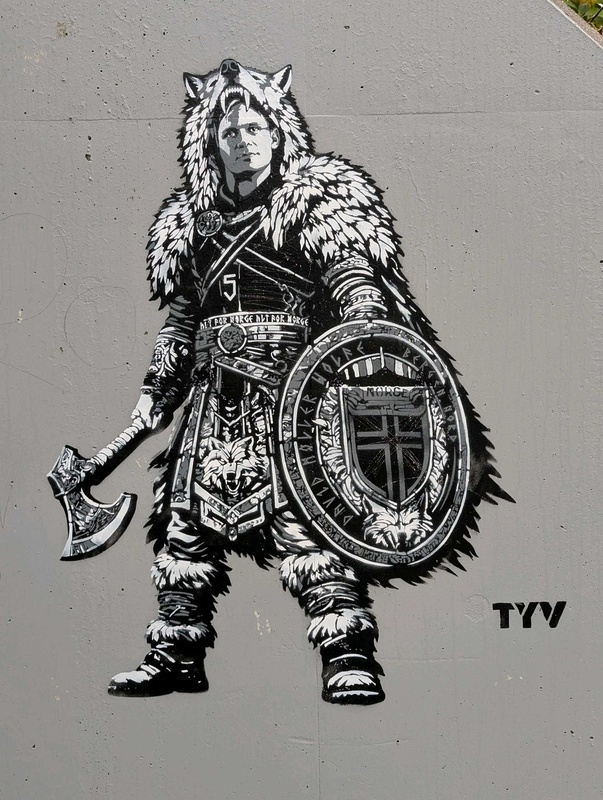
Street art by Norwegian artist TYV (thief) depicting footballer David Møller Wolfe as a berseker. Wolfe was part of the Norwegian national football team which competed in the 2026 World Cup. TYV made this graffiti on the eve of the match Norway-Ivory Coast. The graffiti is located in the underpass leading to IKEA in Åsane (Vestlandet, Norway). The location pays homage to Wolfe, who comes from Åsane. In the graffiti, Wolfe is depicted in Viking gear, complete with shield and axe. The wolf skin on his back is a nod to the footballers surname and to the famed Ulfhednar, a group of berserkers who adorned themselves in wolf skins. TYV added several details, such as the slogan "Alt for Norge" (all for Norway) in a runic-inspired font on the belt, as well as "David Møller Wolfe" and "Bergen nord" where Åsane is located in the same font on the shield. A copy of this artwork has been co-signed by TYV and Wolfe and will be auctioned to support a charity.
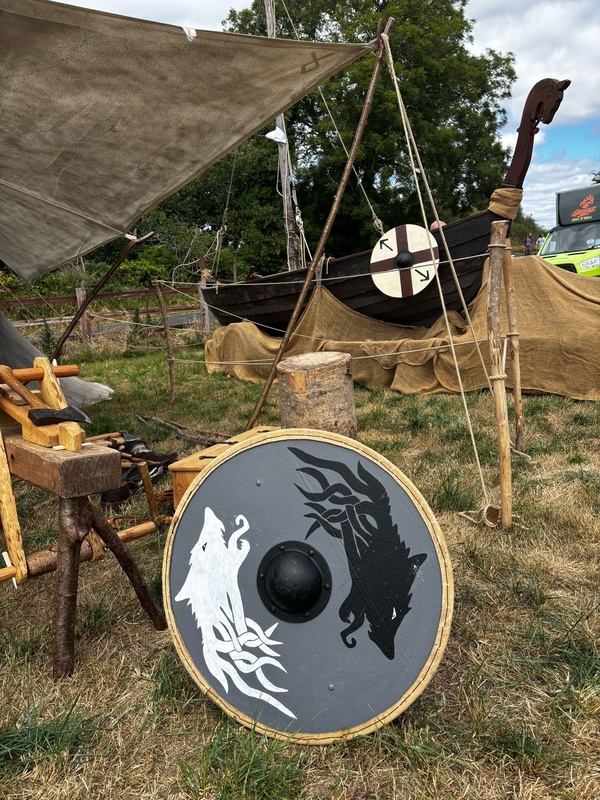
Viking reenactment encampment at the Woodstown Viking Festival in County Waterford, Ireland, featuring a reconstructed longship, decorated round shields, period-style tents and traditional woodworking equipment.