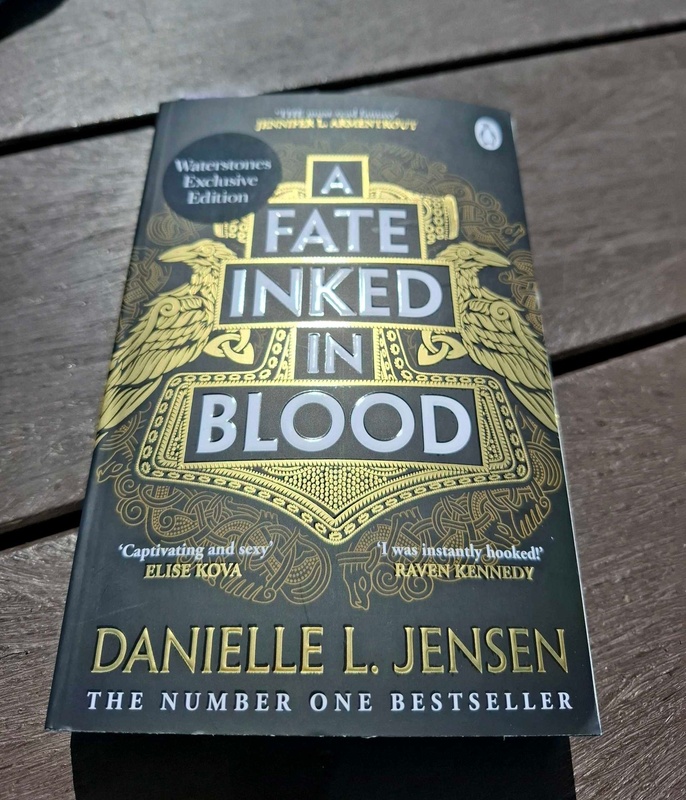
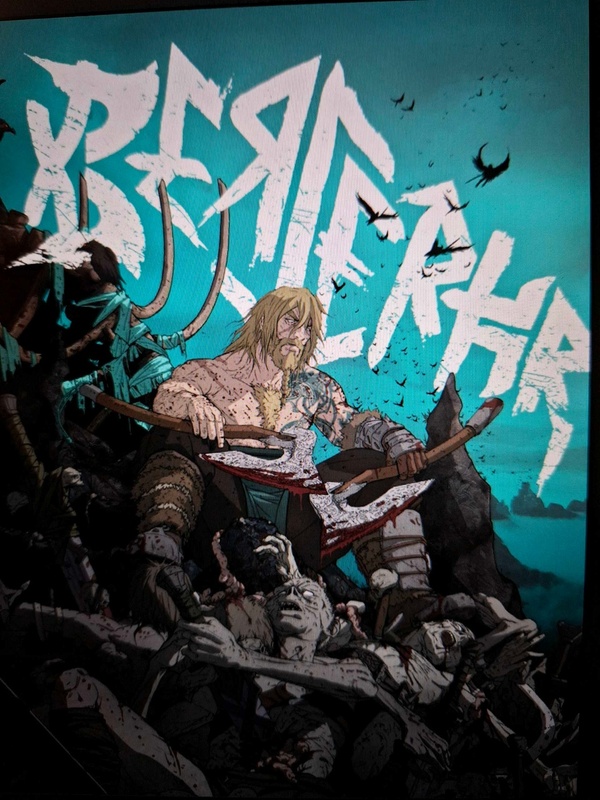
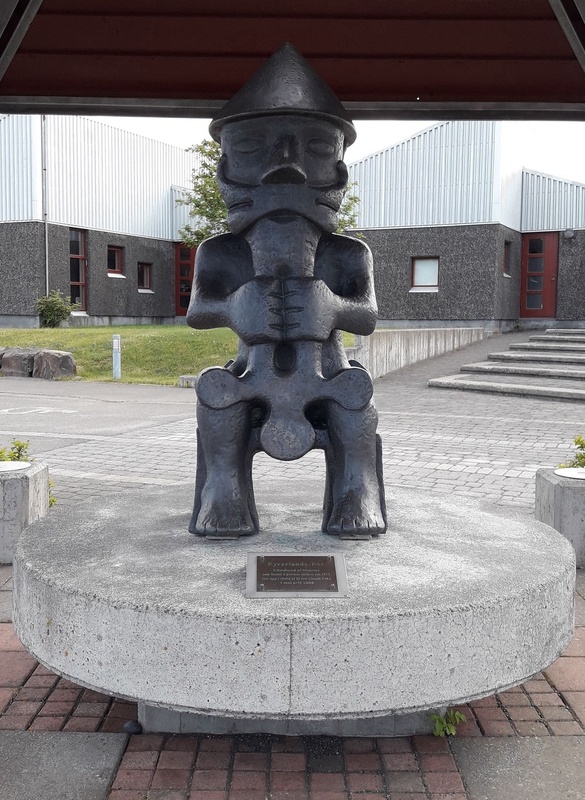
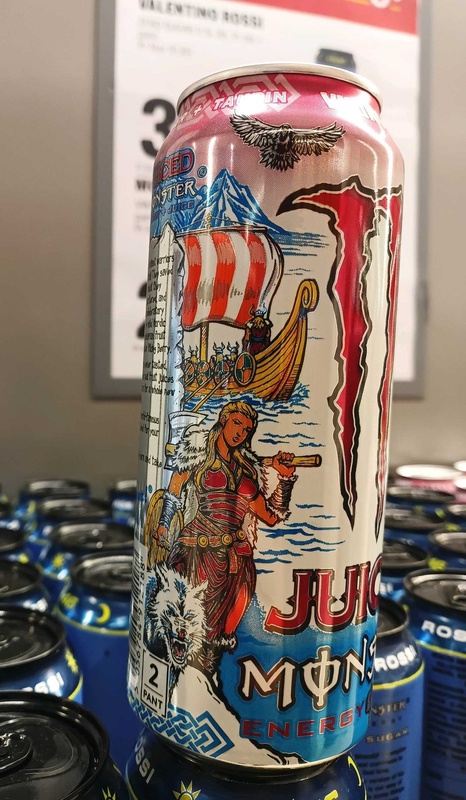
Berserkr is a role play game setting created by Slightly Reckless Games and uses Mork Borg table top role play rules. It was successfully funded on Kickstarter and is strongly influenced by Norse mythology.
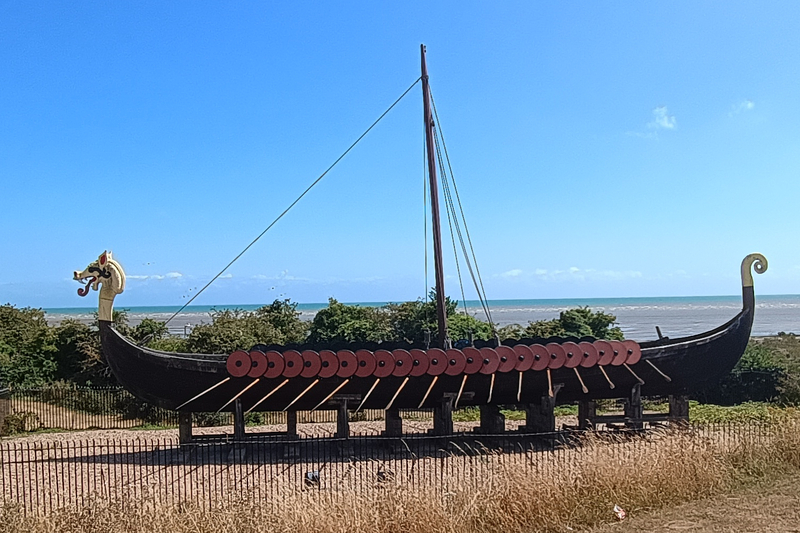
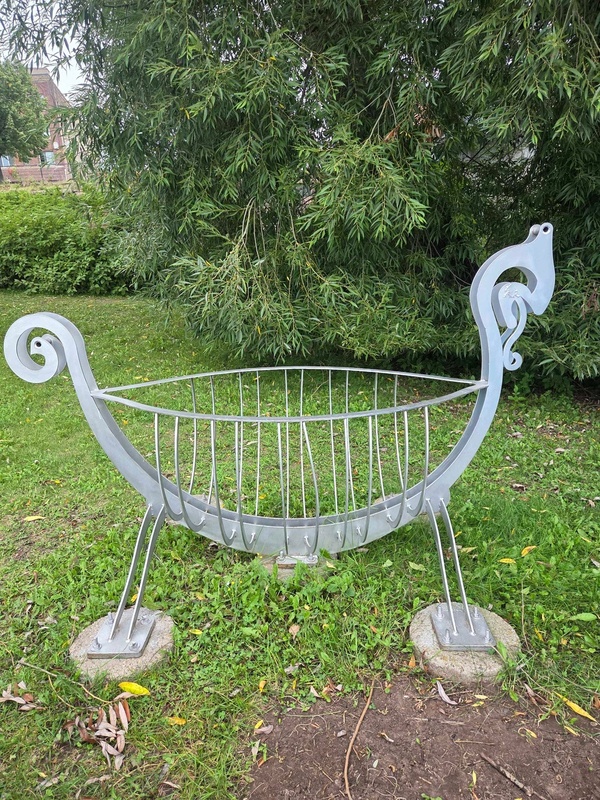
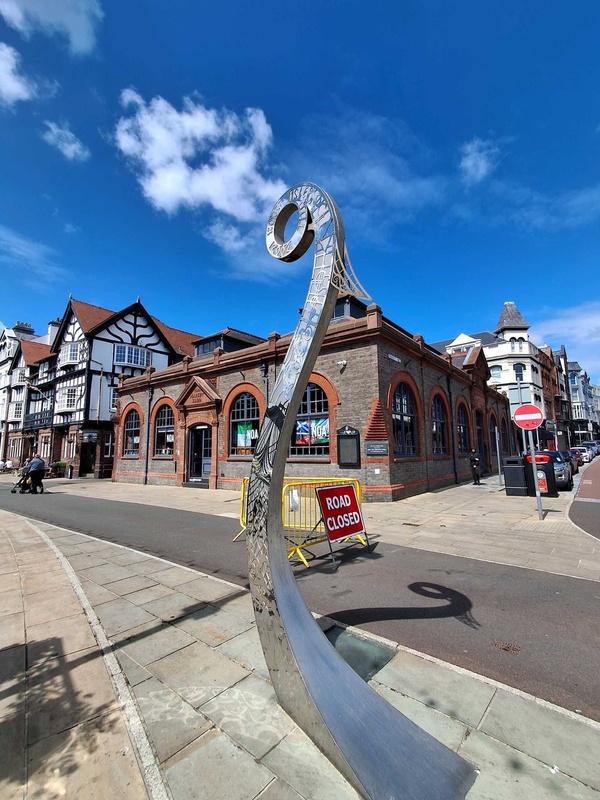
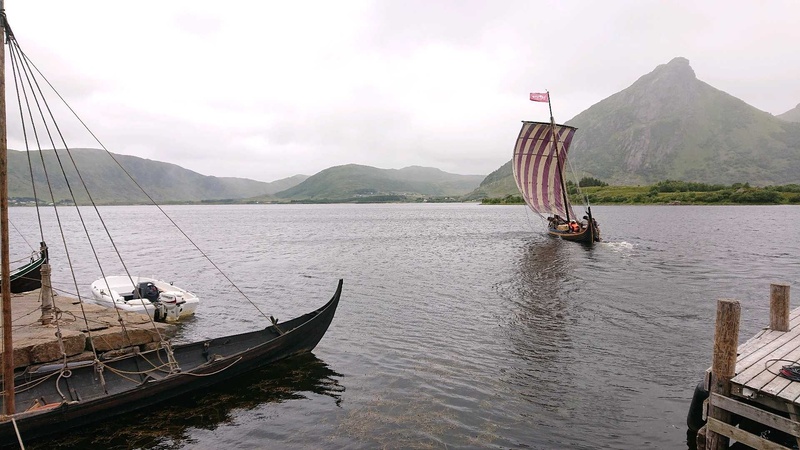
A replica Viking longship built and sailed from Denmark to the nearby Viking Bay (Broadstairs, Kent) in 1949 to commemorate the 1500th arrival of the two Saxon chieftains Hengist and Horsa to Ebbsfleet.
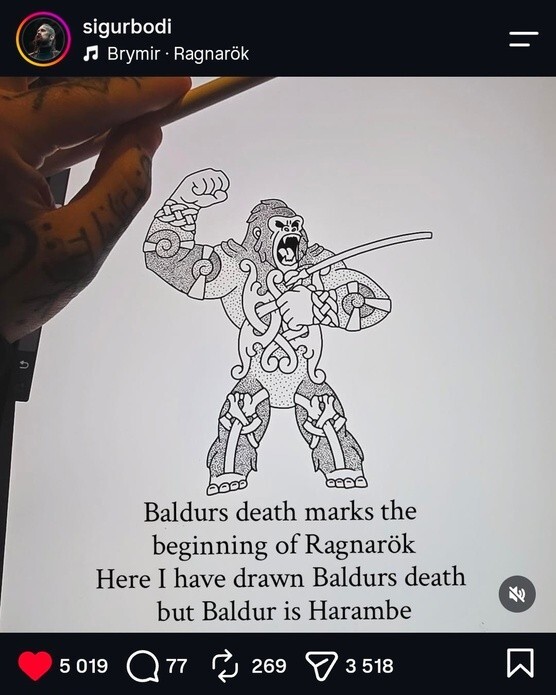
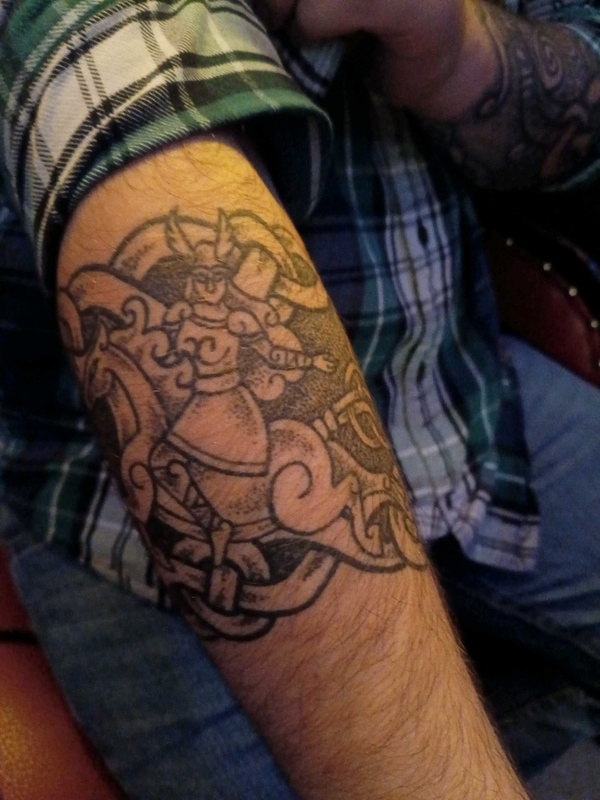
Balðr design offered by tattoo artist Sigurboði Grétarson (Reykjavík) on his instagram account (@sigurbodi). Here, Balðr is humorously styled after Harambe, the internet-famous western lowland gorilla who was shot in May 2016 after attacking a child at the Cincinnati Zoo (USA). The artist references a popular internet conspiracy theory according to which the death of Harambe heralds the end of the modern world, according to events that unfolded afterwards. It is unclear how serious this theory is taken by those who participate in the meme-culture surrounding Harambe, such as the White House of the USA (who released an elegiac statement on the 10th year anniversary of Harambe's death).
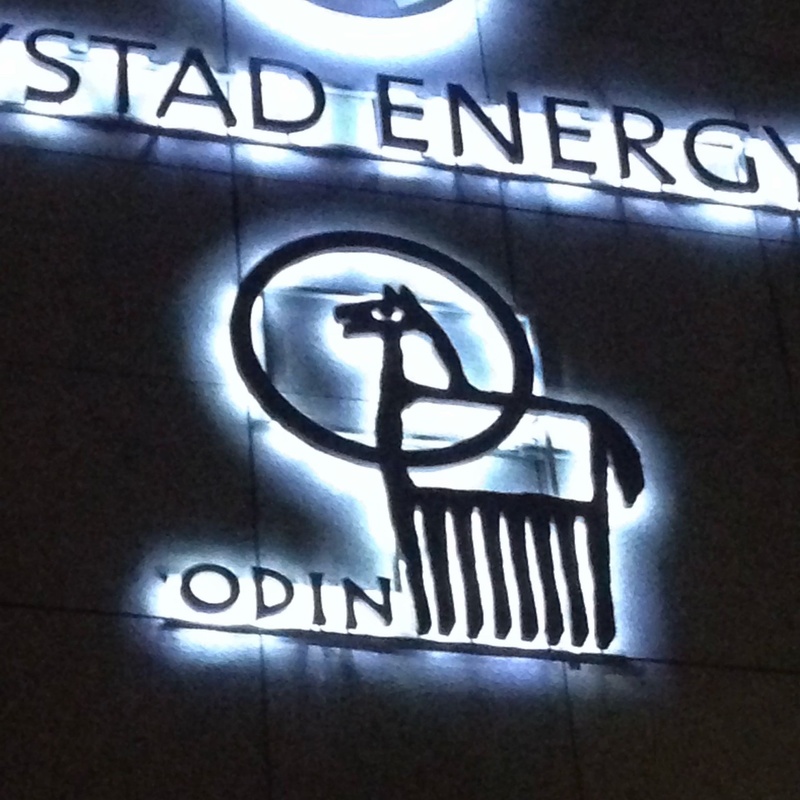
Contributor: Illuminated 'Odin' logo depicting the Norse god's eight-legged horse Sleipnir on the side of a building in Oslo. Apparently connected to the state energy company. 24 October 2014.
[The logo is of ODIN, a Norwegian fund manager headquartered in Oslo.]
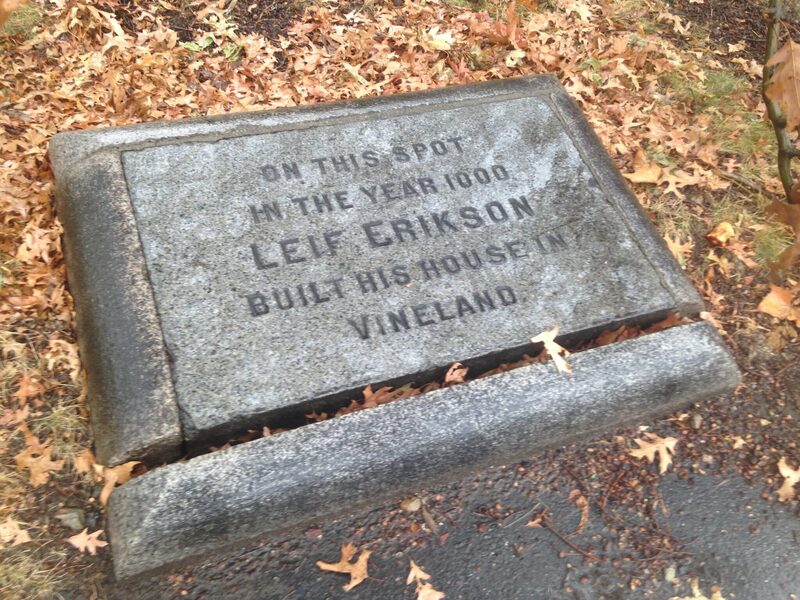
A stone plaque commemorating the alleged location of Leif Erikson's house in Cambridge, Massachussetts. The plaque reads: “On this spot in the year 1000 Leif Erikson built his house in Vineland.”
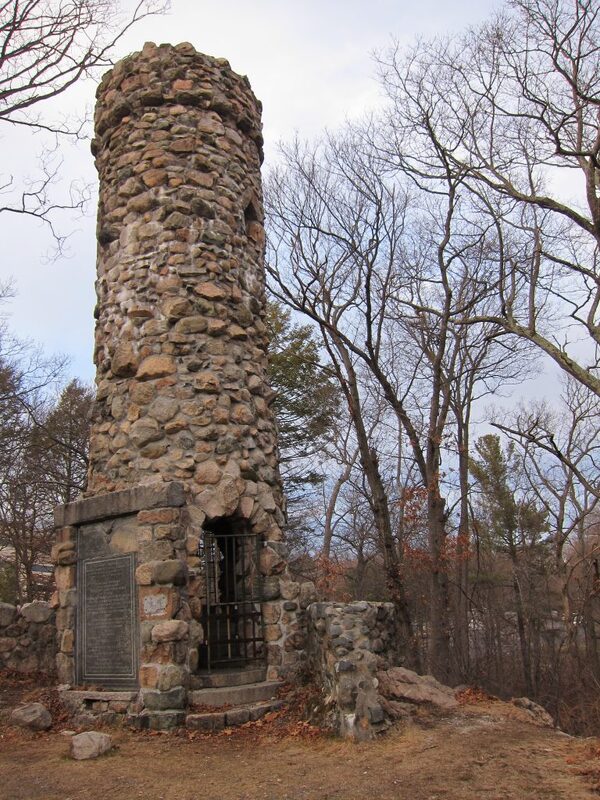
A stone tower erected by Eben Norton Horsford in 1889 in Weston, Massachussetts, allegedly commemorating Leif Erikson's landfall and subsequent settlement of Vinland. Horsford had no proof to substantiate any of his claims, among which was the belief that Norumbega was named after Norway. The plaque on the tower reads:
A.D. 1000 A.D. 1889
NORUMBEGA
CITY·COUNTRY·FORT·RIVER
NORUMBEGA = NOR MBEGA
INDIAN UTTERANGE OF NORBEGA THE ANCIENT FORM
OF NORVEGA·NORWAY·TO WHICH THE
REGION OF VINLAND WAS SUBJECT
CITY
AT, AND NEAR WATERTOWN
WHERE REMAIN TO-DAY
DOCKS·WHARVES·WALLS·DAMS·BASINS·
COUNTRY
EXTENDING FROM RHODE ISLAND TO THE ST. LAWRENCE
FIRST SEEN BY BJARNI HERJULFSON 985 A.D.
LANDFALL OF LEIF ERIKSON ON CAPE COD 1000 A.D.
NORSE CANALS·DAMS·WALLS·PAVEMENTS·
FORTS·TERRACED PLACES OF ASSEMBLY REMAIN TO-DAY
FORT
AT BASE OF TOWER AND REGION ABOUT
WAS OCCUPIED BY THE BRETON FRENCH IN THE
15TH 16TH AND 17TH CENTURIES
RIVER
THE CHARLES
DISCOVERED BY ··············
LEIF ERIKSON·1000 A.D.
EXPLORED BY ··············
THORWALD LEIF’S BROTHER·1003 A.D.
COLONIZED BY ··············
THORFINN KARLSEFNI·1007 A.D.
FIRST BISHOP ··············
ERIK GNUPSON·1121 A.D.
INDUSTRIES FOR 350 YEARS
MASUR·WOOD [BURRS]·FISH·FURS·AGRICULTURE·
LATEST NORSE SHIP RETURNED TO ICELAND IN 1347.
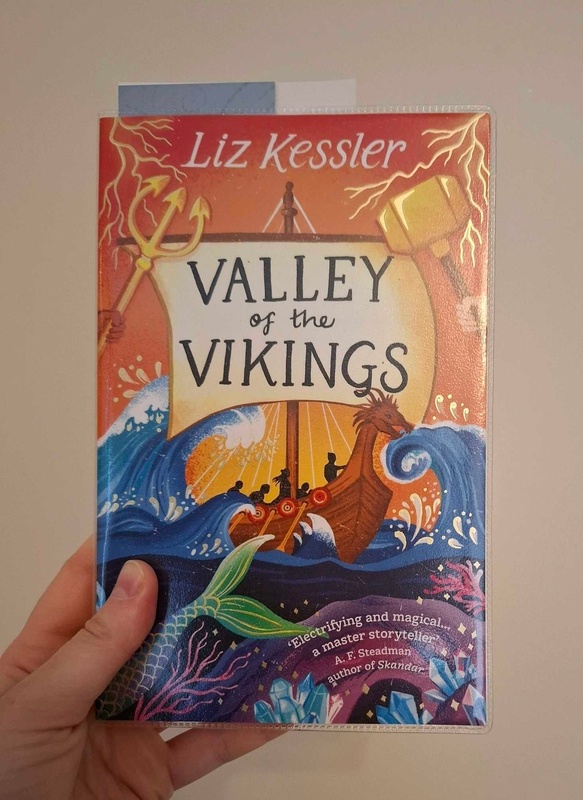
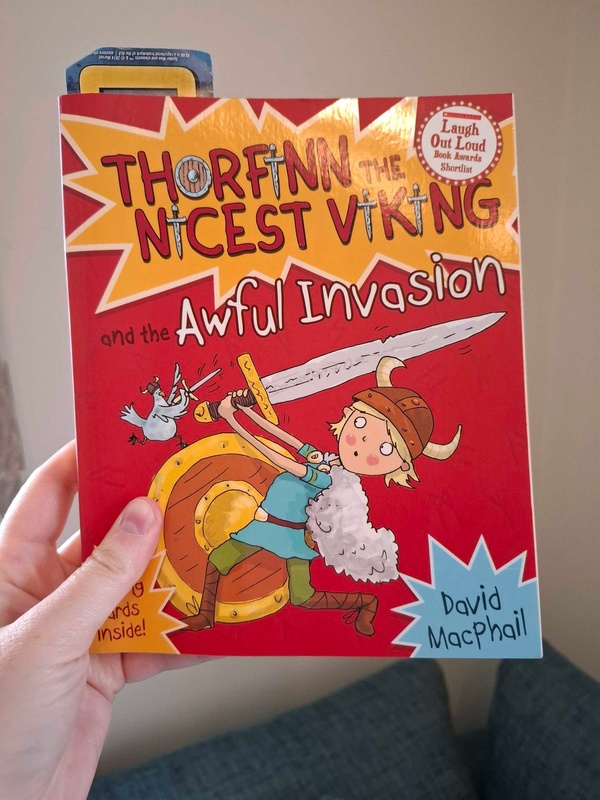
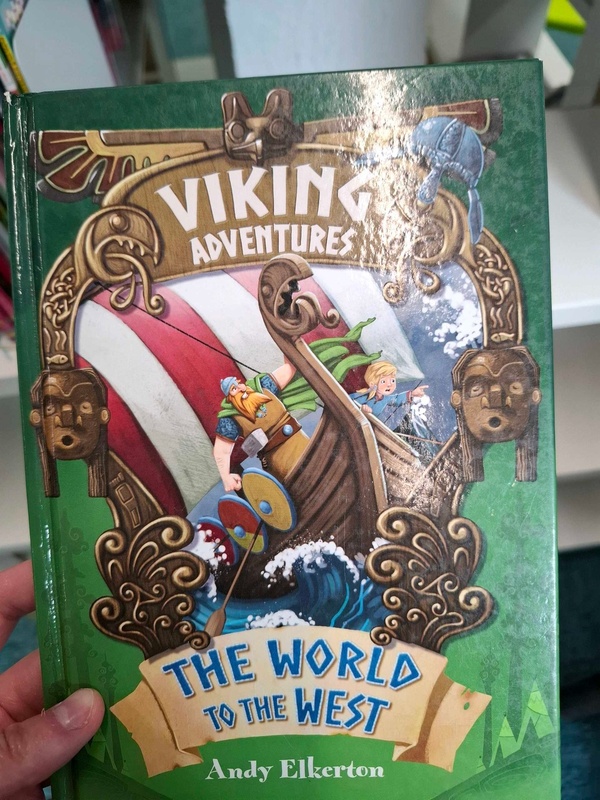
Humorous children’s novel about a gentle Viking boy sent on a raiding expedition to Scotland. Thorfinn is the son of Harald the Skull-Splitter, a fearsome Viking chief. Determined to toughen him up, Harald sends Thorfinn on a raiding expedition to Scotland, hoping that he will finally earn a suitably terrifying Viking nickname.
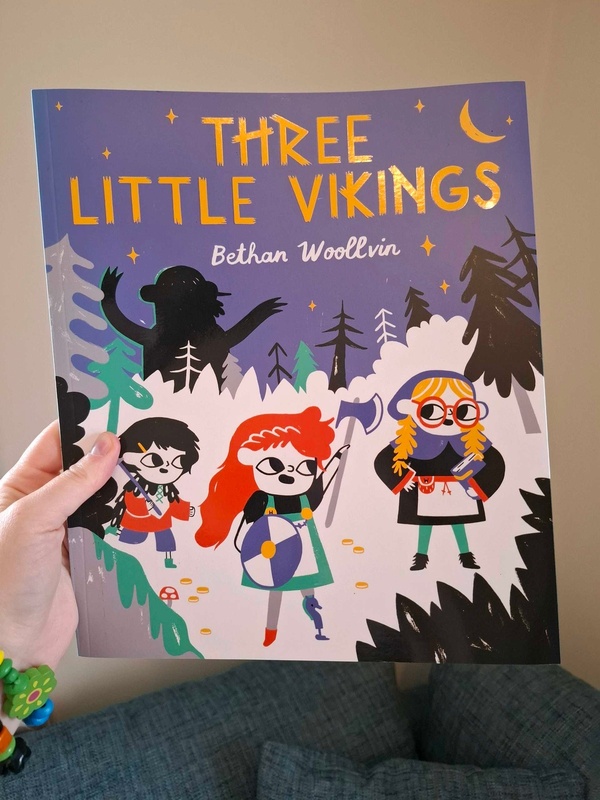
Three Little Vikings is a children’s picture book written and illustrated by Bethan Woollvin. It follows three young Viking girls, Ebba, Helga and Wren, who investigate mysterious disturbances in their village. Discovering that a troll is responsible, they work together to protect their community. The book combines Viking imagery and Scandinavian folklore with contemporary themes.
A collaborative acapella cover of the song "Valhalla Calling" (originally by Miracle of Sound) featuring Serena Belle, Big Brev (Danny Brevik), Peyton Parrish, and Miracle of Sound (Gavin Dunne). Instagram video was published by bigbrev on Instagram.
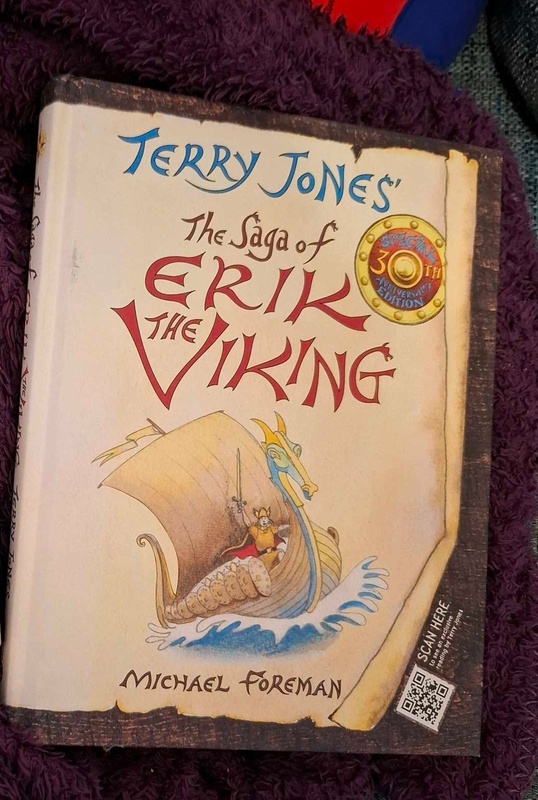
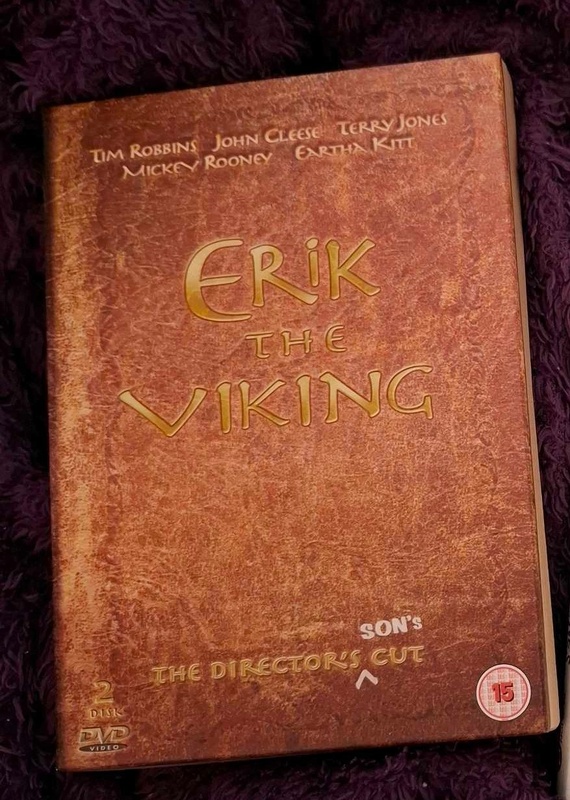
The Saga of Erik the Viking childrens book. The story follows Erik, a brave Viking warrior who commands a great ship named the Golden Dragon. Erik's sail to find the land where the sun goes at night.
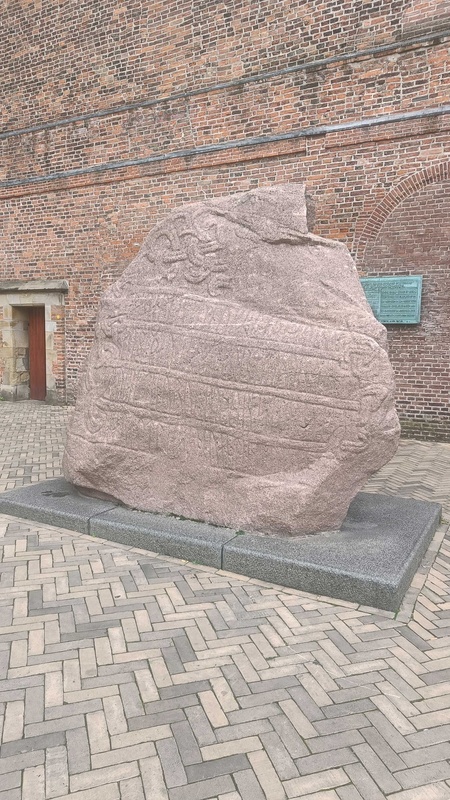
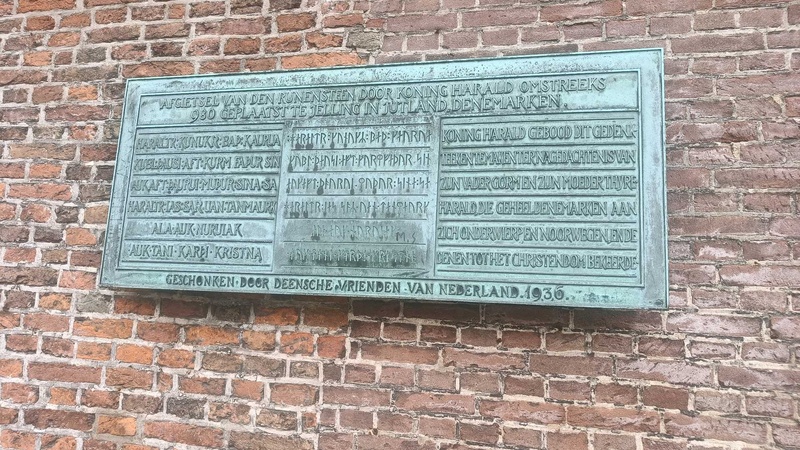
A copy of the Jutland runestone at Utrecht Domkirken, donated by the Danish friends. Erected 1936 by Deensche Vrienden van Nederland. Accompanied by an information panel. Top horizontal panel: A casting of the rune stone by King Harald placed in Jelling in Jutland, Denmark, about 980 A.D. The left-middle vertical panel is a transliteration of the runes. The mid-middle vertical panel is the actual rune text that is found on three sides of the stone. The right-middle vertical panel is a translation of the runes into Dutch.
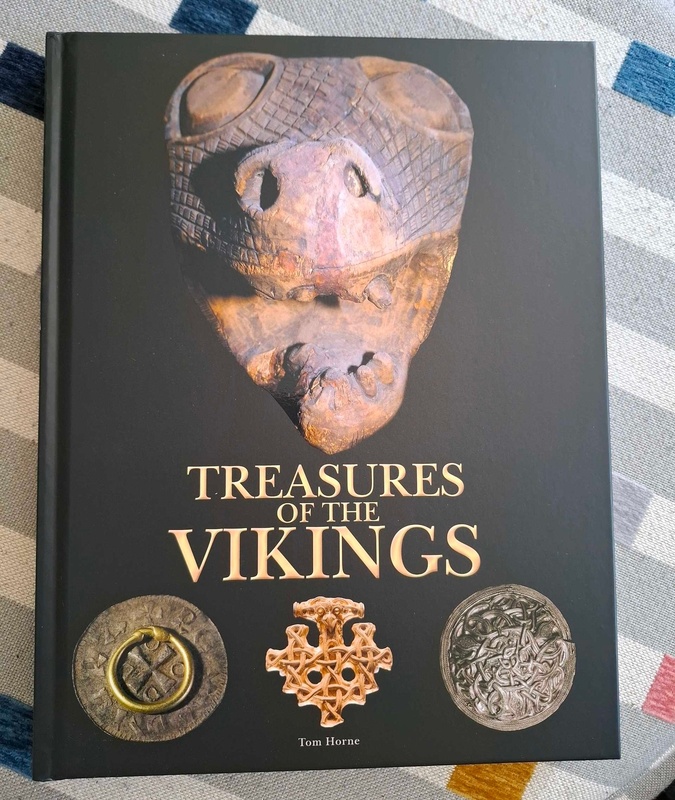
An illustrated survey of Viking Age material culture by archaeologist Tom Horne. Published by Amber Books, the volume explores archaeological discoveries associated with Viking activity across Europe and beyond. Includes many colour photographs and illustrations.
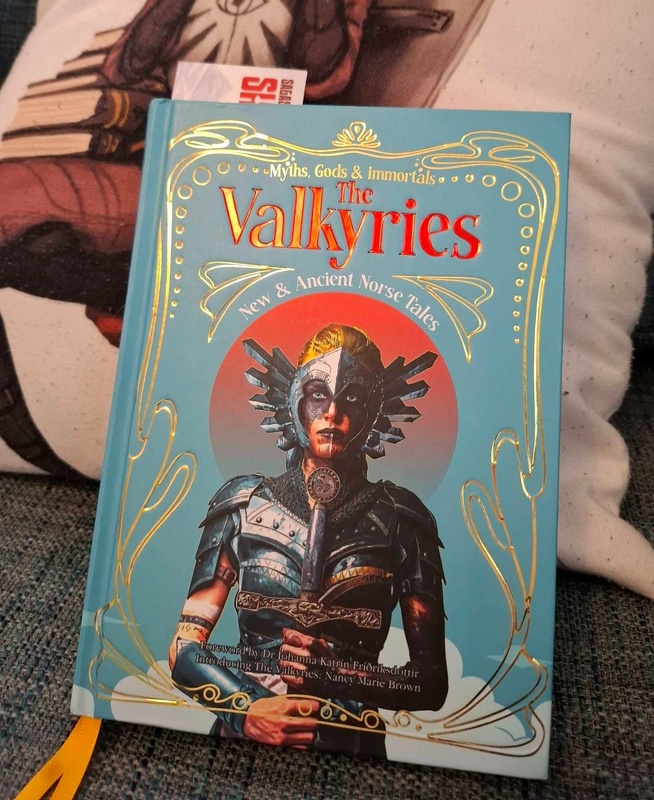
An anthology of modern short stories inspired by or featuring valkyries. With an introductory essay by Nancy Marie Brown, and foreword by Jóhanna Katrín Friðriksdóttir. Published by Flame Tree Publishing as part of its Myths, Gods & Immortals series, the collection includes seventeen new stories exploring themes including fate, warfare, sacrifice and the supernatural. The anthology illustrates the continuing adaptation and reinvention of figures from Norse mythology in contemporary popular literature.
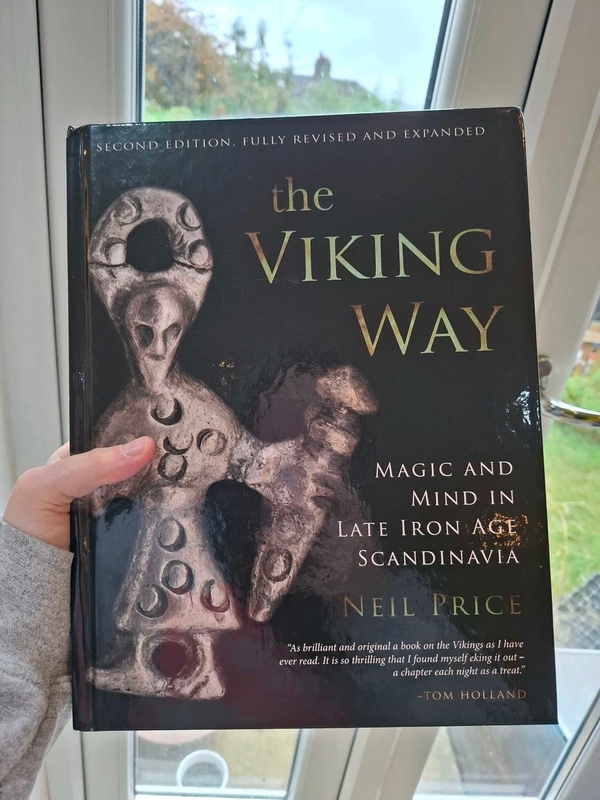
This is the 2019 revised and expanded edition of Neil Price’s influential 2002 study of pre-Christian Norse religion and magical practices. Drawing on archaeological, historical and literary evidence, Price examines the role of sorcery, ritual, gender and supernatural beliefs in Viking Age Scandinavian society. Particular attention is given to seiðr, the relationship between magic and warfare, and the connections between Norse and Sámi religious traditions.
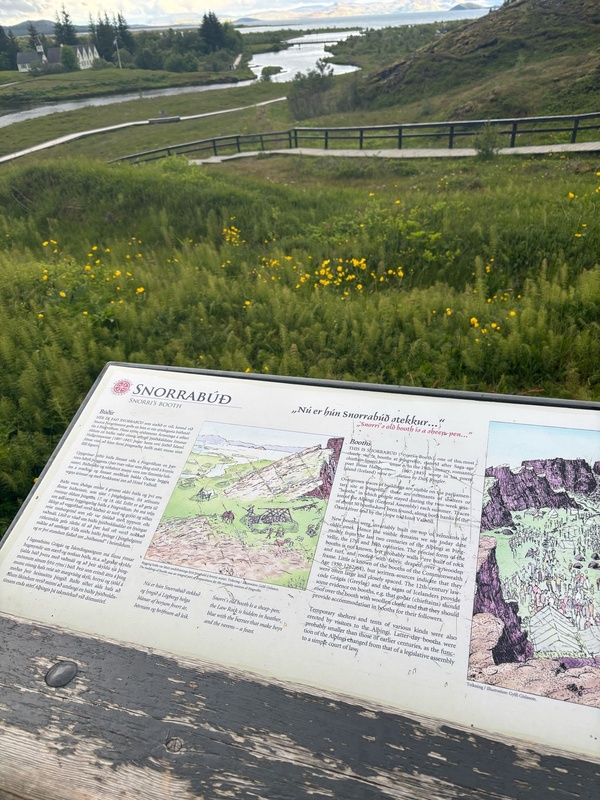
Snorri’s Booth (Snorrabúð) at Þingvellir National Park in Iceland. Þingvellir National Park, this is the archaeological site of one of the old stone and turf booths (búðir) used during the annual summer sessions of the Alþingi (Iceland's national parliament, founded in 930 CE).
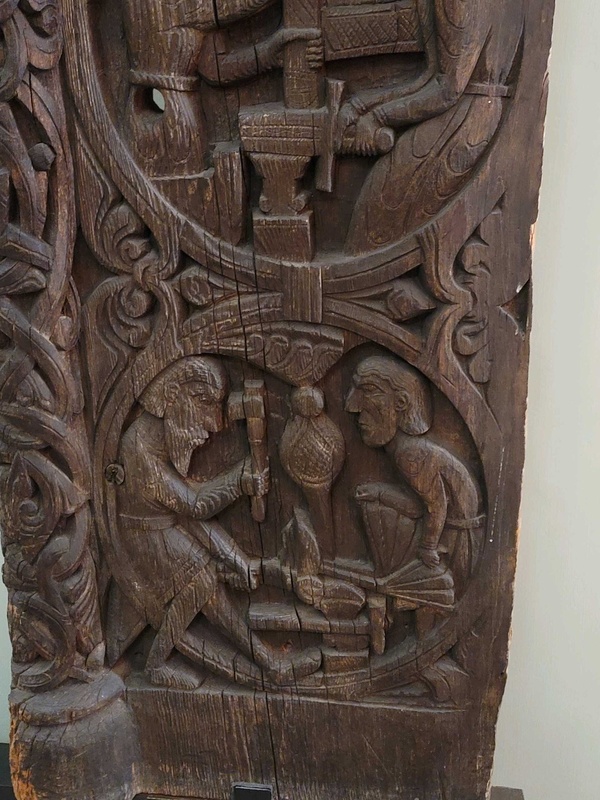
A swordmaking scene on a wooden carving from the portal of Hylestad Stave Church preserved at Historisk Museum in Oslo, Norway, featuring a scene from the Volsunga Saga. In it, Regin, the blacksmith dwarf is across from his apprentice Sigurd, the renowned dragon slayer.
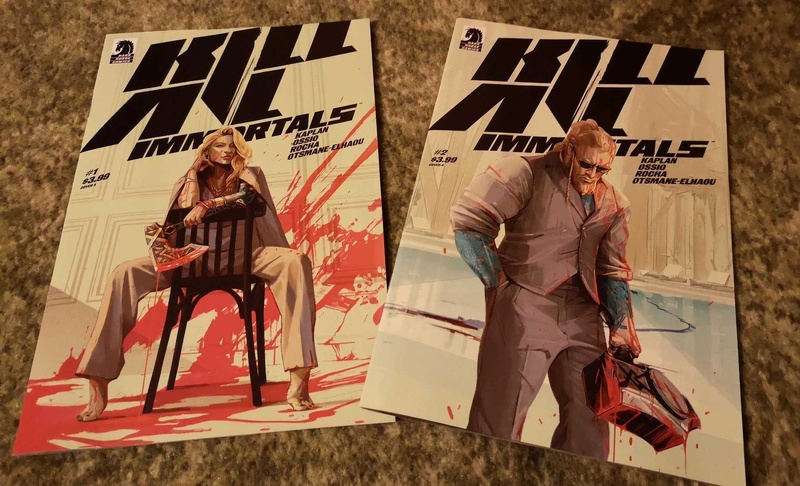
Issue #1 and Issue #2 of the comic book series "Kill All Immortals"- a comic series. It is about the family of Erik the Red who discover an alien life form and find it makes them immortal. In the present, Freydis, the only daughter, is tired of living forever and begins to defy and revolt against her tyrannical father for freedom to determine her own fate and death. The mythological foundation of the comic is rooted directly in Norse history and lore.
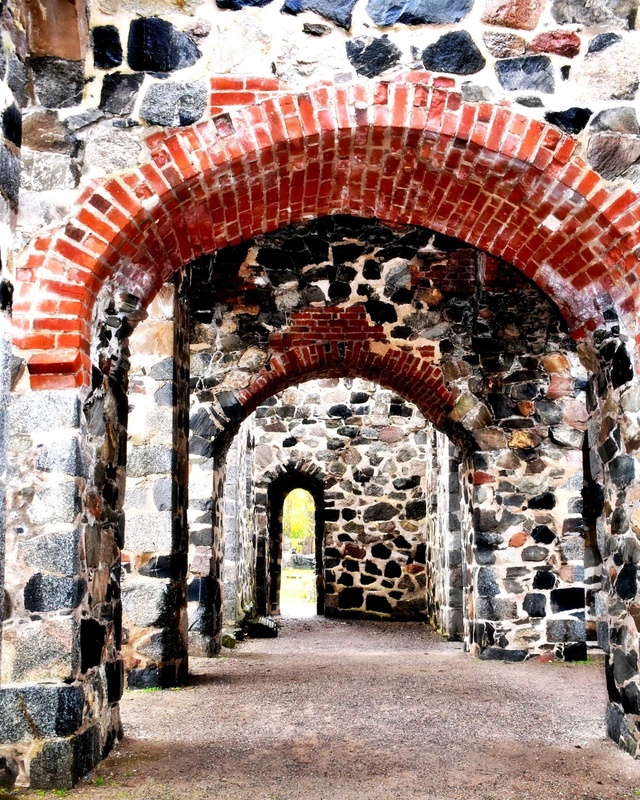
Ruins of St. Olof's church in Sigtuna. The church was one of the first stone churches in Scandinavia, as evidenced by the type of building techniques used in the older walls which date it to the early 11th century. St. Olof is none other than the Norwegian king Olaf Haraldsson who died at the battle of Stiklestad in 1030, a date which in Norway marks the end of the Viking Age.
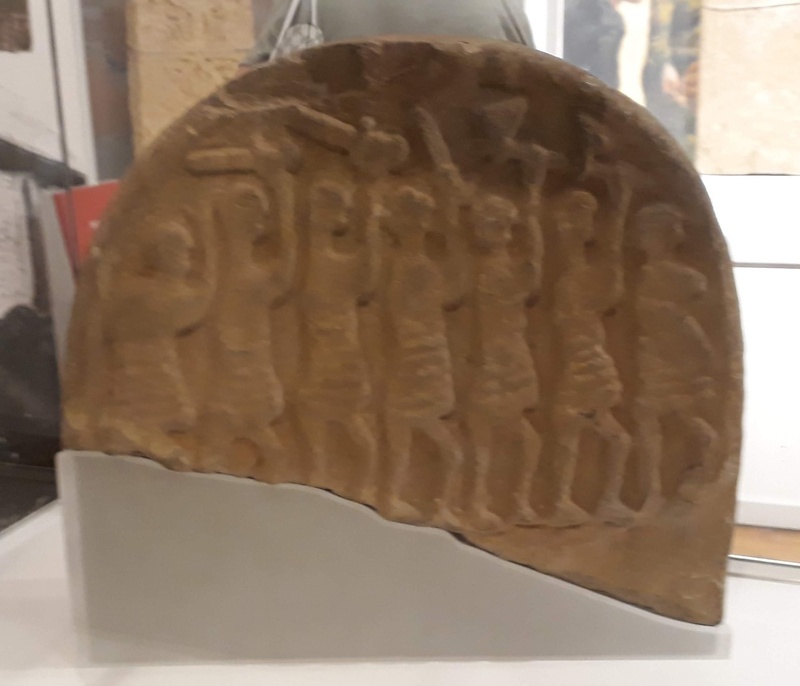
The Lindisfarne Stone, also known as the Viking Raiders Doomsday Stone is a 9th century double-sided grave marker. Side 1 depicts The Last Judgement, side 2 (shown in this photograph) is a possible depiction of Vikings sacking Lindisfarne in 793. The stone shows seven warriors holding swords and axes above their heads.
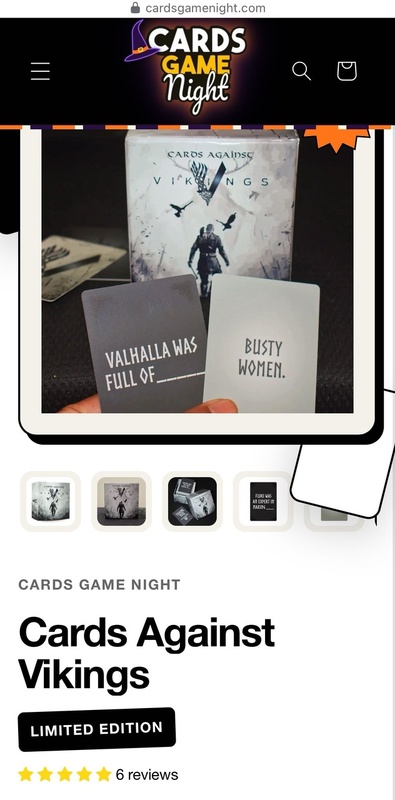
“Cards Against Vikings” card game advertisement on Cards Game Night, the game references the tv show Vikings and riffs off the popular card game Cards Against Humanity.
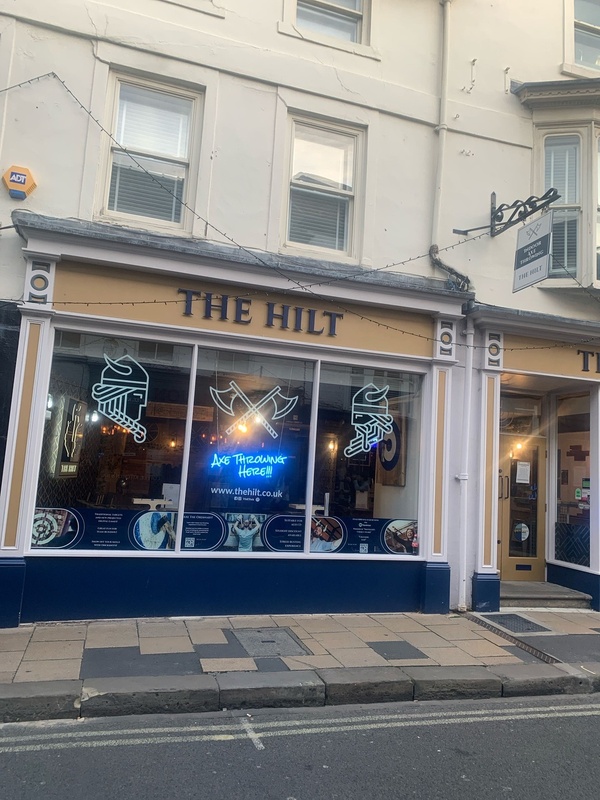
The Hilt on goodramgate in York is an axe throwing venue inspired by the Viking Age. Their logo shows a stylised Viking woman and man, both with horned helmets, divided by two axes.
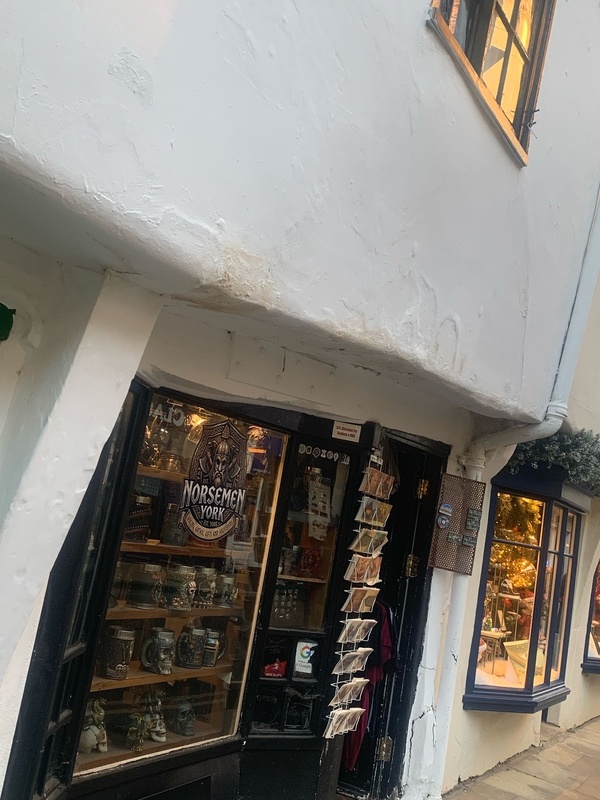
A shop selling Viking themed items on Goodramgate (guthrums street) in York. The logo on the shop window depicts a Viking warrior flanked by axes and ravens on a shield.
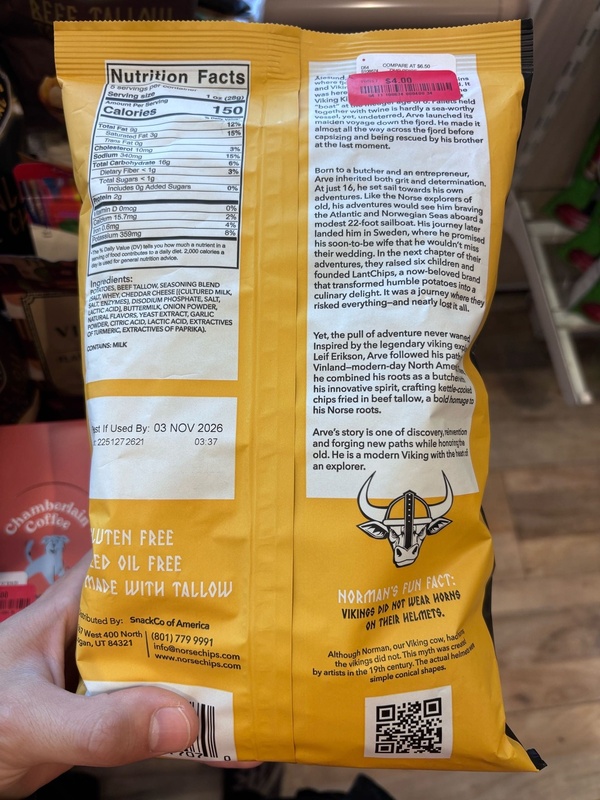
Norse Roots is a brand of crisps that purportedly forges their product in tallow and flame. This pack of crisps was found in HomeGoods in Massachusetts. Each pack has a Viking fun fact and different flavor, the ones in this picture are cheddar and sour cream. The company's logo features a bull with (horned) helmet set in front of the Vegvísir. Their Viking image is completed by the use of lightning and a runic font.
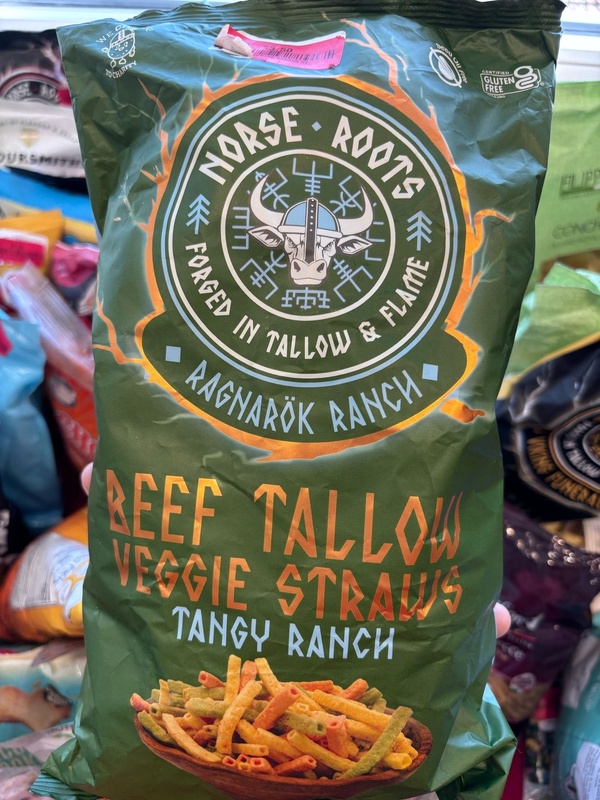
Norse Roots is a brand of crisps that purportedly forges their product in tallow and flame. This pack of crisps was found in HomeGoods in Massachusetts. Each pack has a Viking fun fact and different flavor, the ones in this picture are tangy ranch. The company's logo features a bull with (horned) helmet set in front of the Vegvísir. Their Viking image is completed by the use of lightning and a runic font.
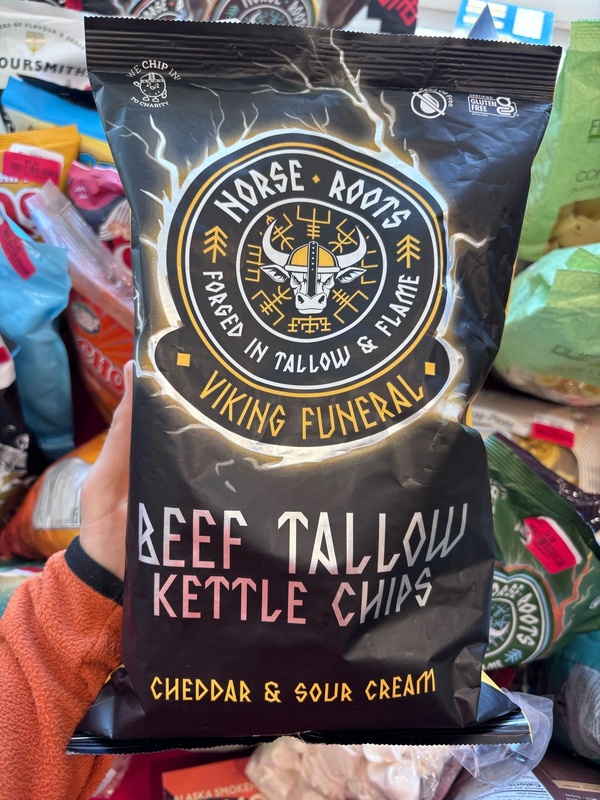
Norse Roots is a brand of crisps that purportedly forges their product in tallow and flame. This pack of crisps was found in HomeGoods in Massachusetts. Each pack has a Viking fun fact and different flavor, the ones in this picture are cheddar and sour cream. The company's logo features a bull with (horned) helmet set in front of the Vegvísir. Their Viking image is completed by the use of lightning and a runic font.
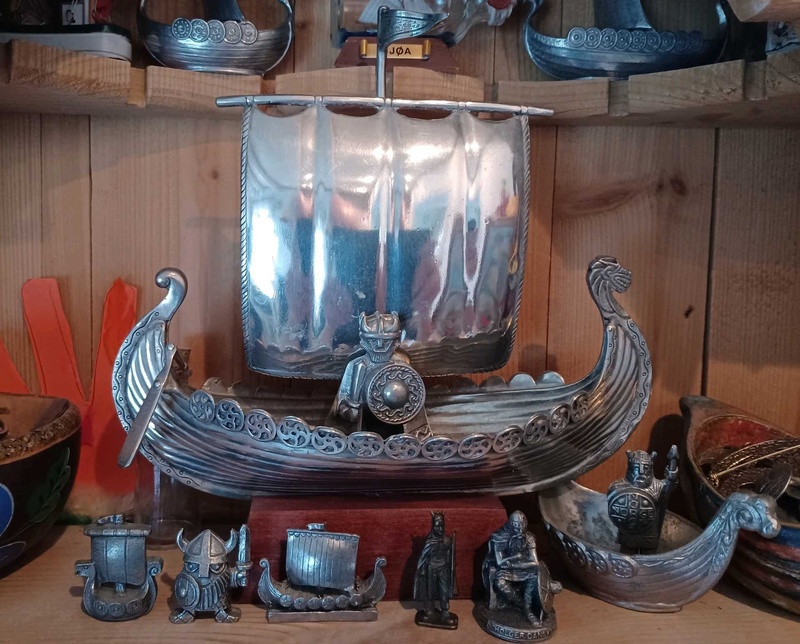
Decorative pewter Viking ship and other assorted pewter decorations, including: ships, shields, Vikings with horned helmets and swords, and Ogier the Dane (Holger Danske).
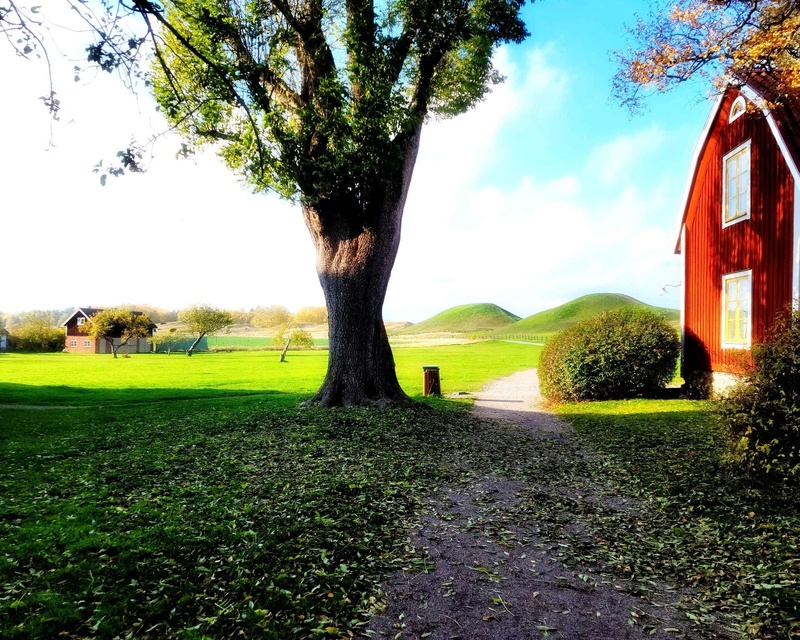
Royal Mounds of Gamla Uppsala, Sweden. Pre-Viking age burial mounds. Dating back to the Vendel and Viking Ages as accounted for in Sweden (around the 5th and 6th centuries). Nearby stood ones a royal estate, and this was where the Svear people gathered to worship their gods.
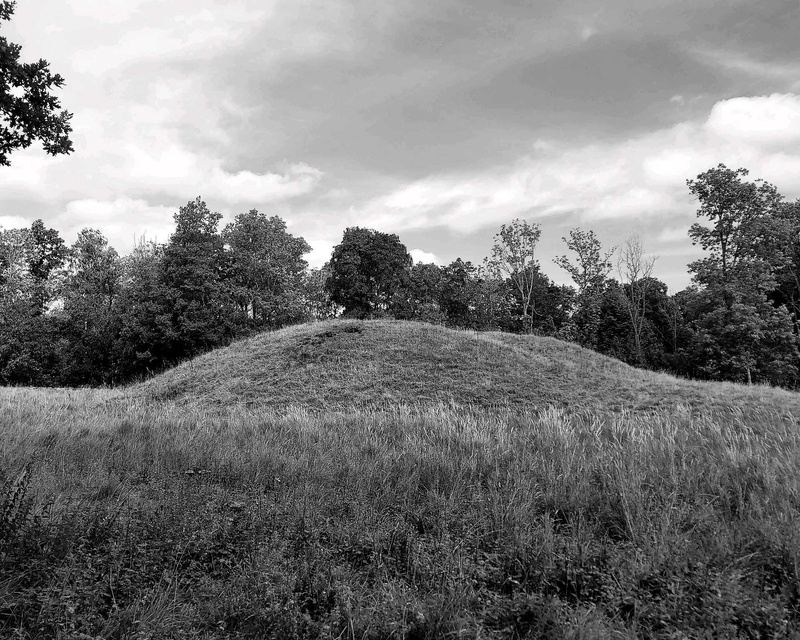
Borre Mound Cemetery. Located within the Borre National Park in Horten, Vestfold, Norway, it stands as the largest burial mound site in Northern Europe.
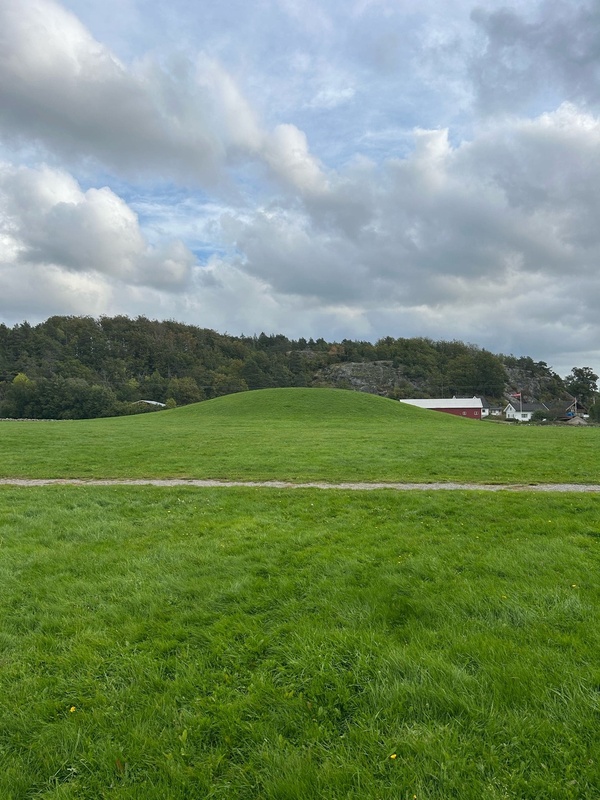
Gokstad Mound, a large 9th-century Viking Age burial mound located at Gokstad Farm in Sandefjord, Vestfold County, Norway. This is also wherethe Gokstad ship was excavated.
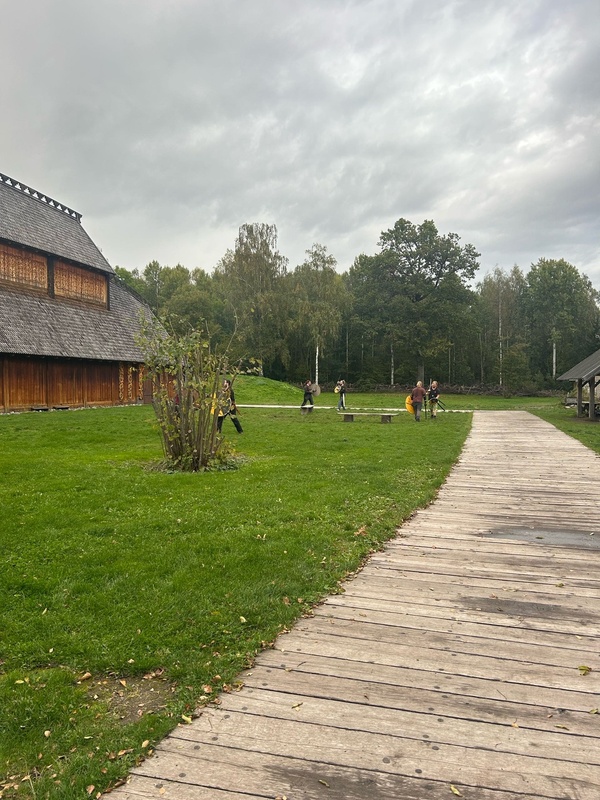
A reenactment group training fighting at the Guildhall in Borre, Norway. Also known as The Gildehallen, it is a reconstruction of one of the Viking Age's large halls.
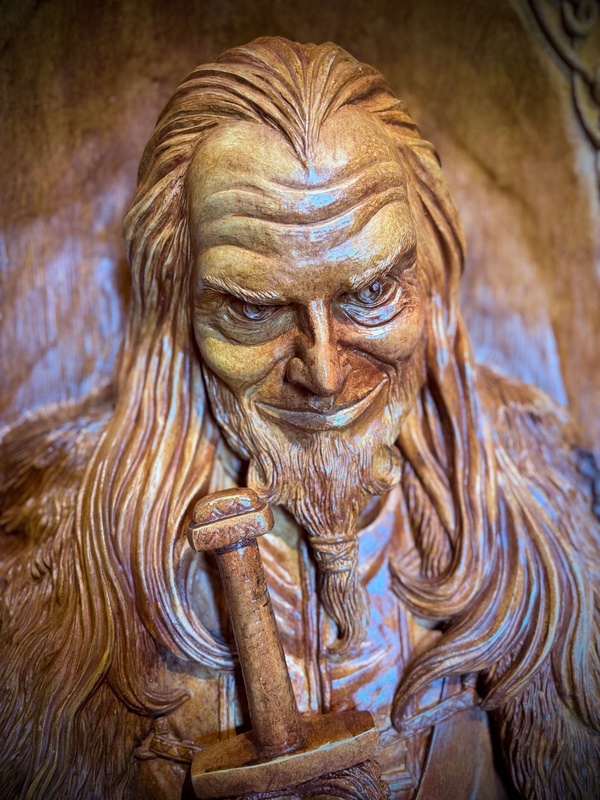
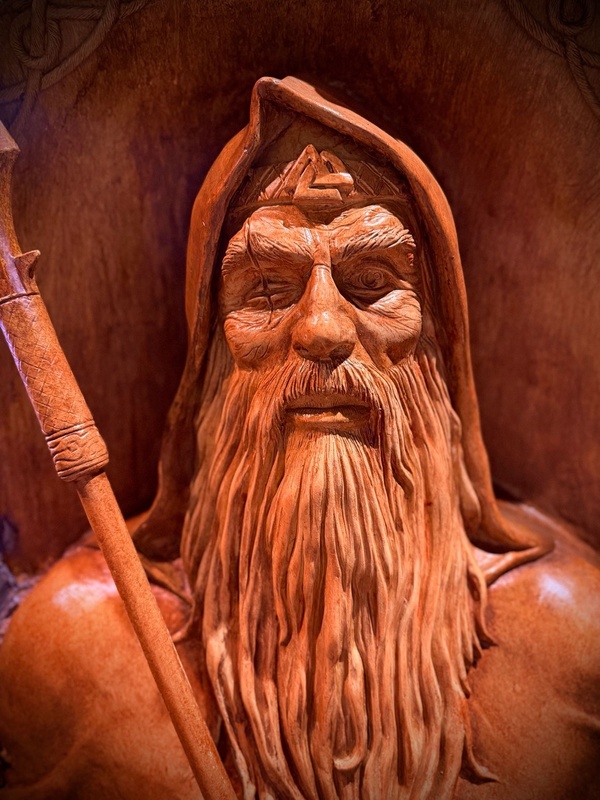
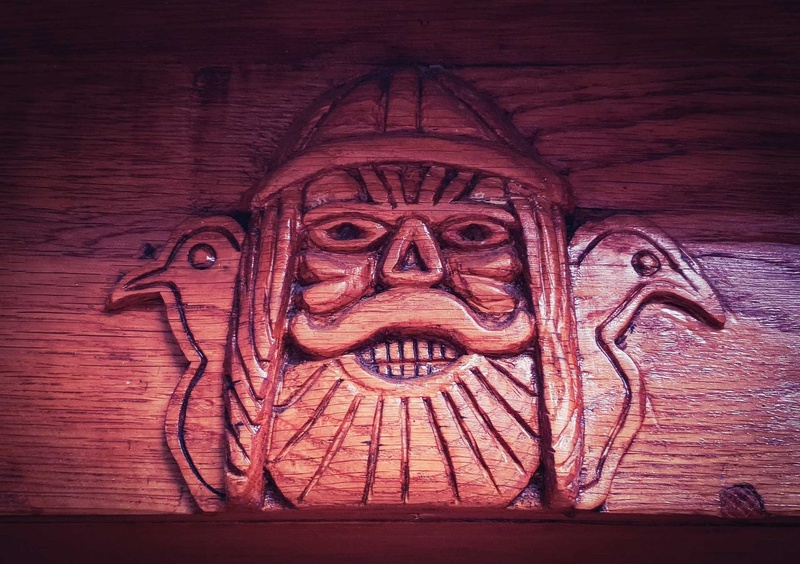
Detail from the wooden carved door at King Of The Vikings VR attraction in Waterford showing Odin with two ravens. Allfather still has both eyes because sculptor learned the story later after research.
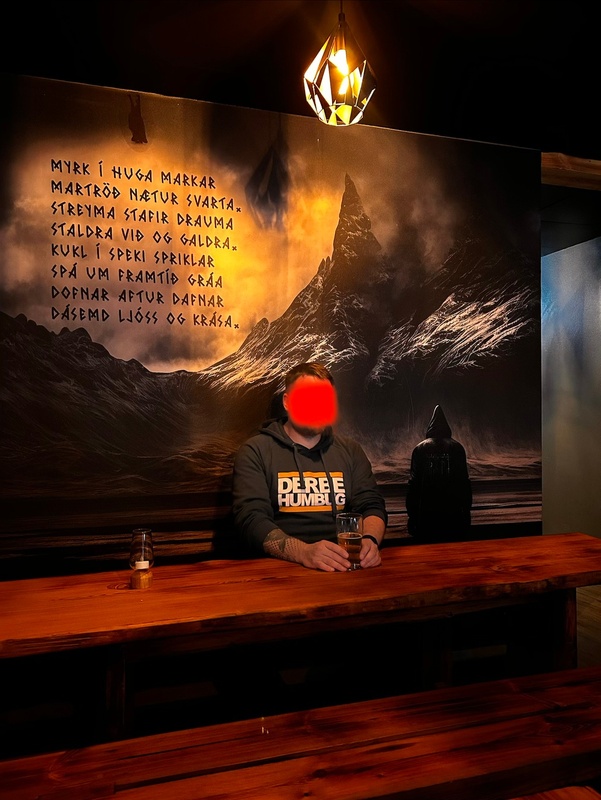
Inside Galdur Brugghús in Hólmavík, Iceland - a viking themed micro brewery. The Icelandic text painted on the dark wall is is an Icelandic beer poem ("Bjórljóð") written by Höskuldur Búi Jónsson. Text says:
MYRK Í HUGA MARKAR
MARTRÖÐ NÆTUR SVARTA
STREYMA STAFIR DRAUMA
STALDRA VIÐ OG GALDRA
KUKL Í SPEKI SPRIKLAR SPÁ UM FRAMTÍÐ GRÁA
DOFNAR AFTUR DAFNAR
DÁSEMD LJÓSS OG KRÁSA.
Translation:
Darkness in my minds
Black nightmares in the night
Staves of the dream pass by incantations and magic
Magic in spoken word shakes
Prophesy about grey future times
Sets and rises
The wonder of light and beauty
Description plate for the runestone copy of the jutland runestone at the domkirke in Utrecht, gifted by the Danish friends of the Netherlands. Presented as a gift to Utrecht University on its 300th anniversary by Danish friends in 1936.
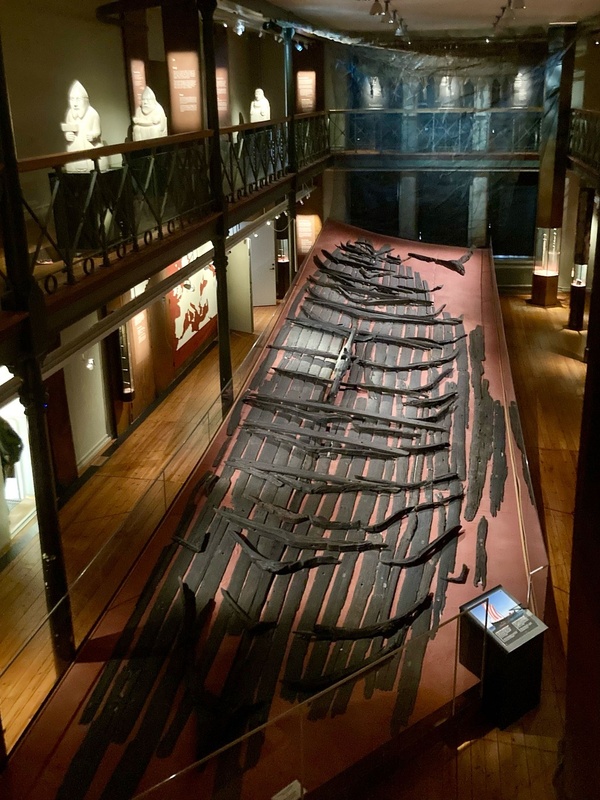
The Äskekärr Viking Ship Vikingr exhibition at the Gothenburg City Museum. The Äskekärr ship from ca 830 CE. was discovered north of Gothenburg by archaeologists in the 1930s. It is currently the only original viking ship on public display in Sweden. It is also the only discovered viking ship with runes carved into the wood such as the letter F (fehu).
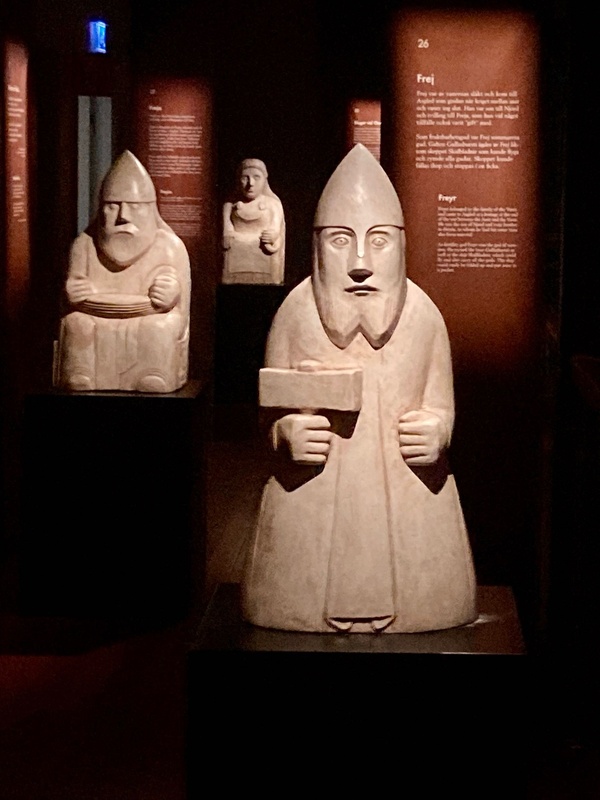
Statues representing the gods Thor, Frej and Freja at the The Äskekärr Viking Ship exhibit ”Vikingr” at the Gothenburg City Museum. Inspired by Lewis chessmen.
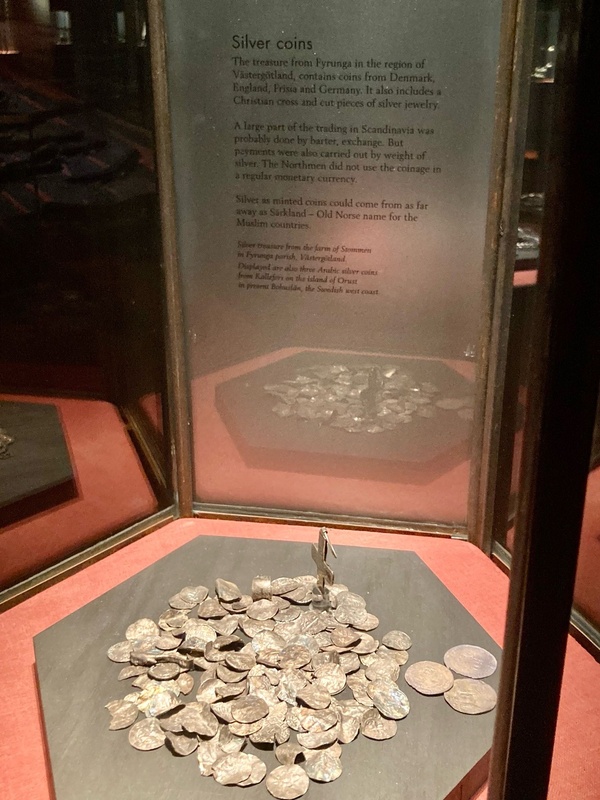
Silver treasure on display at the Äskekärr Viking Ship exhibit ”Vikingr” at the Gothenburg City Museum. Found in 1951 by farmer Bruno Carlsson while ploughing a field at Stommen gård in Fyrunga parish, Västergötland, Sweden. The hoard dates from around 1000 to 1050 AD (the late Viking Age). Includes coins, Christian cross pendant and cut pieces of silver jewelry
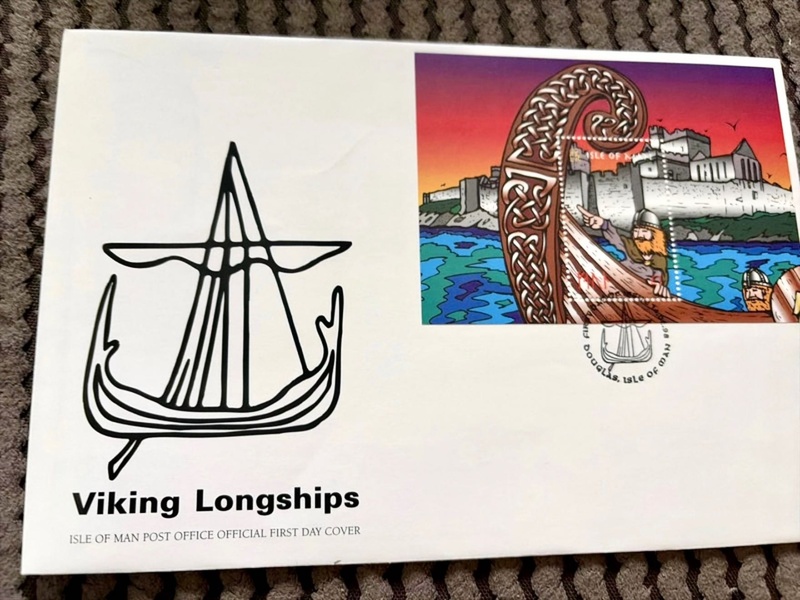
Viking Longships Stamp - Isle of Man Post Office First Day Cover 1998. Features a bearded Viking pointing to the horizon onboard a Viking ship, with Peel Castle in the background.
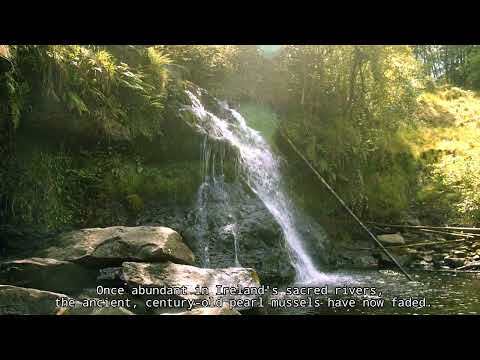
Written and performed by Michelle Quirke, with video production and sound recording by Ann- Marie Kelly, 'The Elder Days' bridges ancient Norse Mythology, in a contemporary retelling , a giantess becomes a guardian of An Bhéarú, The Barrow , and crucially how community resilience in the face of modern loss of the physical disruption of our river systems , is causing a living mythology, The Freshwater Pearl Mussels to die off in our lifetime . Fusing the crisis of Ireland's freshwater rivers with the environmental stewardship of Greece for the EU Presidency Trio.
Michelle’s journey into the project began following the passing of her husband. While grieving, she stayed with her sister Denise in Perth, Australia, where she joined a sunrise swim club in Perth called The Human Excellence Society, and upon returning home to Laois, Ireland, away from the sea, she began swimming in local waterfalls. This inspired her to study at UCC ACE , the mythology and heritage of the land and rivers, carrying on her family's storytelling lineage as a third-generation seanchaí and the granddaughter of Helen and Tony Behan from Martinstown.
Michelle Quirke was awarded a prestigious International Award for her storytelling , and digital movie, The Elder Days, at the 2nd International Digital Storytelling Festival (DST-Zakynthos 2026), held in Zakynthos, Greece, from October 2–4.
Held under the auspices of H.E. the President of the Hellenic Republic, under the theme "We, The Story," the festival was organized by four university laboratories across three Greek universities (National and Kapodistrian University of Athens, University of the Aegean, and Ionian University) in collaboration with the Club for UNESCO Zakynthos.
During the festival's Satellite Scientific Events at the Ionian University, Michelle presented her talk as founder of "Mountain Mermaids" an oral and cultural heritage initiative - a wild swim community, who travel in convoy to waterfalls to swim , uncovering the stories of each using academic research for an immersive re-telling of oral heritage and eco-mythology.
The organising and academic committee & panel was presided over by Festival Presidents Prof. Emeritus Michail Meimaris, Joe Lambert (StoryCenter), and Co-Presidents Pip Hardy, Assoc. Prof. Andreas Moutsios-Rentzos, Assoc. Prof. Burcu Simsek, Asst. Prof. Evika Karamagioli, and Tony Sumner.
The organising and academic committee & panel included Chair & President of Club for UNESCO Zakynthos as well as local government and educational dignitaries.
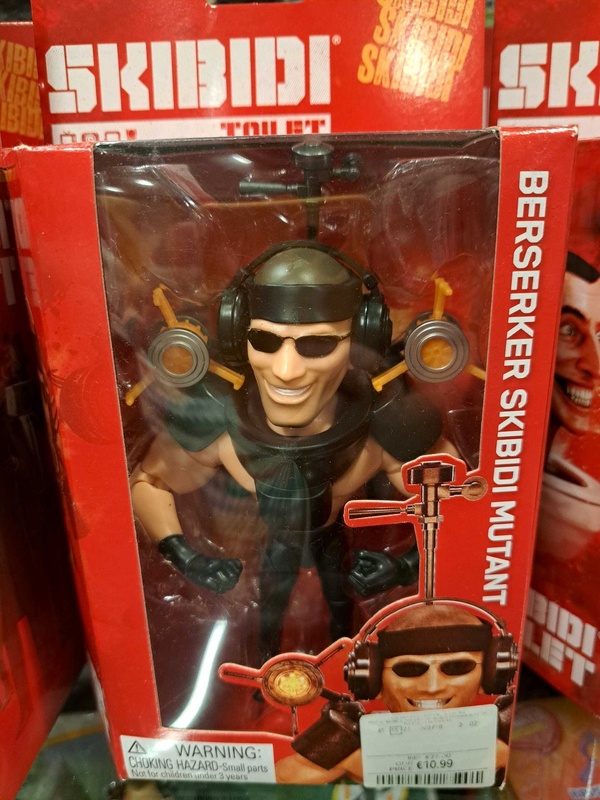
Berserker Skibidi Mutant toy – based on a figure from the Skibidi Toilet series. Very strong, he is a co-leader of the G-squad. His weapons include energy cannons and he has metal plates that serve as armous – so it's probably fair to say that he would have been a formidable opponent, even for an elite Viking Age warrior.
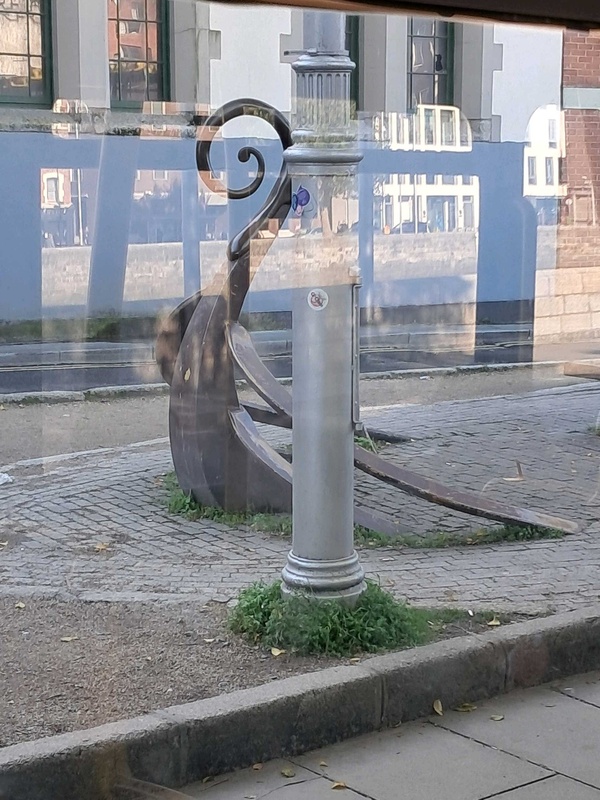
Viking longboat sculpture outside Smock Alley Theatre in Dublin city. Made by artist Betty Newman’s and called Báite (1988). Colloquially known as 'the boat that don't float'.
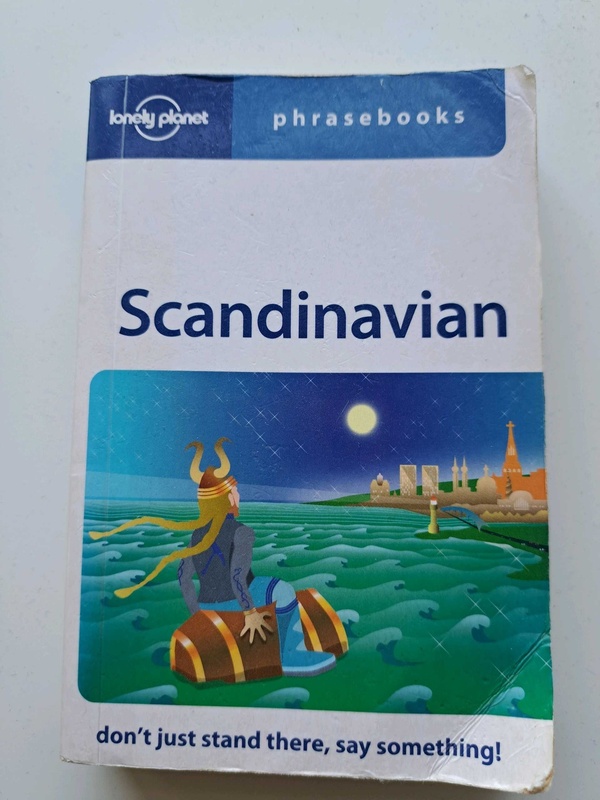
Cover of a Lonely Planet Scandinavian phrasebook featuring a stylised Viking, floating on a barrel and looking across the sea towards a Scandinavian city. The figure wears a horned helmet as a visual symbol for Scandinavia.
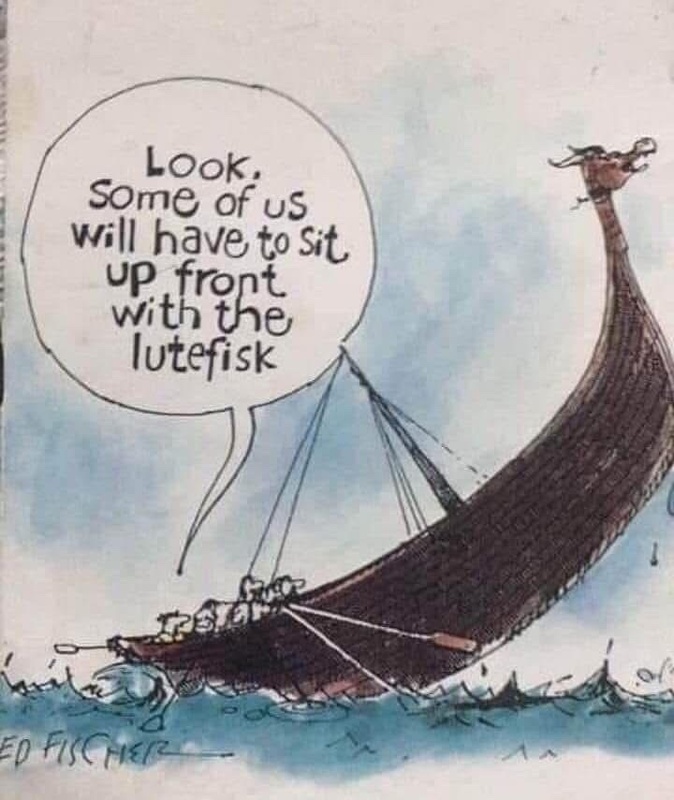
Cartoon by Minnesota cartoonist Ed Fischer depicting Vikings aboard a longship, with one remarking, “Look, some of us will have to sit up front with the lutefisk.” The cartoon combines Viking imagery with lutefisk, a food strongly associated with Norwegian-American and Scandinavian-American culture in the Upper Midwest. We can assume that it would have smelled pretty strongly!
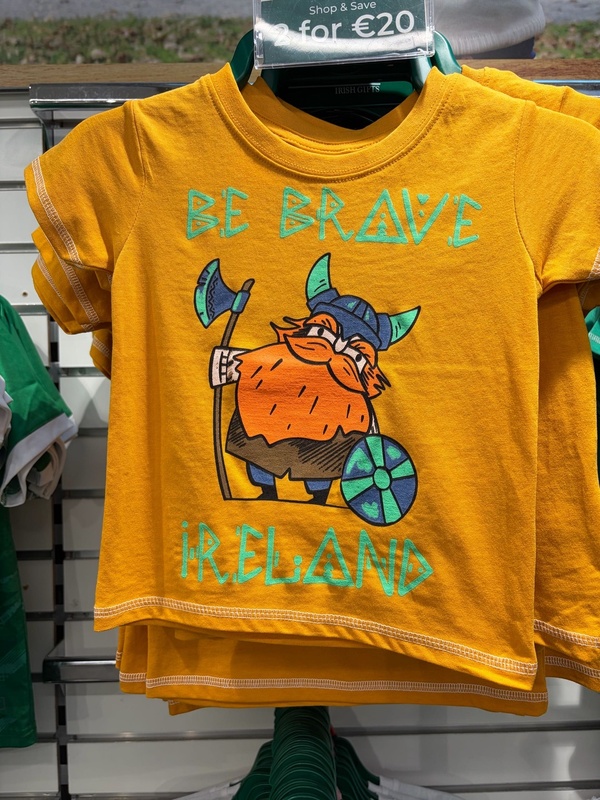
Children’s t-shirt featuring a Viking illustration, and the slogan, "Be brave. Ireland." The shirt was on sale in Carroll’s Irish Gifts in Cork, Ireland.
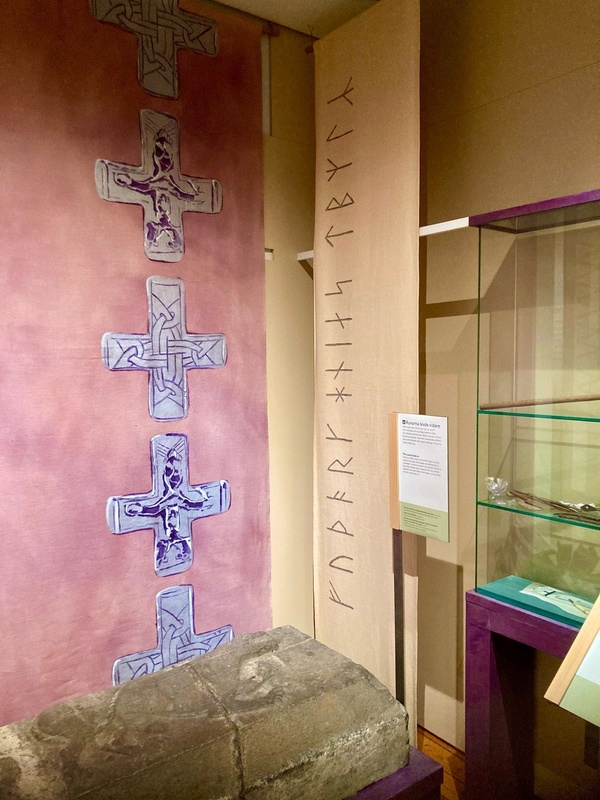
Gothenburg City Museum display illustrating the continued use of runes after the Viking Age and into the medieval Christian period. The exhibition combines enlarged runic characters with cross motifs to show how runic writing persisted post-conversion.
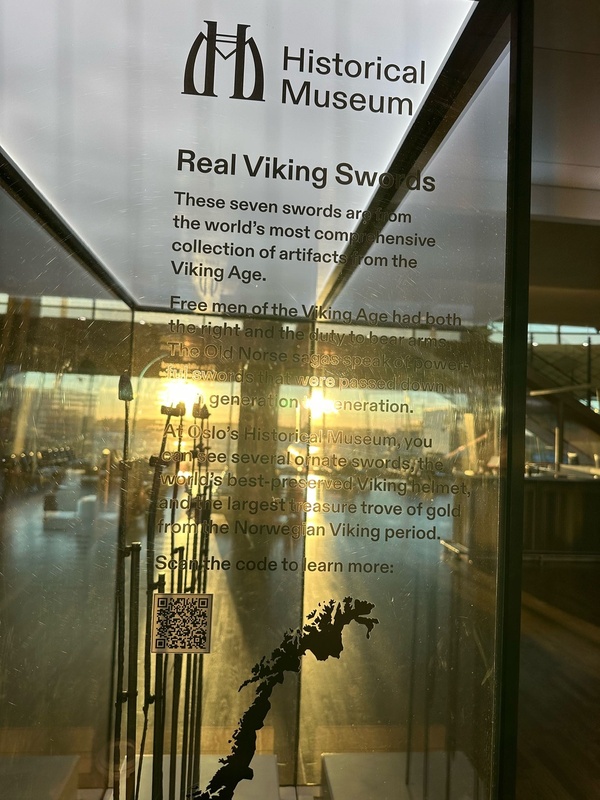
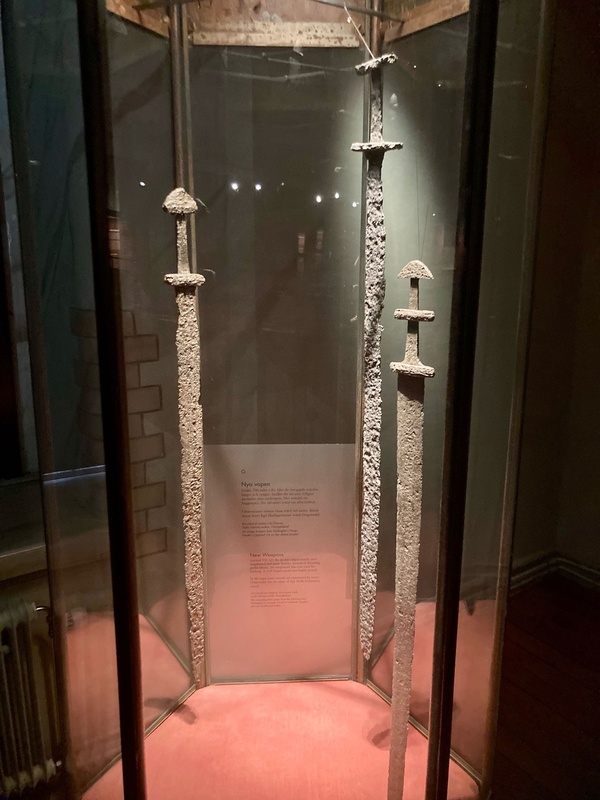
Display of Viking-Age swords in Vikingr – Between Odin and Christ, the permanent Viking exhibition at Gothenburg City Museum. The exhibition is centred on the Äskekärr ship, currently on display, and presents archaeological finds relating to Viking-Age life, trade, belief and warfare
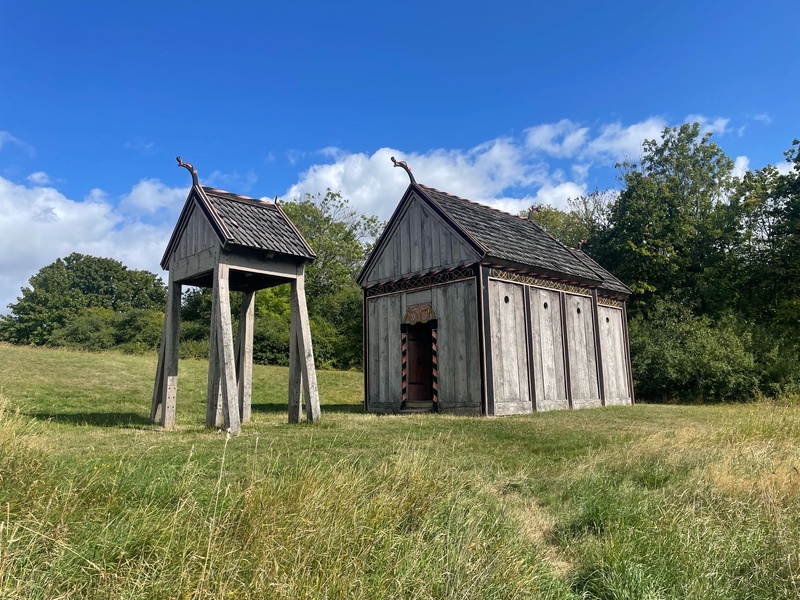
Reconstruction of a late Viking-Age wooden church dating to around AD 1060. The original church was excavated at Hørning, near Randers, Denmark. The reconstruction at Moesgaard includes a separate wooden bell frame and decorative elements based on archaeological evidence from Hørning.
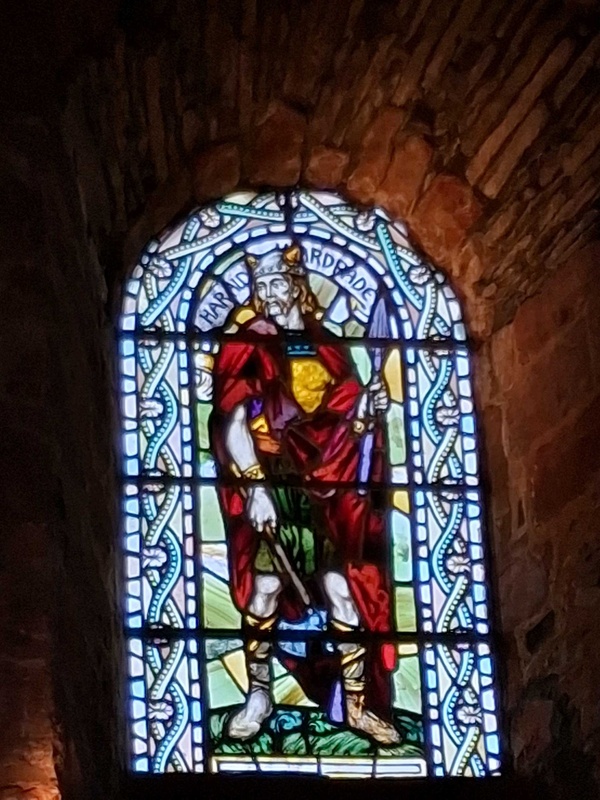
Stained-glass window in St Magnus Cathedral, Kirkwall, depicting Harald Hardrada (Haraldr Sigurðarson), King of Norway from 1046 to 1066. Orkney formed part of the Norwegian realm during Harald’s reign, and Harald gathered forces in Orkney before his invasion of England in 1066.
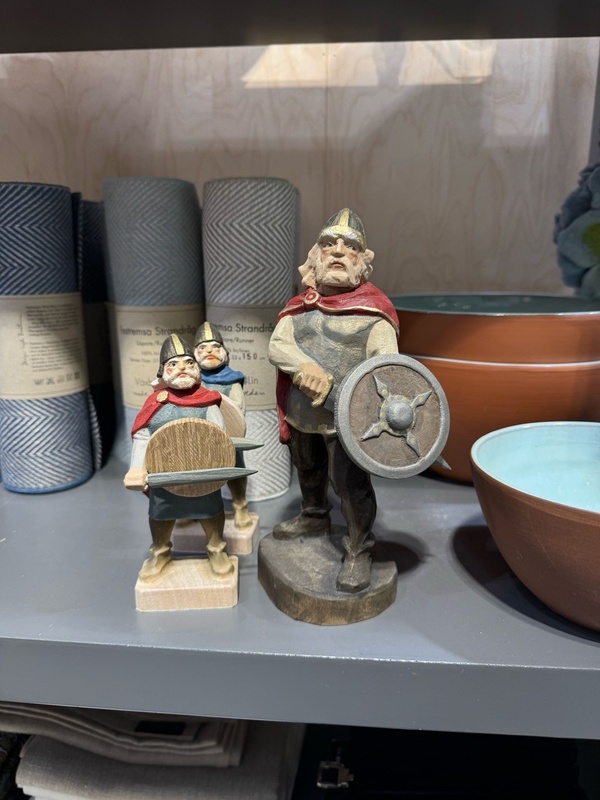
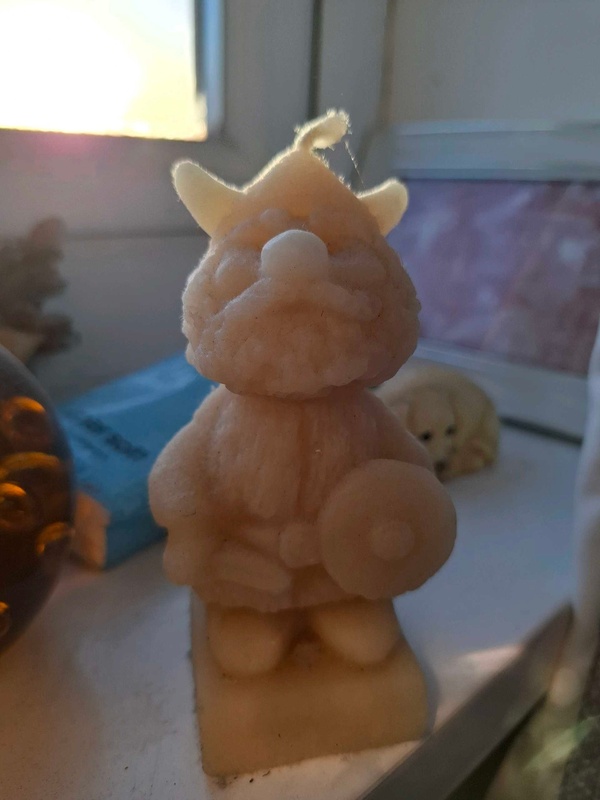
Wooden Viking statues, sold as home decor in a handicraft store in Oslo. The three models depict similar looking Vikings: blond, bearded, with helmet, sword and shield. Two of the statuettes sport a red cape, the third has a blue one.
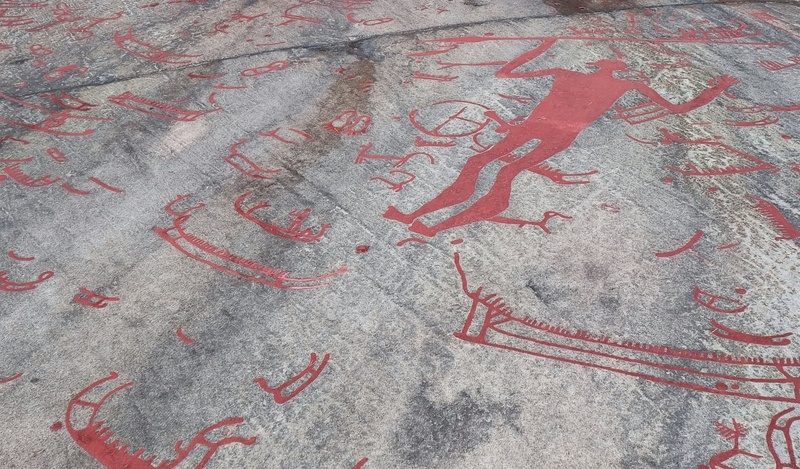
Some of the rock carvings in Tanum. Scandinavian petroglyphs date back to the Bronze Age, ca. 1500-500 before the Viking Age, but are often associated with it in popular culture due in large part to ship motifs.
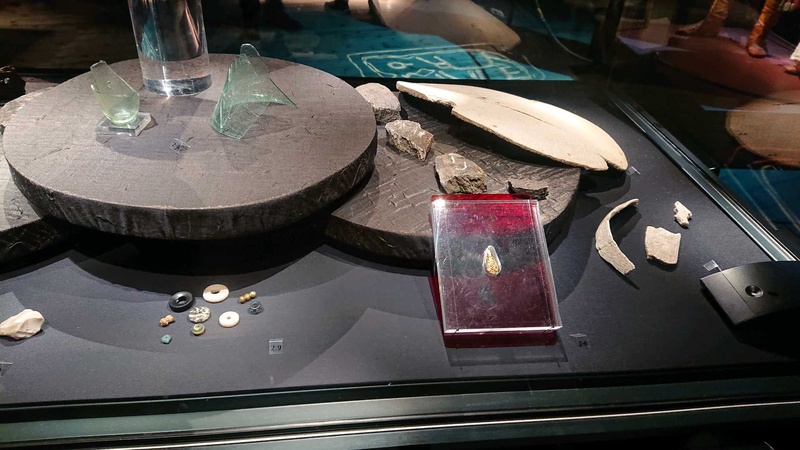
The image shows an archaeological display case containing Viking Age artifacts—including glass fragments, beads, and organic material. On display at Lofotr Viking Museum in Borg, Norway.
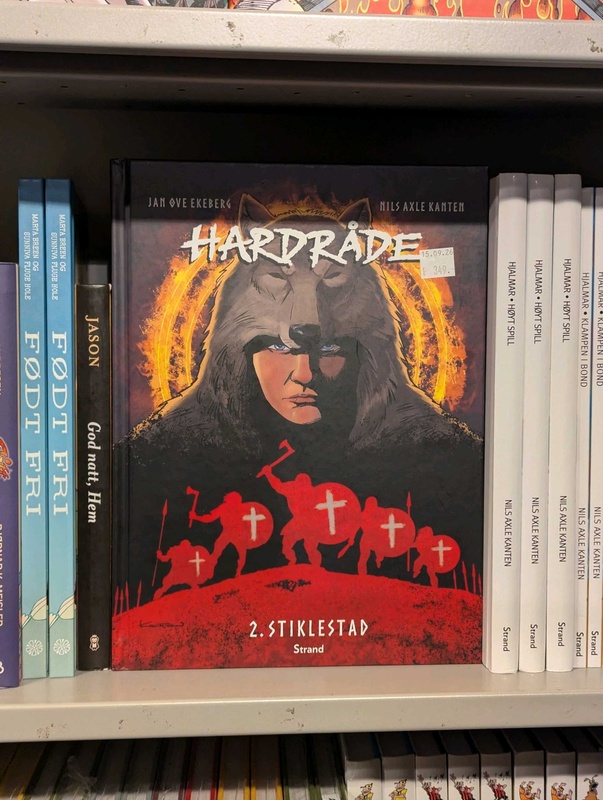
Vol. 2 of the Norwegian Graphic Novel "Hardråde" published by Strand. "Hardråde" is an ongoing graphic novel by Jan Øve Ekeberg and Nils Axle Kanten. The story follows the life of Harald Hardrada and volume two is about the battle of Stiklestad in 1030. The cover shows a man in a wolf pelt, referencing the famed ulfhednar, and and a group of warriors with axes, swords and spear, and round shields with crosses painted on them.
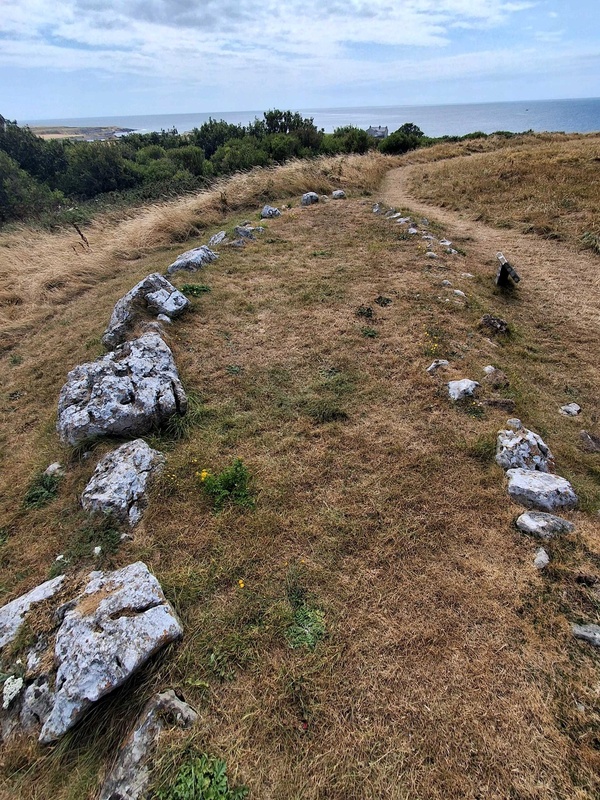
Viking ship burial in Balladoole, Castletown, Isle of Man. Dated to late 9th/early 10th century. Lying on Castle Hill, over earlier Christian burials. Approx. 11-meter-long.
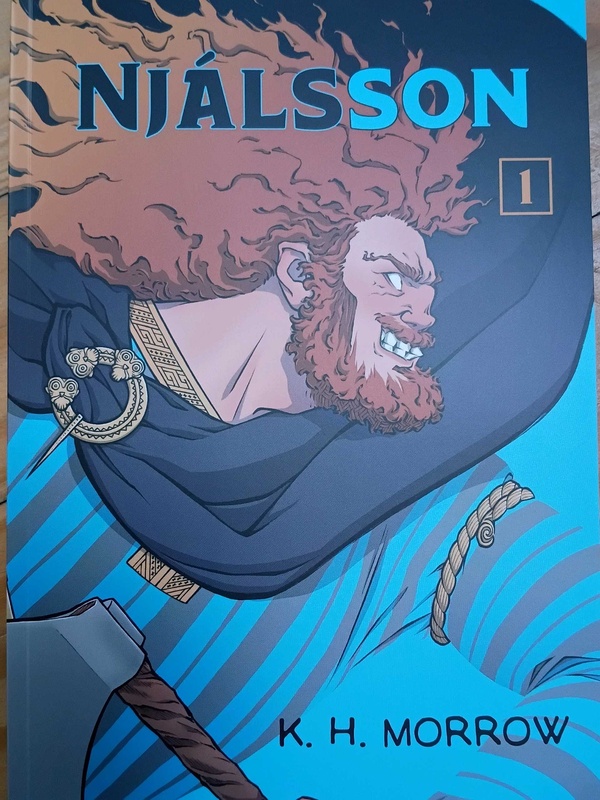
"Njálsson" is an ongoing graphic novel based on Brennu-Njáls saga. It's written and illustrated by K.H. Morrow, who has a PhD in Medieval history with a specilisation in the early medieval period.