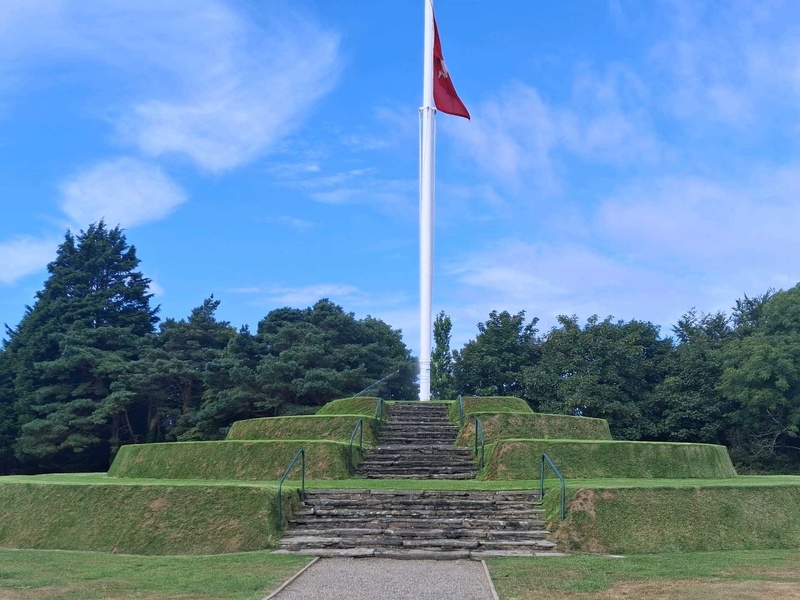
Tynwald Hill. A Thing site. Now the site of the open air meeting of the Isle of Man's parliament on 5th July every year. Norse Viking settlers established the open-air parliament tradition on the island over 1,000 years ago, likely in the late 9th or 10th century. While Iceland has the world's oldest parliamentary tradition, it experienced periods of non-operation; Tynwald is unique because it has run completely unbroken since its inception.
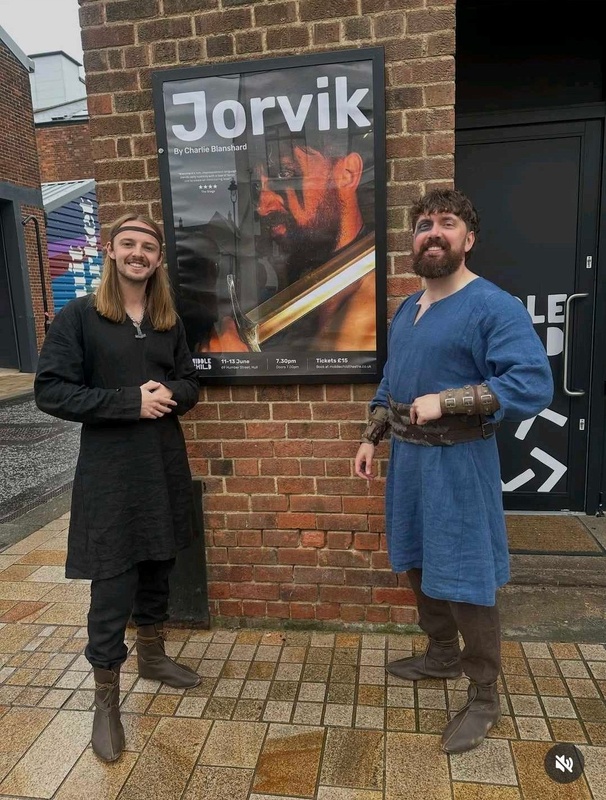
An original immersive theatre experience written by Charlie Blanshard (left, plays Ubba) and Oliver Strong (right, plays Skald/Odin). Attendees participate and witness Ubba celebrating taking over Jorvik and then observe his crisis of confidence on if he will be remembered and this theme is explored through a deep personal debate with the Skald.
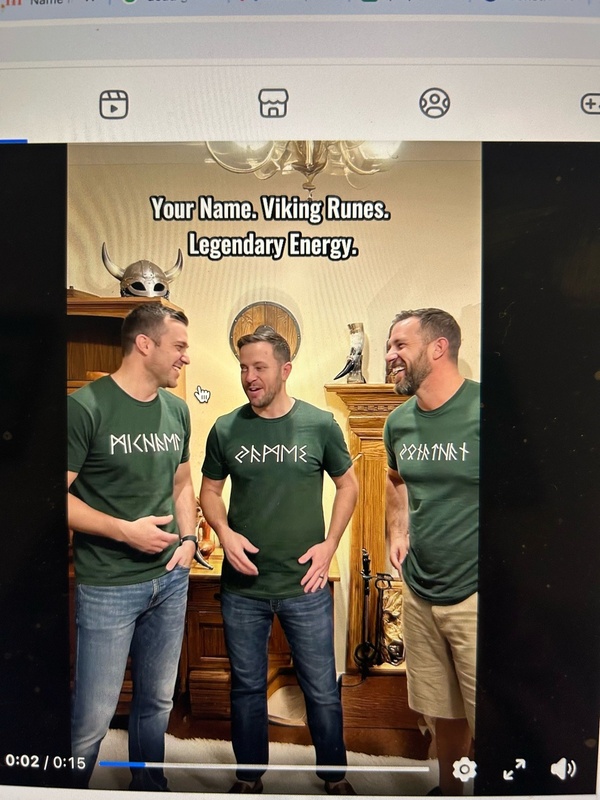
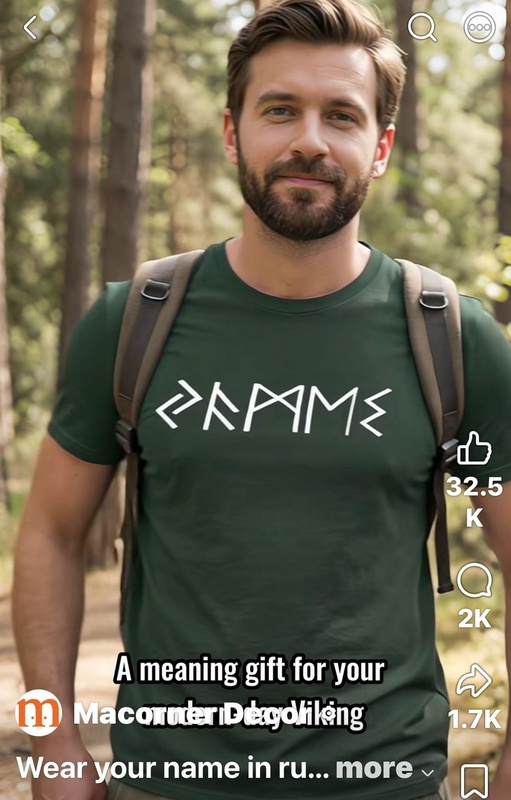
Personalized Name In Runes Viking Shirt, Norwegian Soccer Fan Gift Shirt, Runes Futhark Tee, Custom Norse Mythology Tee, Viking Name Tshirt.
By JCArtFramed
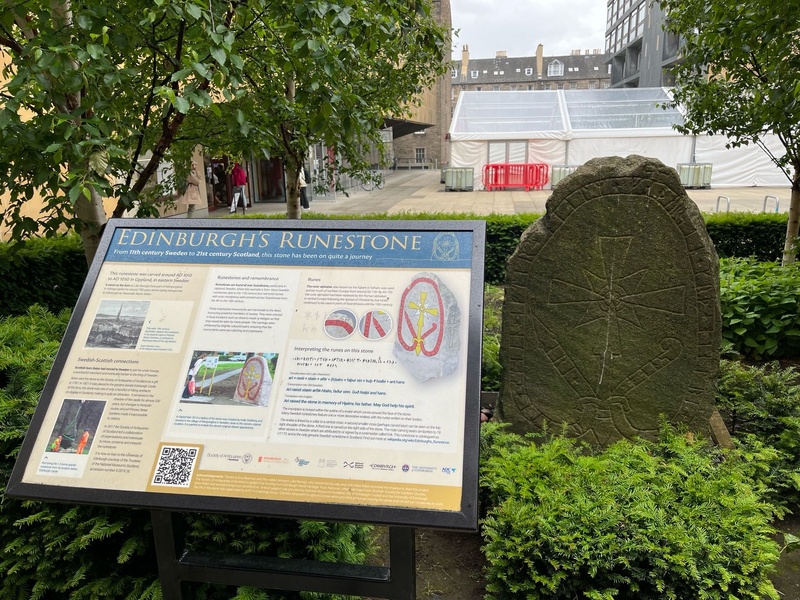
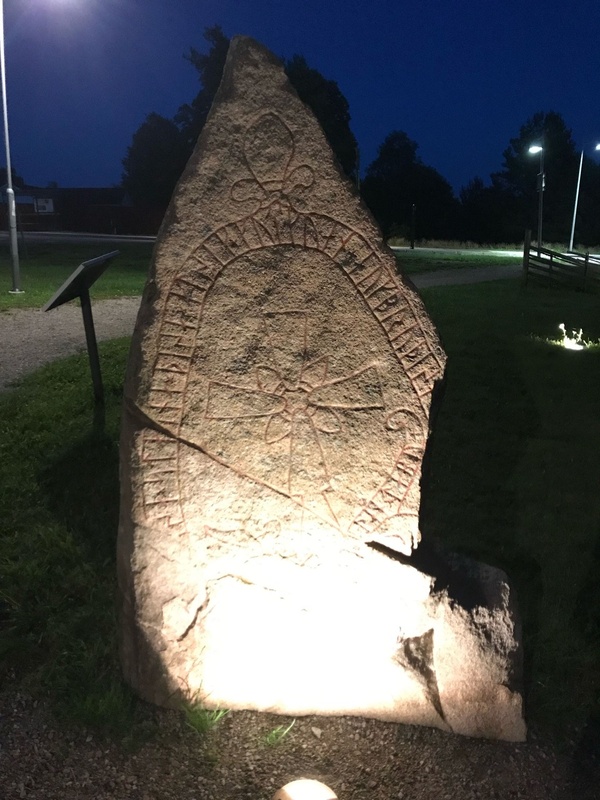
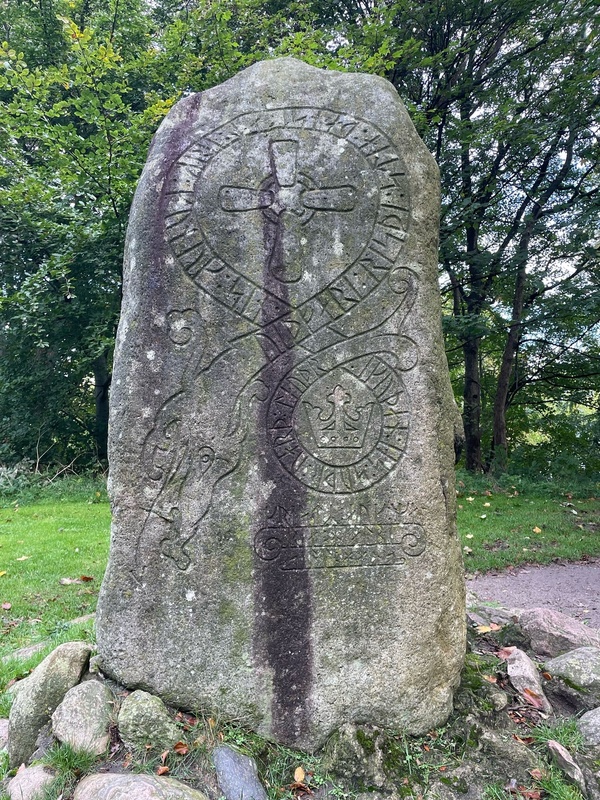
The image shows Edinburgh's Runestone (Rundata ID: U 1173), an 11th-century Viking-age monument originating from Lilla Ramsjö, Uppland, Sweden. Carved around AD 1010–1050 by the runemaster Erik in Uppland, Sweden. Features a serpent-encircled cross with the Old Norse text: “Ari ræisti stæin æftiR Hialm, faður sinn. Guð hialpi and hans”. “Ari raised the stone in memory of Hjalmr, his father. May God help his spirit.”Donated to the Society of Antiquaries of Scotland in 1787 by Sir Alexander Seaton. It was previously displayed in Princes Street Gardens before being relocated in autumn 2020 to its current home outside the University of Edinburgh’s Department of Scandinavian Studies at 50 George Square.
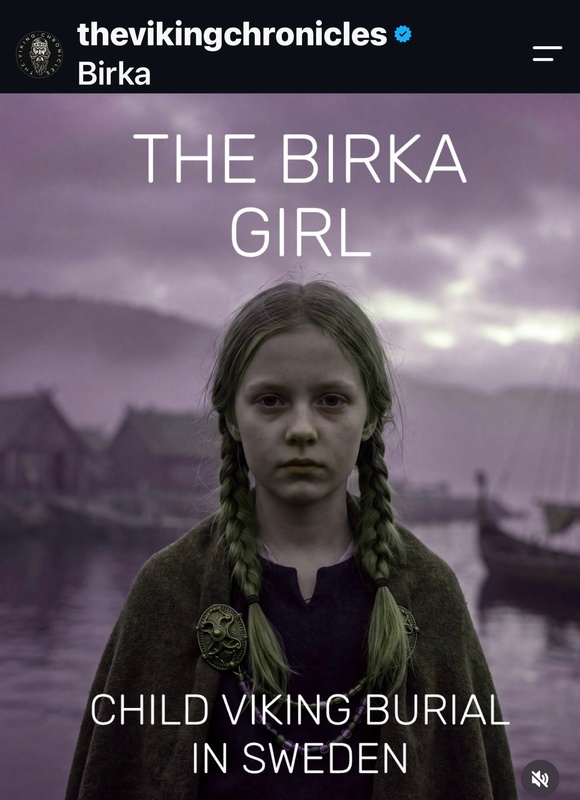
Picture of a Viking burial of a little girl called “Birka” girl. This is one image of what she may have looked like. The burial site is in Birka, Sweden.
The grave was discovered in 1876 by archaeologist Hjalmar Stolpe. Inside, the body of a girl—supposed to be around five or six—was buried in a coffin with jewelry, a knife, and sewing equipment. The grave is likely from around the mid-tenth century
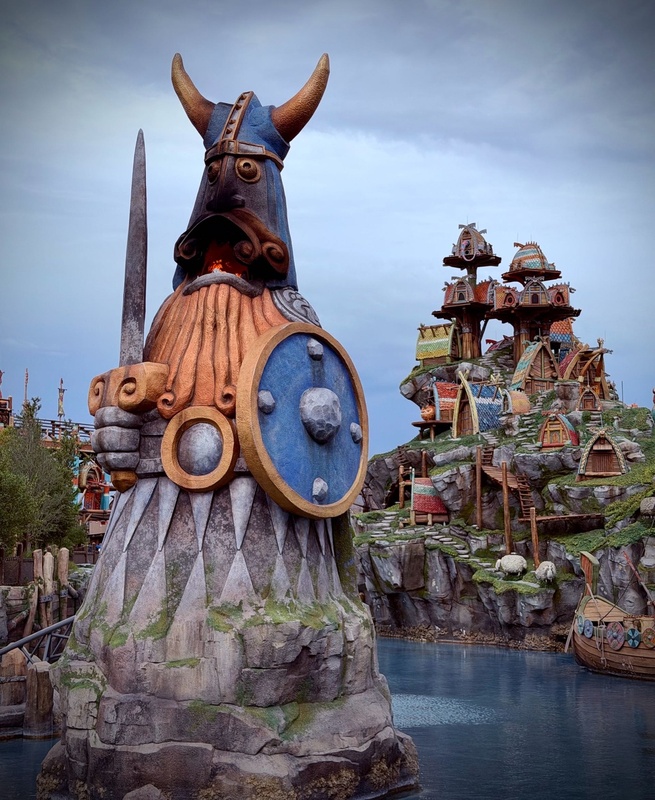
Horned Helmet at Isle of Berk, Universal Epic Universe. Isle of Berk is a part of the Universal Orlando Resort, based on the popular Viking inspired franchise "How to train your dragon".
Viking inspired statue at the Isle of Berk, Universal Epic Universe. Isle of Berk is a part of the Universal Orlando Resort, based on the popular Viking inspired franchise "How to train your dragon".
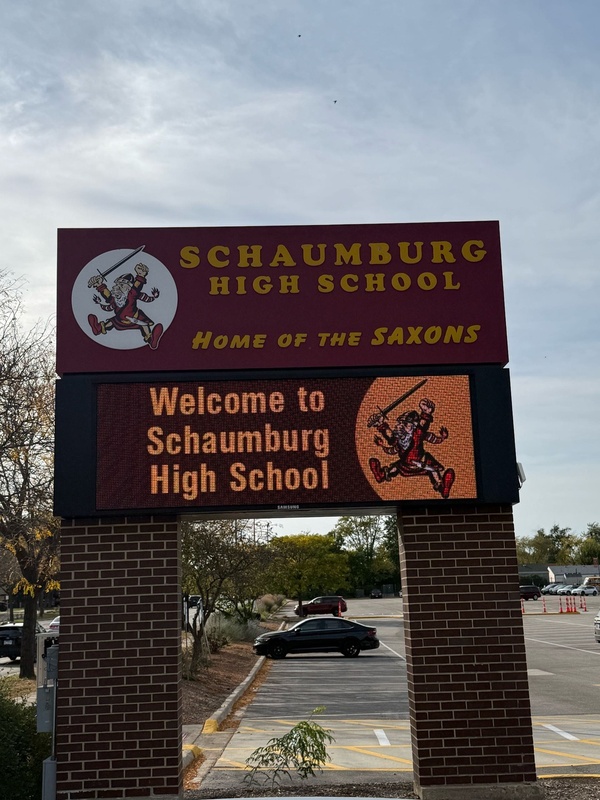
Opened in 1970, Schaumburg High School in Illinois is home to the Saxons, represented by the mascot “Siegie Saxon.” In medieval England, Anglo-Saxons both fought and intermingled with Scandinavian Vikings. Though historically distinct, these peoples’ identities overlap in modern popular imagery, with Siegie recalling the familiar Viking warrior of American sports culture.
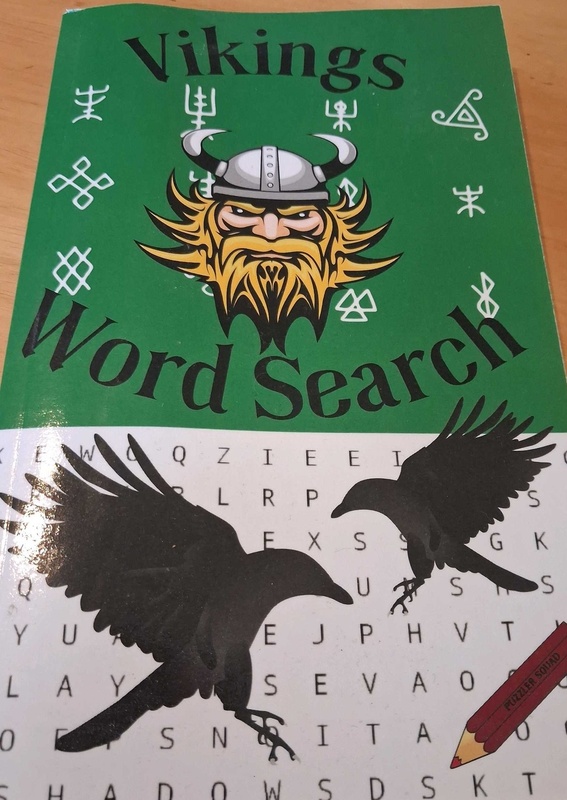
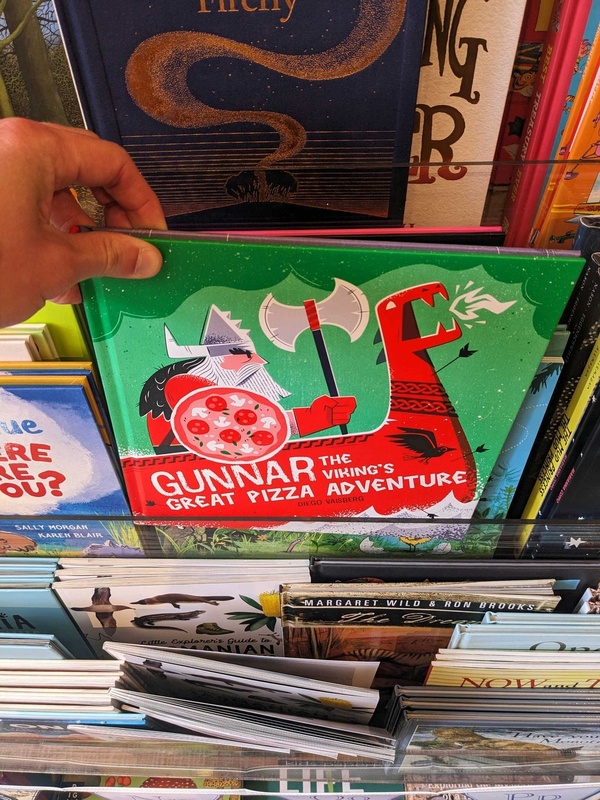
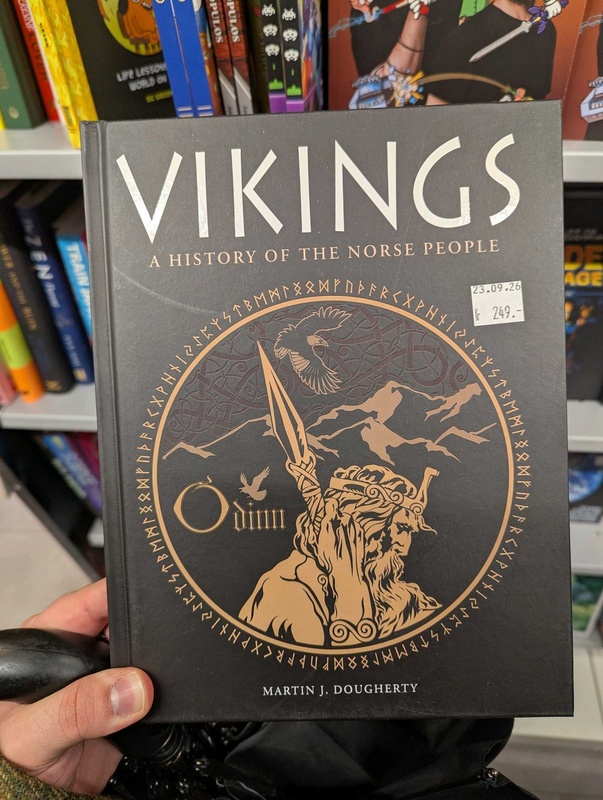
Word search puzzle book with Viking-themed puzzles. The cover sports a VIking warrior with horned helmet and beard, as well as several Norse-inspired symbols and two ravens.
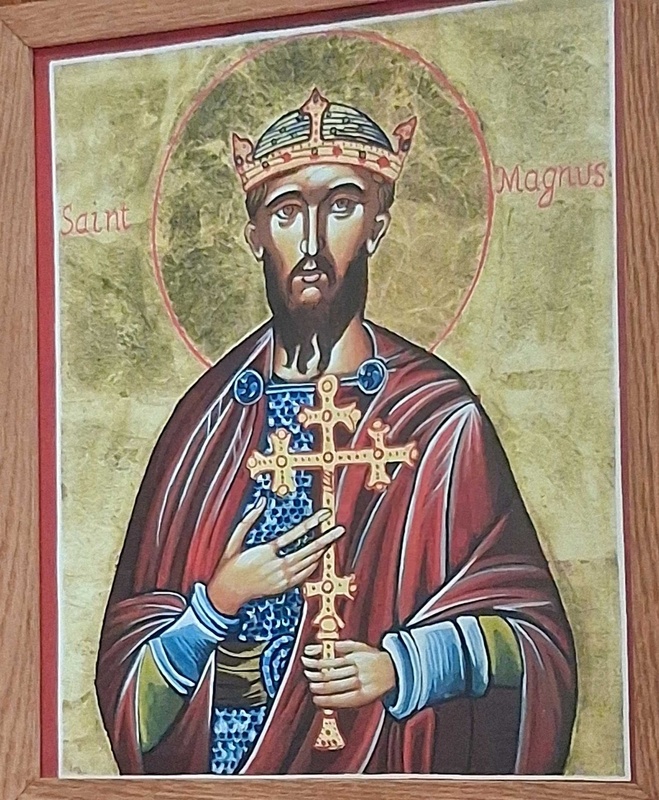
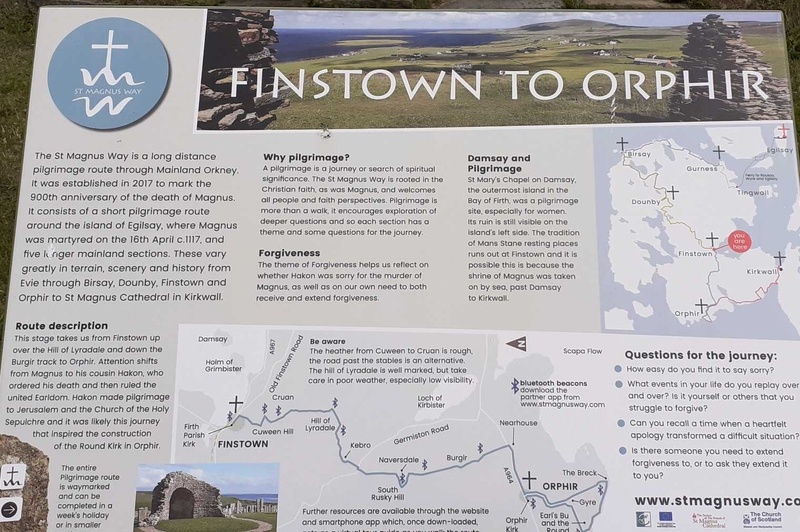
Icon of St. Magnus depicted wearing chainmail, a red cape and a crown, and holding a cross. Magnus Erlendsson was Earl of Orkney before his martyrdom (~1116) and was sanctified in 1136 by Bishop William of Orkney. Although he lived and died after the end of the Viking Age, Magnus Erlendsson is still commonly either referred to as a Viking or as being against Viking activieties.
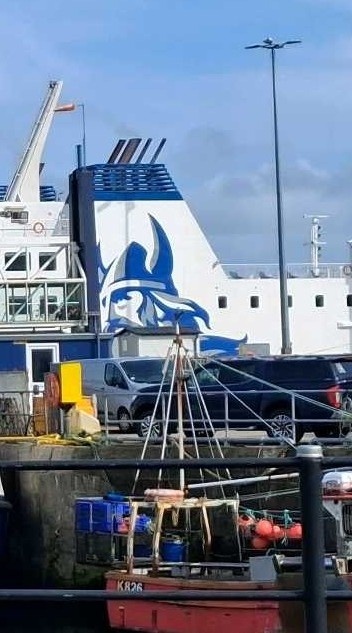
NortLink Ferries Logo depicting a Viking with horned helmet and billowing cape. NorthLink Ferries run between the Scottish mainland, Orkney and Shetland.
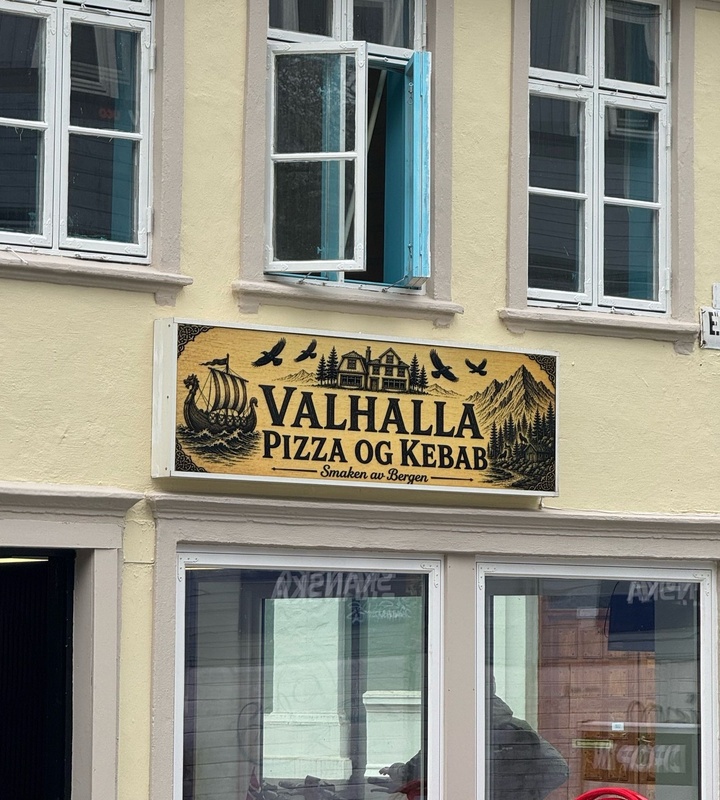
AI-generated logo of “Valhalla” in Bergen. The logo features a Viking ship, ravens, wolves, mountains and a cabin. It reads "Valhalla pizza og kebab - smaken av Bergen" (Valhalla pizza and kebab - the taste of Bergen).
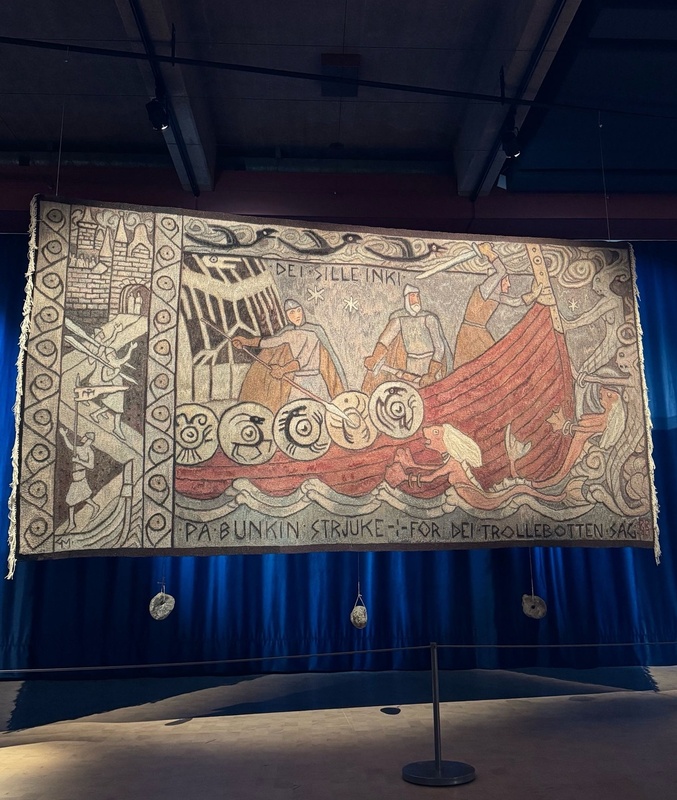
Tapestry currently in the Bryggen Museum, inspired by the ballad of Åsmund Fregdegjeva found in approximately 90 variants. The ballad can be traced back to the Middle Ages, and may have originated from a saga. In this tapestry, Åsmund and his brothers leave the court of the Irish king and set sail for Trollebotten, the mountain under which trolls live and keep the kidnapped Irish princess. This is tapestry number two in a series of ten that were made by the Norwegian textile artist and political activist Ragna Breivik. Ragna dyed her wool herself and wove the ten tapestries over several years. The original design is based on Watercolours by her friend and himself celebrated artist Gerhard Munthe.
This is a new profile picture on a Syrian news channel, Hamdy Arnous, on telegram. The team is anti-imperial but held some admiration for the Assad government. The logo features a Vegvisir symbol, often associated with the Viking Age.
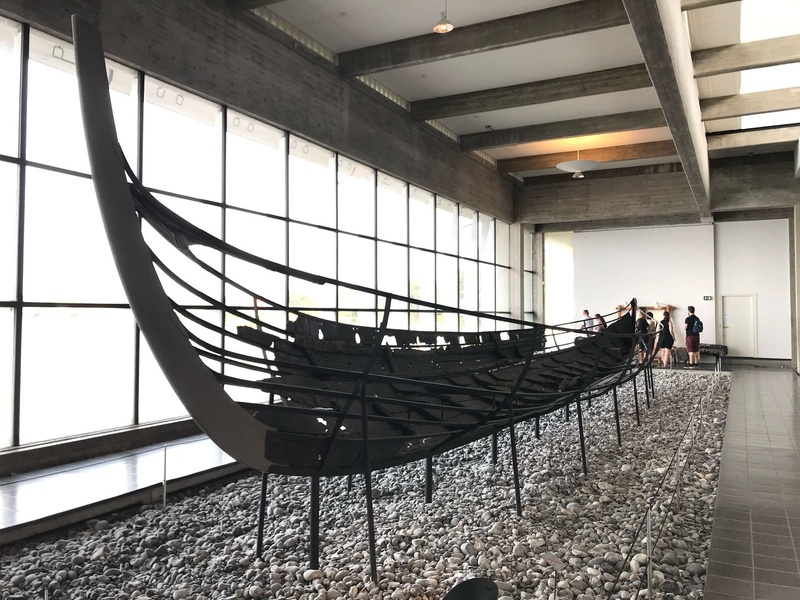
Viking ship museum in Roskilde, Denmark.
Skuldelev 5 is a small war longship suited to Danish coastal waters and the Baltic’s short, choppy waves. Unlike the other Skuldelev vessels, it was expertly built from both new and reused timber, a combination also used in repairs shortly before its sinking in the barrier; the reason remains unknown. Shield-rack fragments survive along the sheerstrake, with traces of carving on the sixth strake aft on the port side. The Viking Ship Museum’s reconstruction, Helge Ask, is displayed in its harbour.
Dating: ca. 1030
Place of construction: Denmark
Preserved: ca. 50 %
Material: oak, pine, ash and alder
Length: 17.3 metres
Breadth: 2.5 metres
Draught: 0.6 metres
Displacement: 7.8 tons
No. of oars: 26
Crew: ca. 30 men
Sail area: 46 m2
Average speed: 6-7 knots
Top speed: ca. 15 knots
Runestone in Vallentuna, Sweden.
Rune reading
ia[r]labaki × li- ---sa × staina × þisa × at sik × kuikuan × auk bru þis(a) [× karþi fur ont ×] si-- --- × ati + (a)lan × tabu +
Old West Norse
Jarlabanki lé[t rei]sa steina þessa at sik kvikvan, ok brú þessa gerði fyrir ǫnd sí[na …] átti allan Tábý.
Runic Swedish
Iarlabanki le[t ræi]sa stæina þessa at sik kvikvan, ok bro þessa gærði fyr and si[na …] atti allan Tæby.
English
Jarlabanki had these stones raised in memory of himself while alive, and made this bridge for his spirit … owned all of Tábýr.
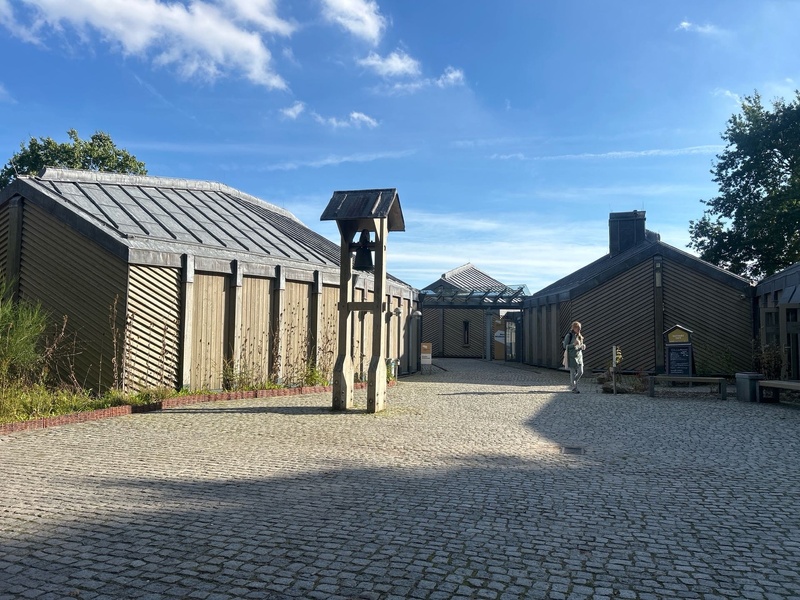
Hedeby Viking Museum, Busdorf, Germany. The Viking Museum Haithabu explores life at one of the Viking Age’s major trading centres. Archaeological discoveries and seven reconstructed houses offer insights into the settlement’s trade, crafts, and everyday life during the early Middle Ages. Together with the neighbouring Danevirke defensive system, Haithabu was inscribed on the UNESCO World Heritage List in 2018.
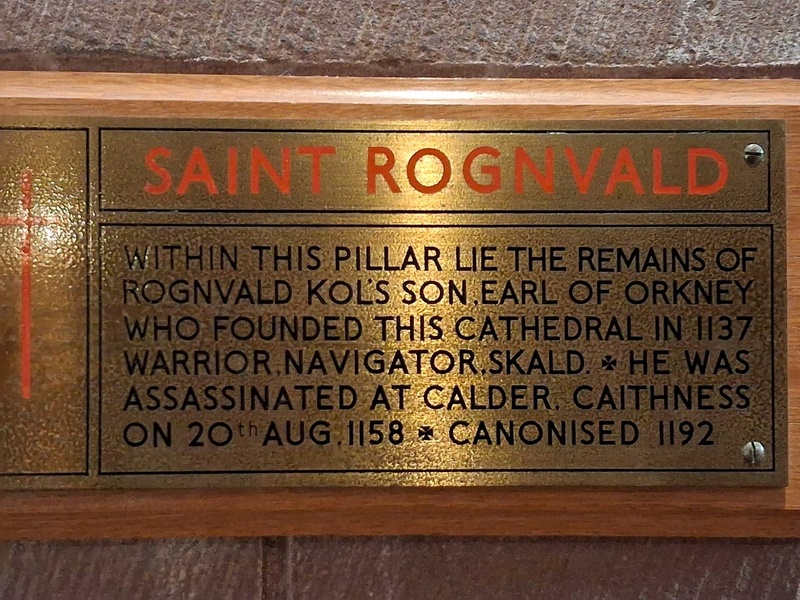
Inside St. Magnus Cathedral in Kirkwall. Rögnvald caused it to be built in memory of his martyred uncle, St. Magnus.
The scrip reads: "Within this pillar lie the remains of Rognvald Kol's son, Earl of Orkney, who founded this cathedral in 1137. Warrior. Navigator. Skald. He was assassinated at Calder, Caithness on 20th Aug. 1158. Canonised 1192."
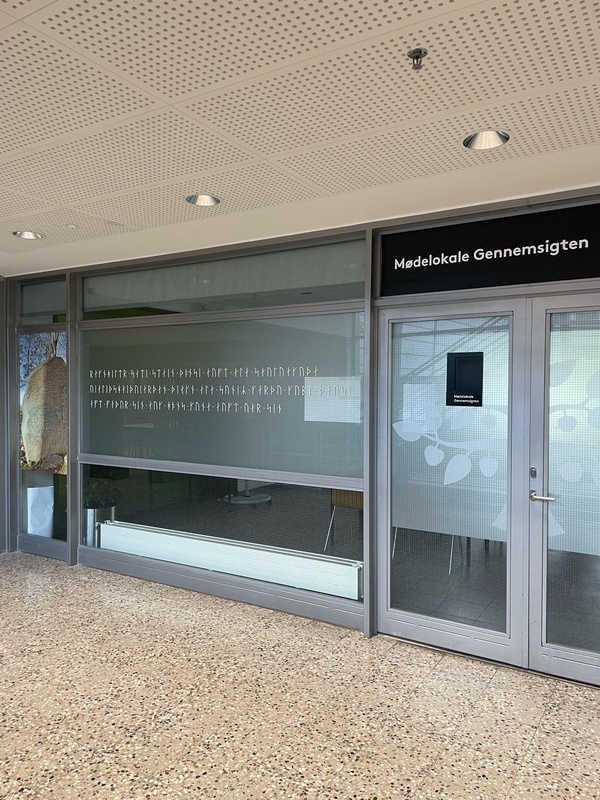
Meeting room at Southern University of Denmark with runes and a runestone on the windows. The text is taken directly from the Glavendrup Runestone (DR 209).
raknhiltr ' sa¶ti ' stain þonsi ' auft ¶ ala ' saulua kuþa ¶ uia l(i)þs haiþuiarþan þia¶kn §B ala ' suniʀ ' karþu ¶ kubl ' þausi ' aft ' faþur ¶ sin ' auk ' hons ' kuna ' auft ¶ uar ' sin ' in ' suti ' raist ' run¶aʀ ' þasi ' aft ' trutin ' sin ¶ þur ' uiki ' þasi ' runaʀ §C at ' rita ' sa ' uarþi ' is ' stain þansi ¶ ailti ' iþa aft ' onon ' traki
Ragnhildr placed this stone in memory of Alli the Pale, priest of the sanctuary, honourable þegn of the retinue. §B Alli's sons made these monuments in memory of their father, and his wife in memory of her husband. And Sóti carved these runes in memory of his lord. Þórr hallow these runes. §C A warlock be he who damages(?) this stone or drags it (to stand) in memory of another.
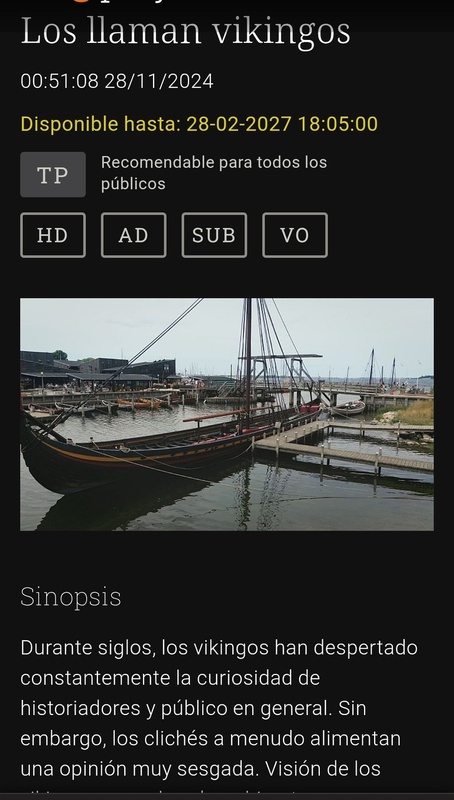
Documentary on Vikings made in Spain.This documentary challenges common stereotypes about Vikings as brutal warriors by exploring who they really were. Through a journey across Denmark, Iceland, and France, it examines Viking society between the 8th and 11th centuries, revealing that they were not only raiders but also traders, explorers, and settlers. Using 3D animation, the film offers a more balanced view of their daily lives, culture, and impact on medieval Europe.
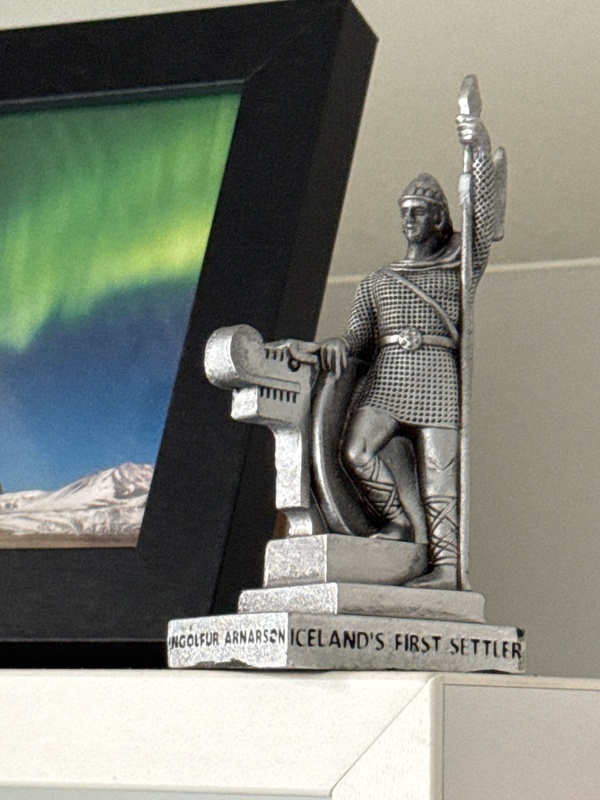
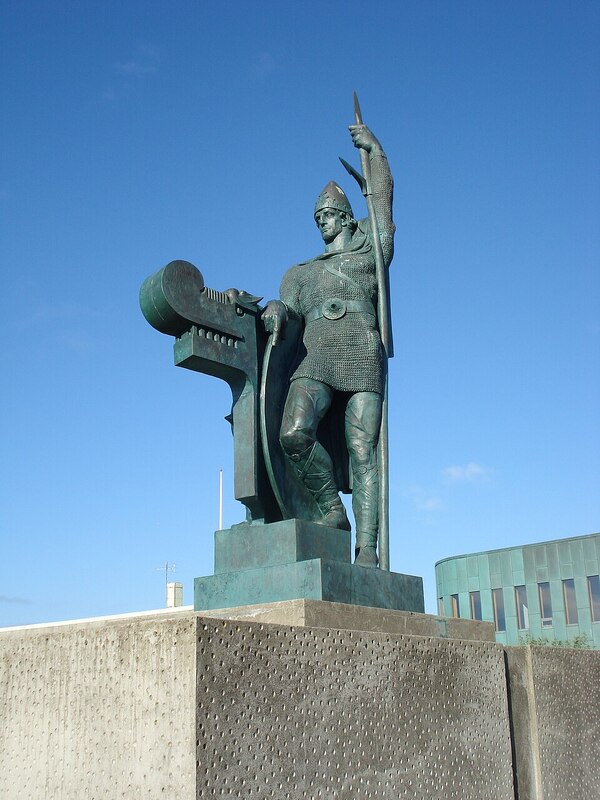
Standing atop Arnarhóll in Reykjavík, this bronze monument commemorates Ingólfur Arnarson, traditionally recognised as Reykjavík’s first settler. His arrival in Iceland is conventionally dated to 874 CE. Created by Icelandic sculptor Einar Jónsson, the monument was unveiled on 24 February 1924.
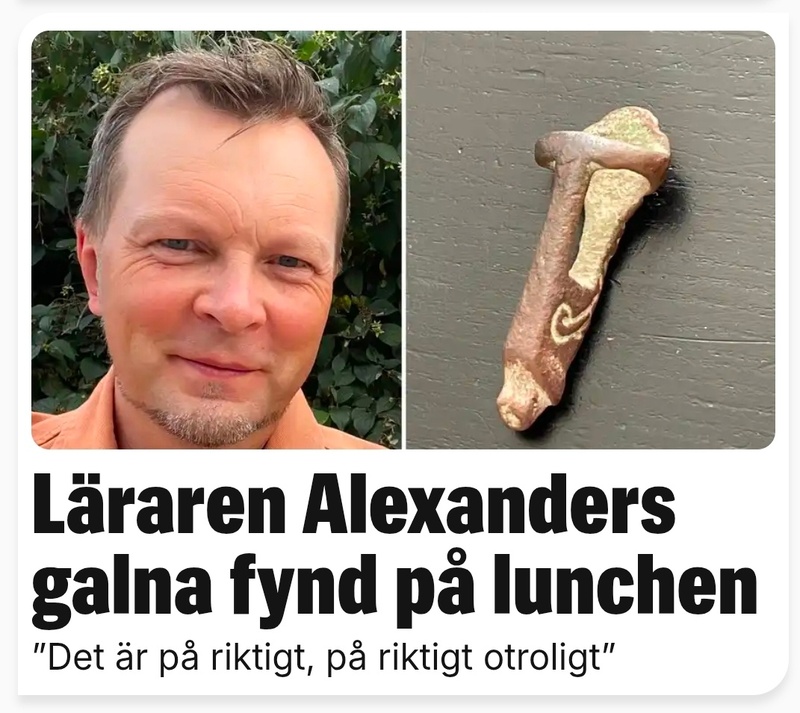
News article about a Swedish history teacher accidentally discovering a viking age artefact: https://www.expressen.se/nyheter/sverige/undervisar-om-vikingar-gjorde-vikingafynd-galet/
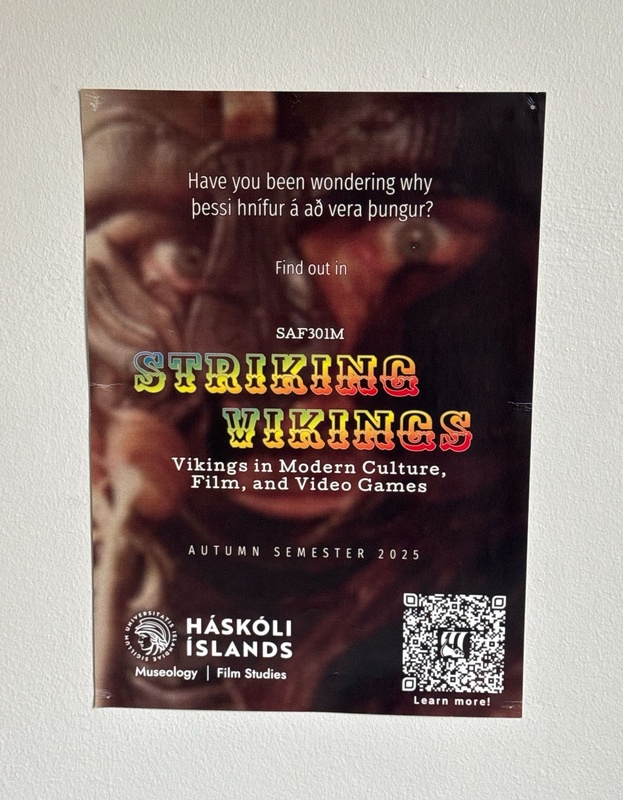
Advertisement for a course taught at the University of Iceland, regarding modern reception of Vikings. The background is a still from the film Hrafninn Flýgur.
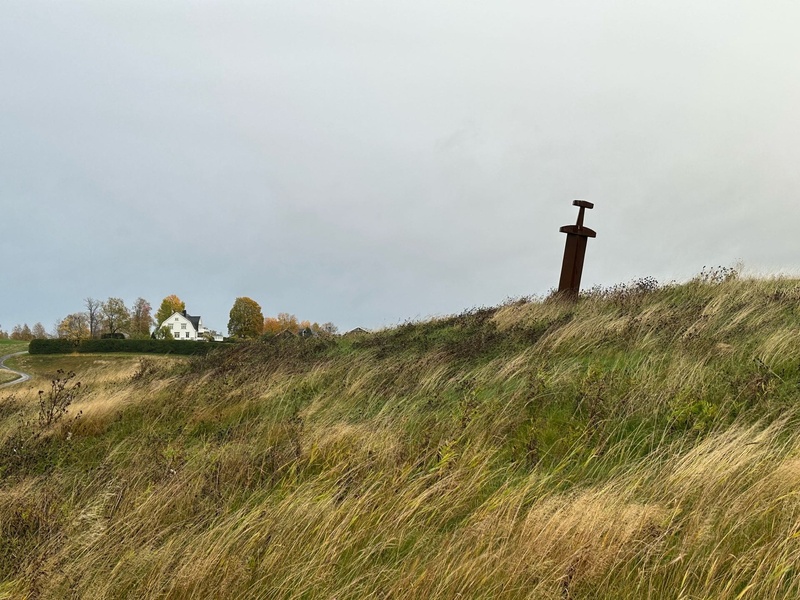
A viking sword on the Miklagard golf course which has a viking theme. Their slogan is "For de store slagene" - "Before the great blows", but can also mean "Before the great battles".
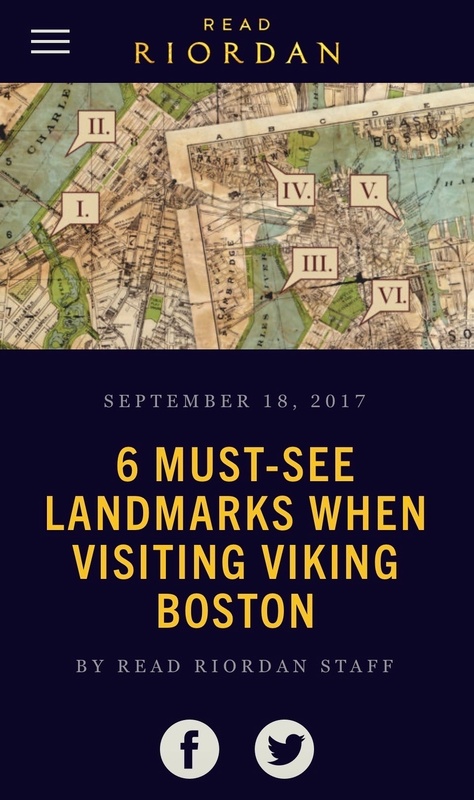
6 Must-See Landmarks When Visiting Viking Boston Website about "Viking Boston". Interestingly the landmarks mentioned on the website have nothing to do with Vikings, but is instead related to the "Magnus Chase" book series by Rick Riordan.
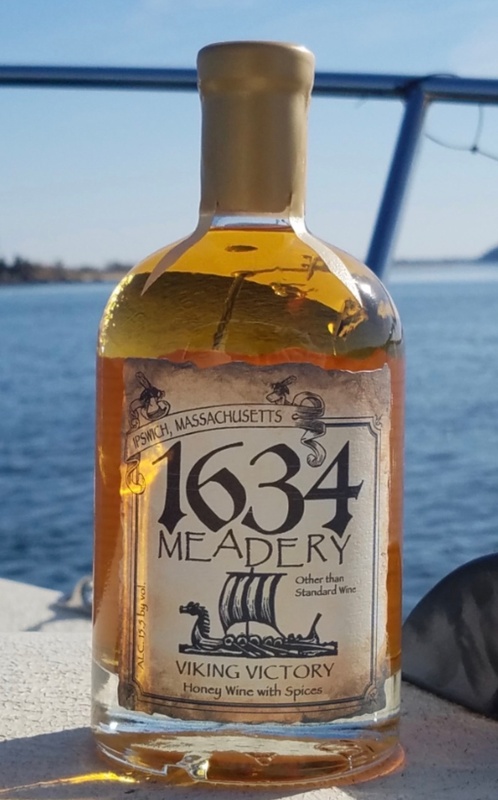
Meadery in Ipswhich that sells Viking branded mead. Host Viking festival once a year with mead tasting and living history. https://www.1634meadery.com/
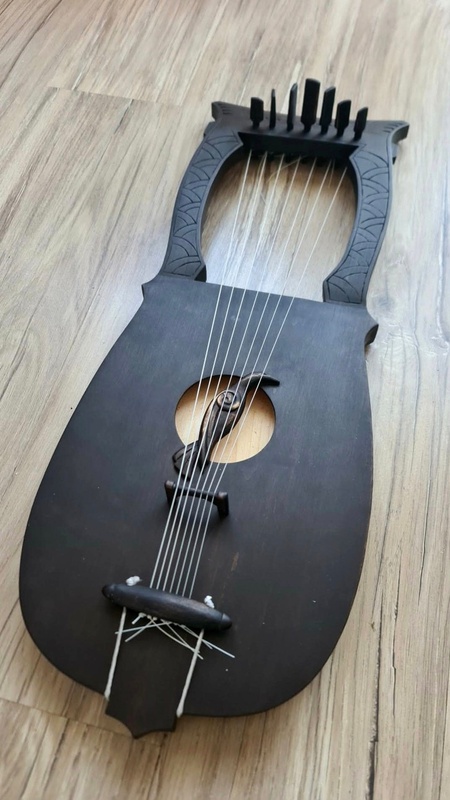
The users own kravik lyre- handcrafted in Poland by Slovisha Instruments, inspired by the original seven-string Kravik lyre discovered in Norway. The Kravik lyre dates back to the 14th century. Vikings are also believe to have played the lyre.
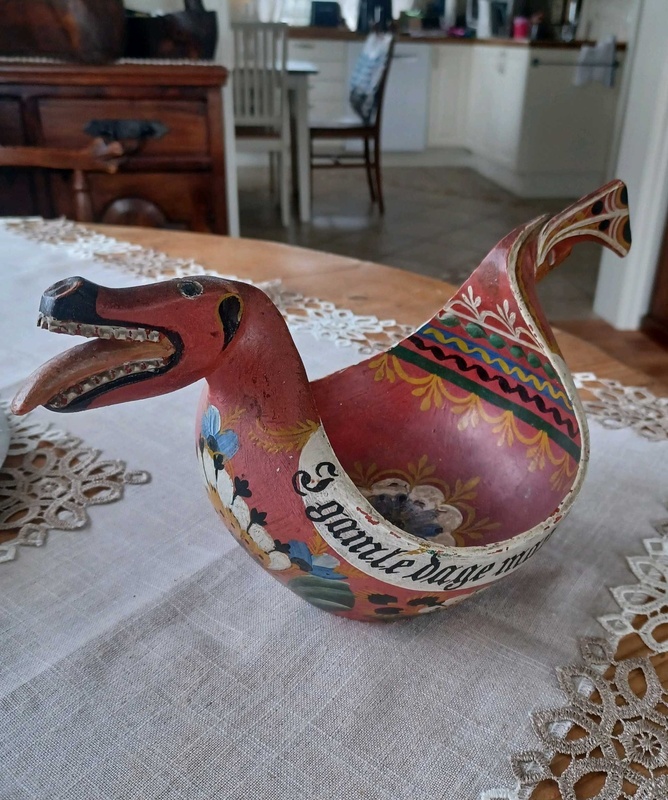
Hand-carved and hand-painted Norwegian wooden ale bowl known as a kjenge (or dragon-headed drinking bowl), featuring traditional rosemaling floral painting and a carved dragon or horse-like head with an extended tongue. The text banner painted along the side reads "I gamle dage...", which translates from Norwegian to "In the old days...". It's design resembles a Viking longship in some aspects, but is not directly connected to Vikings.
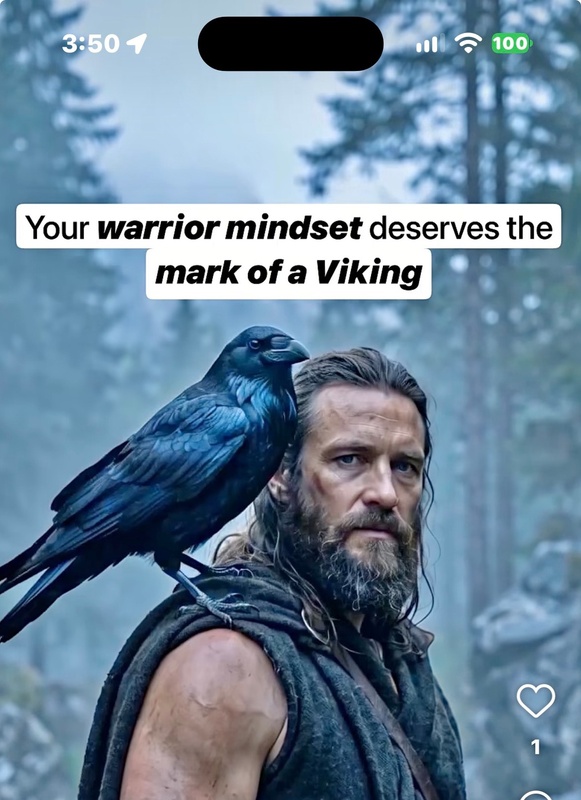
Advertising of personalized Viking tattoos on Instagram. Text reads "your warrior mindset deserves the mark of a Viking". Unknown company that advertisement is made for. Content may have been created by AI.
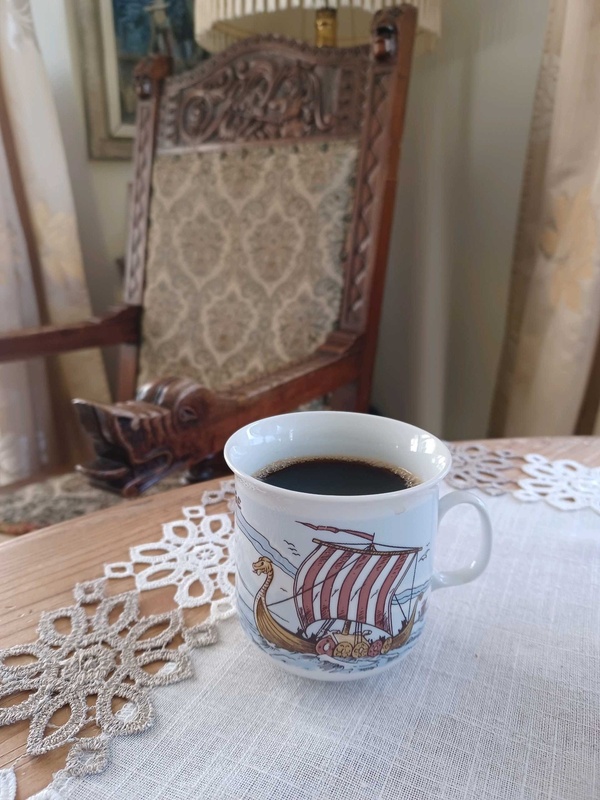
Erling Krage Norge Viking ship porcelain mug, here with coffee in it. Made between 1960 and 1980. Erling Krage A/S was a well-known glass, ceramics, and souvenir store and distributor based in Bergen, Norway, which originally opened in 1934.
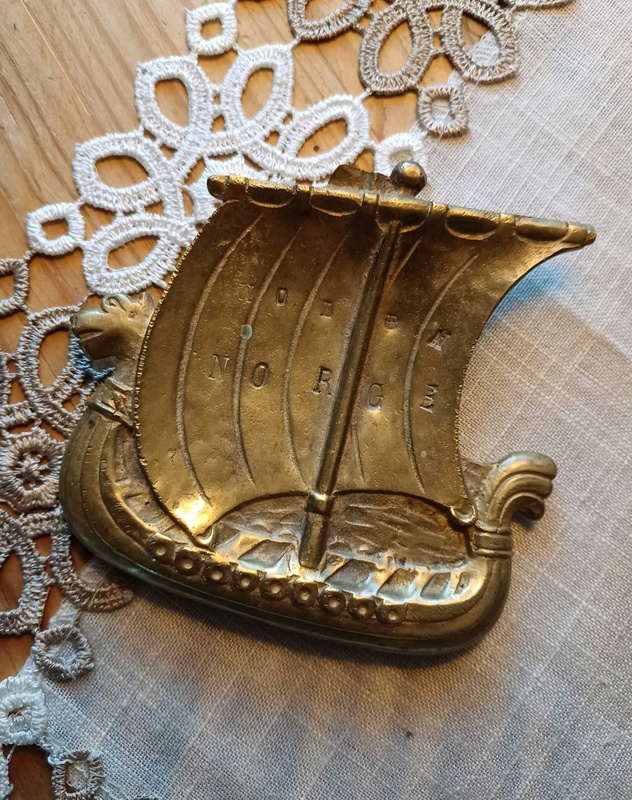
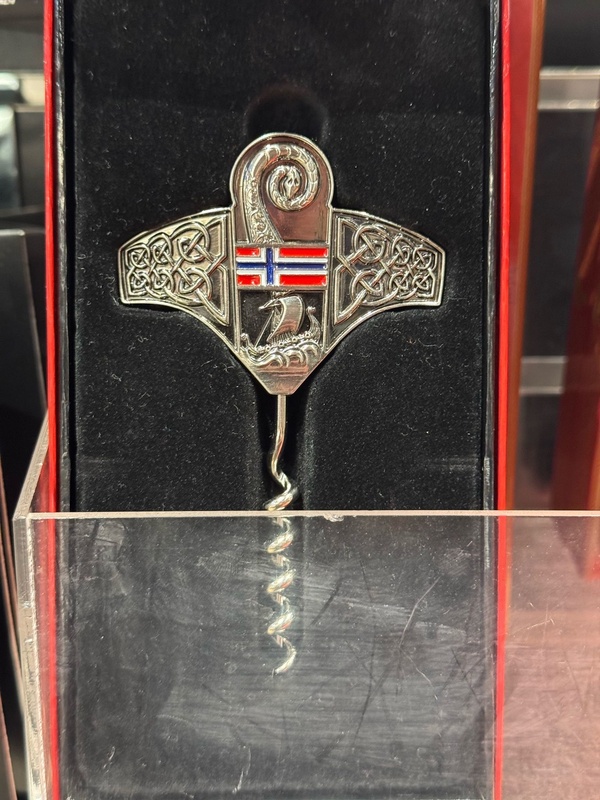
Vintage brass Viking longship souvenir model from Norway, featuring a dragon head at the bow and the word "NORGE" cast onto the sail. This item was mass-produced in the mid-20th-century by various Scandinavian foundries.
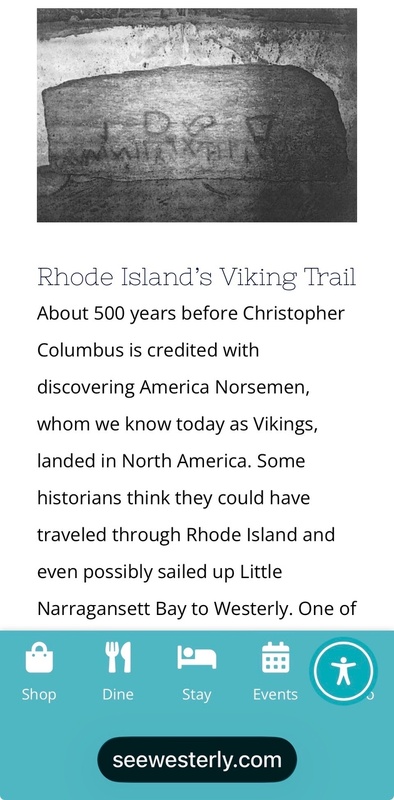
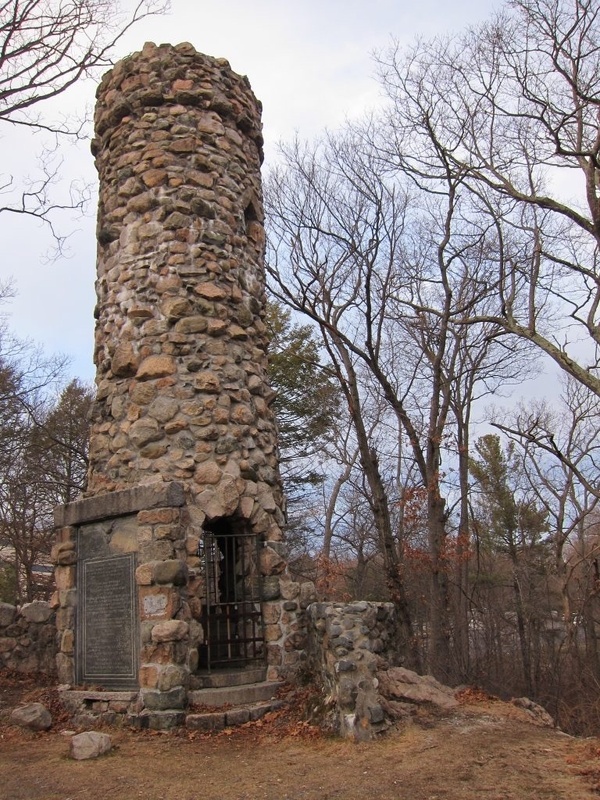
Tower at Norumbega Road on the Charles
Prof. Eben Norton Horsford, amateur archeologist, was convinced that in A.D. 1000, Leif Erikson sailed up the Charles and built his house in what is now Cambridge, Mass. Horsford did a little digging and found some buried artifacts that he claimed were Norse. On the spot he built this memorial. A few miles upstream, at the mouth of Stony Brook he had this tower built marking the supposed location of a Viking fort and city. The tower was erected in 1889 and stands approximately 12 m tall.
Memorial of the Danish king Eric the Good (1056-1103) (Erik Ejegod) who died on a pilgrimage in Cyprus. The stone was raised in 1905 by Thor Lange and carved by Carl Numelin. Erected in June 1915. Features the runic-style text: "Vildfarne rejste liden sten, efter Erik Konning sin, der sydpå døde" ("Wayfarers raised a little stone, after Erik their King, who died in the south"), with the added text at the bottom: "Fjernt fra sit kære Fædreland" ("Far from his dear native land").
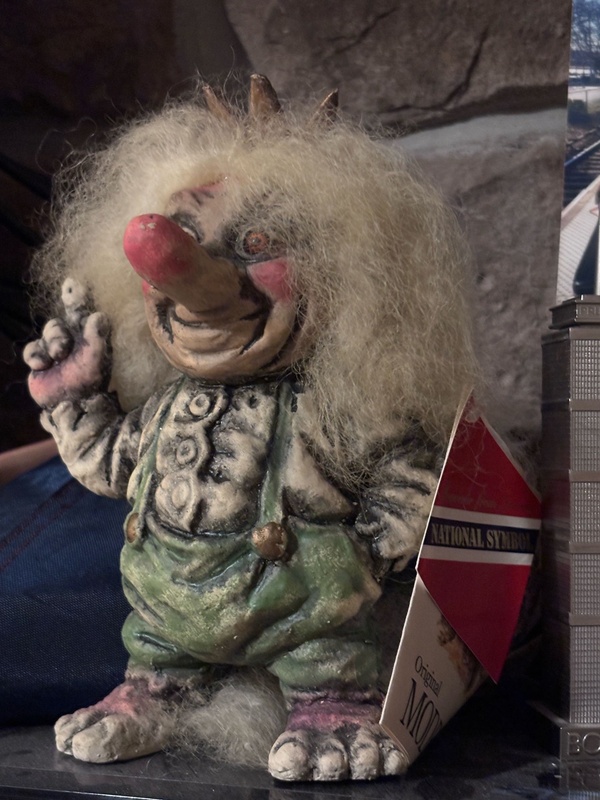
Troll souvenir found in Maine estate sale. Trolls as creatures are deeply rooted in the Viking Age and Old Norse mythology. Possibly made by Ny Form Troll, but not confirmed.
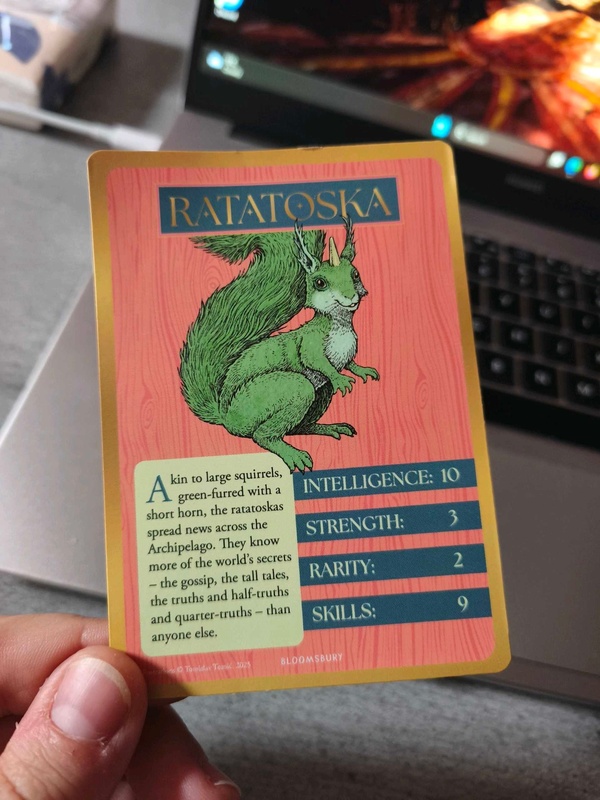
Promotional trading card for the children's book Impossible Creatures. Written by Katherine Rundell. Illustrated by Ashley Mackenzie. Bloomsbury Children's Books. September 14, 2023.
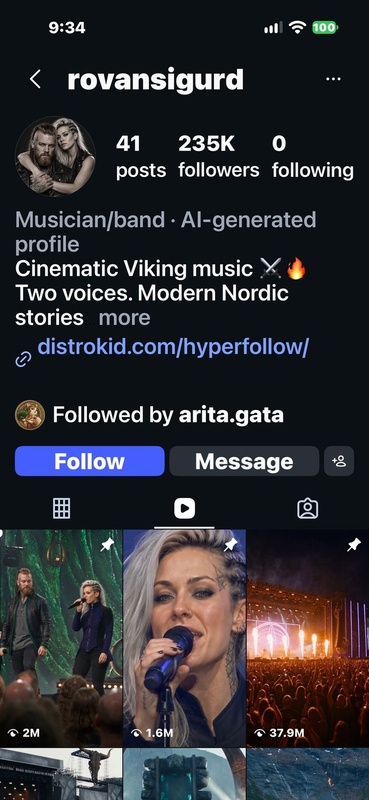
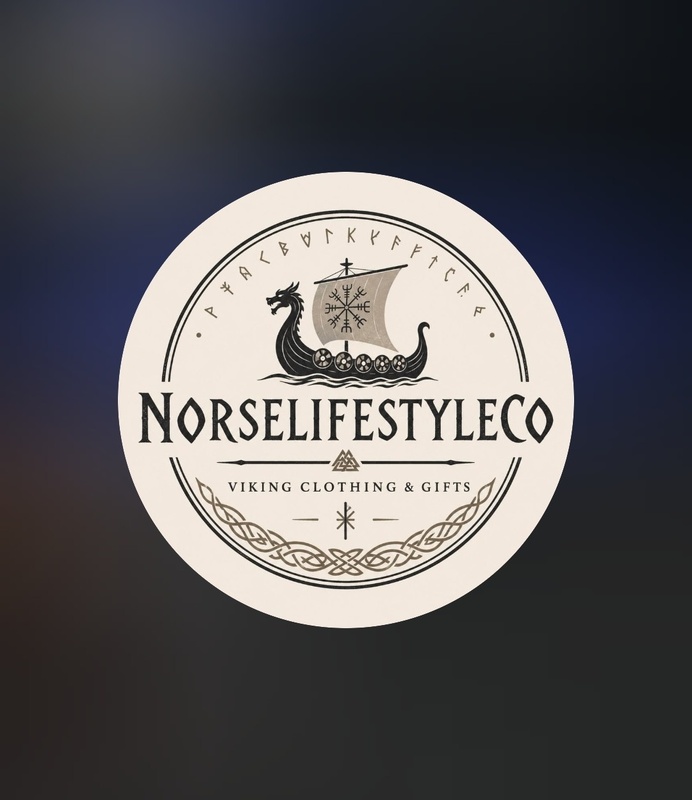
Logo and Instagram profile picture for a business which claims to produce Viking inspired clothing and paraphernalia, however their account features AI-generated images instead of photos of real people and products.
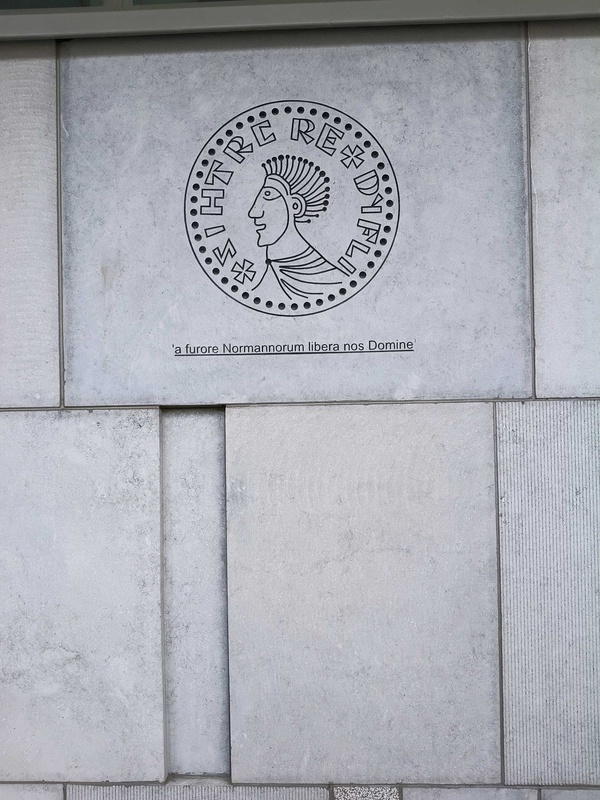
"a furore Normannorum libera nos Domine" (from the fury of the Northmen deliver us, O Lord) found on the outer wall of the Kevin St Garda station in Dublin. This latin sentence is often associated with the Viking Age, but there is no contemporary source for it. Its popularity is such that the sentence has been used as title for some bands' albums, such as Crimson Sunset's metal demo in 1997 and Sabotage's 2016 punk album.
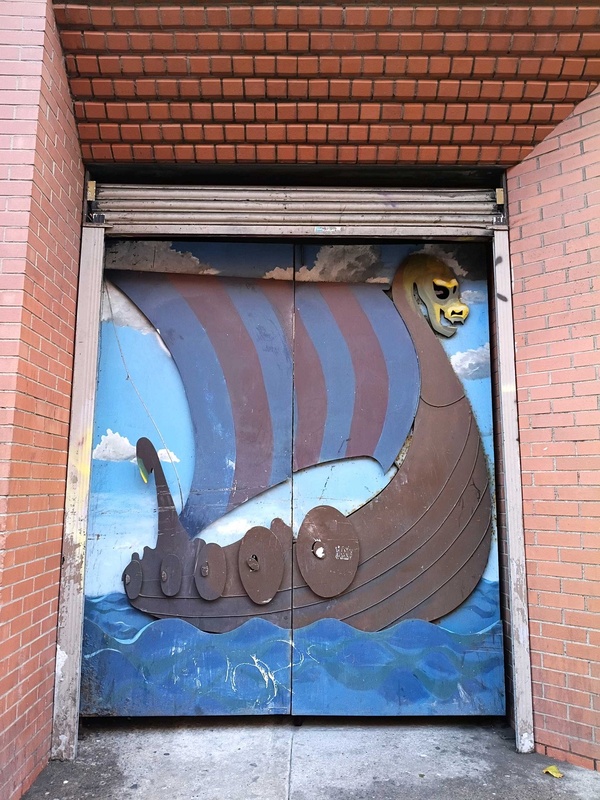
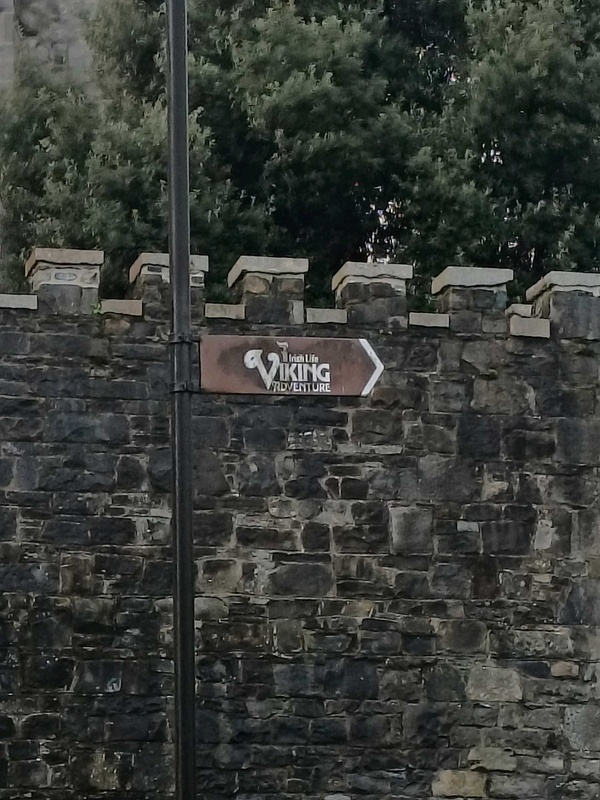
Street sign for the Irish Life Viking Adventure project, a reconstruction of the main street of Viking Dublin that opened in 1988. The exhibition, which used to be inside St. Audeon's church, has been closed for a while, but the street sign is still there.
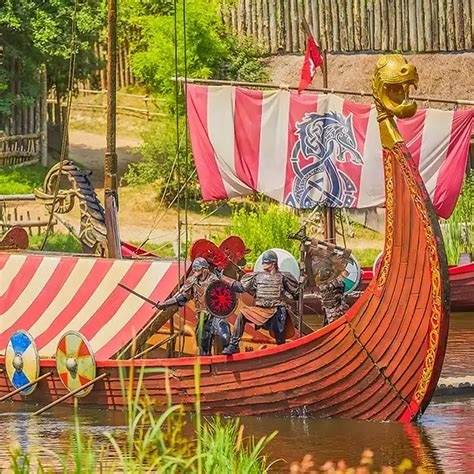
Puy Du Fou, west France, has an incredible performance inspired by the invasion of the Vikings in France!
They tell such a fun story with so many incredible stunts and stage mechanics.
This is the ship they use (spoiler, it comes out from underneath the water with the actors already on it! It's so cool!)
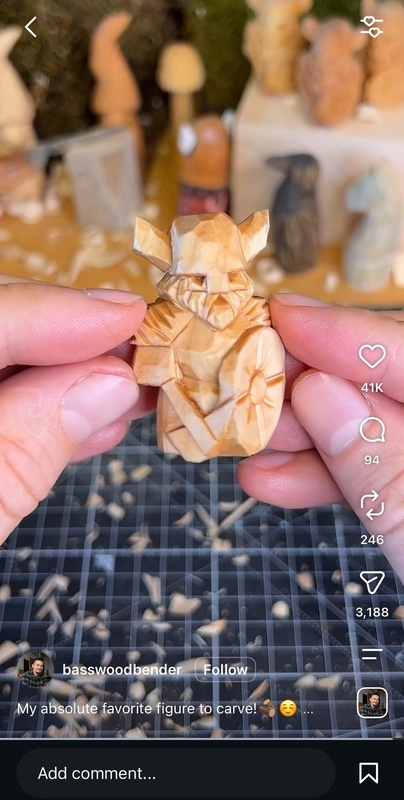
Screenshot from a how-to-carve video for a figure described as a Viking, by creator @basswoodbender. The figurine has a horned helmet, beard, axe and shield.
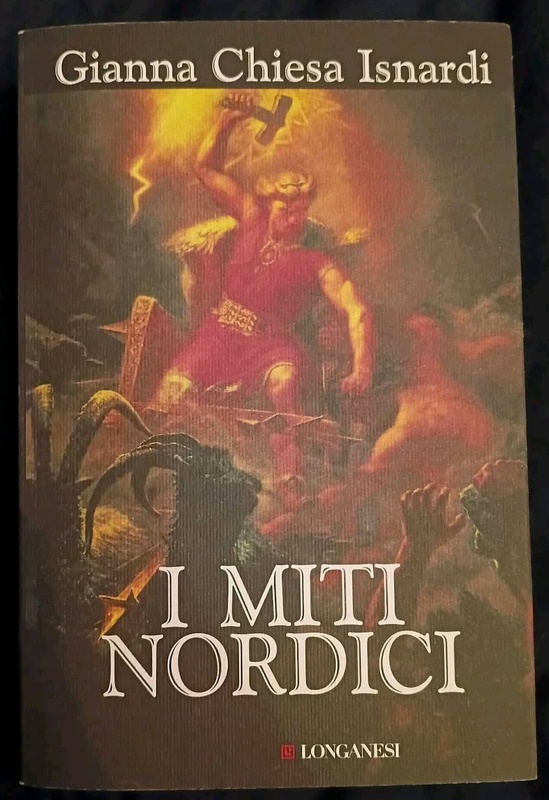
"I miti nordici" (Nordic mythology) is one of Italian academia's foundational books in the study of Norse and Viking culture. The first edition of this book dates to 1991, and although the author has passed, "I miti nordici" is still in print. The cover features Mårten Eskil Winge's 1872 painting "Thor's Fight with the Giants", where the god is smiting giants with his hammer and lightning. Thor is depicted with no beard, riding on his charriot pulled by his two goats.
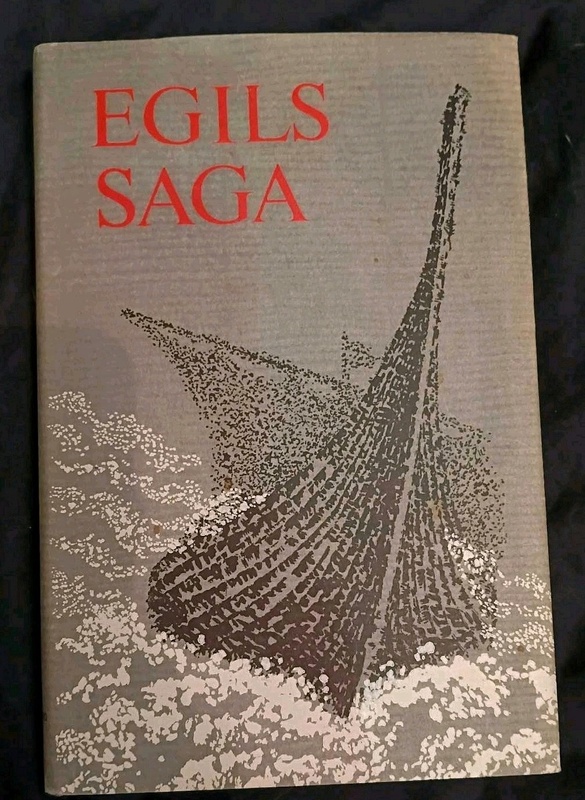
Norwegian (Bokmål) edition of the Saga of Egill Skallagrimsson from 1970. Translated by Hallvard Lie and illustrated by Olav Bjørgum, who made the cover art as well as illustrations for 28 episodes throughout the saga. The cover shows a Viking ship in a stormy sea.
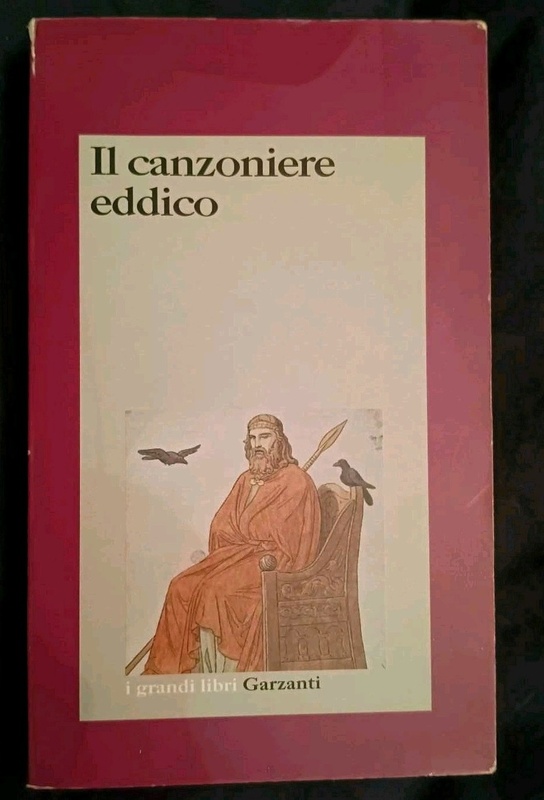
"Il canzoniere eddico" (The Poetic Edda) Italian edition by Piergiuseppe Scardigli (2004). On the cover is Constantin Hansen's 1862 "Odin" where the god is depicted sitting with his spear Gungnir and accompanied by his two ravens, Hugin and Munin.
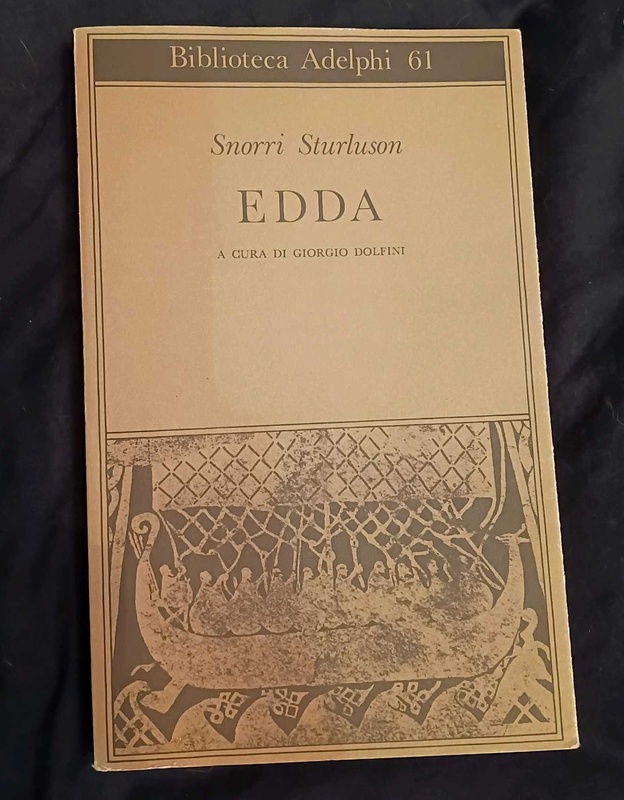
"Edda" Italian edition by Giorgio Dolfini (2003). On the cover is a detail from the Tängelgårda I rune stone, depicting a large ship with warriors on it.
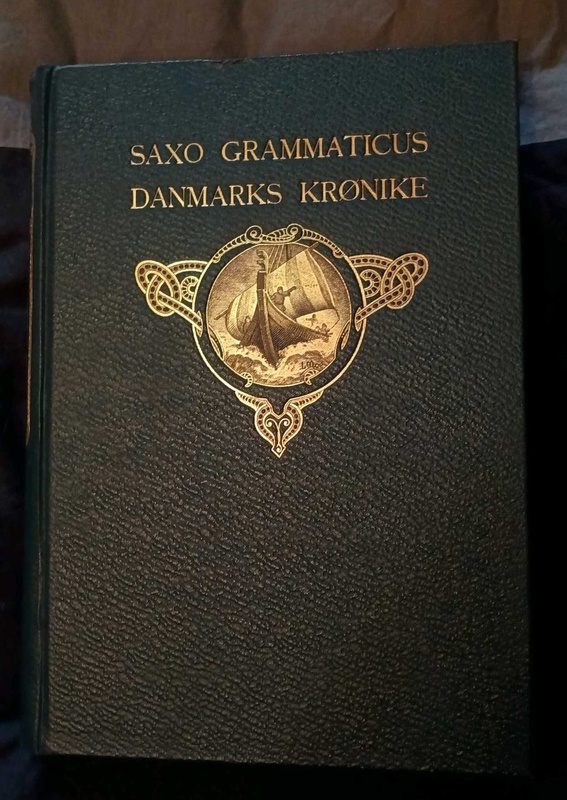
"Saxo Grammaticus - Danmarks krønike", also known by its Latin title "Gesta Danorum", is a 1898 Danish edition of Saxo's history of the Danish people, translated by Dr. Fr. Winkel Horn and illustrated by Louis Moe. The cover art is a round gilded medallion that shows an explorer ar the prow of a Viking ship. The medallion is surrounded by Norse motifs.
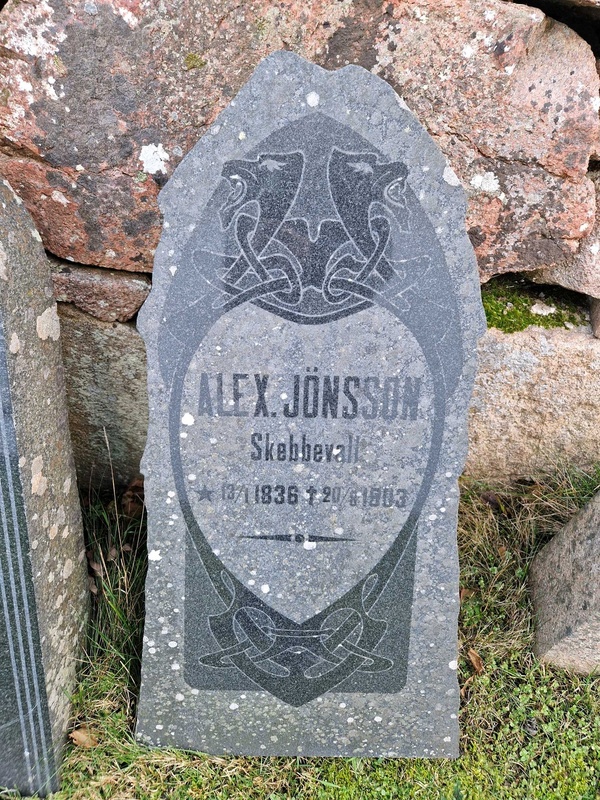
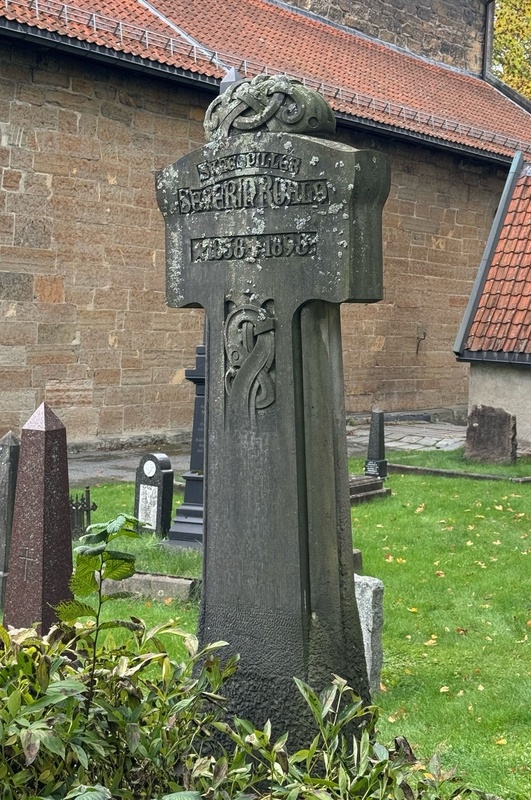
Nineteenth-century gravestone decorated with Viking Revival ornament. The monument incorporates interlaced animal or serpentine motifs inspired by Viking-Age and medieval Scandinavian art, illustrating the adoption of the Viking past in nineteenth-century funerary commemoration.