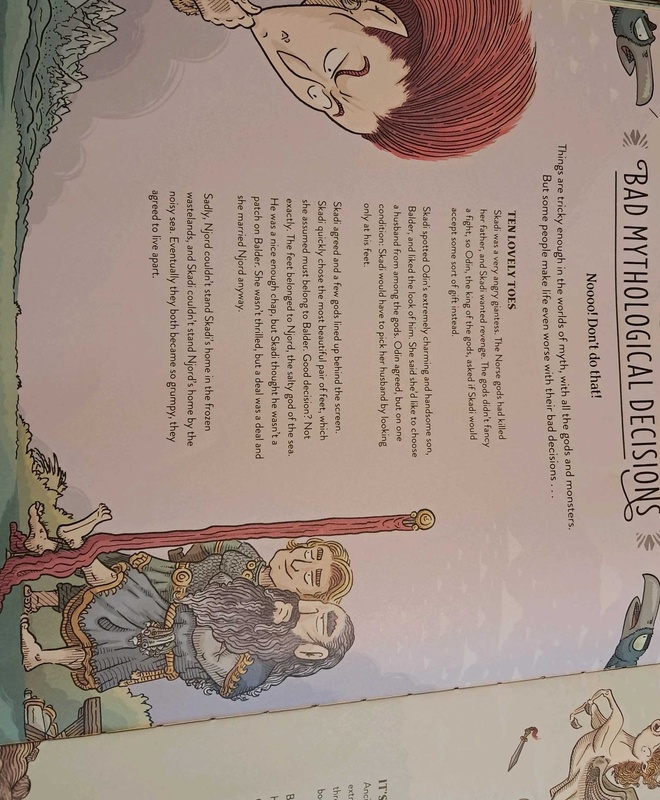
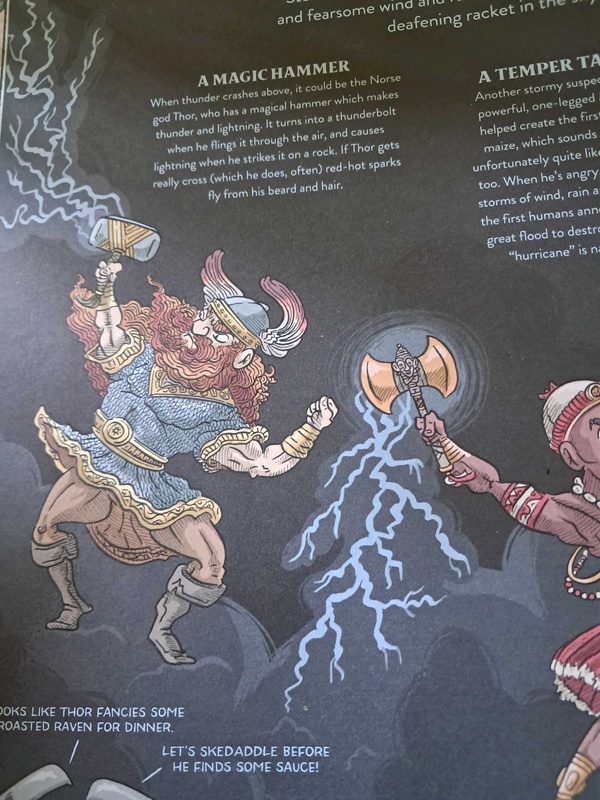
Illustration from "Mighty Myths" by Thiago de Moraes, of the Norse myth in which Skaði, seeking compensation from the gods for the death of her father Þjazi, is permitted to choose a husband from among the gods while seeing only their feet. Hoping to choose Baldr, she selects the most attractive pair, which instead belong to Njörðr. The episode is presented humorously as one of the book’s “Bad Mythological Decisions".
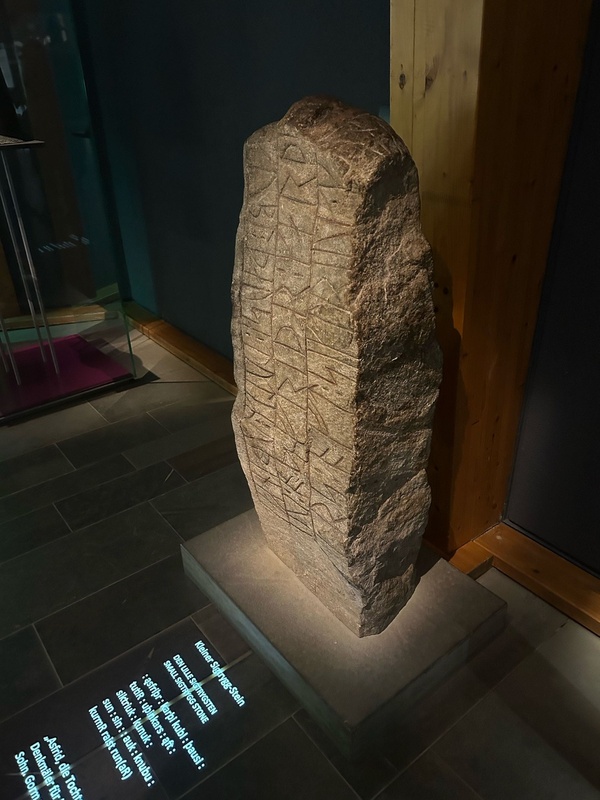
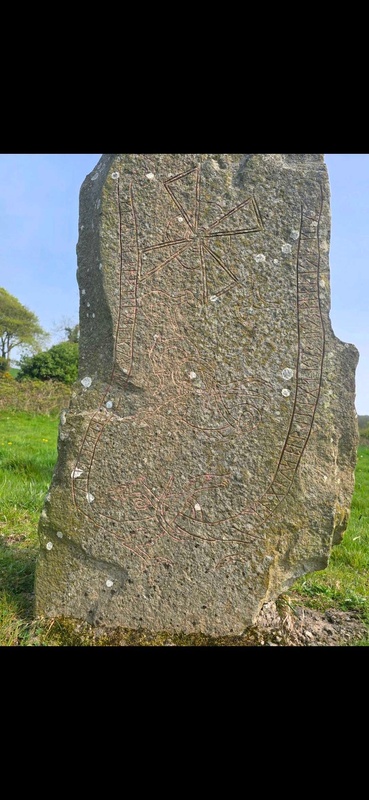
Tenth-century runestone commemorating King Sigtryggr, erected by his mother Ásfríðr, daughter of Óðinkárr. The inscription states: “Ásfríðr, Óðinkárr’s daughter, made these monuments in memory of King Sigtryggr, her son and Gnúpa’s. Gormr carved the runes.” The stone is one of two Sigtrygg stones associated with the royal dynasty ruling Hedeby in the tenth century.
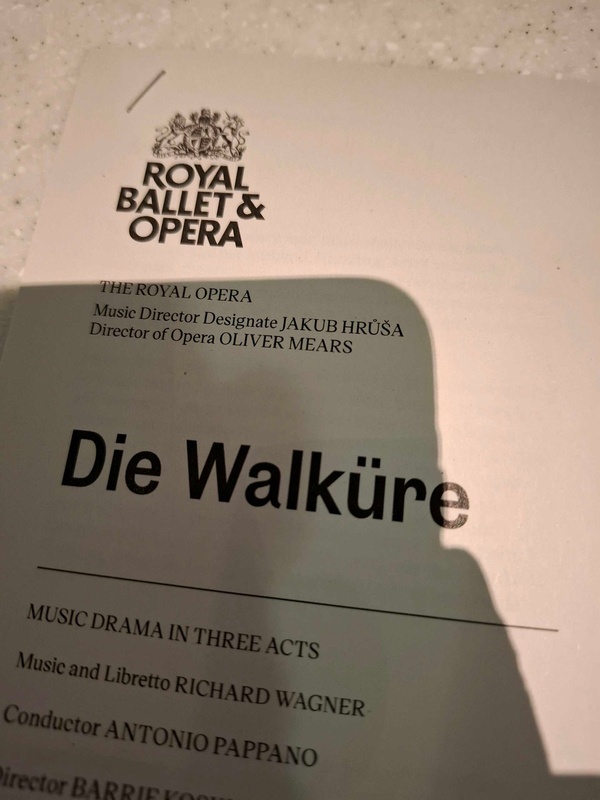
A print-out guide for the 2025 live streaming of Die Walküre in Wagner's Ring cycle of operas. Performed at the British Opera House and streamed to cinemas internationally.
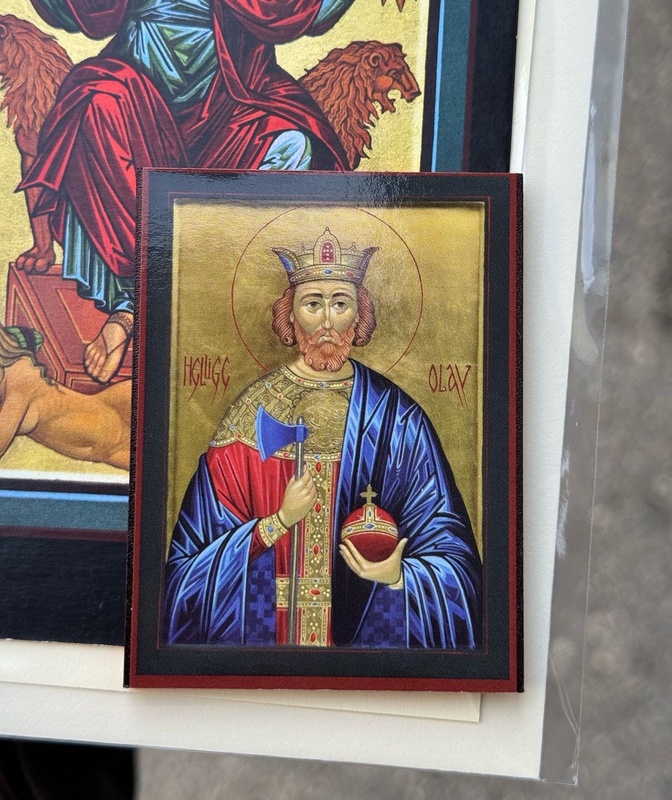
Small modern devotional icon depicting Saint Olaf (Olav Haraldsson/Óláfr Haraldsson), king of Norway from 1015 to 1028. Olaf is represented crowned and haloed, holding an axe, and an orb surmounted by a cross. The icon was on sale at a Catholic bookshop in Oslo.
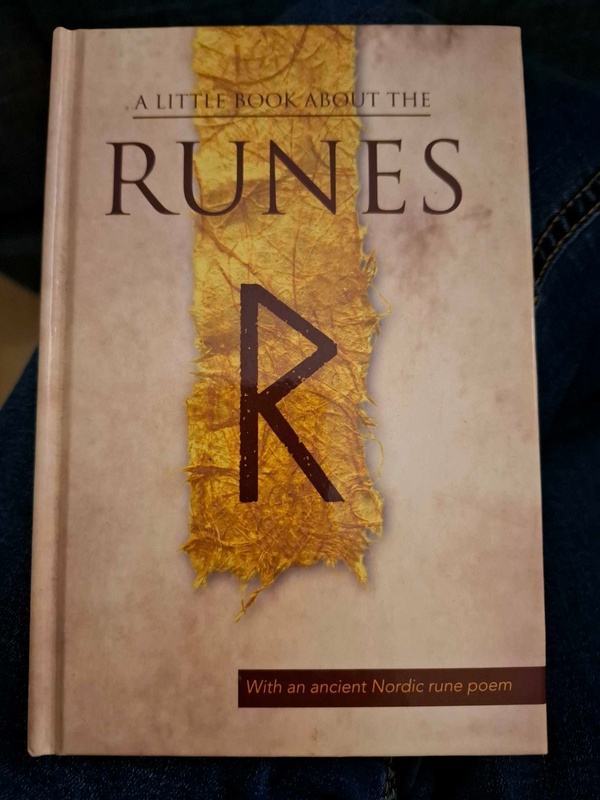
A short book about the runes, with an introduction to the writing system and Norse mythology. In the main text, the runes are presented through a translation of the Norwegian runic poem. The book was originally published in Norwegian ("En liten bok om runer") in 2001 and was subsequently translated in a variety of languages, including English.
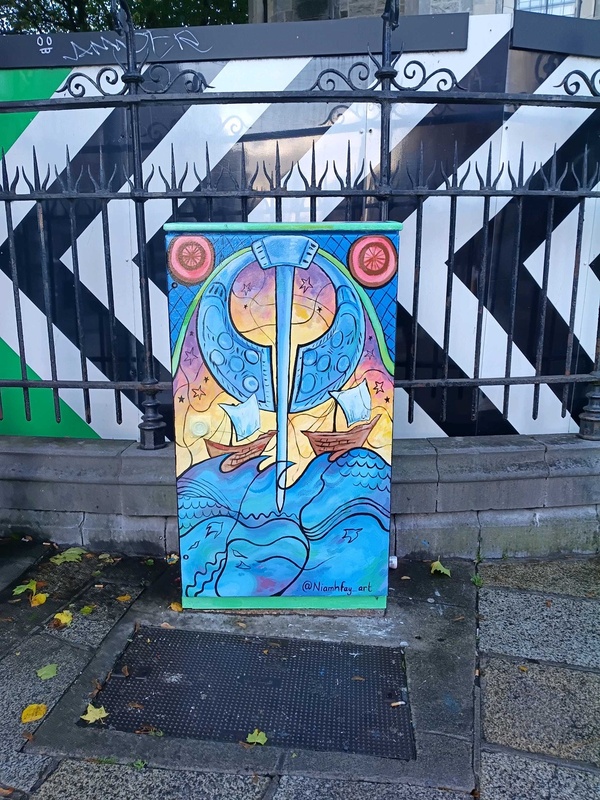
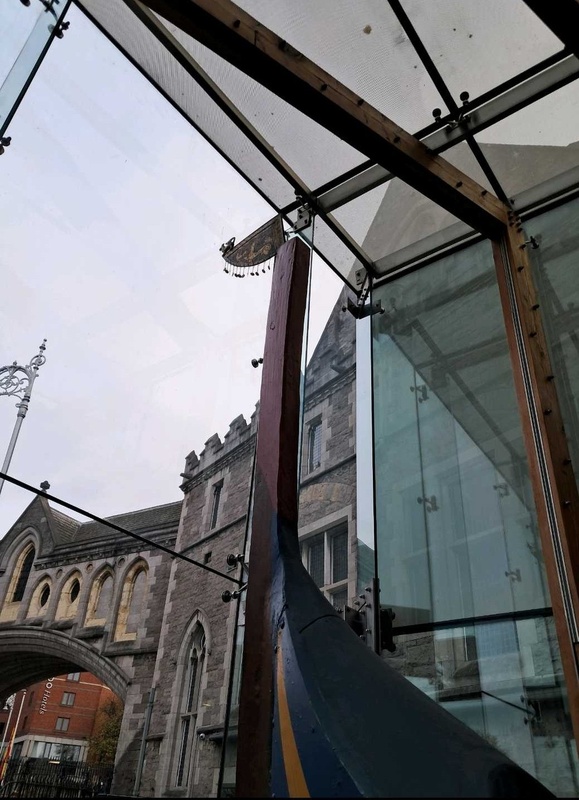
Street art with penannular brooch and Viking ships found outside Christchurch Cathedral, in Dublin. This piece by the title "Dyflinn" was created by artist @Niamhfay_art for the project Dublin Canvas.
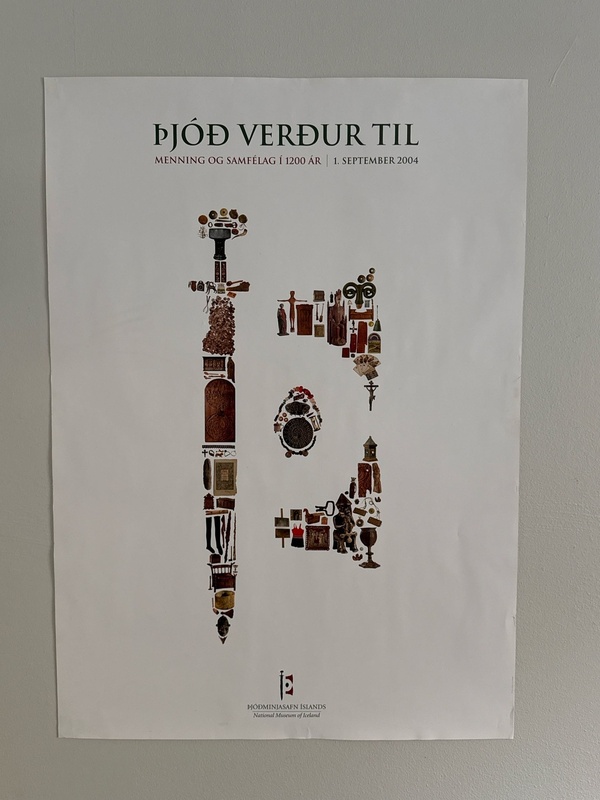
Poster produced by the National Museum of Iceland (Þjóðminjasafn Íslands) for 'Þjóð verður til: Menning og samfélag í 1200 ár' (“A Nation Comes into Being: Culture and Society over 1,200 Years”), dated 1 September 2004. The design features a large letter Þ (thorn), constructed from the forms of a sword, shield and two axes and filled with images of artefacts from the museum’s collections.
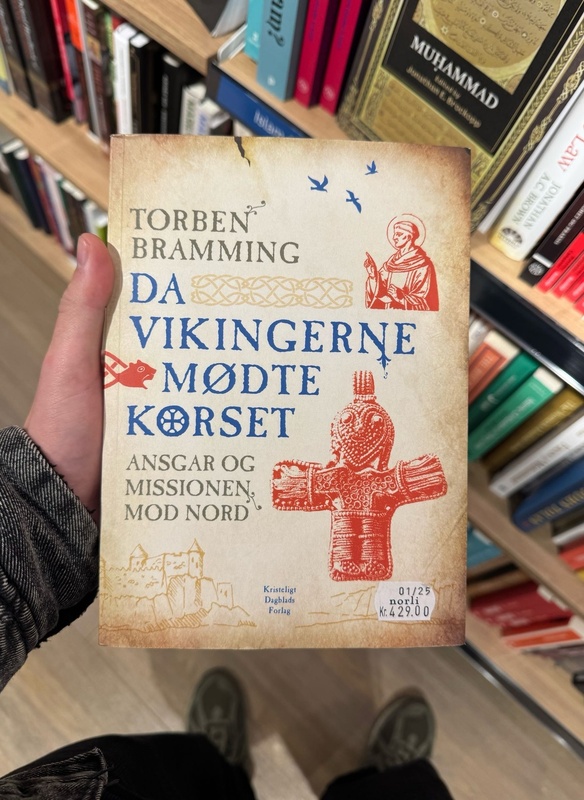
Cover of Torben Bramming’s Da vikingerne mødte korset: Ansgar og missionen mod nord (“When the Vikings Met the Cross: Ansgar and the Mission to the North”). The cover combines explicitly medieval and Viking imagery, including a representation of a Viking-Age cross pendant, with manuscript-style lettering and decorative interlace. The book concerns Ansgar and the Christian mission to Scandinavia during the Viking Age.
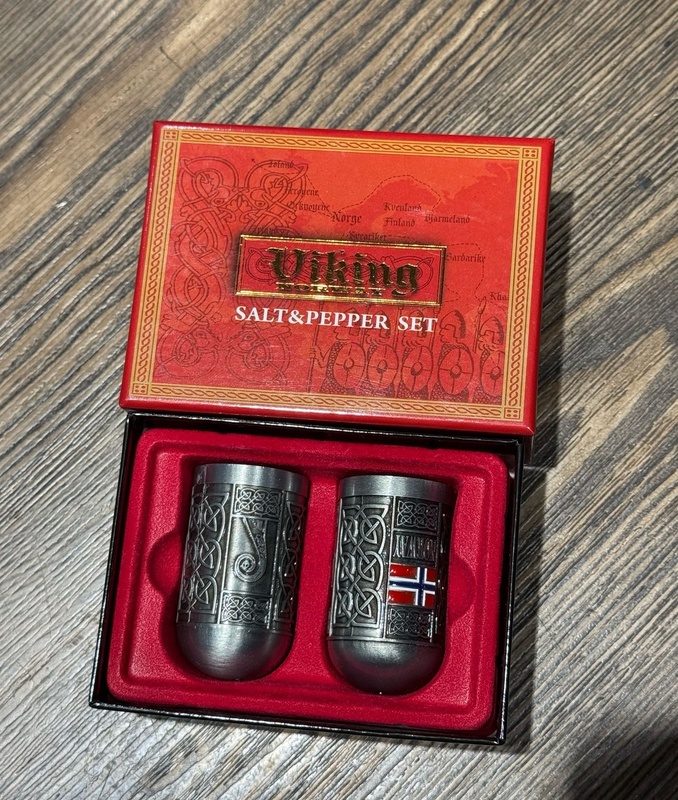
Souvenir salt and pepper set marketed under the label "Viking Norway”. The two metal shakers are decorated with interlace motifs associated with Viking and medieval Scandinavian art. One incorporates the Norwegian flag and the word “Norway”. The presentation box uses further Viking-themed imagery, including interlace decoration, a map of Scandinavia and a row of helmeted warriors carrying round shields.
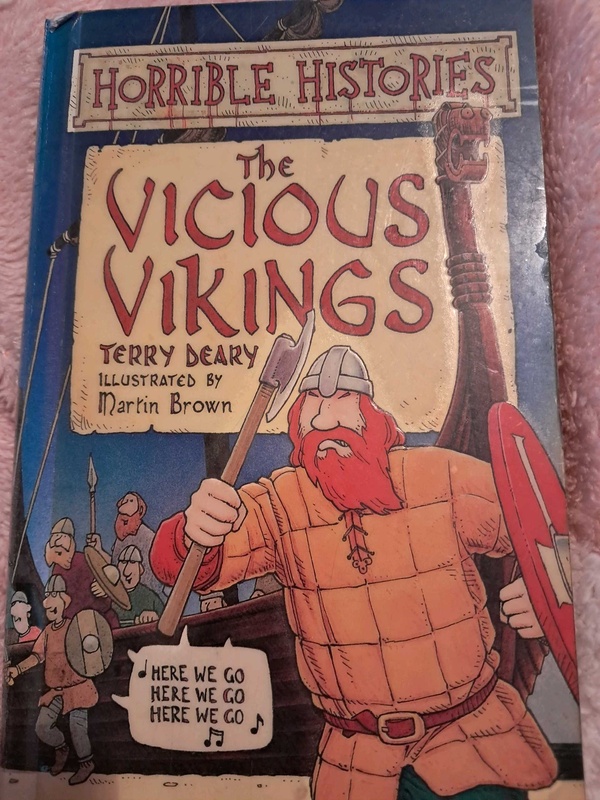
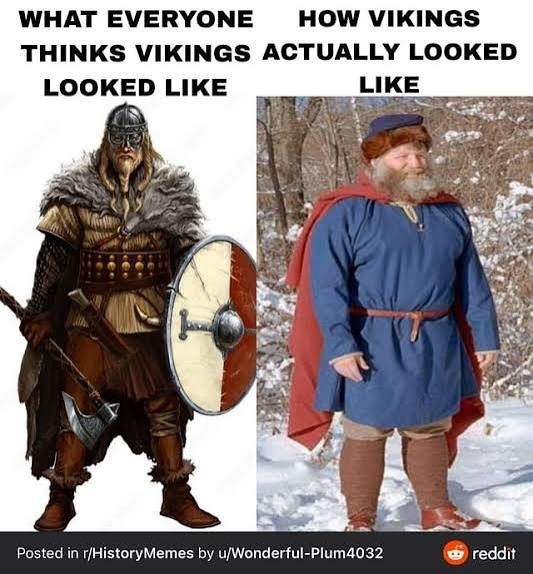
Front cover of The Vicious Vikings, part of the Horrible Histories series by Terry Deary, illustrated by Martin Brown. The cover presents a caricature of a Viking warrior with helmet, spear and shield, accompanied by other armed figures and a Viking ship. This popular children's book combines historical material with humour, violence and deliberately exaggerated imagery.
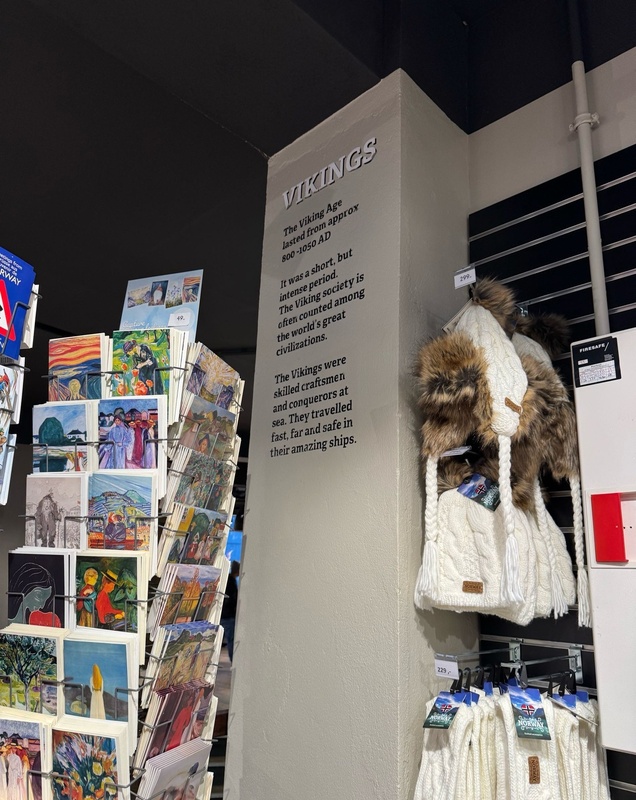
Text about the Viking Age on the wall of a souvenir shop, nowhere near any “Viking souvernirs”. The text says: "The Viking age lasted from approximately 800-1050 ad. It was a short but intense period. The Viking society is often counted among the world's great civilizations. The Vikings were skilled craftsmen and conquerors at sea. They travelled fast, far and safe in their amazing ships.
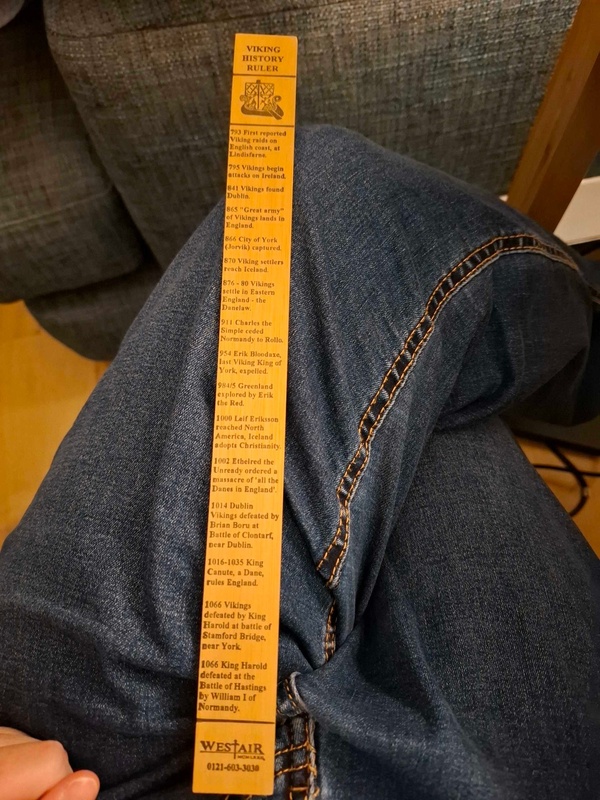
Wooden Viking History Ruler which features a chronological timeline of key Viking events and raids from 793 AD to 1066 AD printed along the surfac. Purchased from the Jorvik Viking Centre.
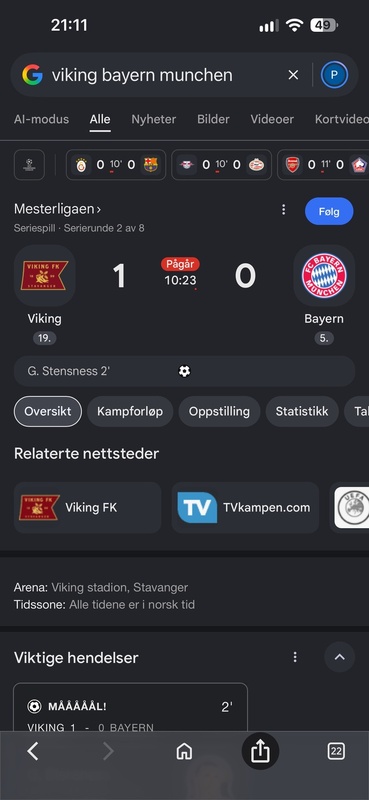
Live score for a UEFA Champions League match between Viking FK and FC Bayern München on October 13, 2026, where Viking initially led 1–0 early in the match. The match was played at Viking Stadion (also commercially known as Lyse Arena) located in Stavanger, Norway
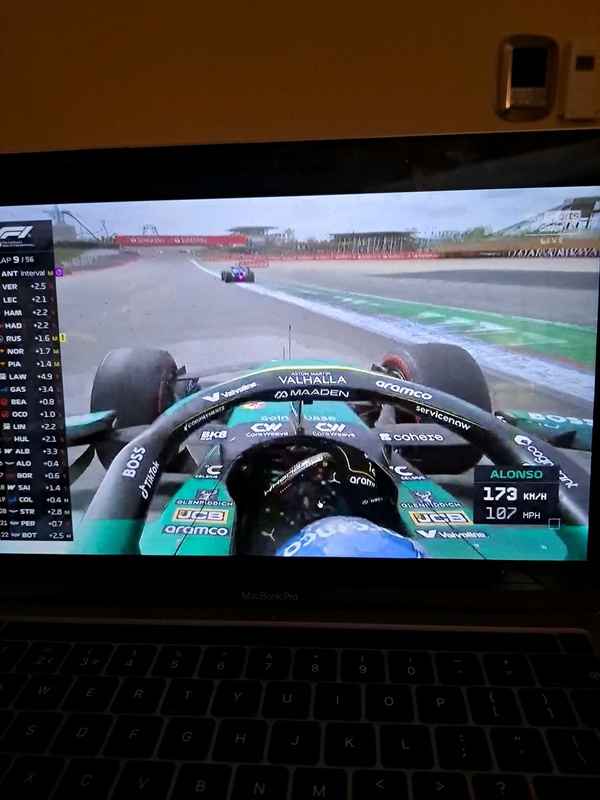
Aston Martin's first series-production mid-engined hybrid supercar that directly incorporates technology, aerofoils, and engineering methodologies from the Aston Martin Aramco Formula One Team called Valhalla. Picture taken from the Race of the Americason the 25th of October.
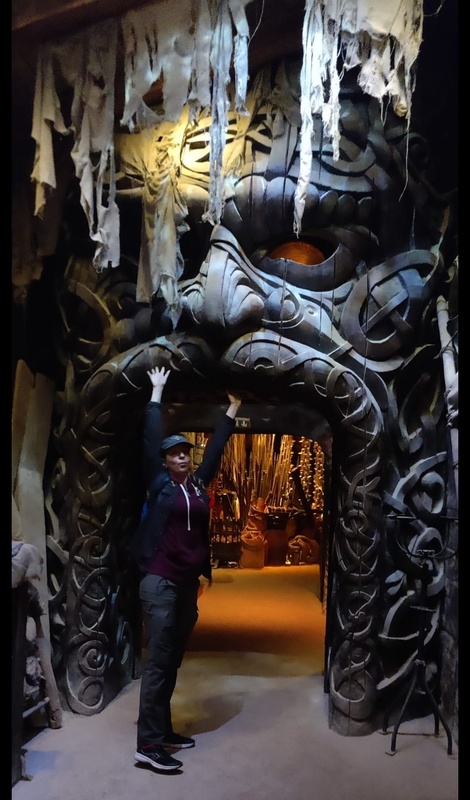
One of Puy Du Fou's walk through attractions in the west of France. The attraction is called "Le Premier Royaume" (The First Kingdom) and it goes through the history of France by invasion/conquests, so it also has a section on the Romans and WWII, as well as the Vikings.
1976 AA publication Touring guide to Ireland - Fanum House Basingstoke Hampshire England. Publications like this were popular pre Google maps and typically guided tourists and visitors to drives of historical interest including monastic sites raided by the Vikings who did not need AA maps or Google maps to find them.
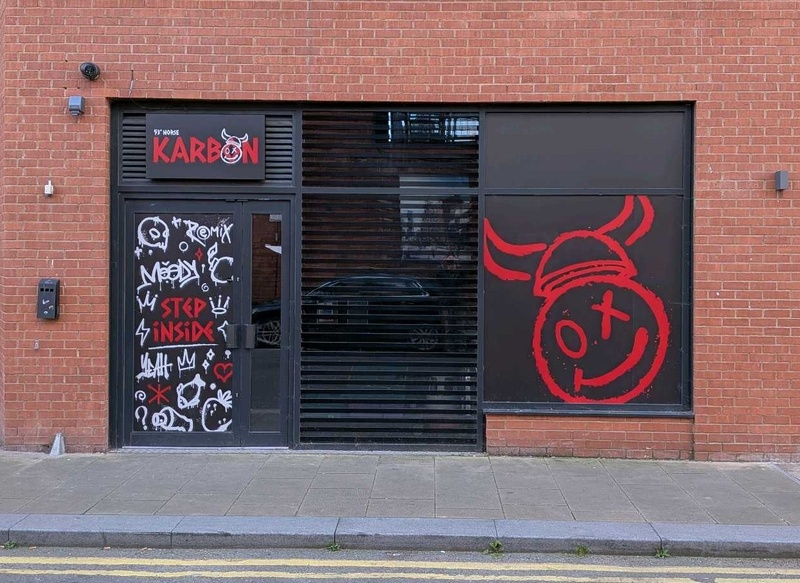
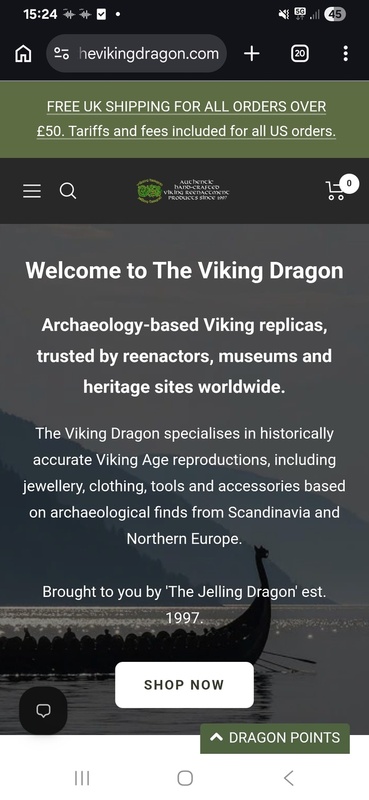
Karbon Bar & Kitchen paired with 53° Norse, an experimental restaurant and DJ-led social venue located on Alma Street in Kelham Island, Sheffield, UK. The graffiti outside features a smiling viking icon, reflecting the Nordic theme of 53° Norse.
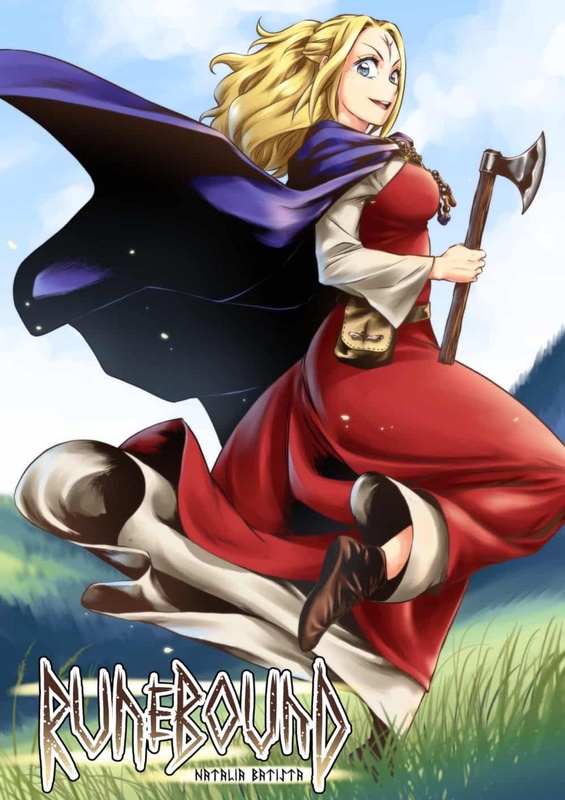
"Runebound" is a manga-style comic book by Swedish artist Natalia Batista, published in 2020. In a Viking-inspired fantasy setting, young women train to become Valkyries and battle magicians. To cast magic, a Valkyrie must bind herself to a slave called a træl to extract energy. The story follows Hilda and a broken slave named Aske.
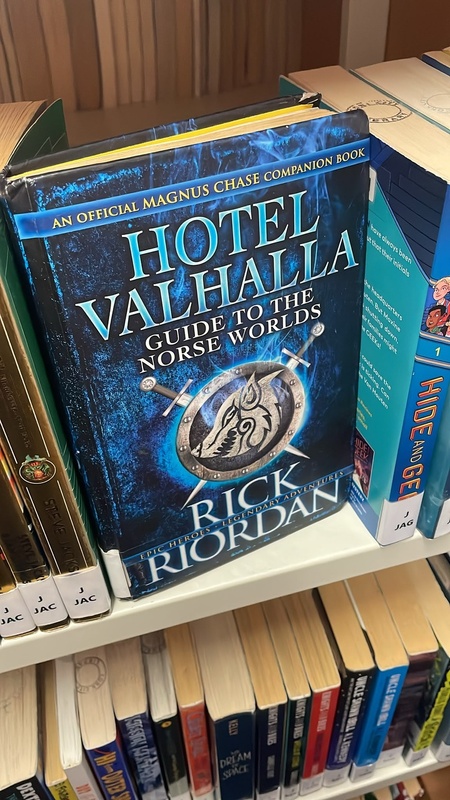
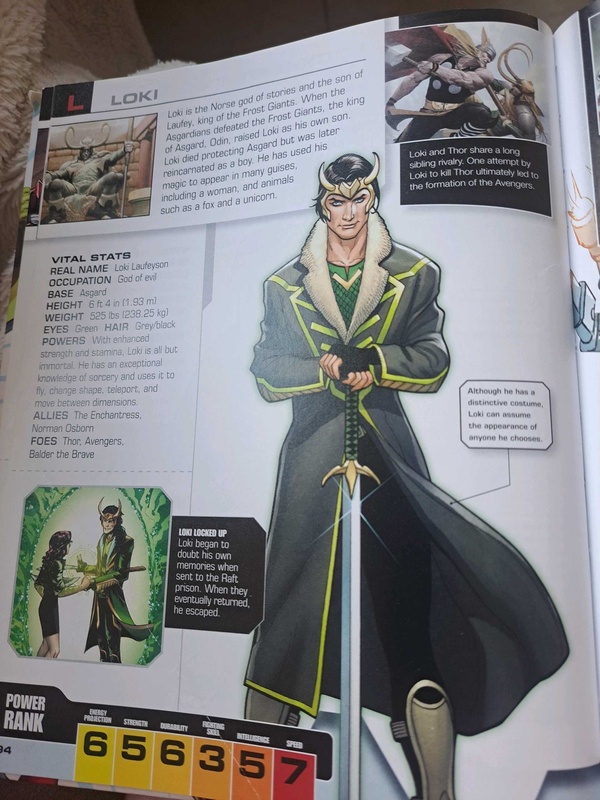
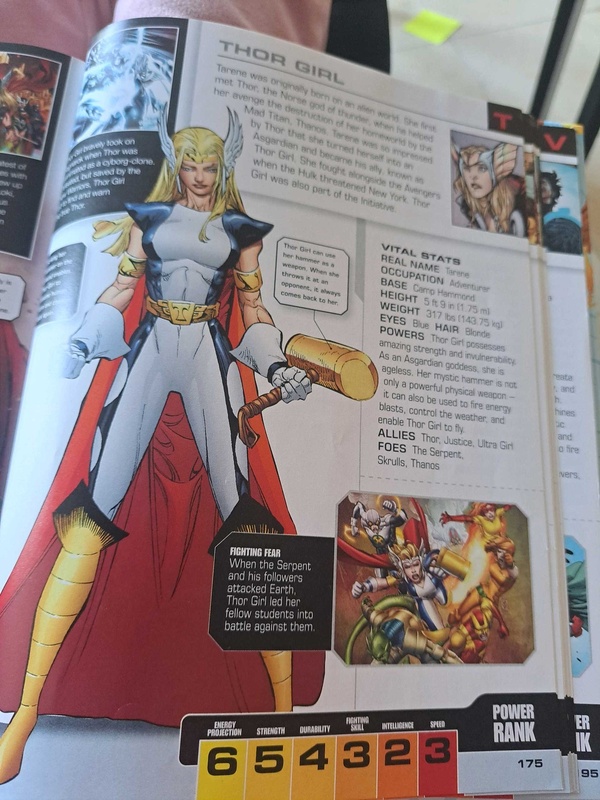
Hotel Valhalla by Rick Riordan. It is a companion book set in the Magnus Chase and the Gods of Asgard universe, published on August 16, 2016 by Disney Hyperion.
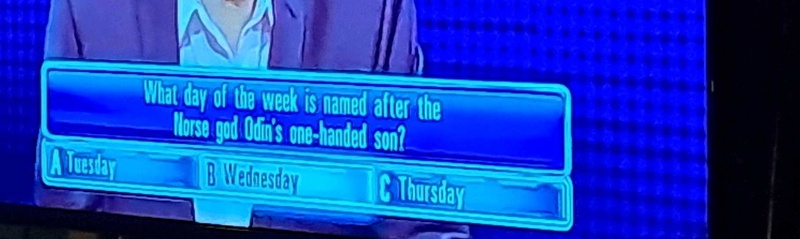
Screenshot of Norse mythology question on the British quiz show 'The Chase', demonstrating that this etymology is considered to be a challenging general knowledge question for a UK audience. Broadcast on ITV.
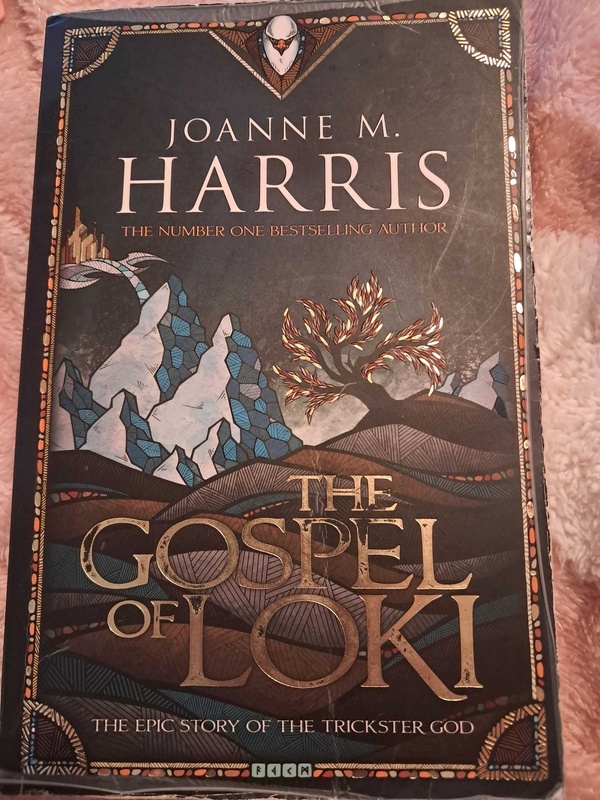
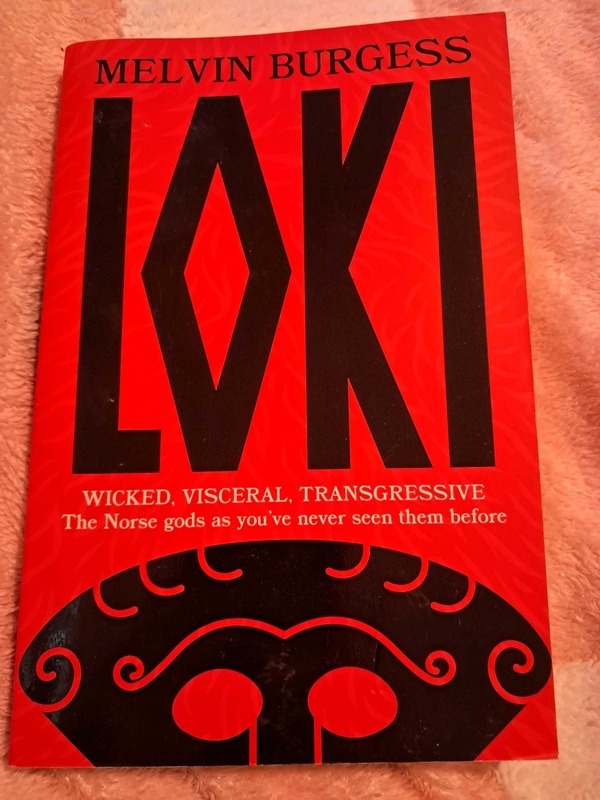
Contributor description: Novel by Melvin Burgess in which the Norse myths are retold from the titular character's perspective. The illustrations on the cover and back of the book are based on the carvings of the Snaptun stone, which depicts a male face with stitched-up lips. A story preserved in the Prose Edda describes how Loki has his lips sewn shut by the dwarf Brokkr, so it is thought that the face on the Snaptun stone is Loki.
(Book originally purchased at the Shakespeare and Company bookshop in Paris, France)
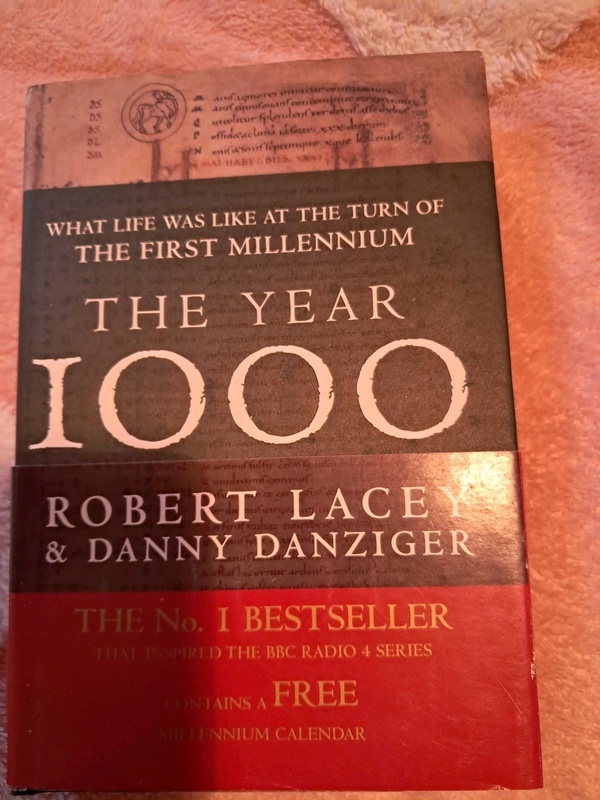
The Year 1000: An Englishman´s Year describes life in early medieval England, with several chapters discussing the interactions between the English and the Vikings.
240 pages. Dimension: 196 x 129 x 17. Weight in Grams: 170.
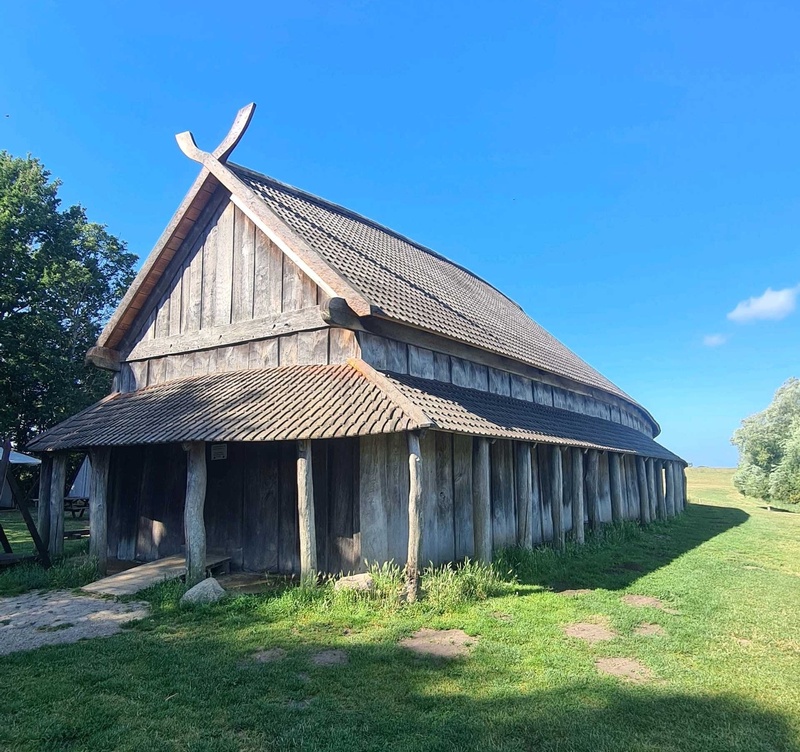
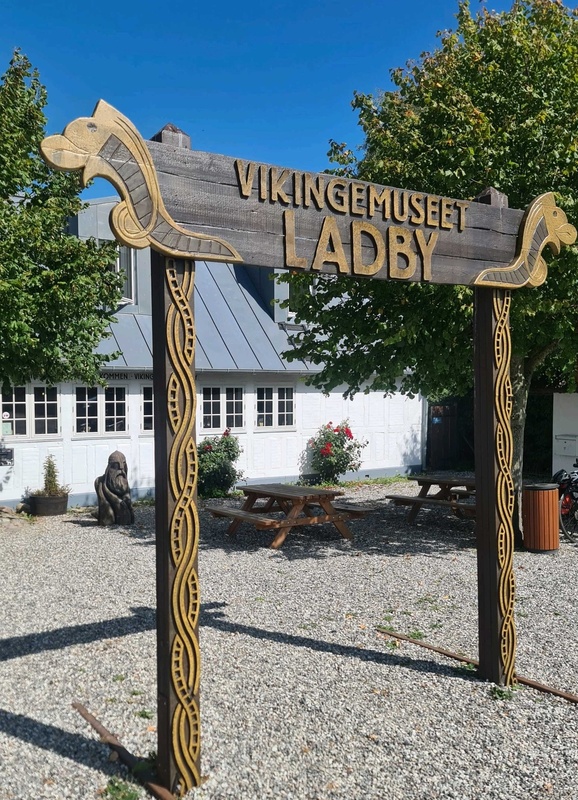
The Ladby Viking Museum (Vikingemuseet Ladby) is an archaeological museum in Kerteminde, Denmark, that houses Denmark’s only known Viking ship grave. Built directly over the original 10th-century (c. 925 AD) burial site inside a concrete vault, it displays the soil imprint and iron rivets of a 21.5-meter-long Viking longship. A local Viking king or chieftain was laid to rest here alongside grave goods, weapons, 11 sacrificed horses, and 3 to 4 dogs.
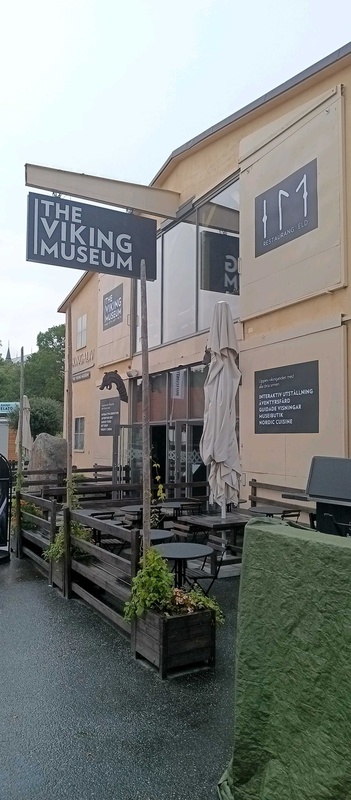
The Viking Museum (formerly Vikingaliv) at Djurgårdsvägen 15 on the island of Djurgården in Stockholm is an interactive museum dedicated to the Viking Age and Norse culture. The museum's centerpiece is an 11-minute dark ride that uses motion simulation, sets, and special effects to follow a 10th-century Viking family's journey across Europe. Audio is available in nine languages.
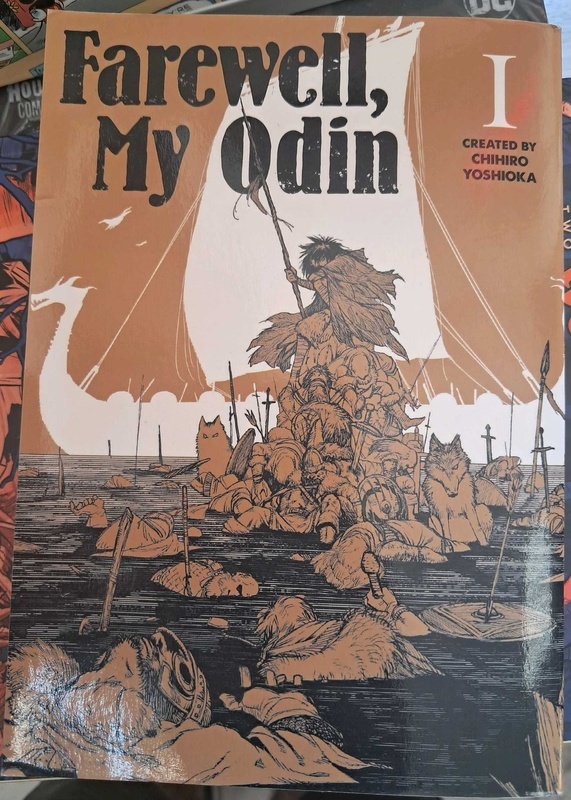
"Farewell, My Odin" is a Japanese manga series written and illustrated by Chihiro Yoshioka. It was serialized in Coamix's seinen manga magazine Monthly Comic Zenon between June 2023 and October 2024. The story is set against the brutal backdrop of 11th-century England during the Viking invasions.
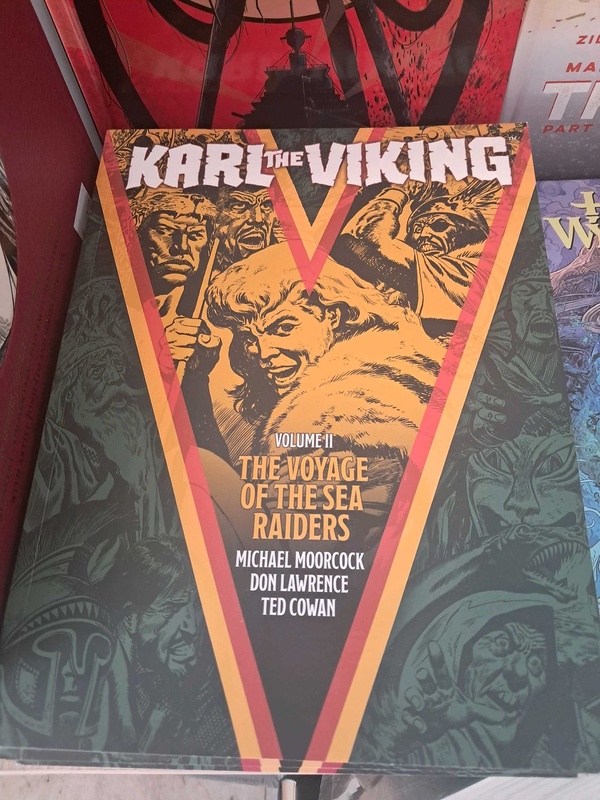
"Karl the Viking: Vol 2, The Voyage of the Sea Raiders." BY Michael Moorcock, Don Lawrence, and Ted Cowan. This concluding 240-page volume collects 12 historical-fantasy adventure strips originally serialized in the 1960s boys' weekly comic Lion. The story follows the Saxon-born Viking chief Karl and his band of warriors as they travel far beyond Scandinavia.
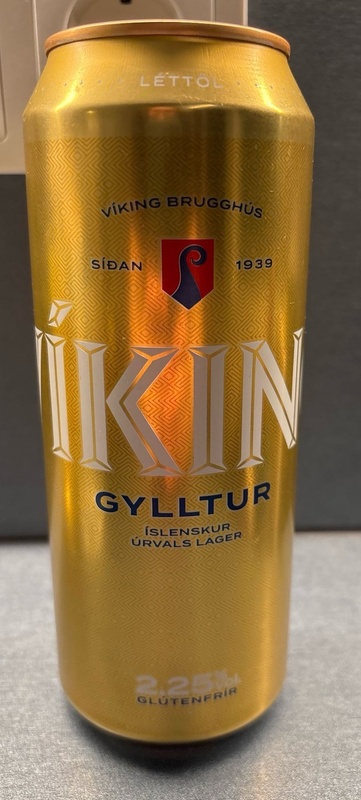
Víking Brugghús is one of Iceland's largest and most historic breweries, originally founded in 1939 as Efnagerð Siglufjarðar before relocating to Akureyri in 1945. Now operated under Coca-Cola European Partners (CCEP), the brewery produces some of the country's most ubiquitous beers, including its flagship premium lager, Víking Gylltur.
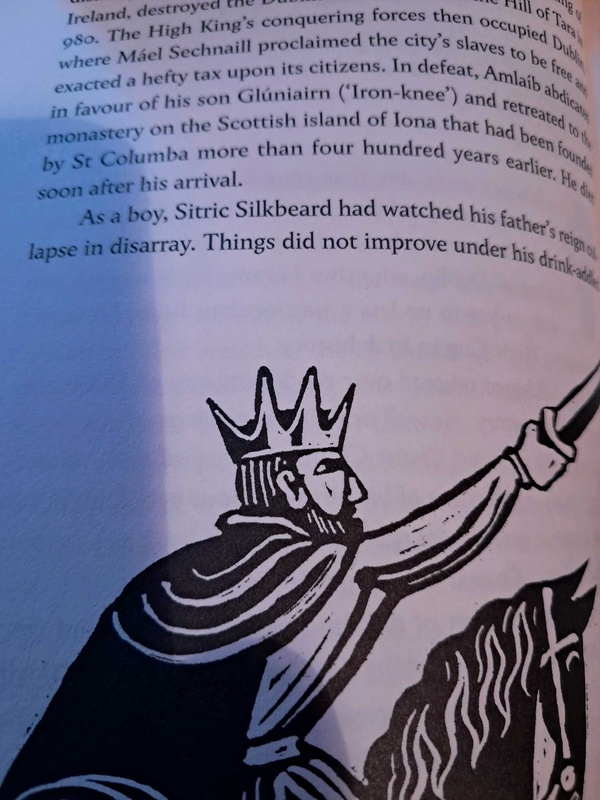
Illustrated chapter in Turtle Bunbury's book, "Ireland's Forgotten Past" describing the reign of the Hiberno-Norse King of Dublin, Sitric Silkbeard.
(Book originally purchased at the Museum of Literature Ireland in Dublin City. )
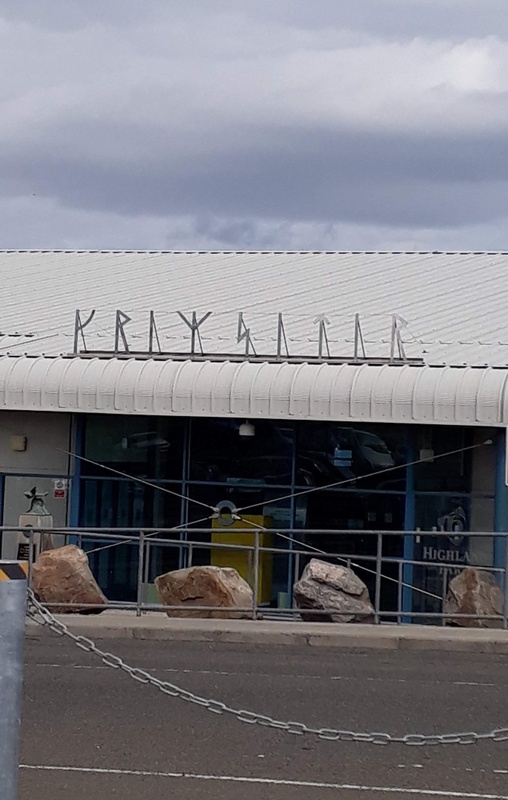
Kirkwall Airport entrance sign on the roof of the terminal. It is situated at Grimsetter so, transliterated into younger futhark runes, it reads Krimsitir.
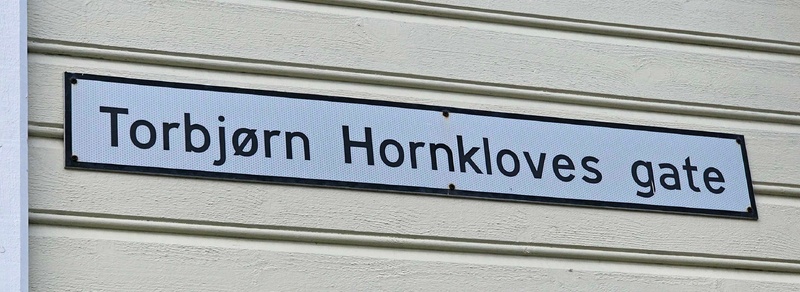
Street sign for Torbjørn Hornkloves gate in Stavanger, Norway. The street is named after Þorbjǫrn hornklofi (Torbjørn Hornklove), a ninth-century Norwegian skald traditionally associated with the court of King Harald Fairhair (Haraldr hárfagri). Poetry attributed to Þorbjǫrn includes material celebrating Harald and his victories, including the Battle of Hafrsfjord, traditionally associated with the unification of Norway.
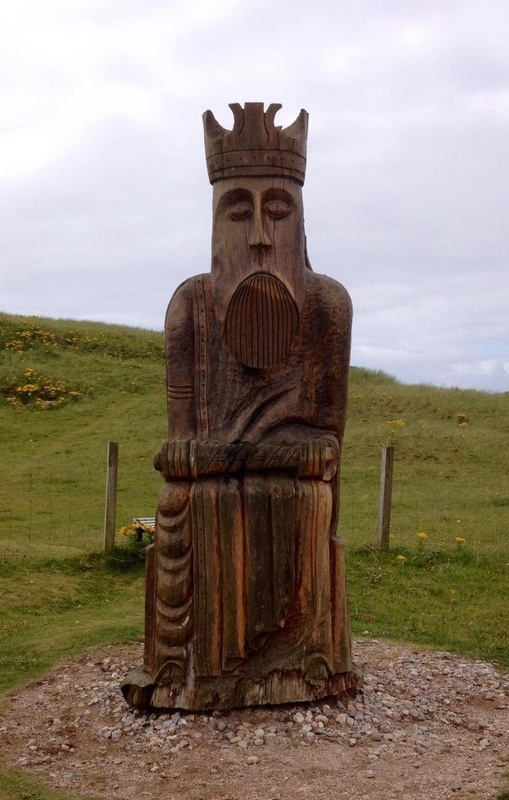
Modern monument commemorating Magnus III Olafsson of Norway, known as Magnus Barefoot (Magnús berfœttr), who was killed in battle in County Down in 1103. Magnus died while campaigning in Ireland, following an alliance with the Irish king Muirchertach Ua Briain. Medieval sources place his death and burial in Ulster, in the area around modern Downpatrick and Strangford Lough.
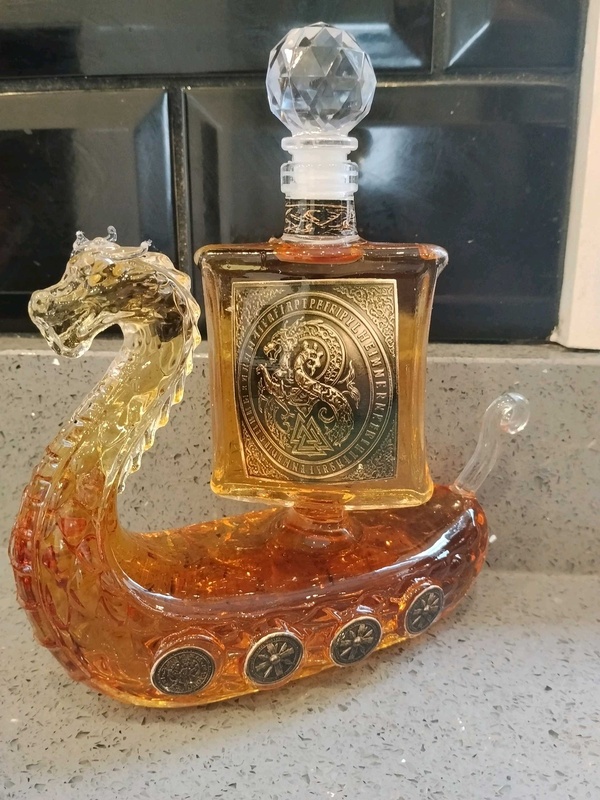
Glass drinks decanter purchased from the online retailer Temu. The decanter takes the form of a stylised Viking ship, with a dragon-headed prow and shields along the hull. A separate square bottle rises from the centre of the vessel and is decorated with Viking-inspired imagery, including a warrior figure, a Valknut and runic-style lettering. The owner has filled the decanter with rum!
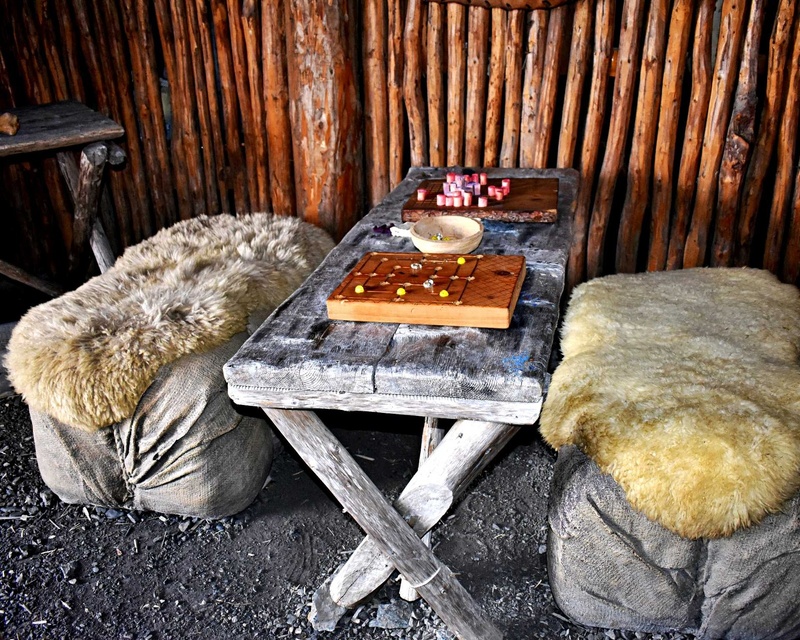
Board games set up for play at Norstead Viking Village, a reconstructed Viking-age port of trade at L’Anse aux Meadows, Newfoundland and Labrador, Canada. Hnefatafl belongs to the family of asymmetric tafl board games associated with the Viking Age, in which one side defends a king against a larger attacking force. The game forms part of Norstead’s presentation of Viking-age recreation and everyday life.
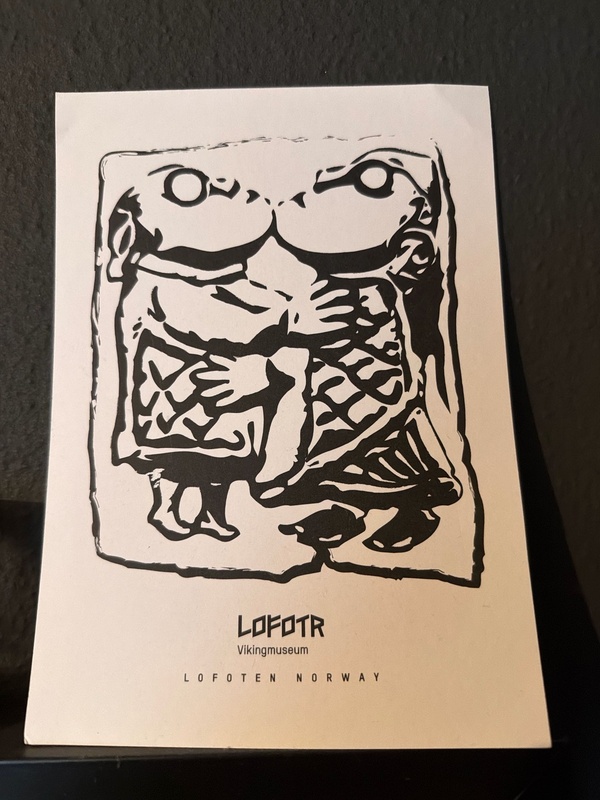
Modern print reproducing the design of a gullgubbe (small gold-foil figure) excavated at Borg in Lofoten, Norway, and displayed at Lofotr Viking Museum. The original is one of five gold-foil plaques found at Borg depicting two figures facing and embracing one another. Such paired figures have commonly been interpreted as the god Freyr and the jötunn Gerðr. The print bears the logo of Lofotr Viking Museum and “Lofoten Norway".
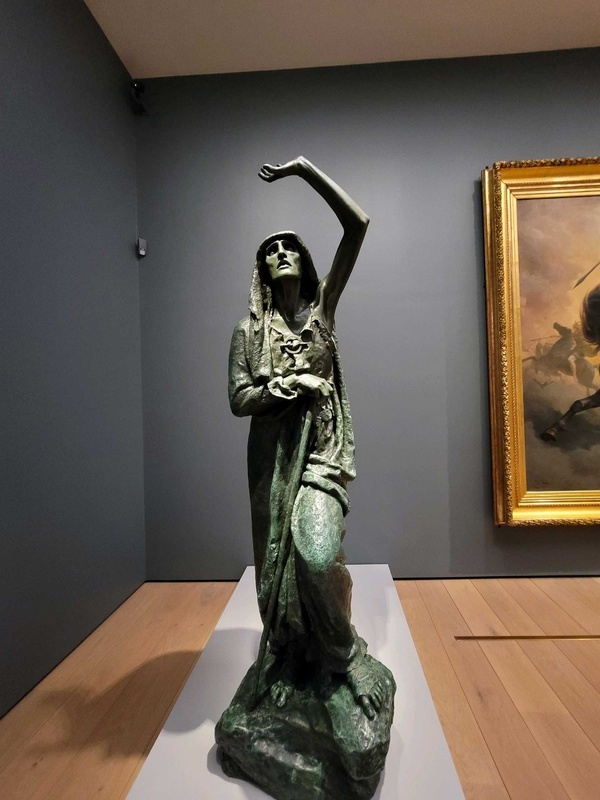
Sculpture by Søren Lexow-Hansen depicting Vala, a female seeress from Old Norse tradition. The standing figure raises one arm above her head while holding the other before her body. The work draws on the figure of the völva or prophetess familiar from Old Norse mythological literature, most notably the seeress who delivers the prophecy of 'Völuspá'. Photographed on display at the Nasjonalmuseet (National Museum), Oslo, Norway
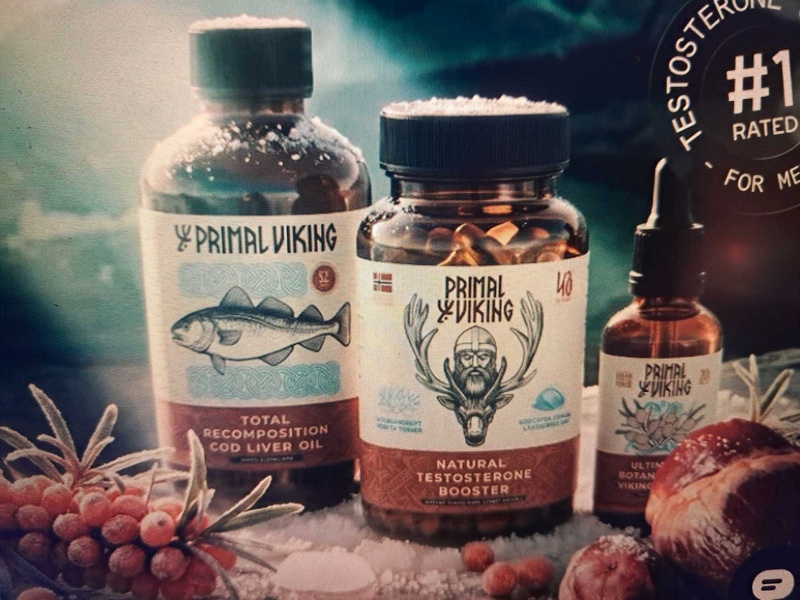
Online advertisement for dietary supplements sold under the Primal Viking brand. Products pictured include cod liver oil and a “Natural Testosterone Booster”, packaged using Viking-inspired branding and imagery. Primal Viking explicitly associates Vikings with masculinity, physical strength, testosterone, muscle development and sexual vitality. Its marketing contrasts modern men with supposedly stronger Viking ancestors and promotes ingredients including reindeer organs and Arctic plants.
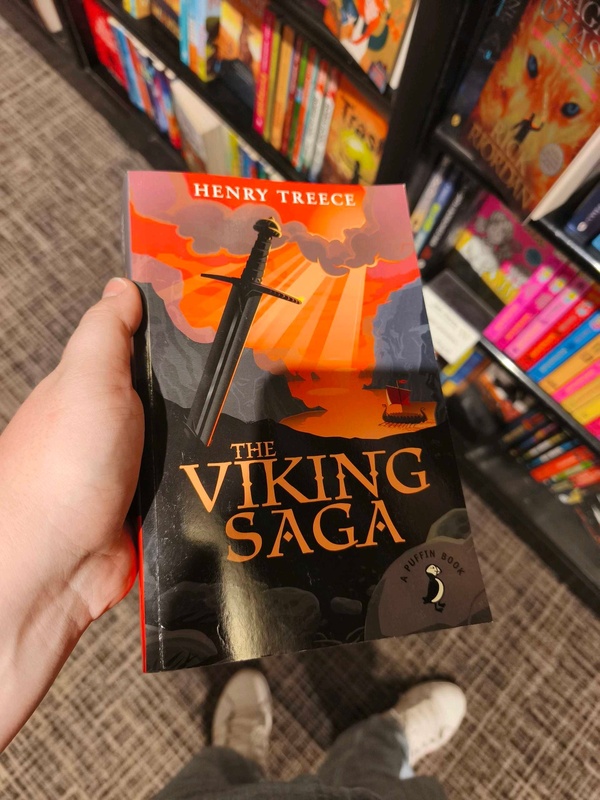
Paperback edition of Henry Treece’s The Viking Saga, a trilogy of historical novels for children comprising Viking’s Dawn, The Road to Miklagard, and Viking’s Sunset. The novels follow the Viking Harald Sigurdson on voyages from Scandinavia to Britain and beyond. This 2016 Puffin edition uses a stylised sword, mountainous landscape and Viking longship on its cover to visually signal its Viking setting.
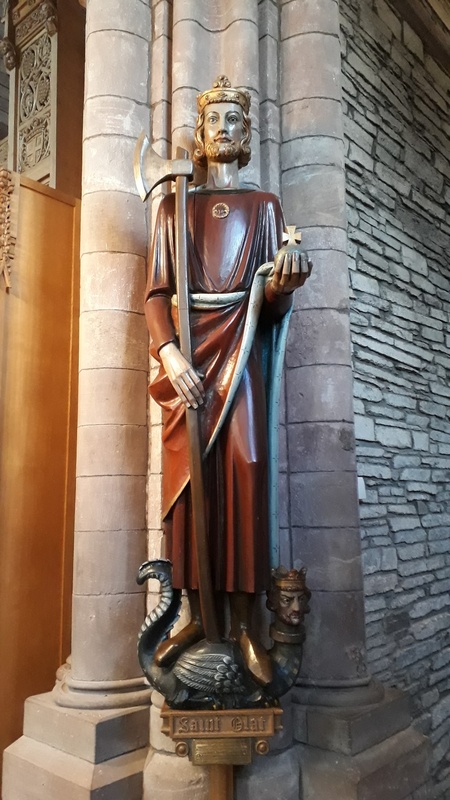
Wooden statue of St Olaf, gifted to Orkney in 1937 by Nidaros Cathedral in Norway. The missionary saint is depicted with a large Dane-axe.
Contributor supplied: Statue of King Olaf Tryggvason [editor: Olaf Haraldsson / St Olaf] of Norway inside St Magnus Cathedral in Kirkwall.
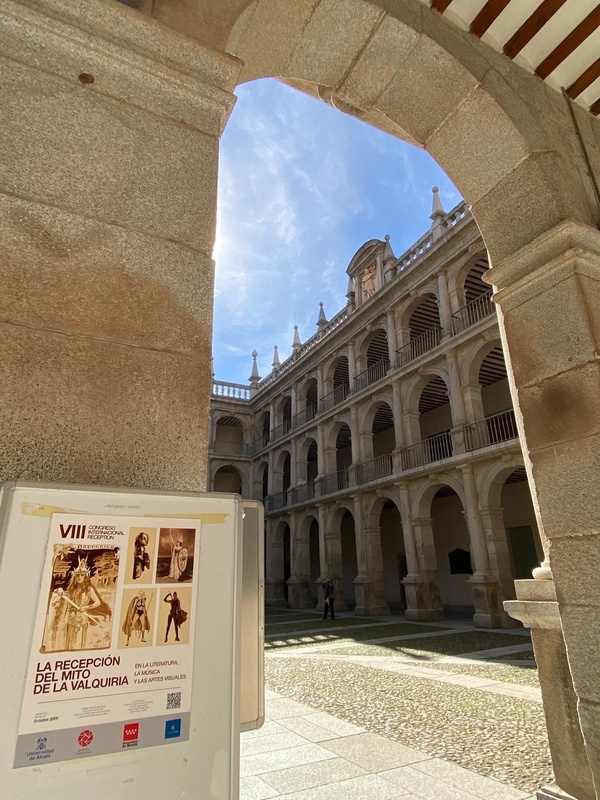
Poster advertising the 8th International RECEPTION Conference, “La recepción del mito de la valquiria en la literatura, la música y las artes visuales” (“The Reception of the Valkyrie Myth in Literature, Music and the Visual Arts”), held at the University of Alcalá, Spain, on 22–23 October 2026. The poster incorporates several historical and modern representations of the Valkyrie, illustrating the conference’s focus on the reception and transformation of the figure from the medieval period to contemporary popular culture.
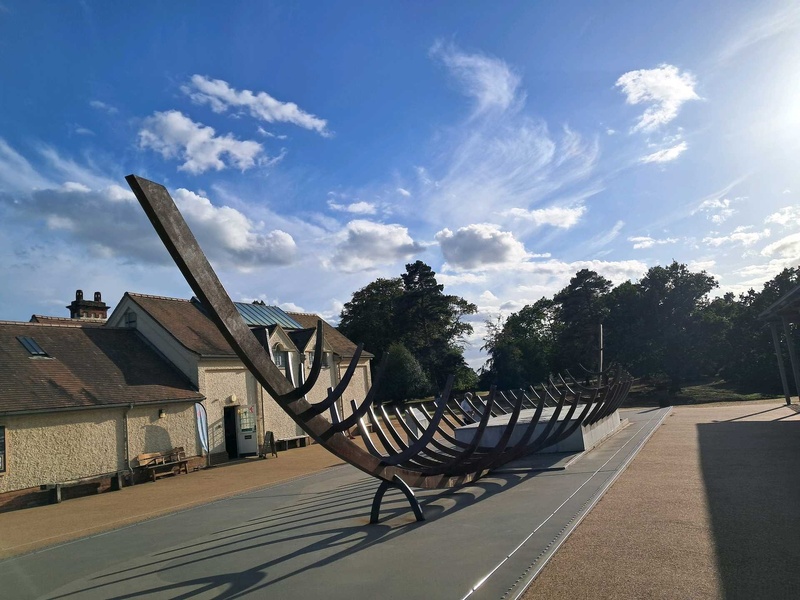
Full-scale modern sculpture representing the Anglo-Saxon ship discovered in Mound 1 at Sutton Hoo, Suffolk. Installed in 2018, the 27-metre-long sculpture reproduces the skeletal form of the vessel and indicates the position of the burial chamber. The original early seventh-century ship was placed beneath a burial mound and contained a rich assemblage of grave goods. Although Sutton Hoo is Anglo-Saxon rather than Viking, there are many connections between the ship burial and the wider Scandinavian world, including the famous Sutton Hoo helmet. Its face-mask may contain an allusion to Woden, the Anglo-Saxon counterpart of the Norse god Óðinn.