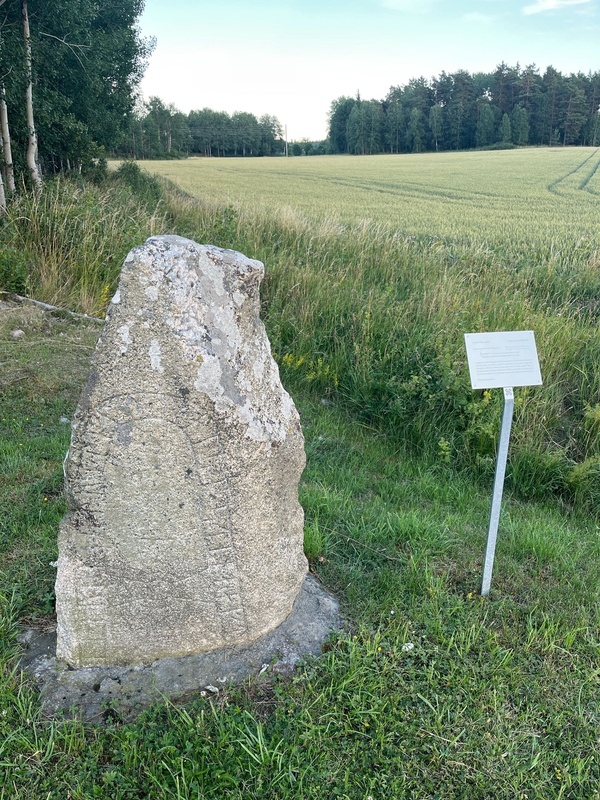
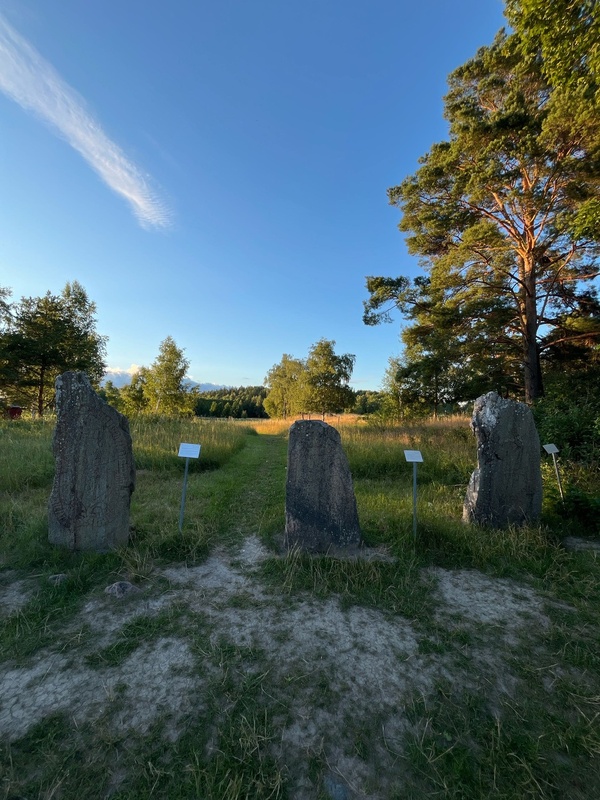
Runestone U 150 is a Late Viking Age granite runestone dating to around AD 1010–1050, located in Täby, Uppland, Sweden. The inscription commemorates Sveinn, stating that Jarlabanki and Fastvé raised the stone in memory of their son.
Runes:
[· iarla·b]aki · auk · fastui · litu · raisa · stina · aftiʀ [· suain · sun · sin]
Rune text transliteration:
Jarlabanki ok Fastvé létu reisa steina eptir Svein, son sinn.
English translation:
Jarlabanki and Fastvé had the stones raised in memory of Sveinn, their son.
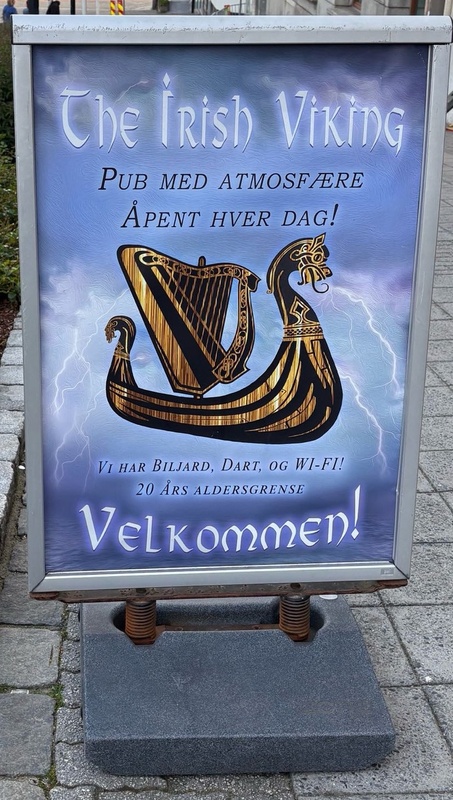
The Irish Viking Pub in Haugesund, Norway. “ Pub med atmosfære, åpent hver dag”- ”Pub with atmosphere, open every day”. The post has a Viking longship below a Harp.
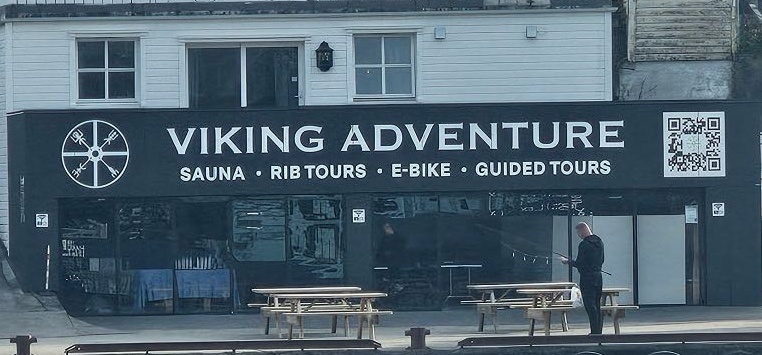
Viking Adventure Centre in Haugesund, Norway. The sign features the name along with a circular symbol on the left that resembles the 'Vegvisir' Icelandic stav.
The Broby Bro Runestones—U 135, U 136, and U 137—are a group of Late Viking Age memorial stones in Täby, Uppland, Sweden. Dating to around AD 1020–1050, they commemorate members of the influential Jarlabanke family and include inscriptions about Estrid and her husband Östen, who is remembered for travelling to Jerusalem and dying in the Byzantine Empire.
U 135
Runes:
× ikifastr × auk × austain × auk × suain × litu · raisa + staina þasa · at · austain faþur × sin × auk × bru × þasa karþu × auk × hauk þana ×
Rune text transliteration:
Ingifastr ok Eysteinn ok Sveinn létu reisa steina þessa at Eystein, fǫður sinn, ok brú þessa gerðu ok haug þenna.
English translation:
Ingifastr and Eysteinn and Sveinn had these stones raised in memory of Eysteinn, their father, and made this bridge and this mound.
U 136
Runes:
× astriþr × la(t) + raisa × staina × þasa × [a]t austain × buta sin × is × suti × iursalir auk antaþis ub i × kirkum
Rune text transliteration:
Ástríðr lét reisa steina þessa at Eystein, bónda sinn, er sótti Jórsalir ok endaðist upp í Grikkjum.
English translation:
Ástríðr had these stones raised in memory of Eysteinn, her husbandman, who attacked Jerusalem and met his end up in Greece.
U 137
Runes:
· aystin · auk · astriþr · raistu · stina · aftir · kak · sun · sin ·
Rune text transliteration:
Eysteinn ok Ástríðr reistu steina eptir Kag(?)/Gag(?), son sinn.
English translation:
Eysteinn and Ástríðr raised the stones in memory of Kagr(?)/Gagr(?), their son.
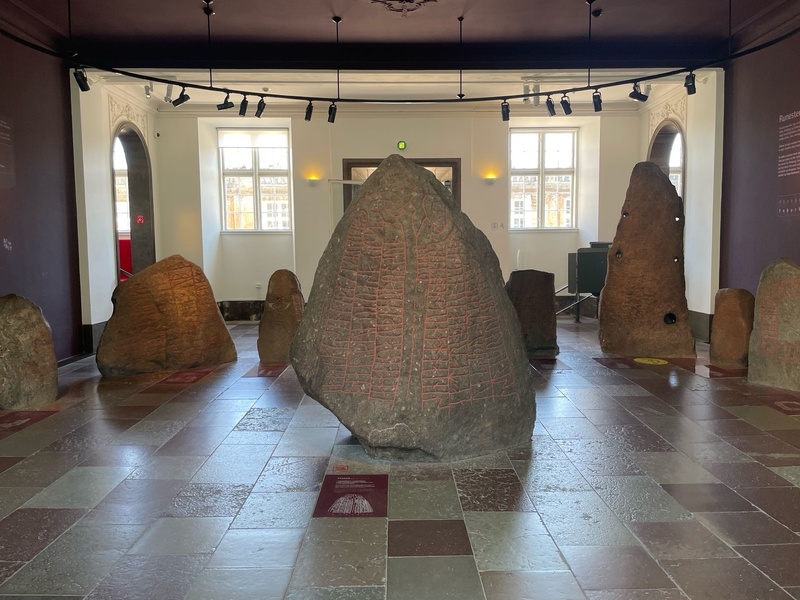
Picture of several runestones located at Nationalmuseet, the National Museum of Denmark in Copenhagen. The runestone at the forefront is the Tirsted runestone DR 216. This commemorative inscription runs on two sides of the stone, and reads:
Translitteration
§A osraþr auk hiltu(-)-ʀ ¶ raisþu stain þansi ¶ aft froþa fronti sin ¶ sin ian han uas þo foink ¶ uaiʀa §B ian han uarþ tauþr o suo¶þiauþu auk uas furs ¶ i frikis ioþi þo aliʀ uikikaʀ
English
§A Ástráðr and Hildungr/Hildvígr/Hildulfr raised this stone in memory of Fraði/Freði, their kinsman. And he was then the terror(?) of men. §B And he died in Sweden and was thereafter the first(?) in(?) Friggir's(?) retinue(?) and then: all vikings.
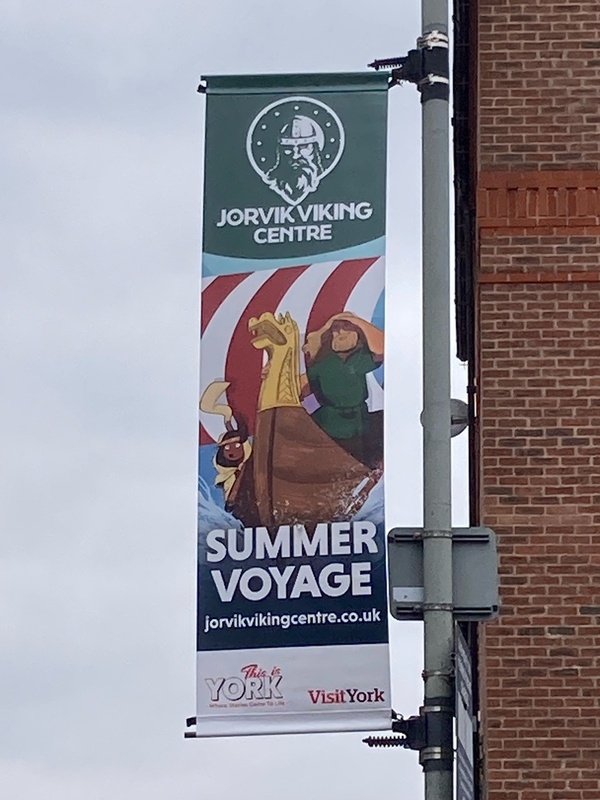
Signage to the Jorvik Viking Centre including advertisement for the Summer Voyage, This is York and Visit York. The advertisement includes a cartoon of a ship with sails and two Vikings
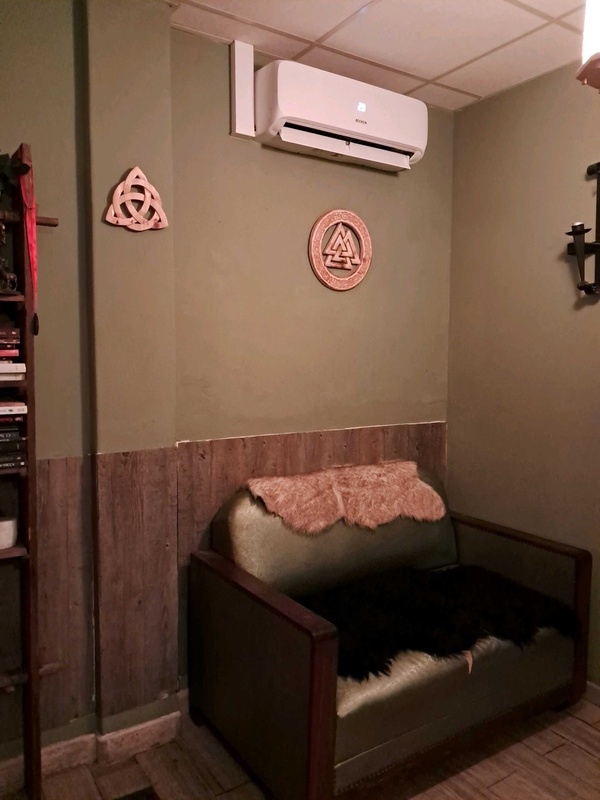
Wooden carved artwork from inside the restaurant O’Covil in Lisbon, Portugal. The item on the left is a celtic knot and the item on the knight is a Valknut.
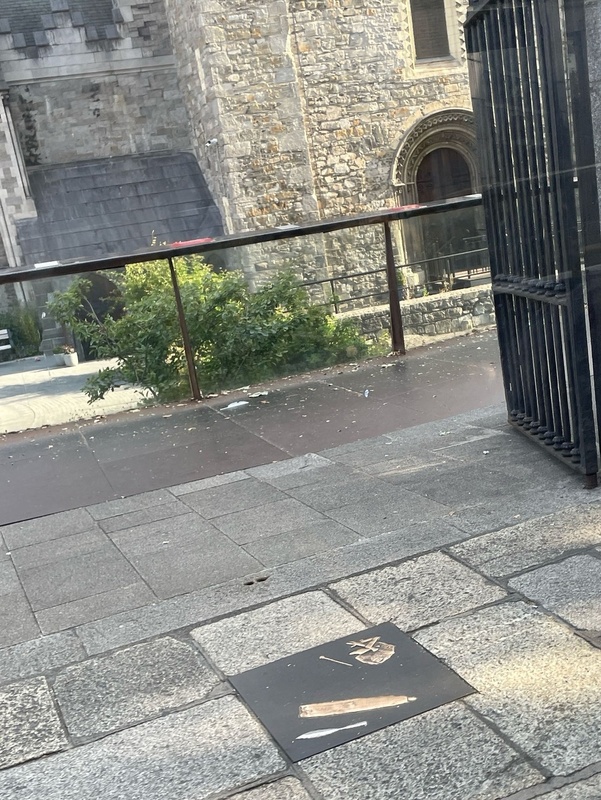
Viking metal plaque from Dublin, part of a series located around Christ Church and Wood Quay in Dublin. They feature replicas of medieval and Viking artefacts. This plaque includes a spearhead, needle, iron weaving sword or batten, and a key and lock mechanism.
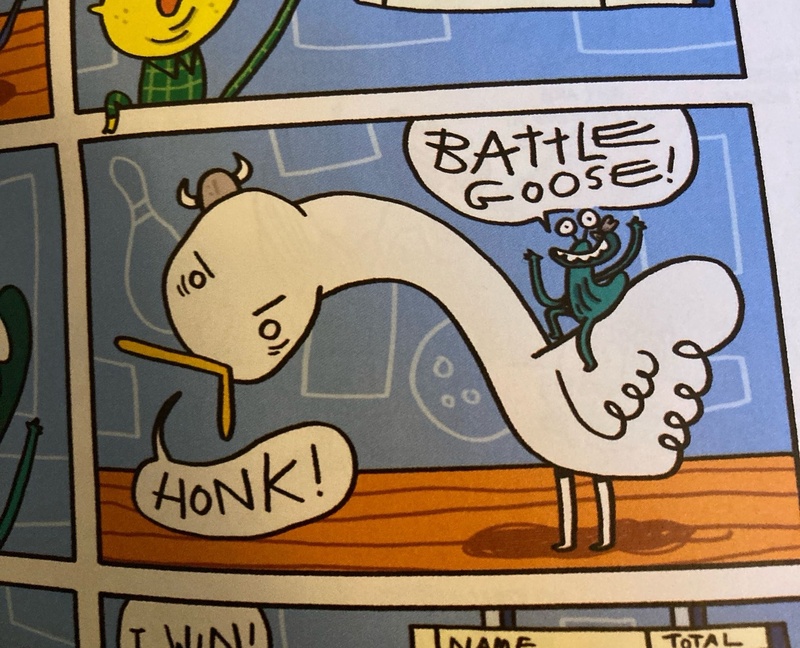
Doug Slugman, P.I. by Joe List in the Phoenix Comic the week of the 16-July-2026. The comic features a battle goose wearing a horned Viking helmet saying "honk" with a small creature riding it's back.
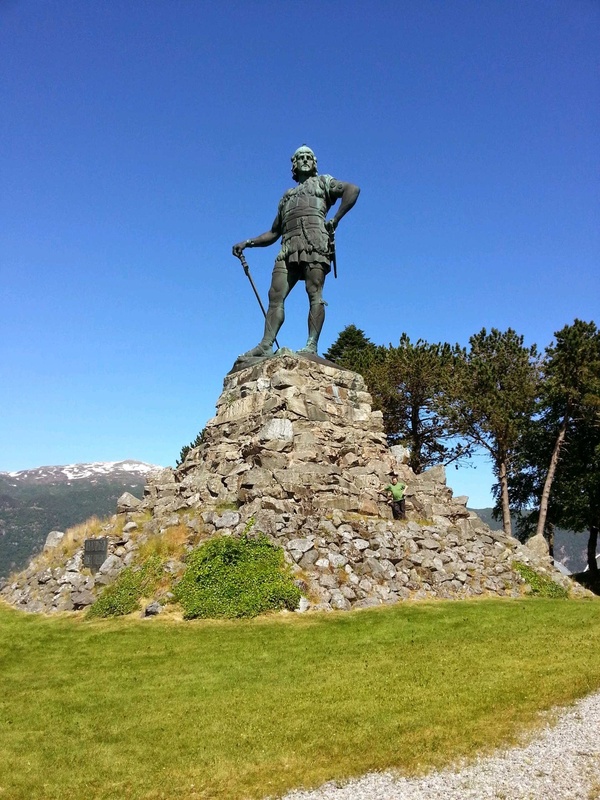
Statue of Fridtjov the bold. Located in Vangsnes, a village in Vik Municipality in Vestland county, Norway, stands the statue of Fridtjof the Bold. Fridtjof, who was the king of Ringerike and Sogn according to Friðþjófs saga hins frœkna (Fridtjof's Saga). The statue was commissioned by Kaiser Wilhelm II of Germany. It is 10.5 metres (34 ft) high and is situated on a 12-metre (39 ft) high platform. The statue was sculpted by German sculptor Max Unger (1854-1918). It was transported to Vangsnes in 15 sections and erected during February 1913.
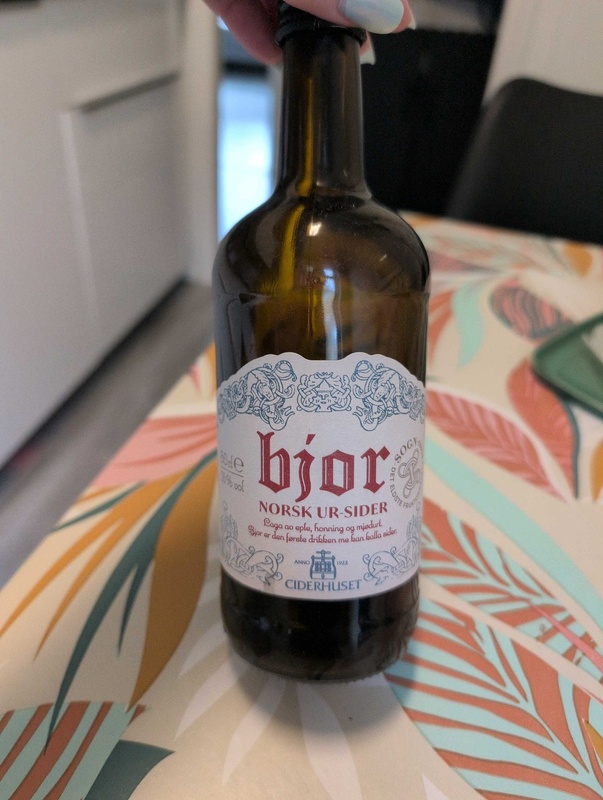
Bjor ur-sider, also known as Bjor Viking cider. Produced by Ciderhuset / Balholm in Sogn, Norway, it is a strong, sweet, and aromatic style of cider meant to emulate the mead-like fruit brews of the Vikings. It is considered a rich "Viking cider" as it is flavored with honey and meadowsweet which is believed to have been used by Vikings.
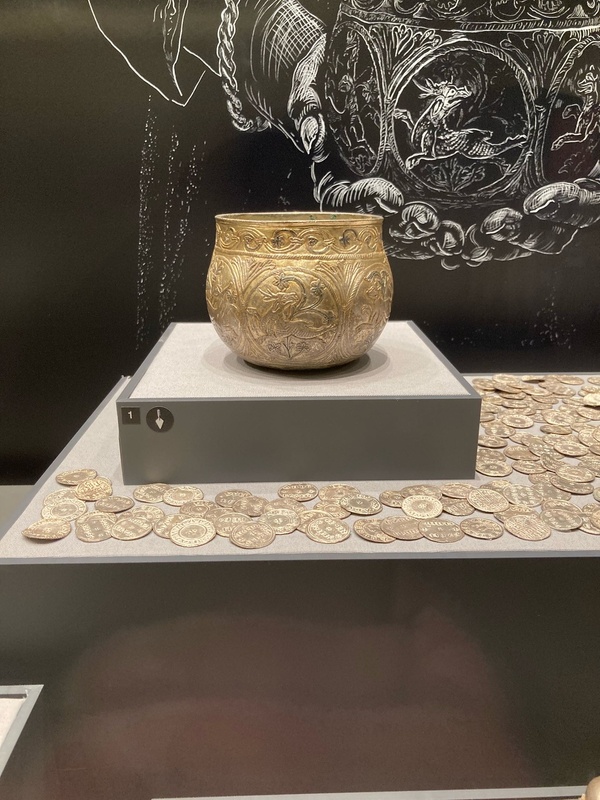
Picture of part of the Vale of York hoard, found in 2007 in North Yorkshire, England and now housed at the Yorkshire Museum. This 10th century Viking hoard contains 617 silver coins and 65 other items. This pictures show some of those coins, and the Vale of York cup, a gilt silver cup possibly plundered from the North of France.
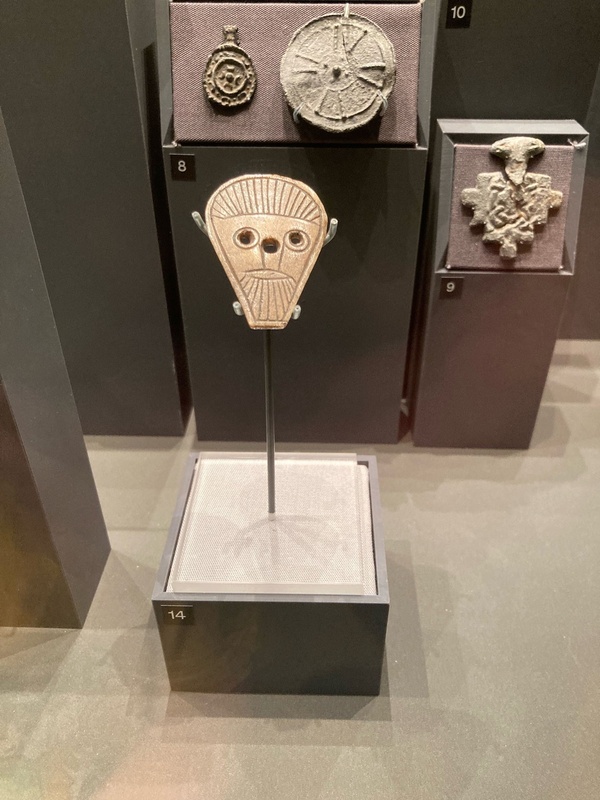
This carved bone plaque is believed to be a self-depiction of a Viking Age Norseman. Dated between the years 866-1000 it is part of the Viking North exhibition ath the Yorkshire Museum. Pictured behind it is a selection of silver pendants.
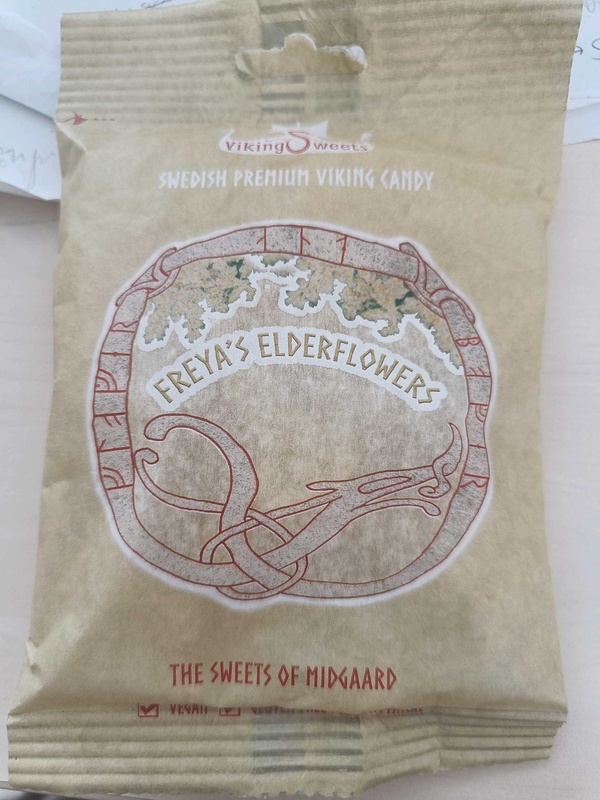
A bag of Freya's elderflowers candy by the company Viking Sweets. This Swedish company sells "premium Viking candy" under the collected name of "Sweets of Midgaard". Their candy bags are decorated with a runestone inspired motif.