Visit Haukeli is a tourism website which includes tourism attractions that have a Norse influence. One of them is the Urdbøuri and Uravert where the website says "Uravert is considered to be quite mysterious, the valley is too wide and the surrounding mountains too low to be able to give such a result. Therefore, there are several legends about Urdbøuri. The only victory was won by Thor with the hammer who hit the mountain in anger. He became furious when he was not offered more beer at a wedding on a farm that was located here. The masses of stones fell down on the people and the farm, but then the hammer slipped out of his hand and disappeared into the stone rubble. Thor then went through the rubble and threw stones aside through the rubble to find his hammer again, and that is how Thor's Way was created".
Norwegian soccer fan Emil Anners Lappen tells CBC The National about the moment he got caught on camera refusing to join a ‘factually wrong’ celebratory Viking row in Gjøvik after Norway’s win over Senegal at the 2026 FIFA World Cup.
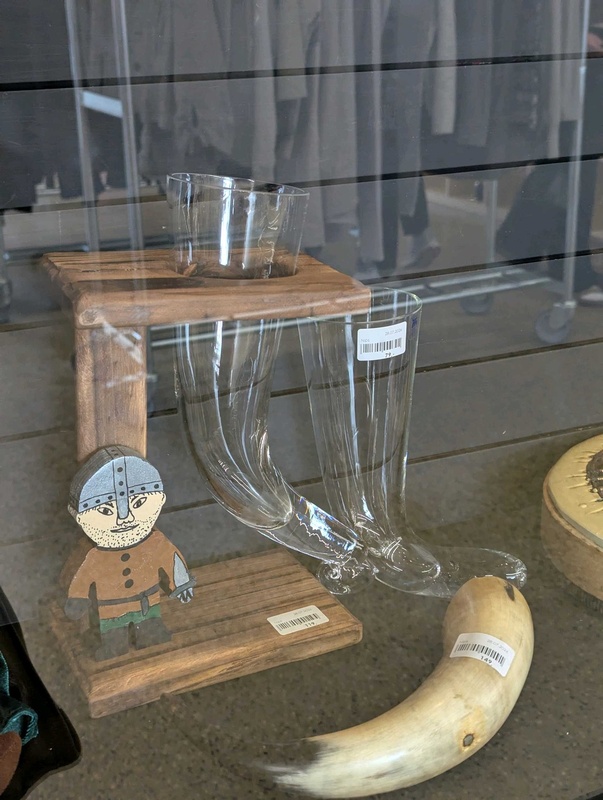
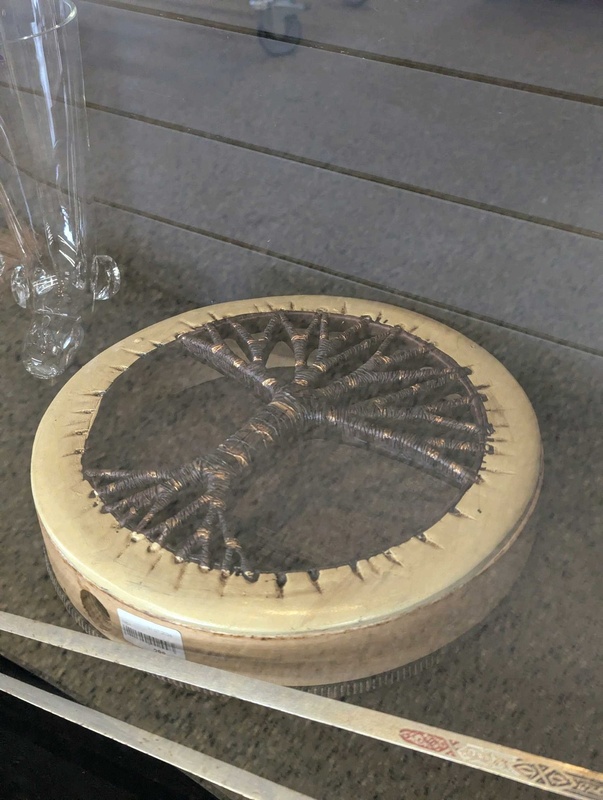
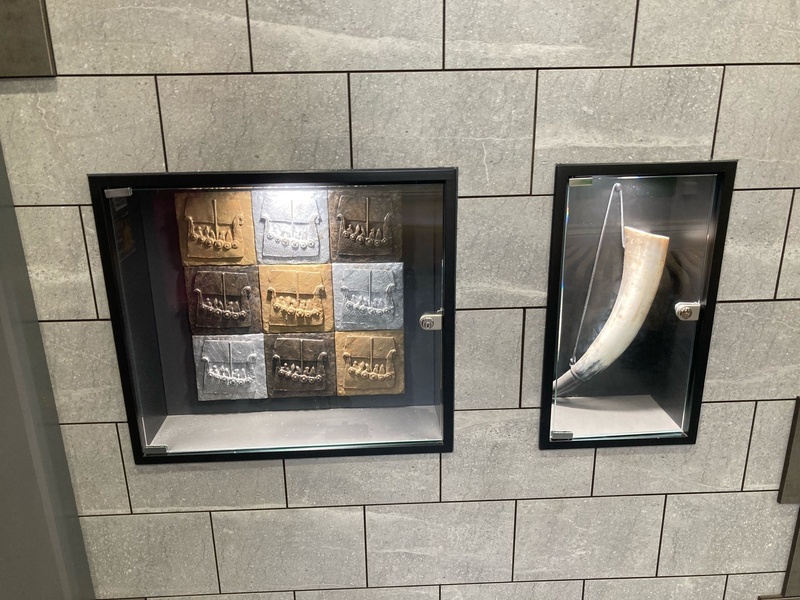
Viking artefacts on display at the York station including nine small, metallic Viking ship relief tiles mounted in a grid formation on a textured wall and a replica drinking horn.
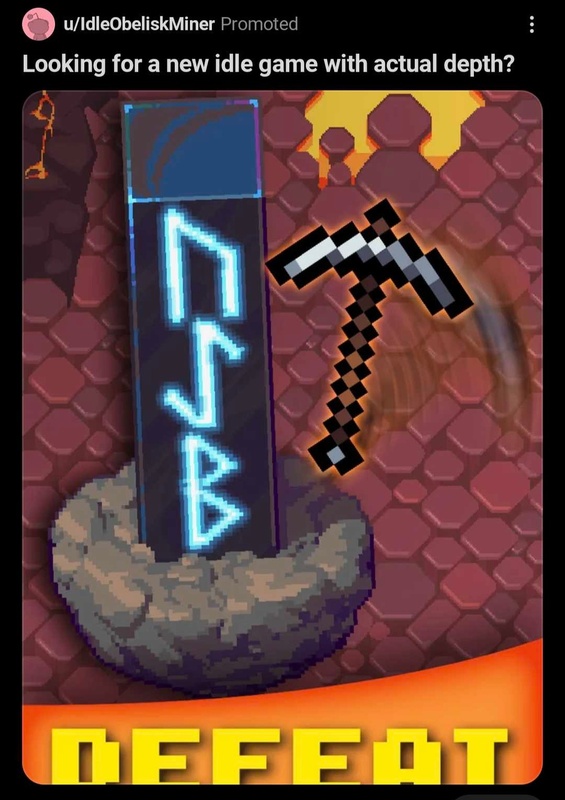
Idle Obelisk Miner is an incremental mining simulator developed by Checkbox Entertainment. The picture is a screenshot from the game featuring a pick axe and a sign with runes saying "USB".
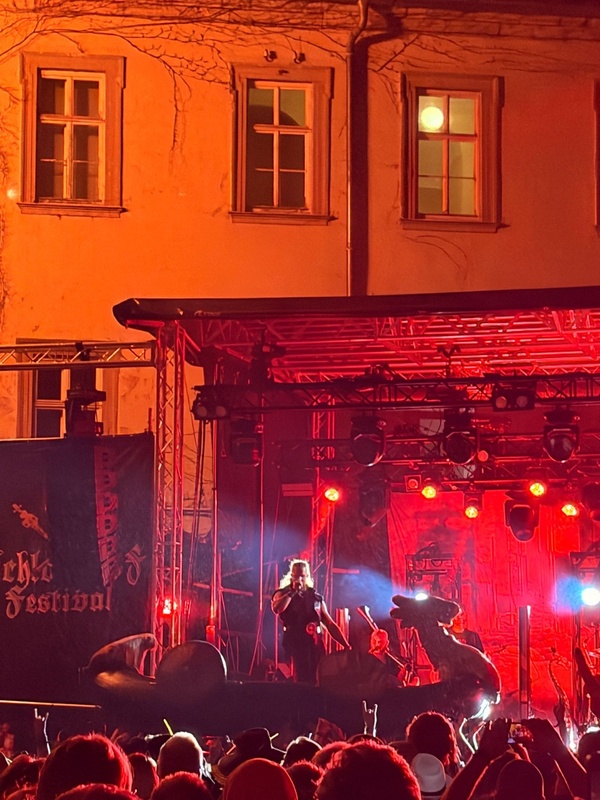
Saltatio Mortis performed on a large replica of a Viking longship at the Schlosshof Festival 2026. Saltatio Mortis primarily performs medieval metal, medieval rock, and folk rock.
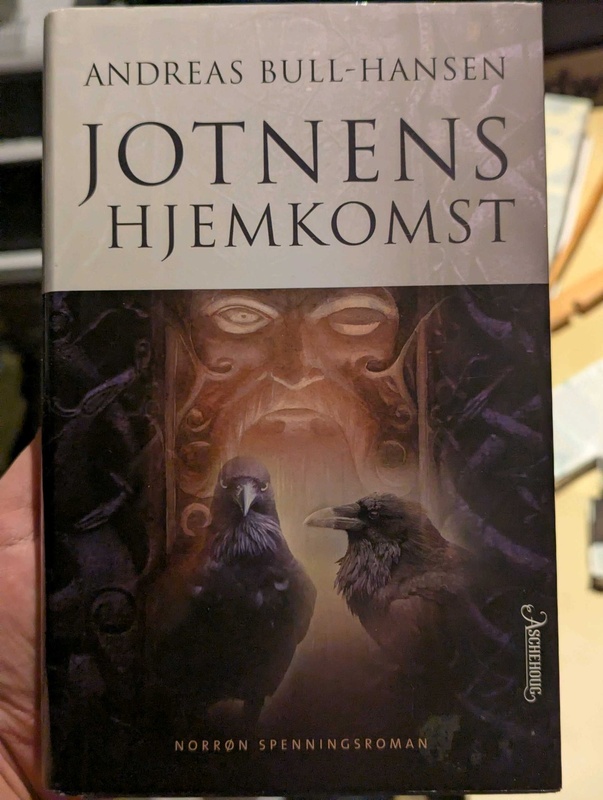
Jotnens hjemkomst (Return of the Giant), the first installment in the Tyr Trilogy (Tyr-trilogien) written by Norwegian author Bjørn Andreas Bull-Hansen.
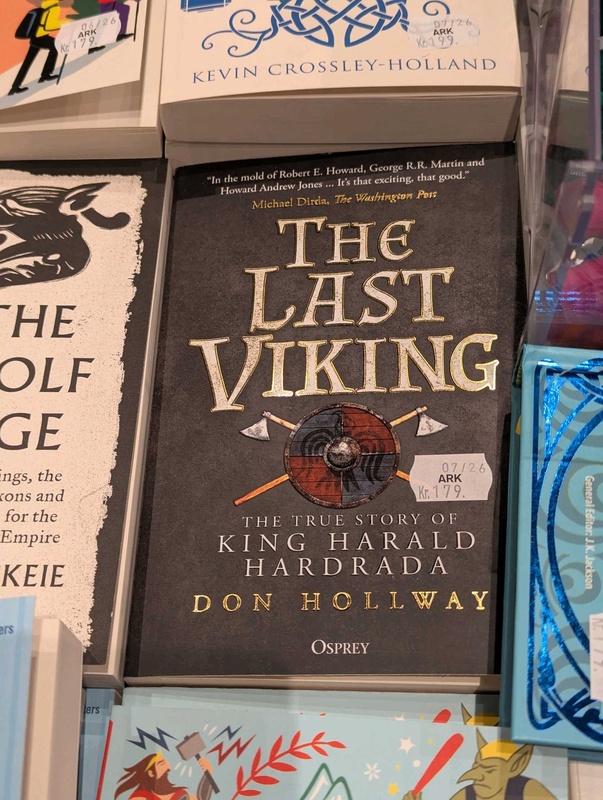
The Last Viking: The True Story of King Harald Hardrada (2021) by Don Hollway, a biography of Harald Hardrada, King of Norway and one of the most renowned Viking warriors, displayed among Norse and Viking-themed books.
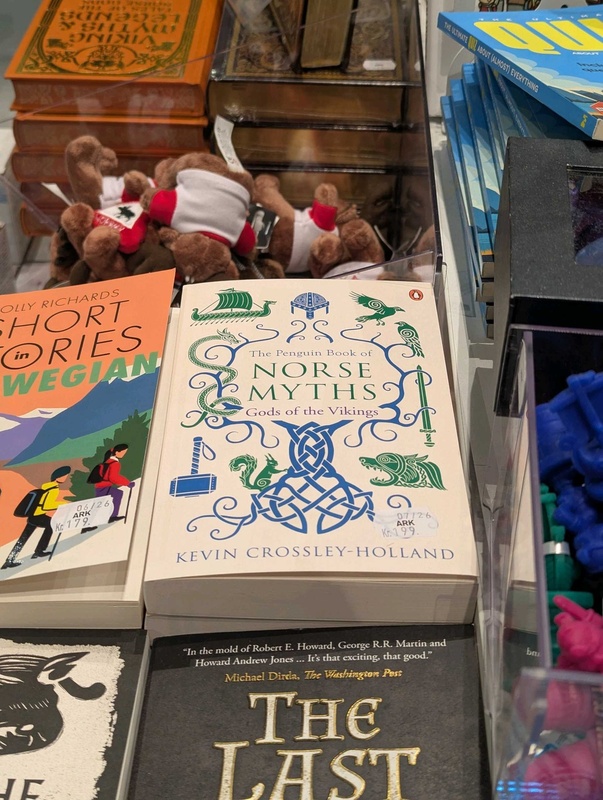
The Penguin Book of Norse Myths: Gods of the Vikings by Kevin Crossley-Holland, a collection and retelling of Norse myths, featuring stories of gods, giants, heroes and other figures from Norse mythology, originally published in 1980.
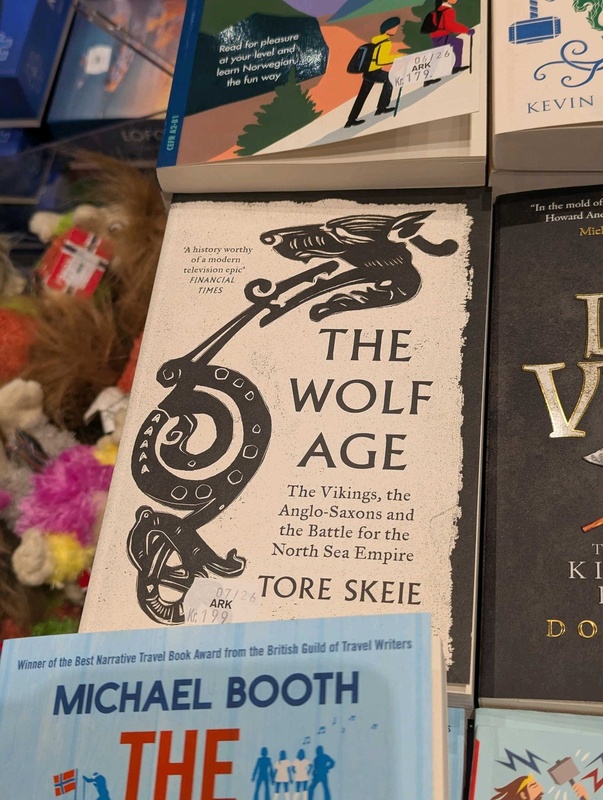
The Wolf Age: The Vikings, the Anglo-Saxons and the Battle for the North Sea Empire by Tore Skeie, a history of the struggle between Vikings and Anglo-Saxons for control of the North Sea world, focusing on the rulers, warriors and conflicts that shaped the eleventh century.
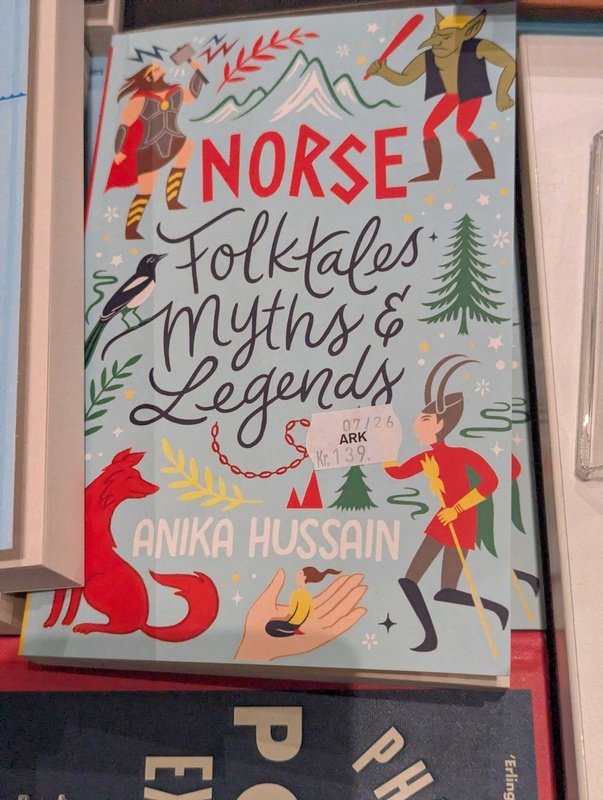
Norse Folktales, Myths & Legends by Anika Hussain (2022), an illustrated collection of traditional Norse folktales, myths and legends, introducing stories of gods, mythical beings and heroes from Norse tradition.
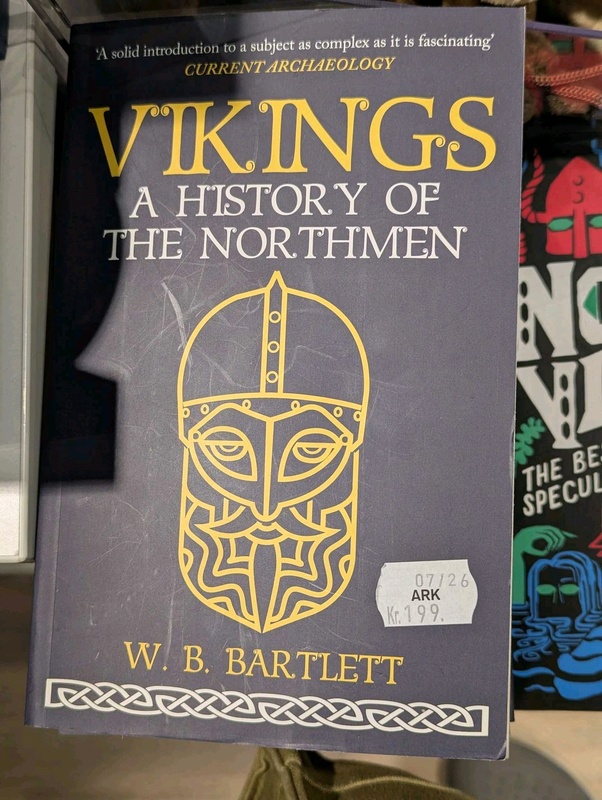
Vikings: A History of the Northmen by W. B. Bartlett (2019), a history of the Vikings, exploring their society, warfare, exploration and expansion across Europe and the wider medieval world.
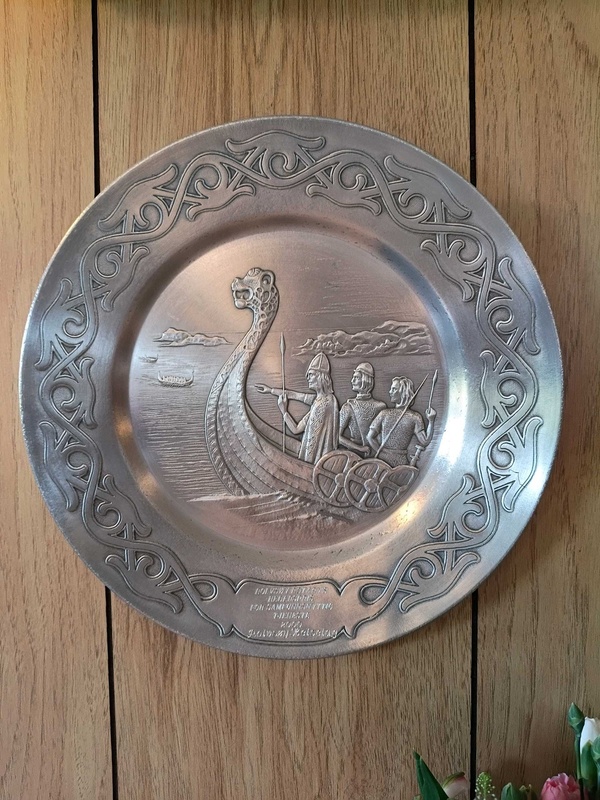
Decorative, circular pewter plate featuring a detailed relief engraving of a Viking longship and Norse warriors. The border contains a wide, continuous band of traditional Celtic or Norse knotwork loops around the rim.
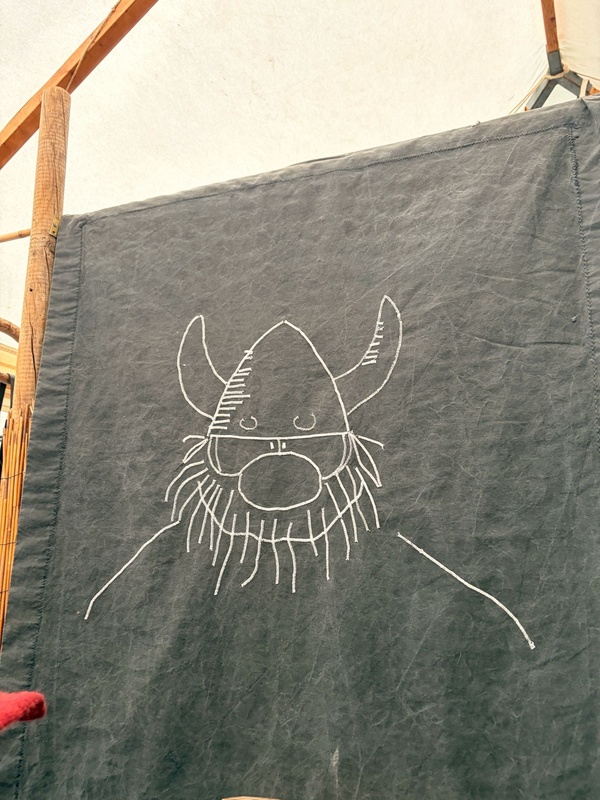
A white line-art embroidery or print of a stylized cartoon Viking depicted on a textured dark gray, fabric-like canvas background. The Viking is Hägar the Horrible, main character of the eponymous comic strips created by Dik Browne and launched in 1973. Seen at the Schlosshof Festival 2026 (https://www.schlosshof-festival.de/Startseite.html).
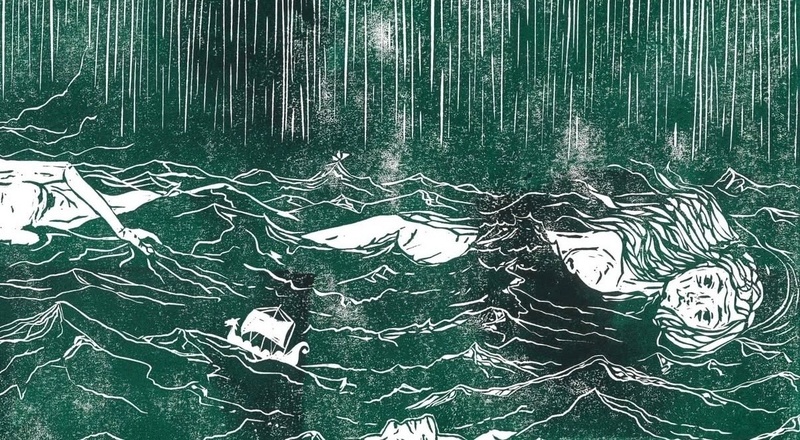
Svalar unnir, dætur Ránar (black waves, daughters of Rán) . Created by Marie Sophie Besson (https://www.instagram.com/marie.giboulee.art/) using linocut printmaking technique. In Norse mythology, the Daughters of Seagoddess Rán (also known as the daughters of Ægir) are nine personifications of sea waves.
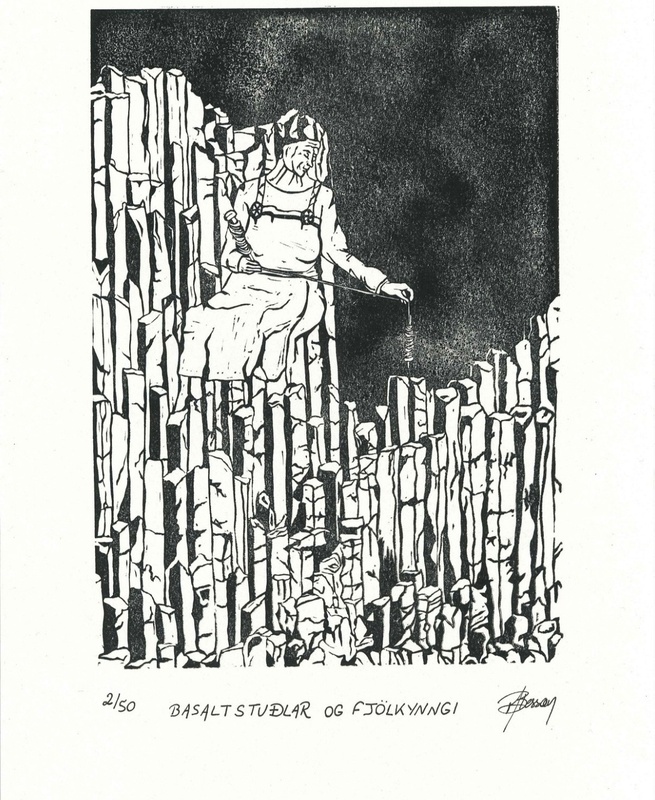
Basaltstuðlar og fjölkynngi (basalt columns and sorcery). Created by Marie Sophie Besson (https://www.instagram.com/marie.giboulee.art/) using linocut printmaking technique. The integration of Iceland's natural landscape with a figure apparently practising seiðr suggests a connection to broader Viking heritage. References to seiðr are common in saga and eddic literature, often focusing on its practice by both appropriate and controversial figures.