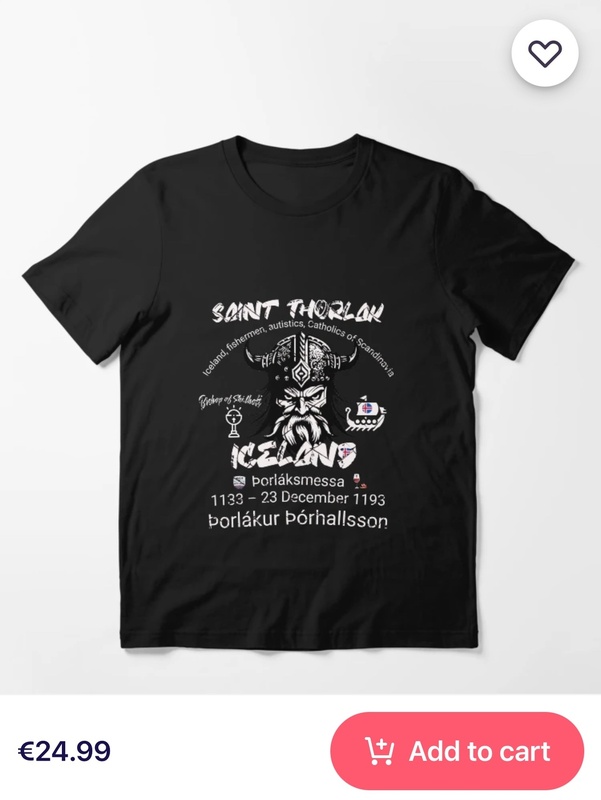
Merchandise invoking Saint Thorlak of Iceland (Þorlákur Þórhallsson, 1133-1193). The t-shirt reads "SAINT THORLAK - Iceland, fishermen, autistics, Catholics of Scandinavia - Bishop of Skálholt - ICELAND - Þorláksmessa - 1133 - 23 December 1193 - Þorlákur Þórhallsson" and is decorated with emojis of wine and viking ships. In the centre features prominently the angry head of a bearded man wearing a horned helmet.
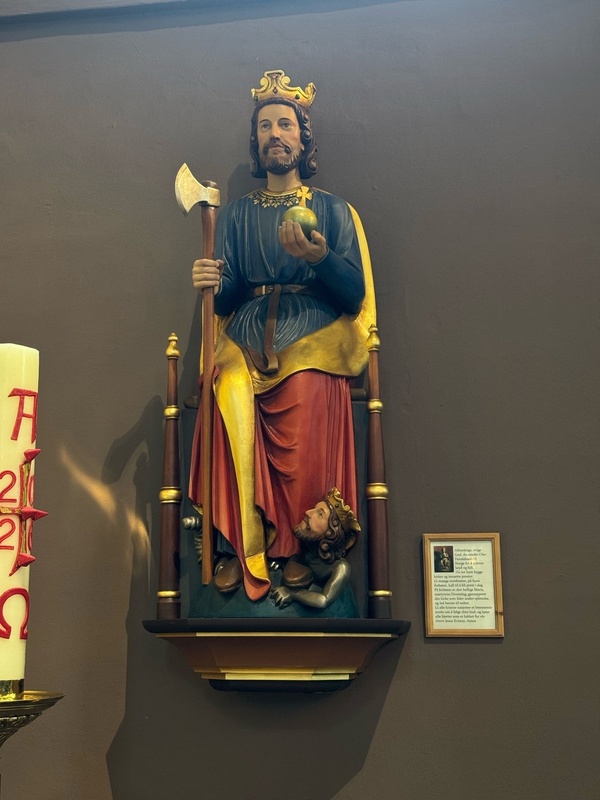
Sculpture of Saint Olaf in the St. Olavs Domkirke, Oslo. Saint Olav is here depicted holding an axe and standing triumphant over his past non-Christian Viking self.
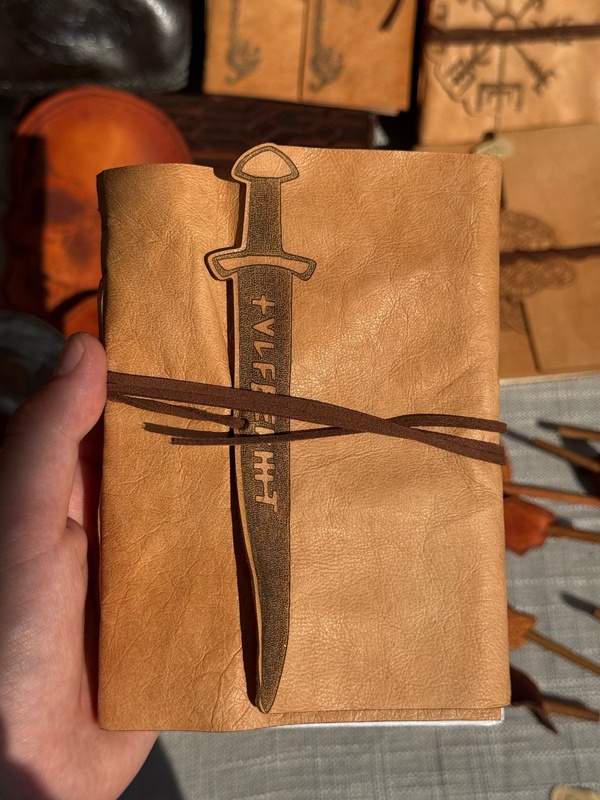
Handcrafted leather notebook with Ulfberht sword. Ulfberht swords are dated between the 9th and 11th century and named after the engraving on the blade, which is likely the name of the maker of these swords. Ulfberht is a Frankish name, suggesting Frankish production for these swords. The notebook is sold at a Viking-themed festival in Norway.
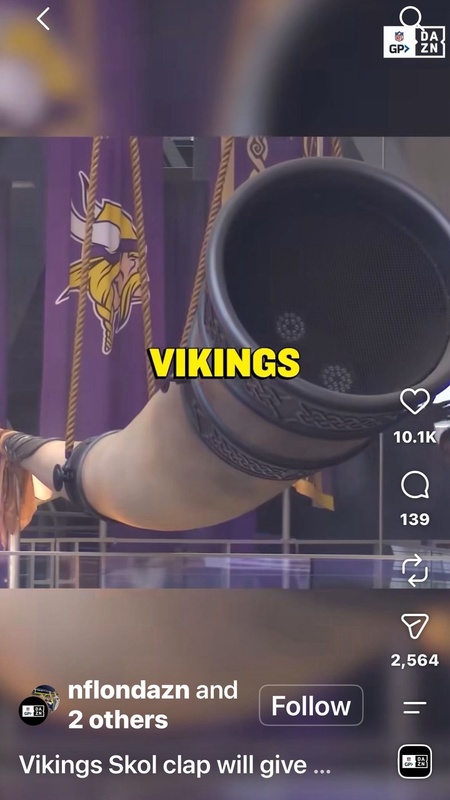
Large replica of the mythical Norse horn Gjallarhorn at the Minnesota Vikings’ stadium, used during games and fan celebrations as part of the team’s modern Viking-themed identity.
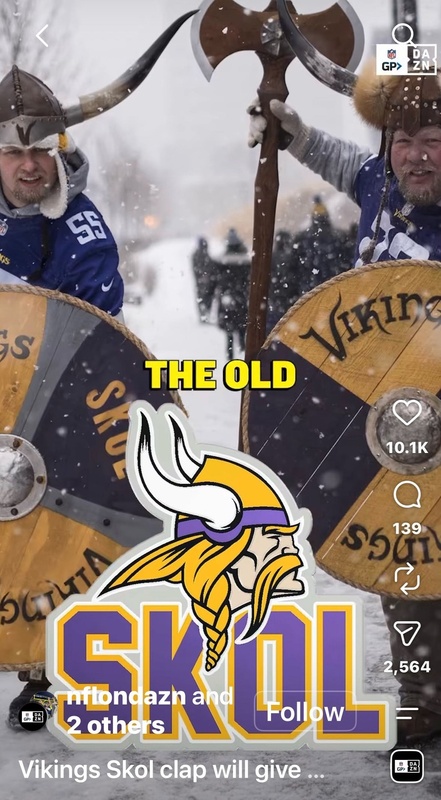
Minnesota Vikings fans with replica shields, horned helmets and axes, adopting the imagery of Viking warriors. The display connects modern sports fandom with Viking identity, as supporters symbolically present themselves as “Vikings.”
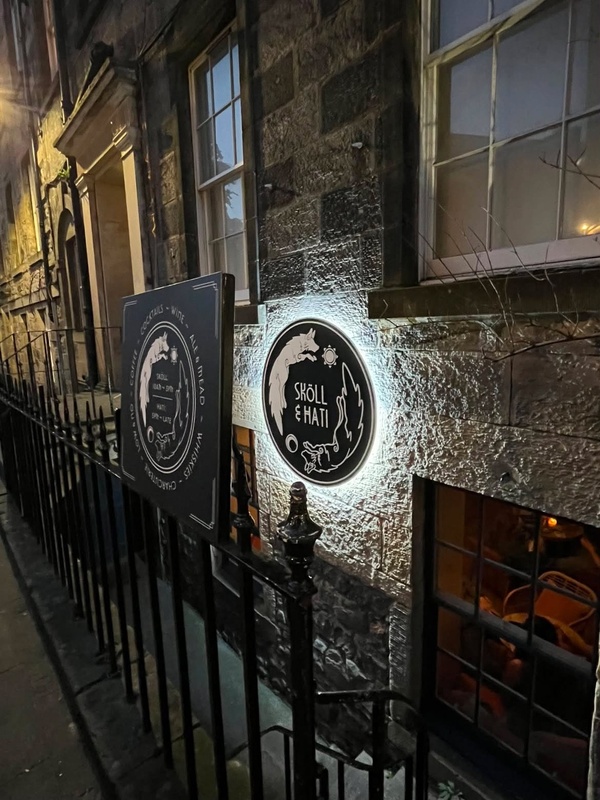
The selected image shows the illuminated circular sign for Sköll & Hati, a Norse mythology-themed basement bar located at 3A Merchant Street in Edinburgh's Old Town.
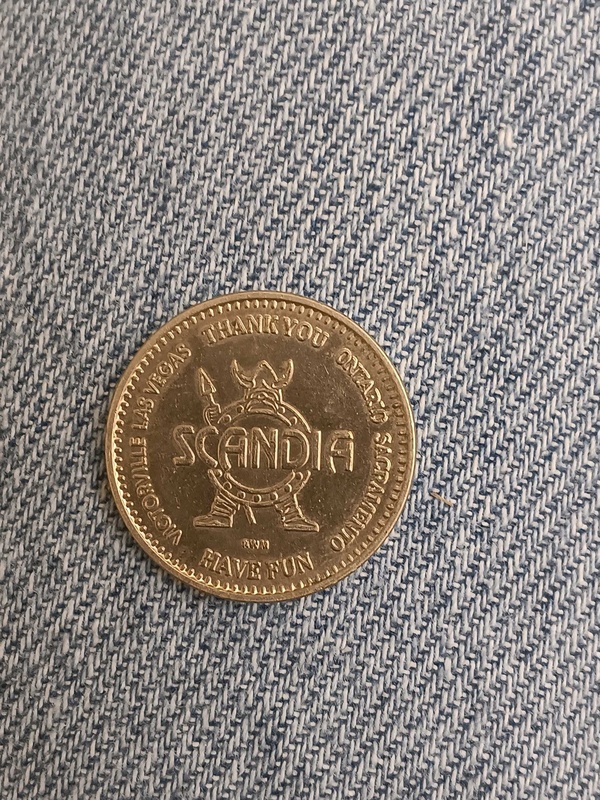
Scandia Family Fun Centers amusement token using Viking imagery as part of its Scandinavian-themed branding. The obverse depicts a Viking head facing left with “Scandia”, “Since 1976” and “Fun for Everyone”; the reverse shows a standing Viking holding a spear, surrounded by the names Victorville, Las Vegas, Ontario and Sacramento, together with “Thank You” and “Have Fun”. The initials RWM refer to Roger Williams Mint.
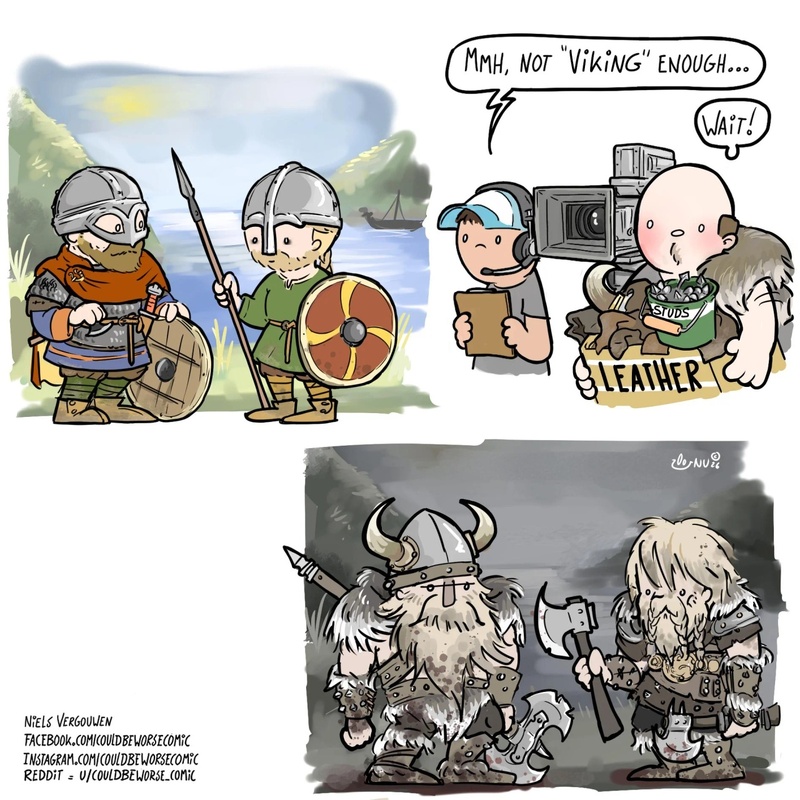
Comic by Niels Vergouwen (Could Be Worse Comic) satirising the modern stereotypical image of Vikings. Historically inspired warriors are judged 'not Viking enough' and transformed into exaggerated fantasy Vikings with horned helmets, fur, huge axes and rugged clothing. The meme was shared on Reddit.
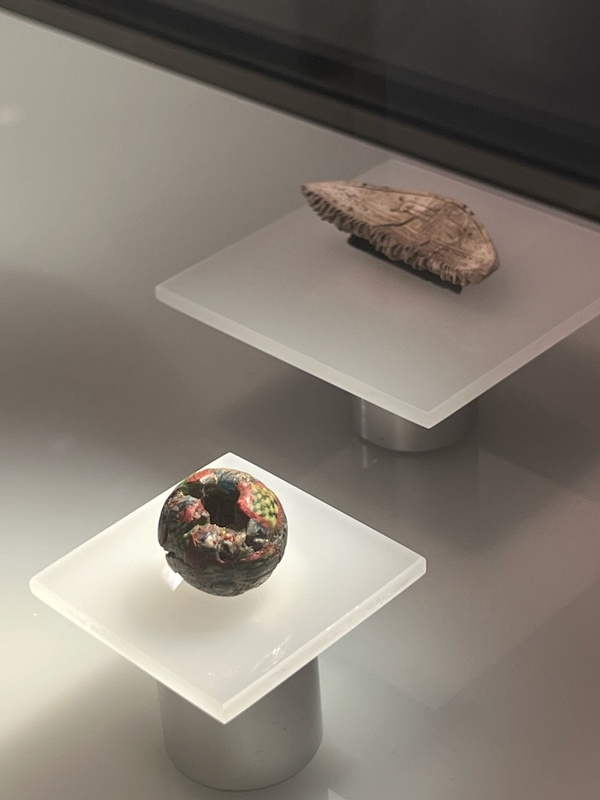
Glass mosaic bead and finely carved bone comb, both dating to around AD 400 and excavated as grave goods from the Early Iron Age burial mounds at Veien. The polychrome glass mosaic bead was an imported luxury item, showcasing long-distance trade connections during the Early Iron Age. The bone comb features geometric engravings and was recovered as a grave good from the burial field. Both artefacts form part of the permanent De dødes ting (“Things of the Dead”) exhibition at Veien Kulturminnepark in Hønefoss, Norway.