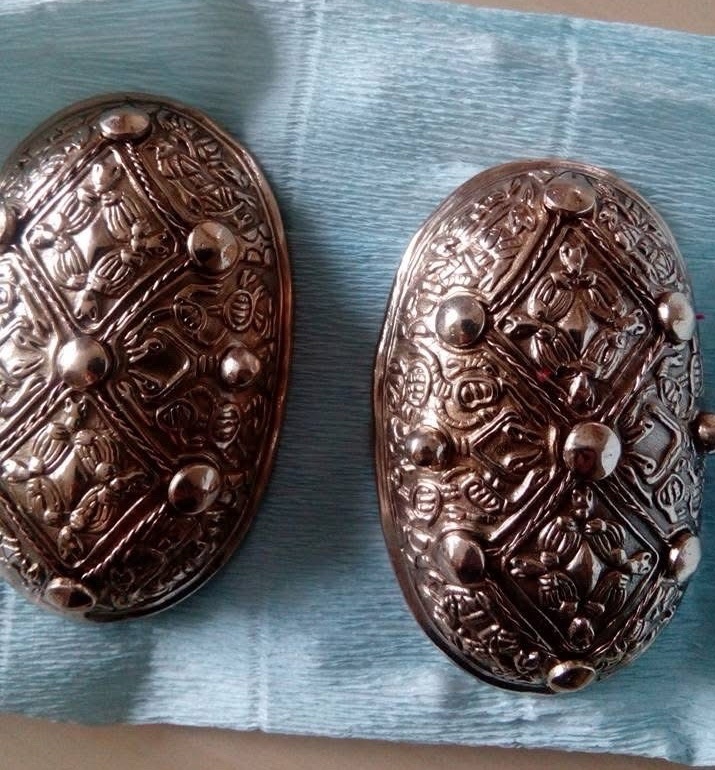
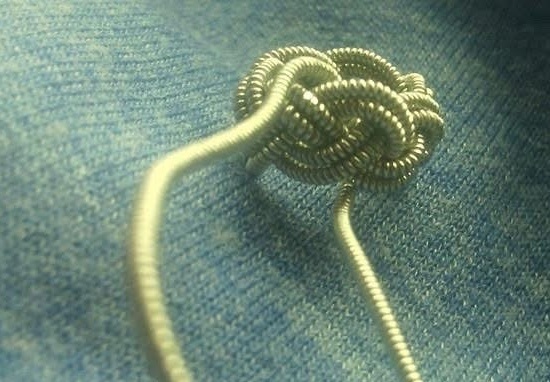
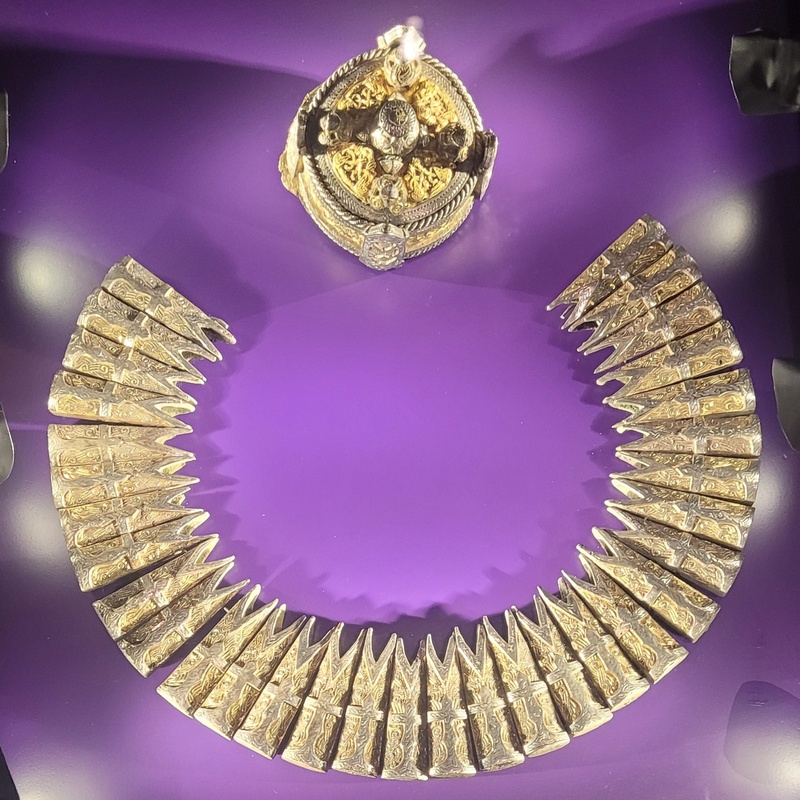
Viking Posament. Posaments are decorative braids or knots made from metal wire used to embellish garments and textiles, famously discovered in 8th- to 10th-century Viking graves in Birka, Sweden.
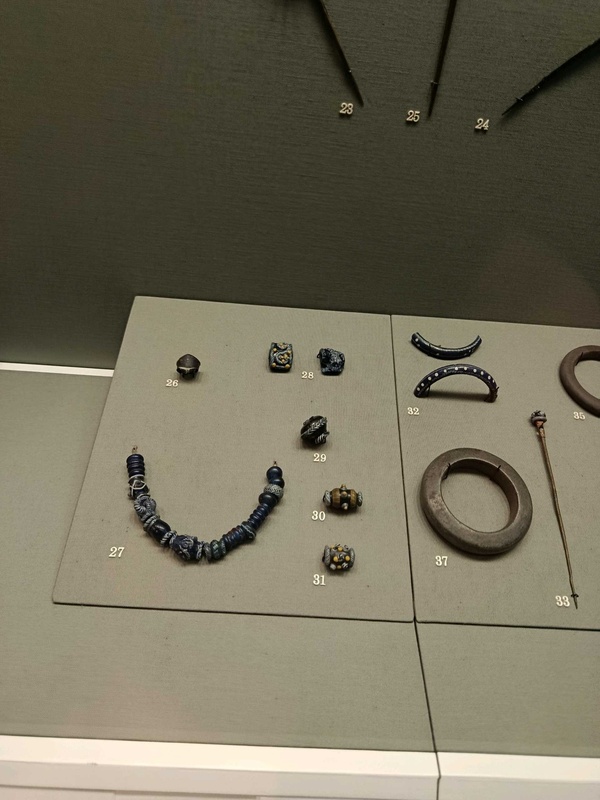
Viking age beads found in Dublin. National Museum of Ireland. Item: A strung necklace made of dark blue and patterned glass beads (labeled number 27).Origin/Date: Dating roughly from the 9th to 11th century, representing Hiberno-Norse or Viking trade and craftsmanship in Ireland.
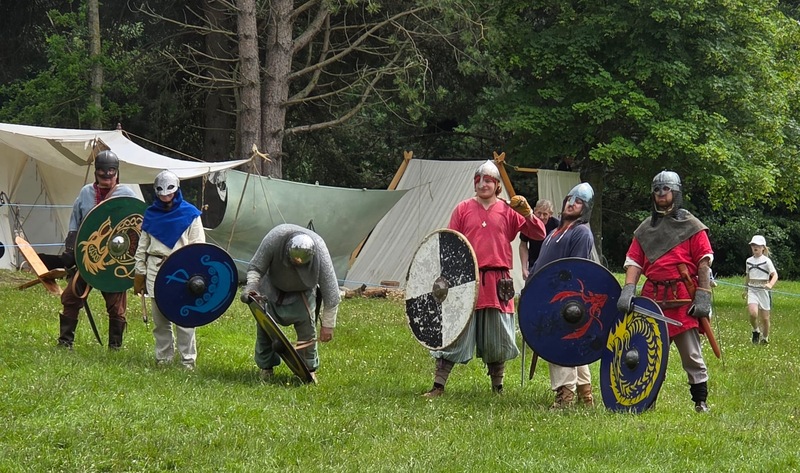
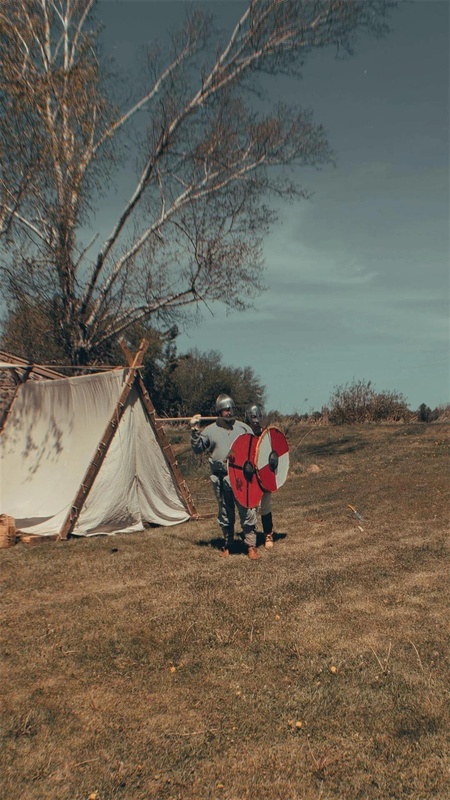
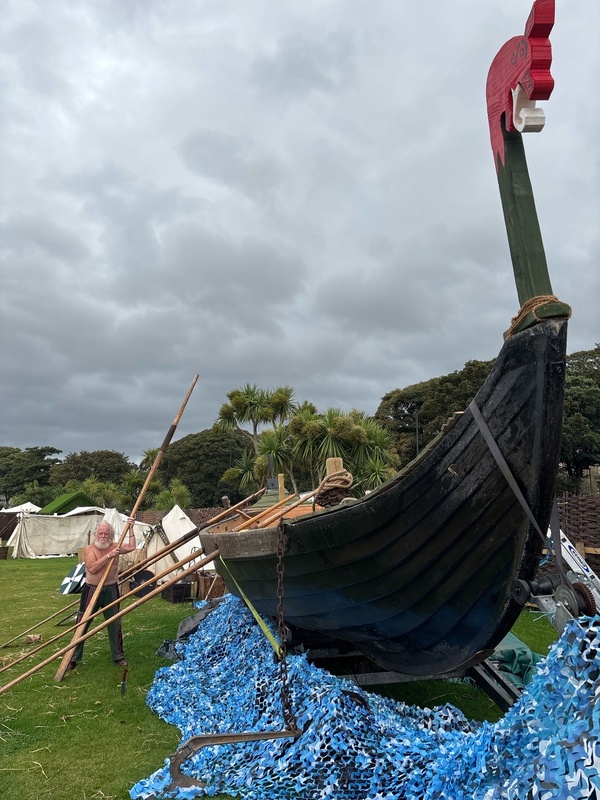
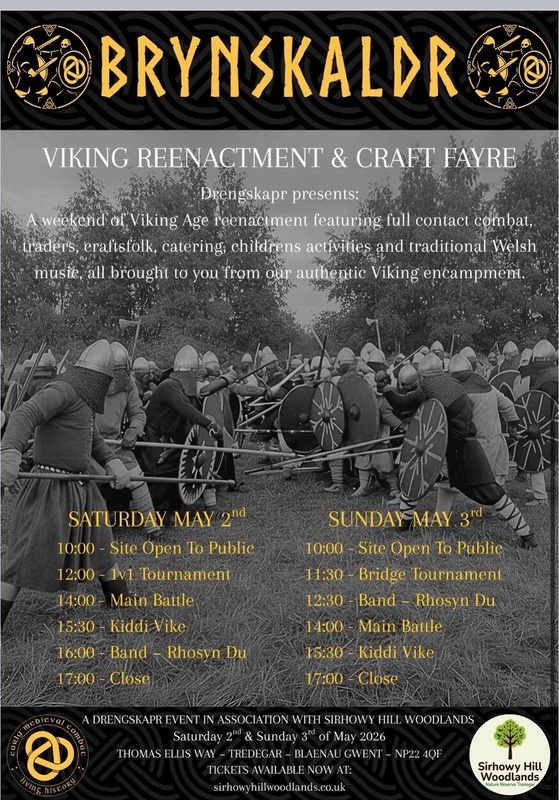
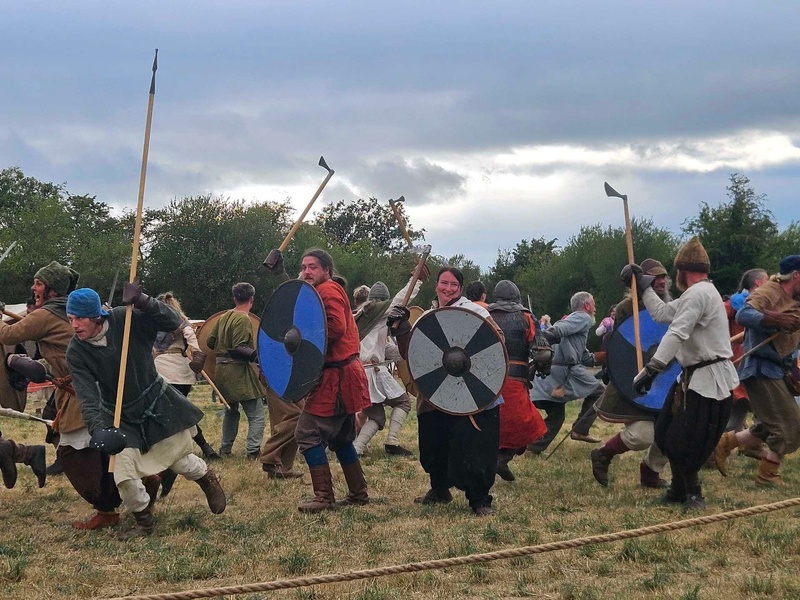
A weekend of Viking reenactment featuring full contact combat, traders, craftsfolk, catering, children's acitivities, and traditional Welsh music. Sirhowy Hill Woodlands. Saturday 2nd & Sunday 3rd May 2026.
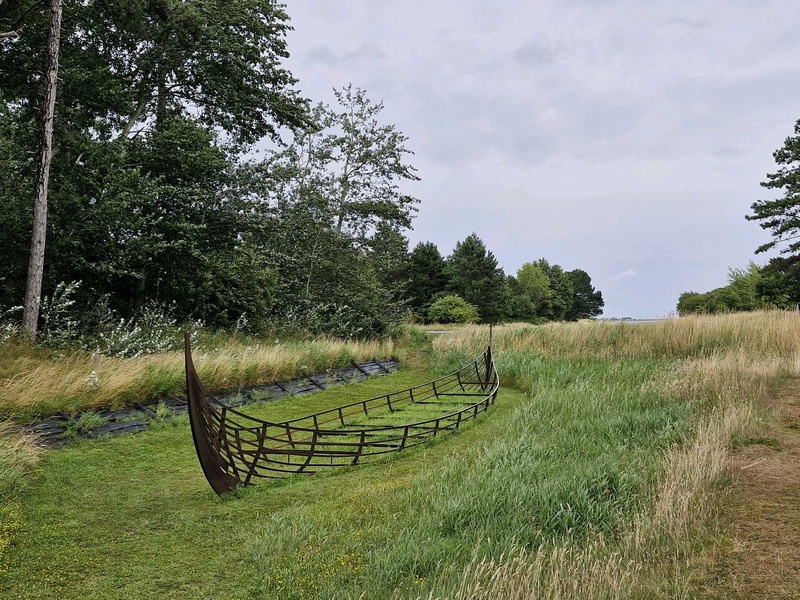
Site of a Viking Canal (Kanhave Kanal) on Samsø Island, Denmark, with a metal Viking ship replica on the site. The canal was constructed in 726 and bisects the island. It is 500 metres long.
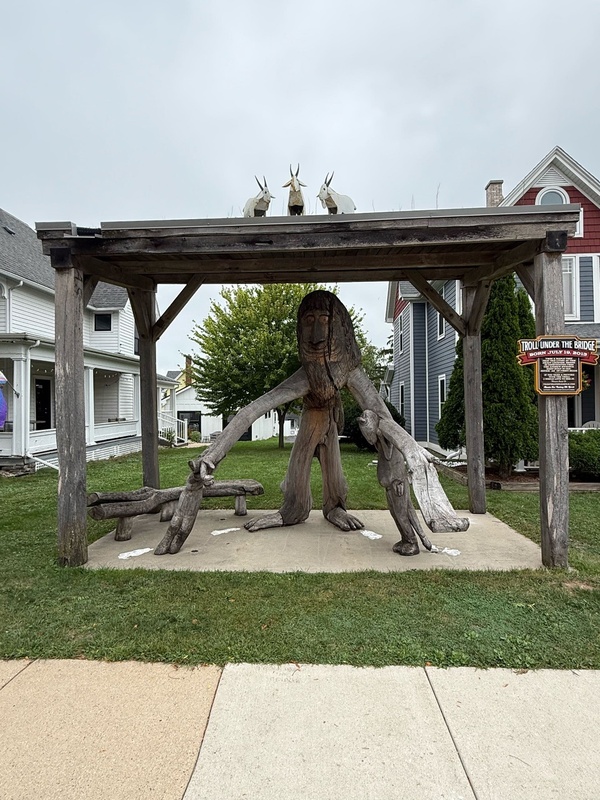
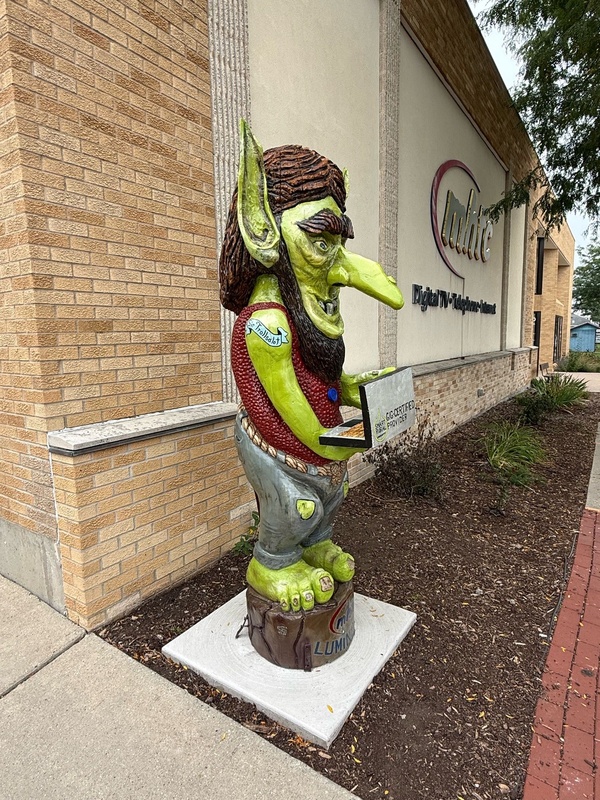
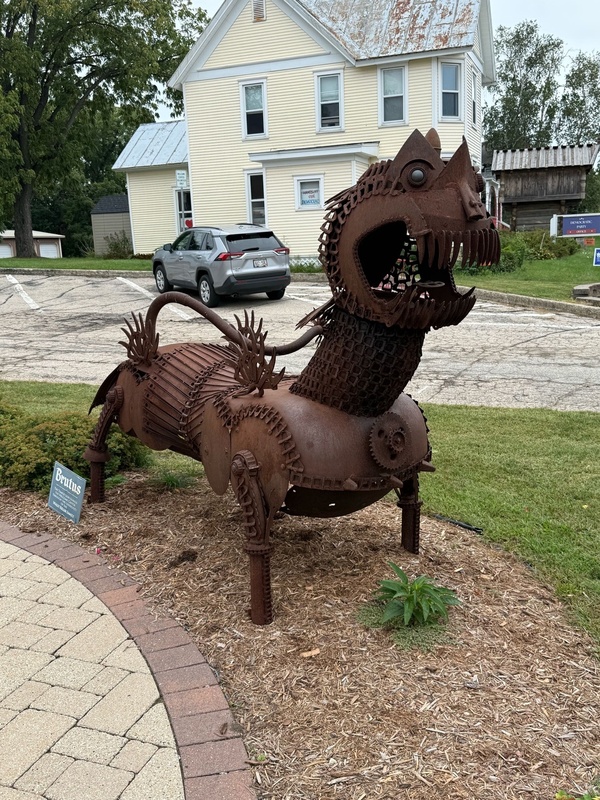
This metal sculpture is named "Brutus" and stands outside the Mount Horeb Area Chamber of Commerce and Welcome Center in Wisconsin. Artist: Wally Keller, a scrap metal artistMaterial: Recycled metal parts like gears and chains. Setting: Placed along the famous "Trollway", which features many unique carvings and mythical creatures.
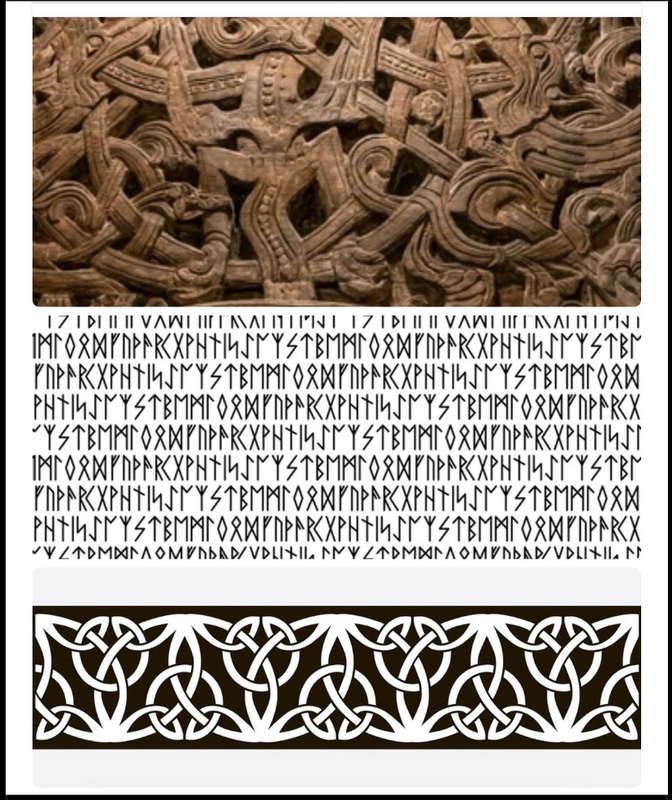
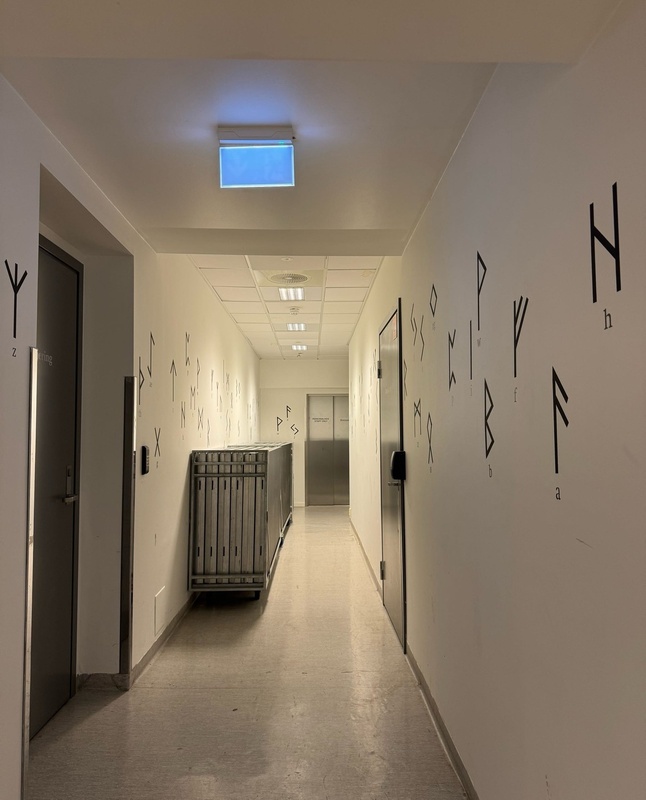
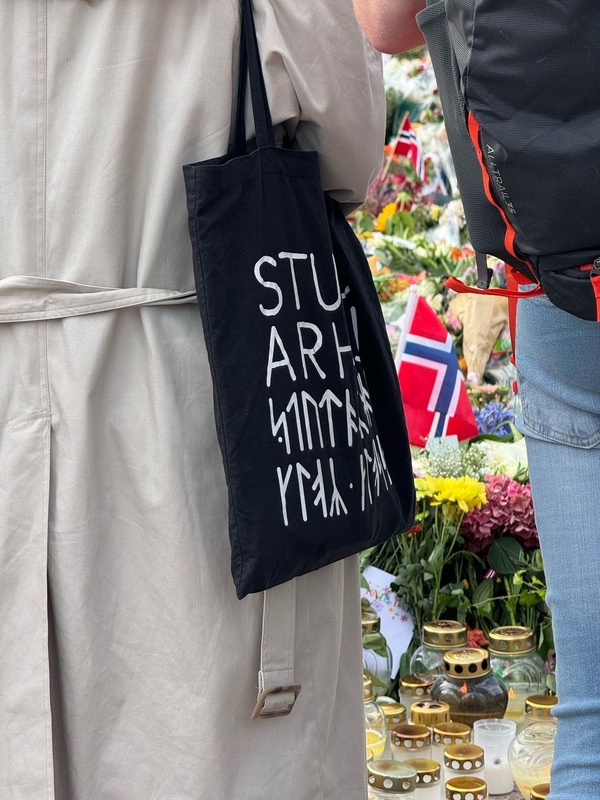
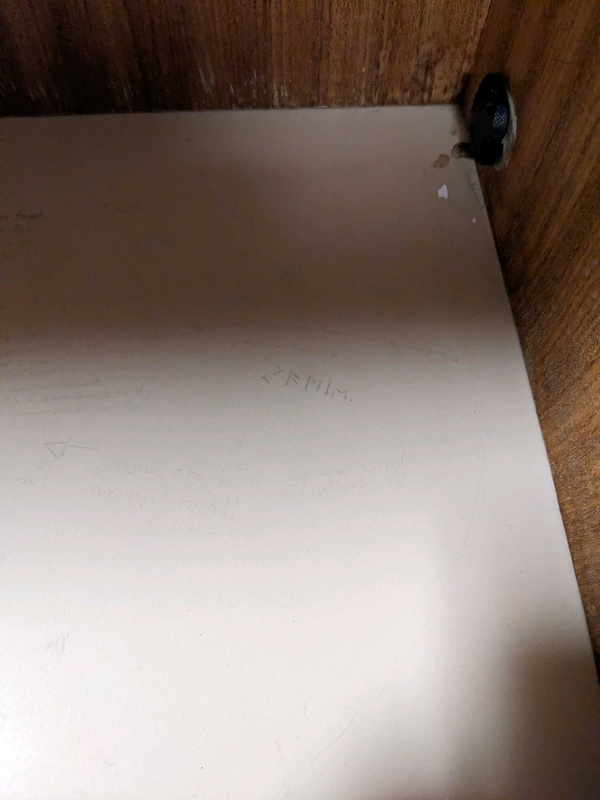
Futhark runes with latin transliteration, spread accross the walls of a lower level of Nynorskens hus, the civic centre and a hub for Norwegian folk culture.
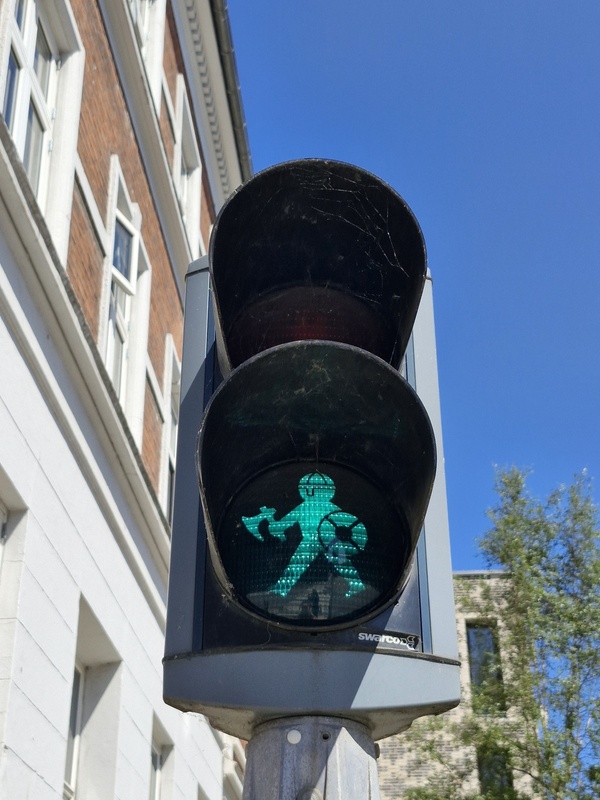
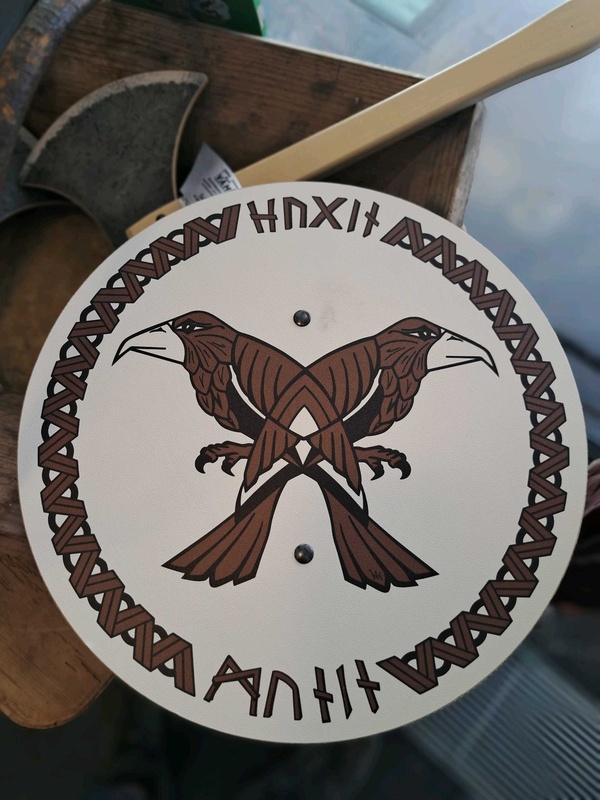
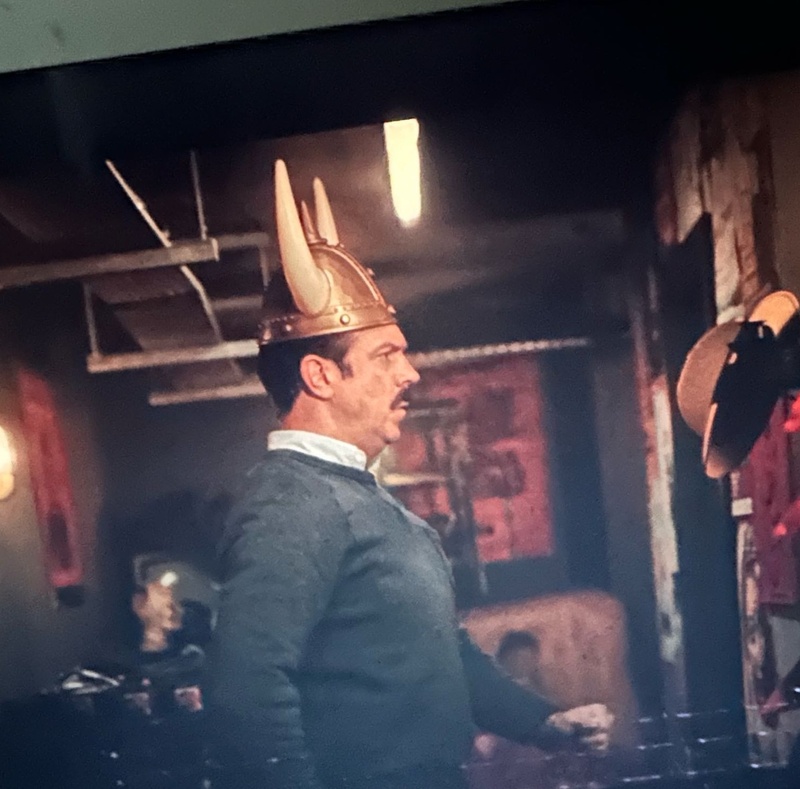
Season 4, Episode 5 of Ted Lasso.
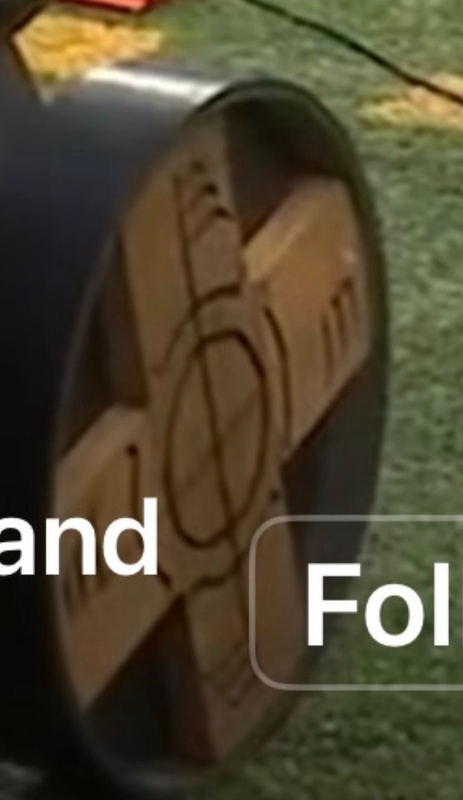
Ted is alone backstage in a theater and of all the props and costumes he could pick up, he picks this one. It’s immediate recognition.
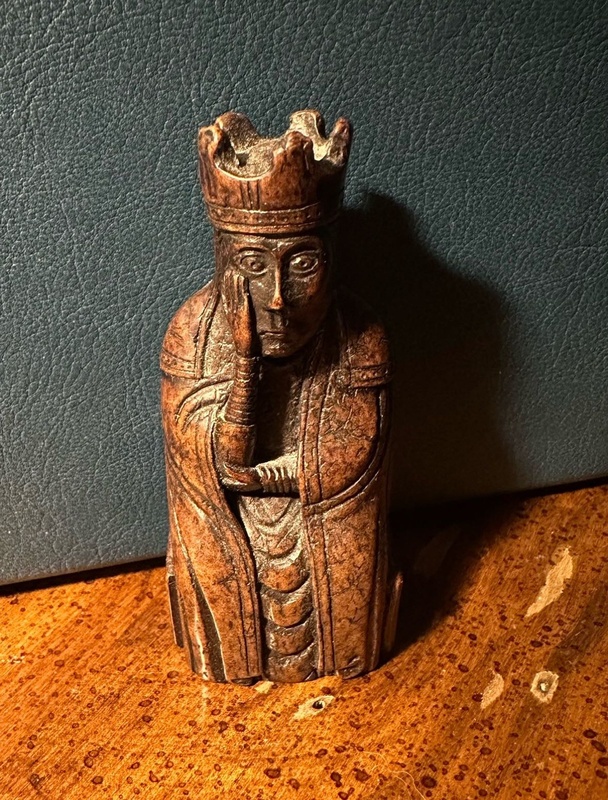
Modern replica of a queen from the Lewis Chessmen, depicted seated with one hand resting against her cheek. The original Lewis Chessmen, dating to the late 12th or early 13th century, were probably made in Norway and were discovered on the Isle of Lewis in Scotland.
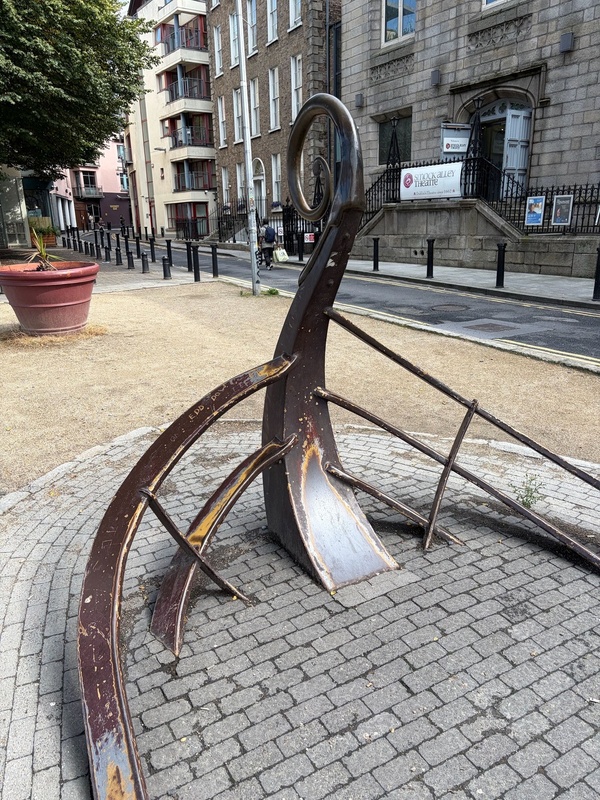
A Viking longship sculpture located on Essex Quay, near the Temple Bar riverfront and adjacent to Wood Quay. Designed by Betty Newman Maguire. It was inspired by the discovery of an actual Viking longship during 1970s archaeological excavations at nearby Wood Quay.
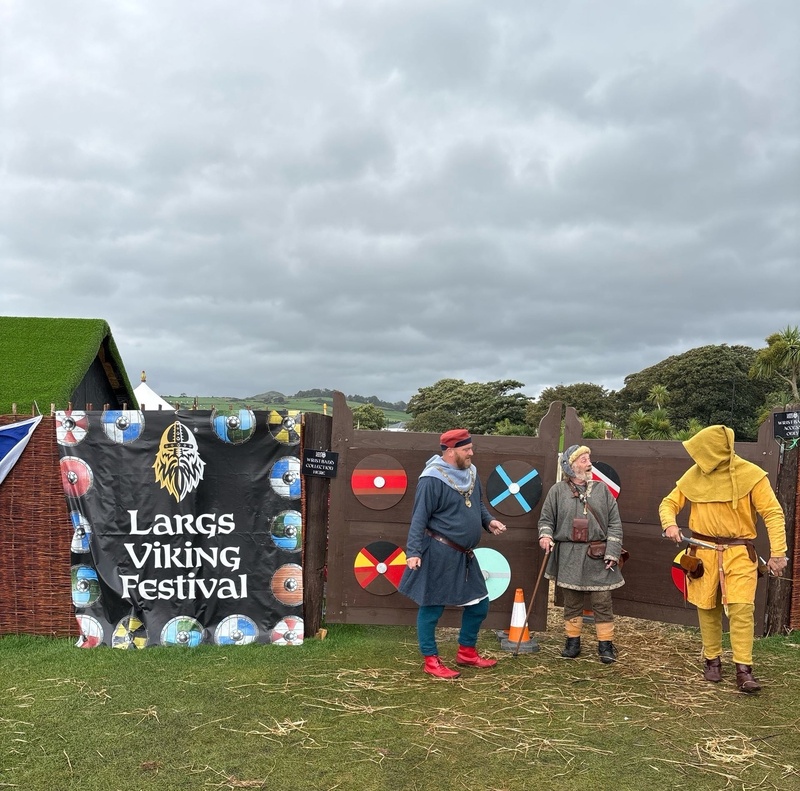
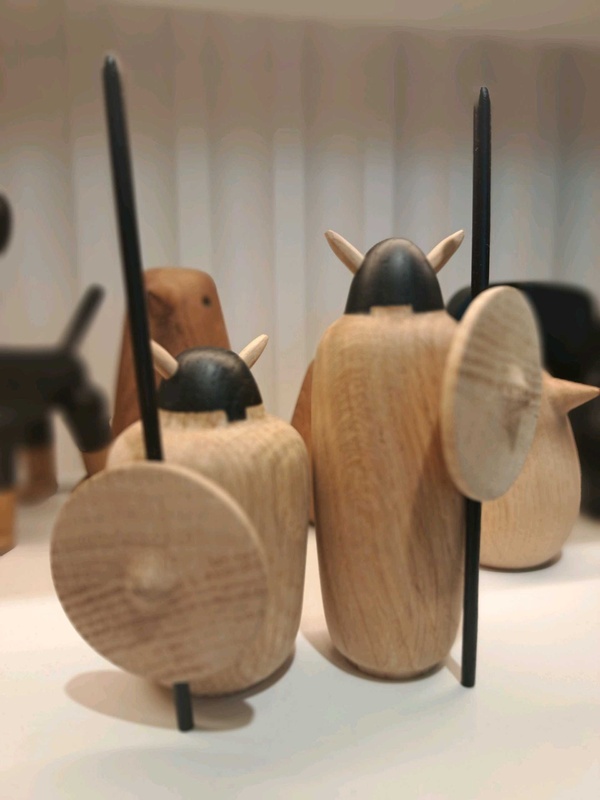
Modern wooden decorative figures depicting stylised Viking warriors with round shields, spears and stereotypical horned helmets. The minimalist design uses Viking imagery as a contemporary decorative product.
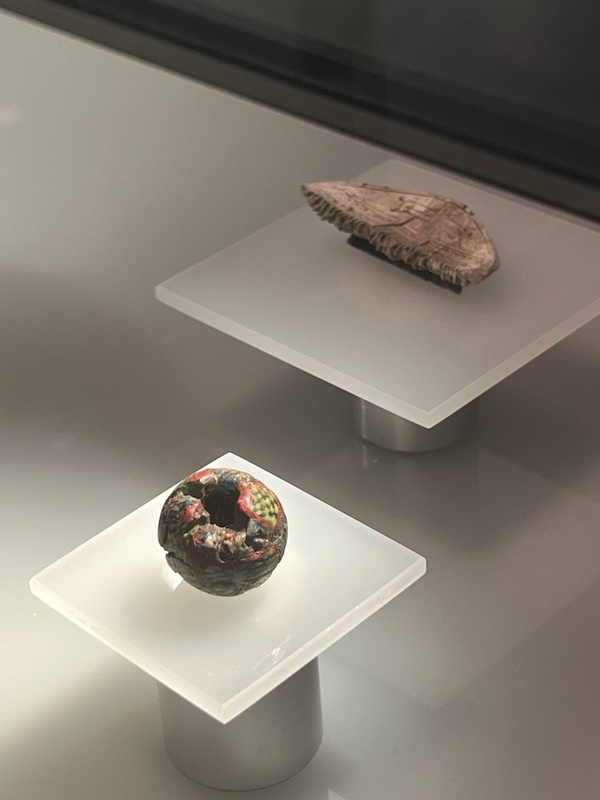
Glass mosaic bead and finely carved bone comb, both dating to around AD 400 and excavated as grave goods from the Early Iron Age burial mounds at Veien. The polychrome glass mosaic bead was an imported luxury item, showcasing long-distance trade connections during the Early Iron Age. The bone comb features geometric engravings and was recovered as a grave good from the burial field. Both artefacts form part of the permanent De dødes ting (“Things of the Dead”) exhibition at Veien Kulturminnepark in Hønefoss, Norway.
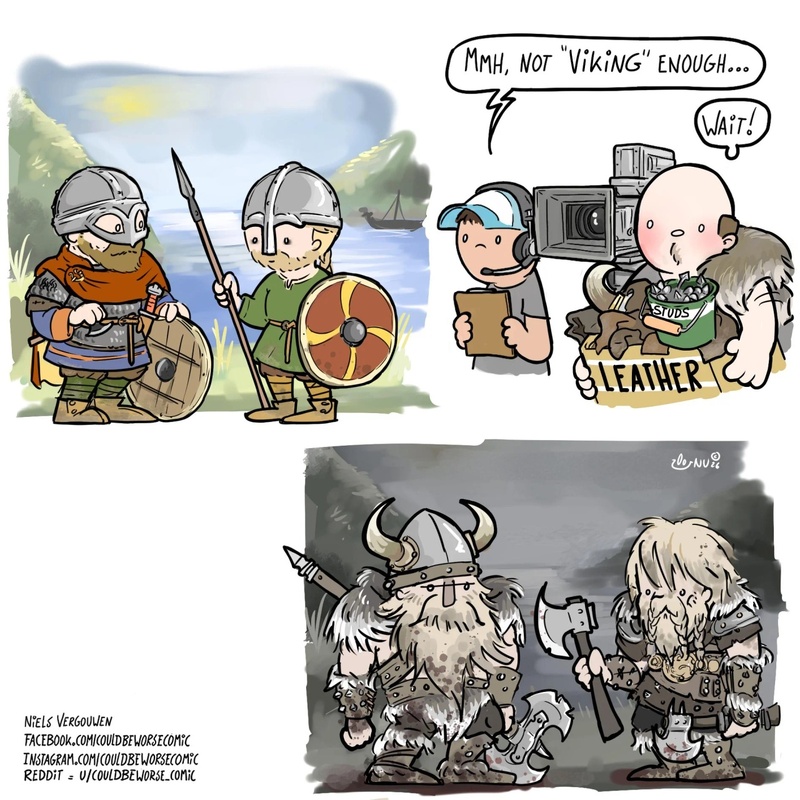
Comic by Niels Vergouwen (Could Be Worse Comic) satirising the modern stereotypical image of Vikings. Historically inspired warriors are judged 'not Viking enough' and transformed into exaggerated fantasy Vikings with horned helmets, fur, huge axes and rugged clothing. The meme was shared on Reddit.
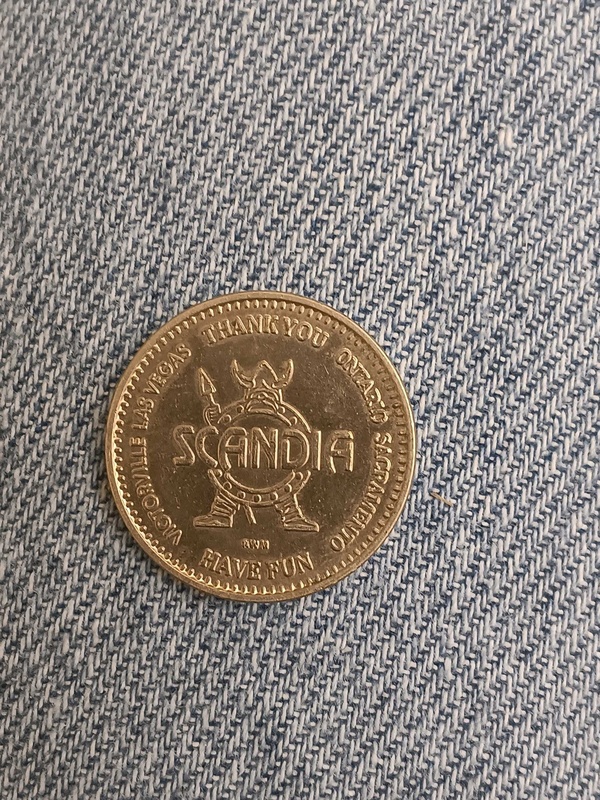
Scandia Family Fun Centers amusement token using Viking imagery as part of its Scandinavian-themed branding. The obverse depicts a Viking head facing left with “Scandia”, “Since 1976” and “Fun for Everyone”; the reverse shows a standing Viking holding a spear, surrounded by the names Victorville, Las Vegas, Ontario and Sacramento, together with “Thank You” and “Have Fun”. The initials RWM refer to Roger Williams Mint.
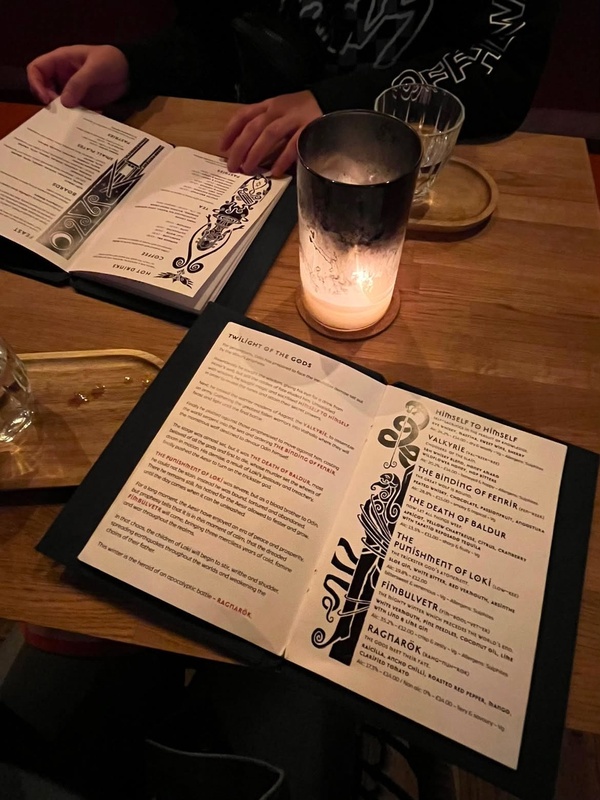
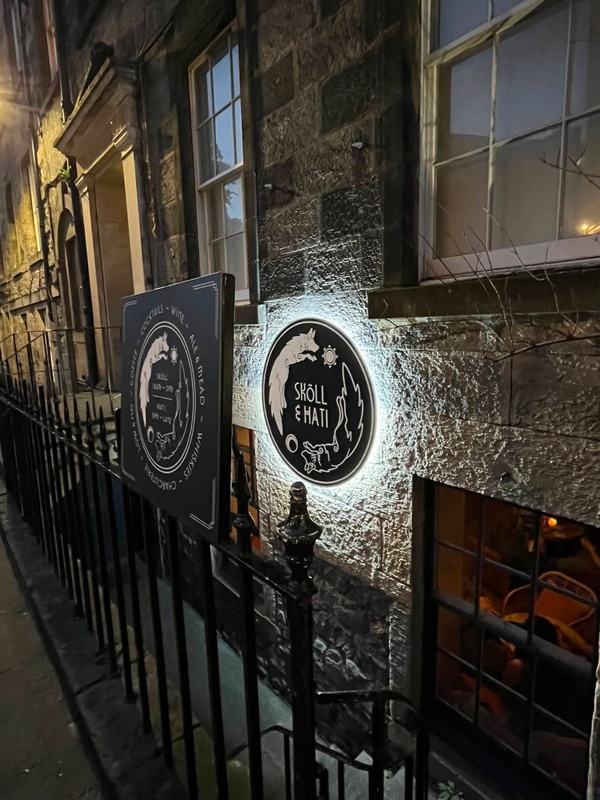
The selected image shows the illuminated circular sign for Sköll & Hati, a Norse mythology-themed basement bar located at 3A Merchant Street in Edinburgh's Old Town.
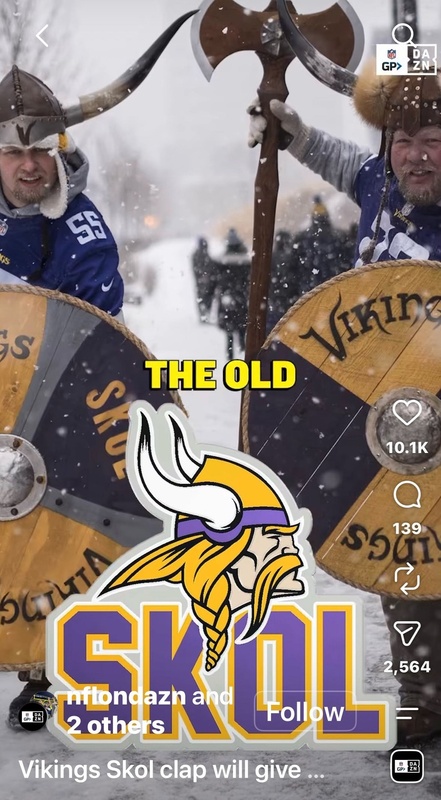
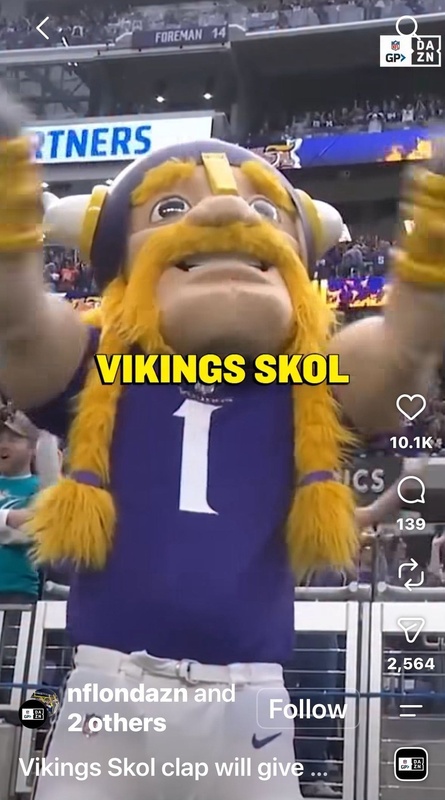
Minnesota Vikings fans with replica shields, horned helmets and axes, adopting the imagery of Viking warriors. The display connects modern sports fandom with Viking identity, as supporters symbolically present themselves as “Vikings.”
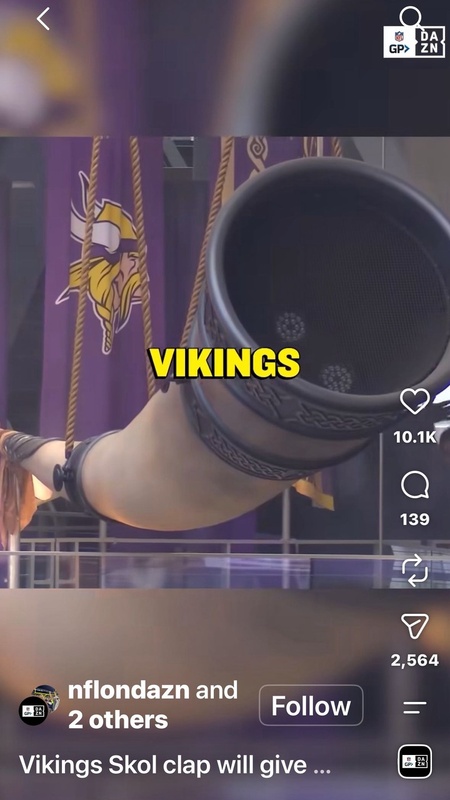
Large replica of the mythical Norse horn Gjallarhorn at the Minnesota Vikings’ stadium, used during games and fan celebrations as part of the team’s modern Viking-themed identity.
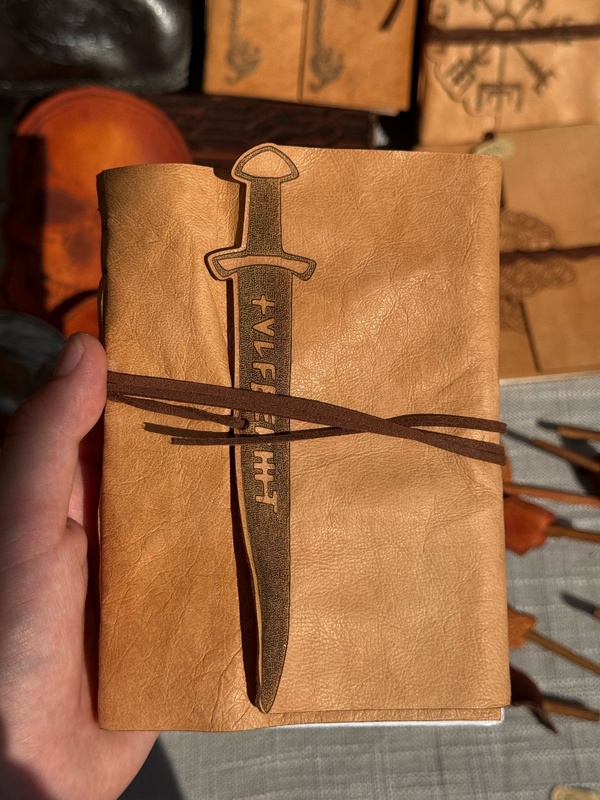
Handcrafted leather notebook with Ulfberht sword. Ulfberht swords are dated between the 9th and 11th century and named after the engraving on the blade, which is likely the name of the maker of these swords. Ulfberht is a Frankish name, suggesting Frankish production for these swords. The notebook is sold at a Viking-themed festival in Norway.
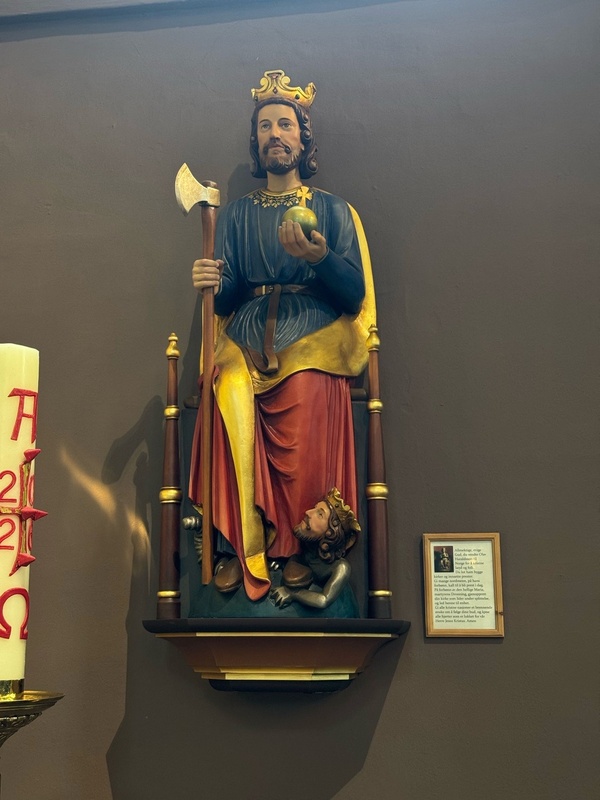
Sculpture of Saint Olaf in the St. Olavs Domkirke, Oslo. Saint Olav is here depicted holding an axe and standing triumphant over his past non-Christian Viking self.
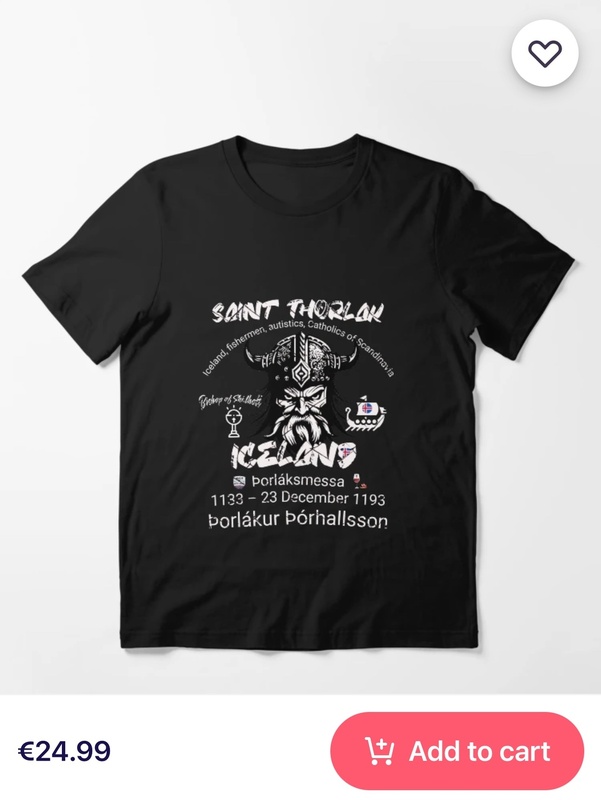
Merchandise invoking Saint Thorlak of Iceland (Þorlákur Þórhallsson, 1133-1193). The t-shirt reads "SAINT THORLAK - Iceland, fishermen, autistics, Catholics of Scandinavia - Bishop of Skálholt - ICELAND - Þorláksmessa - 1133 - 23 December 1193 - Þorlákur Þórhallsson" and is decorated with emojis of wine and viking ships. In the centre features prominently the angry head of a bearded man wearing a horned helmet.
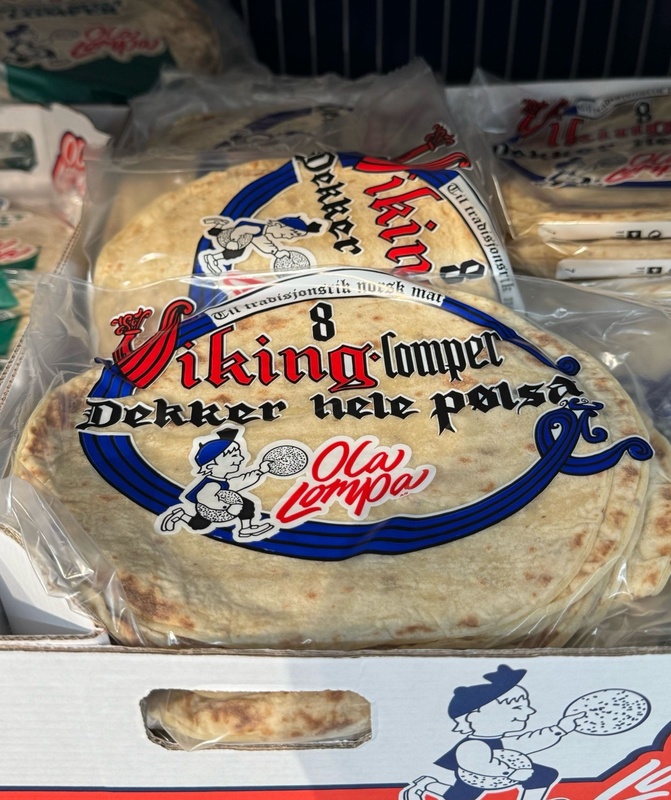
Lomper by the brand Ola Lompa, from their Viking line. Lomper are a Norwegian potato flatbread which nowadays is typically used for hot dogs, but which traditionally would go with both sweet and savoury fillings. The logo features a Viking ship as the "V" in "Viking" and uses a gothic font. The same font is used for both slogans. The first "Til tradisjonsrik norsk mat" means "For traditional Norwegian food", the second "Dekker hele pølsa" means "It covers the full sausage". This last one references the modern tradition of eating hot dogs in lomper instead of hot dog buns.
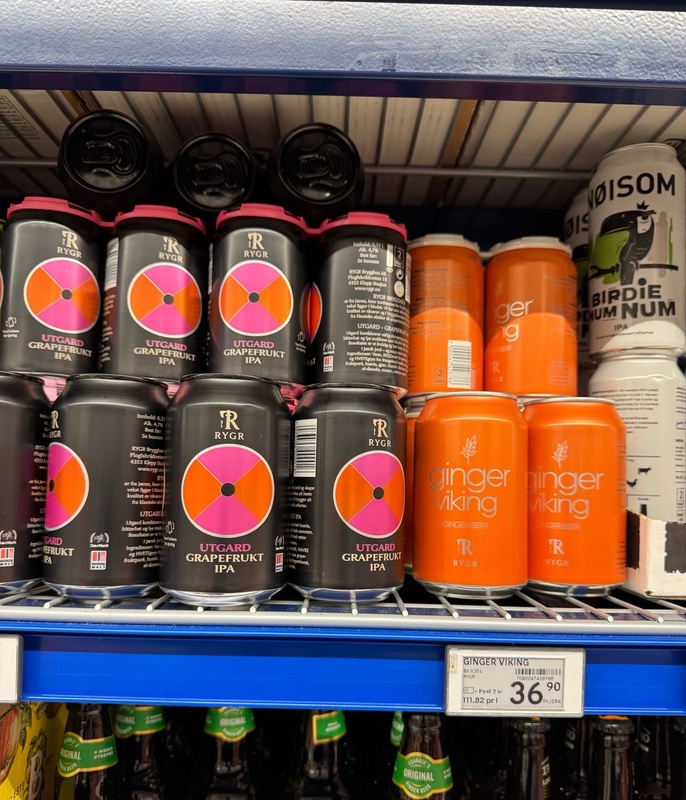
A selection of drinks by Rygr Brygghús, a Norwegian brewery. One is a grapefruit IPA named "Utgard" decorated with a viking shield, the other a ginger beer named "Ginger Viking". The brewery's logo features an axe as part of the R and the year 872. The brewery itself was founded in 2017 in Jæren (Rogaland, Norway), but they chose 872 as the year to feature on their logo as it marks the battle of Hafrssfjordr which resulted in the unification of Norway under the rule of King Harald Fairhair.
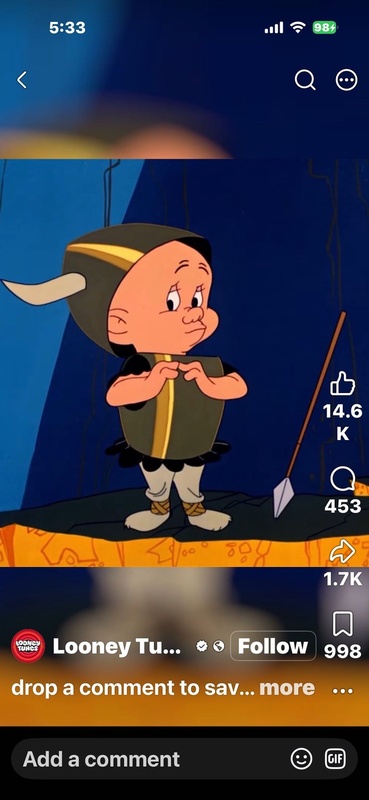
Social media screenshot of the Loony Toons character Elmer Fudd dressed as a Viking hunting Bugs Bunny or “wabbits.” Notably, he is wearing a horned helmet.