Screenshot from the Til Valhalla Project website (https://tilvalhallaproject.com/pages/about-us). The Til Valhalla Project is a US veteran-founded initiative that aims to honors fallen service members by creating and delivering memorial plaques to their families while supporting veteran mental health.
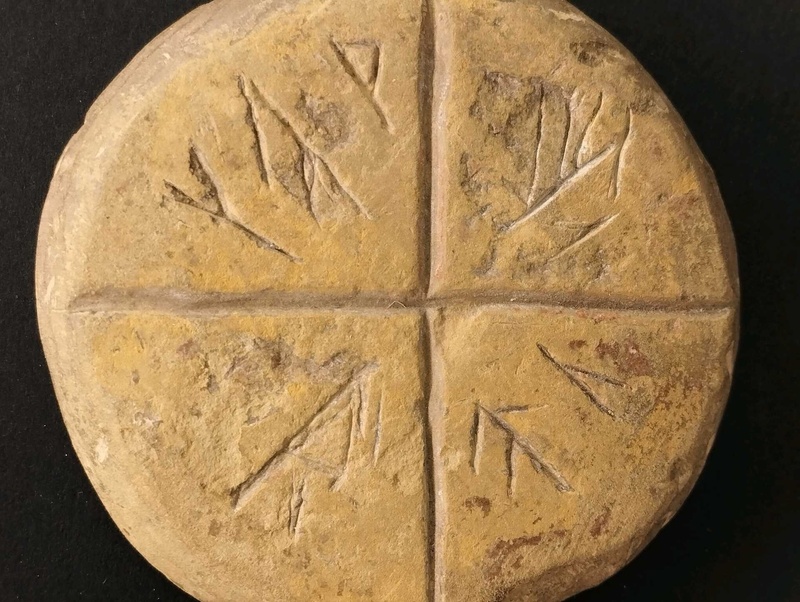
The Stackrue sandstone disc with short twig Norse runes. Discovered in the Stackrue broch near Sternness, Orkney in 19th century. On display at Skail House (https://skaillhouse.co.uk/). Made of steatite (soapstone). Estimated to date back to 9th-10th century. The runes on the Stackrue sandstone disc remain mostly undeciphered, though the characters in the first quadrant can be interpreted to mean "god".
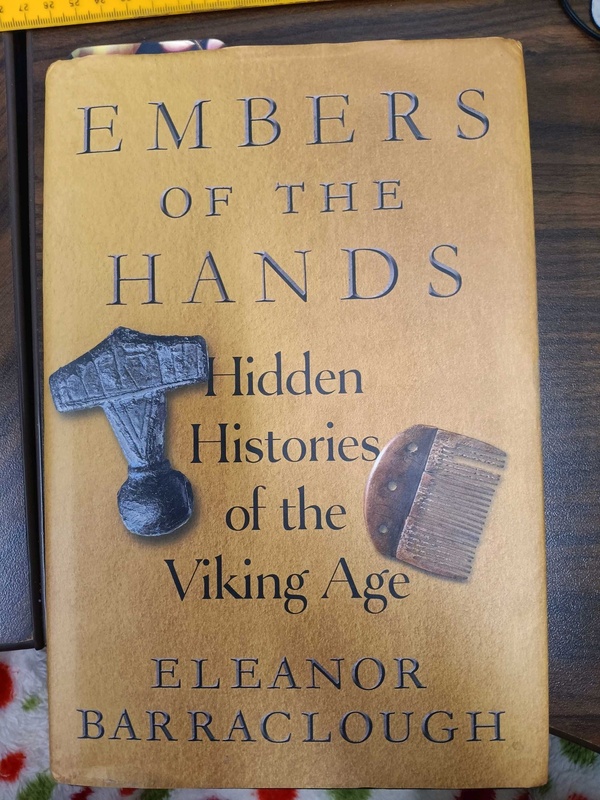
Embers of the Hands: Hidden Histories of the Viking Age by Eleanor Barraclough. Book sometimes used at Universities, in classes such as Archaeology of Vikings. It seeks to educate about Norse culture based on archaeology. Chapters include: love, travel, belief, bodies, home, play, unfreedom, and endings. United States: Published in the US in January, 2025, by W. W. Norton & Company. Published in the September, 2024, by Profile Books.
From contributor:
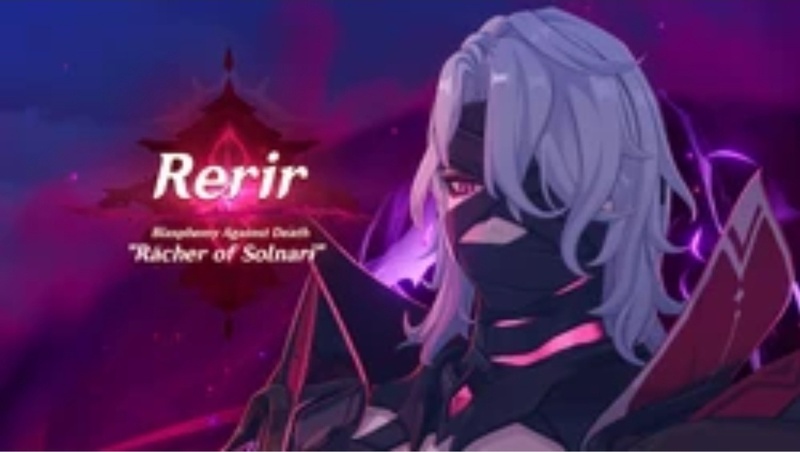
The text reads "Rerir", "Blasphemy against death" and "Racher of Solnari" as his title.
Rerir is an antagonists from Genshin Impact and has several components of his character that are drawn from Norse mythology and folklore. His name is of course the same as Rerir from Volsungasaga. He also has Racher as a title which means "Avenger" (i think it's germanic in origin though, but it matches the original Rerir's motives.) Solnari appears to be a combination of the names for the Goddess Sól and Loki's son Nari. Solnari has not appeared in the game so it's unsure if there's more norse inspiration there. In general though, Rerir is aligned with an order that's avenging a fallen civilization so the themes still stand.
Rerir's weapon, a polearm called Barnstokkr, is named after the tree in Volsungasaga that's very central to the plot.
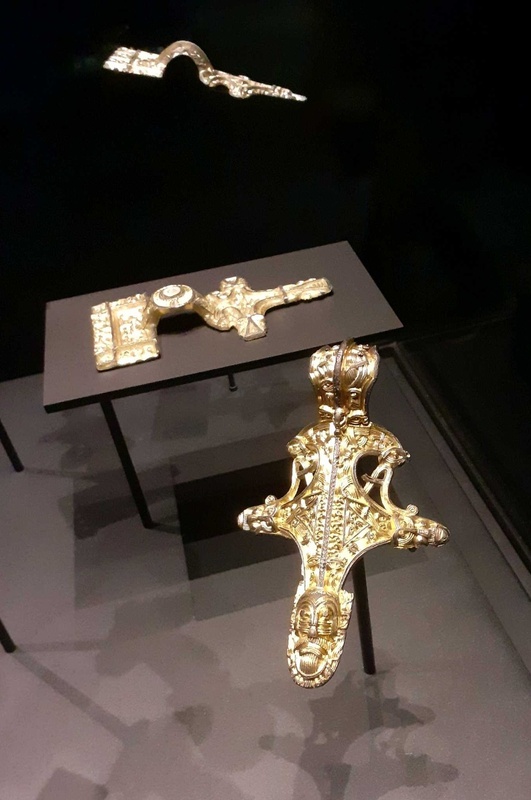
A gilded bronze square-headed bow brooch featuring intricate animal ornamentation and stylised human faces with beards. On display in the Arkeologisk museum, Stavanger, Norway.
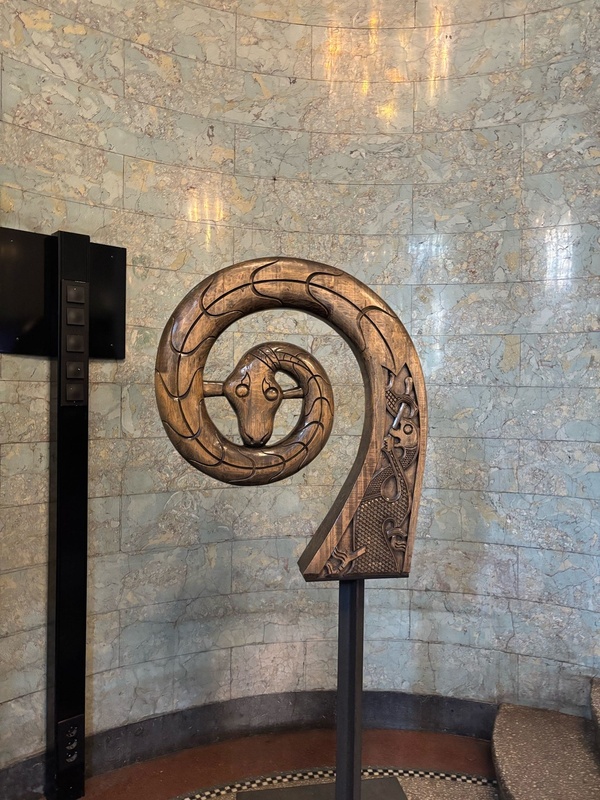
A reconstruction of an ornate spiral serpent or dragon head from the prow of the 9th-century Oseberg Viking ship. Will be on display at the Viking Ship Museum in Oslo once the museum reopens: https://www.vikingtidsmuseet.no/english/.
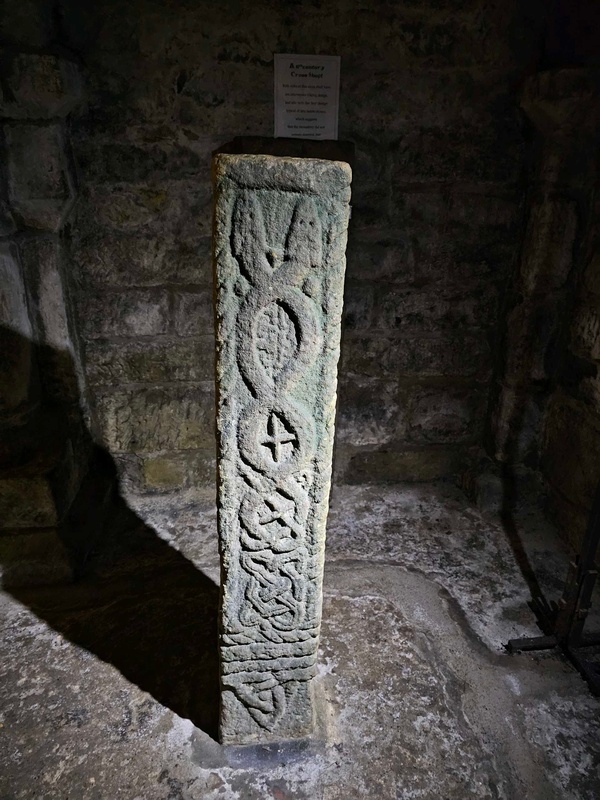
Remains of a carved stone cross preserved inside the crypt of St. Mary's Church in Lastingham, North Yorkshire (https://lastinghamparishchurch.org.uk/about-us/vicars-of-lastingham/). It dates from the 8th to 10th centuries, and features intricate interlaced knotwork, ring-headed cross motifs, and carvings in Scandinavian style . The crypt itself dates largely to 1078 and is acknowledged as one of the earliest Norman crypts in England.
Screenshot showing Northern Viking 2026, the codename for a joint U.S., Icelandic and NATO military exercise held in Iceland in August 2026, marking 75 years of U.S.–Iceland defence cooperation.
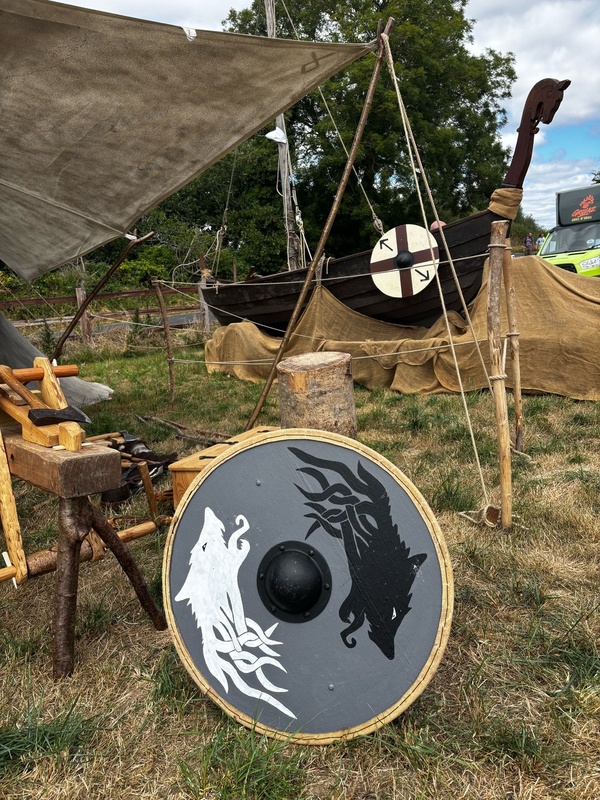
Viking reenactment encampment at the Woodstown Viking Festival in County Waterford, Ireland, featuring a reconstructed longship, decorated round shields, period-style tents and traditional woodworking equipment.
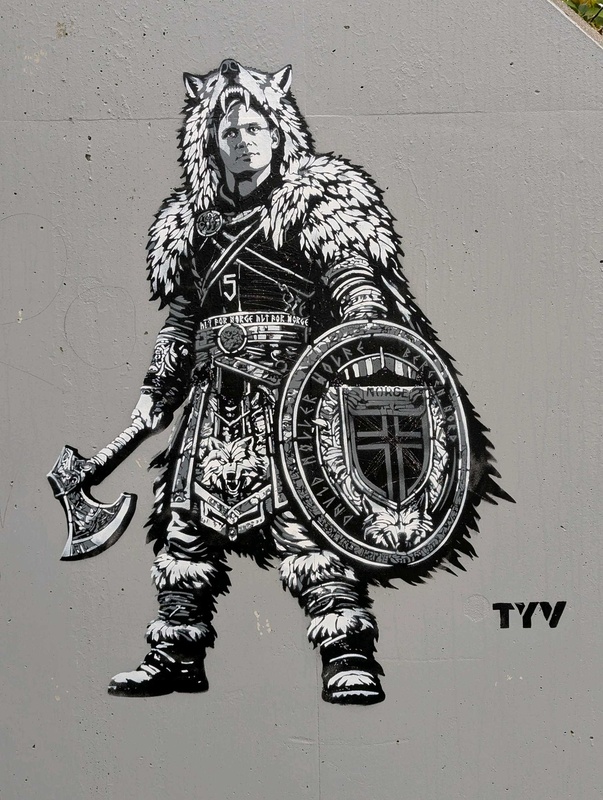
Street art by Norwegian artist TYV (thief) depicting footballer David Møller Wolfe as a berseker. Wolfe was part of the Norwegian national football team which competed in the 2026 World Cup. TYV made this graffiti on the eve of the match Norway-Ivory Coast. The graffiti is located in the underpass leading to IKEA in Åsane (Vestlandet, Norway). The location pays homage to Wolfe, who comes from Åsane. In the graffiti, Wolfe is depicted in Viking gear, complete with shield and axe. The wolf skin on his back is a nod to the footballers surname and to the famed Ulfhednar, a group of berserkers who adorned themselves in wolf skins. TYV added several details, such as the slogan "Alt for Norge" (all for Norway) in a runic-inspired font on the belt, as well as "David Møller Wolfe" and "Bergen nord" where Åsane is located in the same font on the shield. A copy of this artwork has been co-signed by TYV and Wolfe and will be auctioned to support a charity.
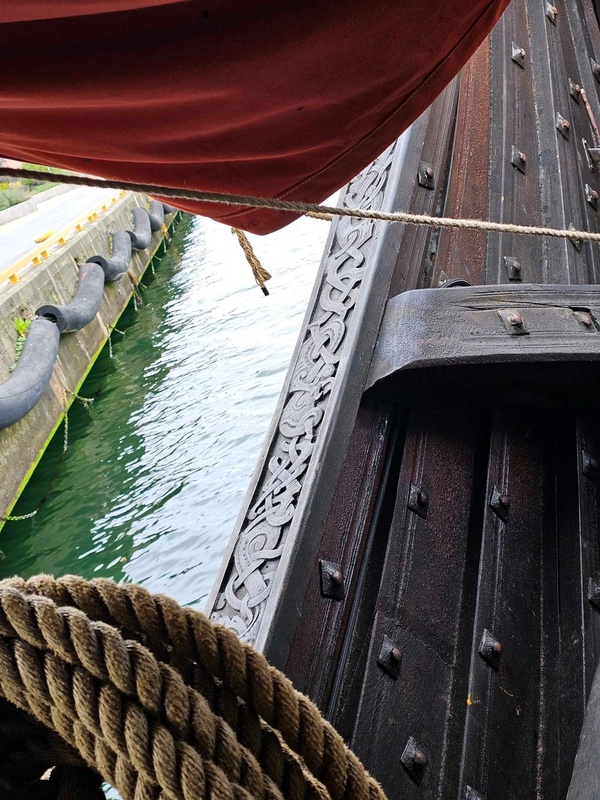
Decorative carving on the side of the Draken Harald hårfagre. This modern, ocean-crossing longship is not a faithful reproduction of a Viking longship, but it is heavily inspired by living Norwegian boat-building traditions hailing back to the Viking Age. In 2016 the Draken Harald Hårfagre sailed from Haugesund (Rogaland, Norway) to the USA, and in 2026 it featured as Odysseus' ship in Christopher Nolan's "The Odyssey".