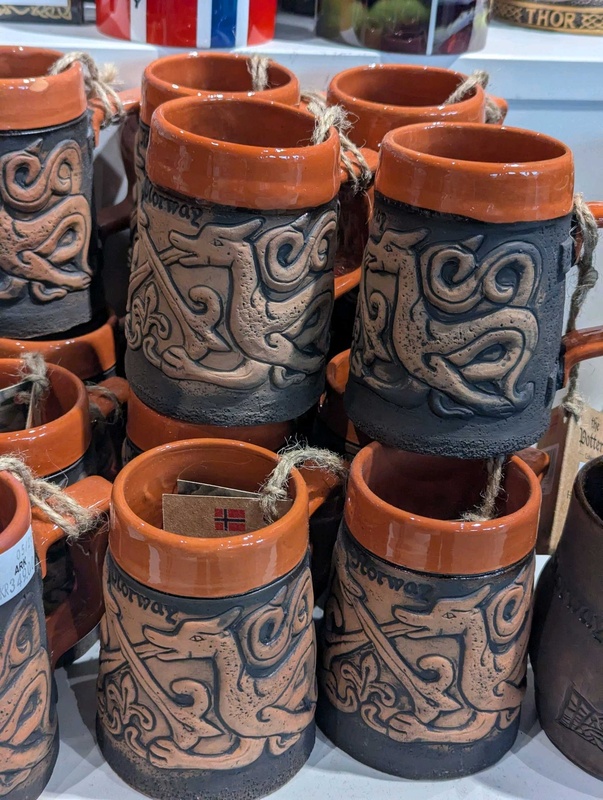
Handcrafted ceramic Viking dragon mug from Brødrene Flaarønning's "The Pottery" Norway collection. Made from natural clay featuring textured, dark-textured body reliefs of a traditional Viking dragon/serpent motif and a glossy orange-brown glazed rim and interior.
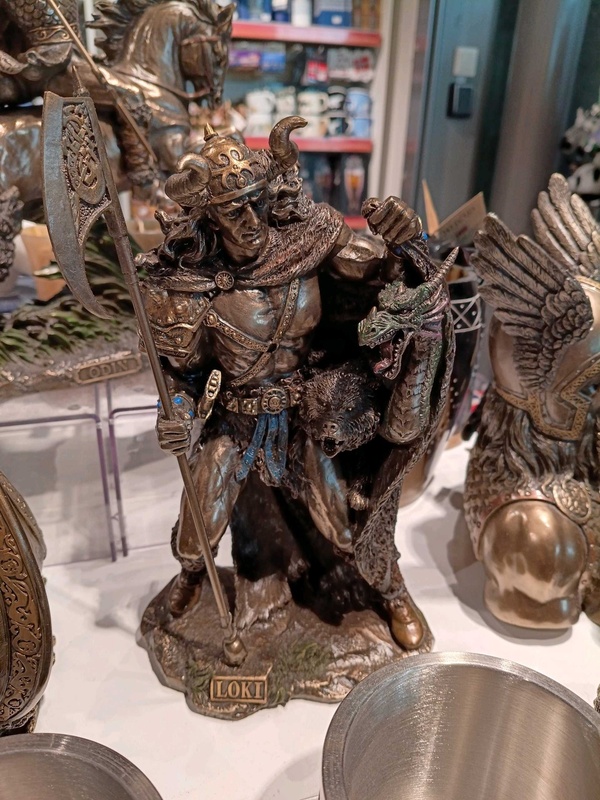
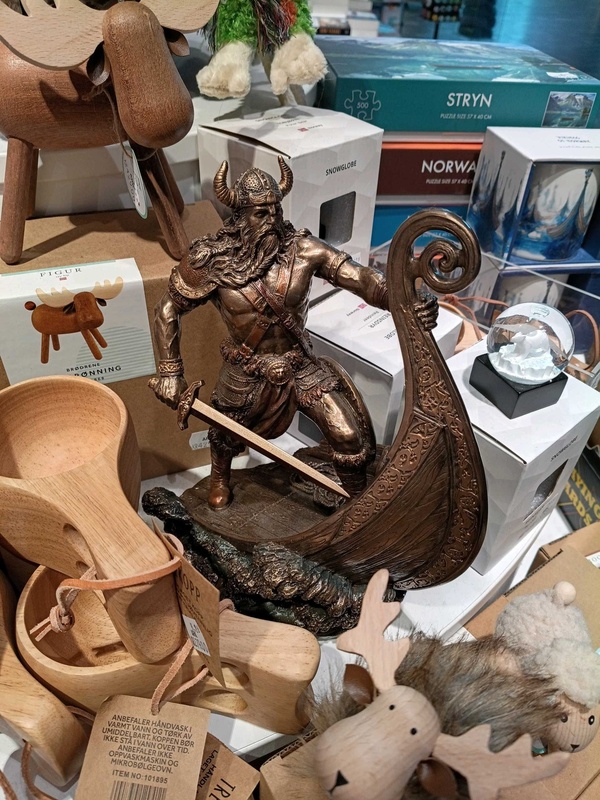
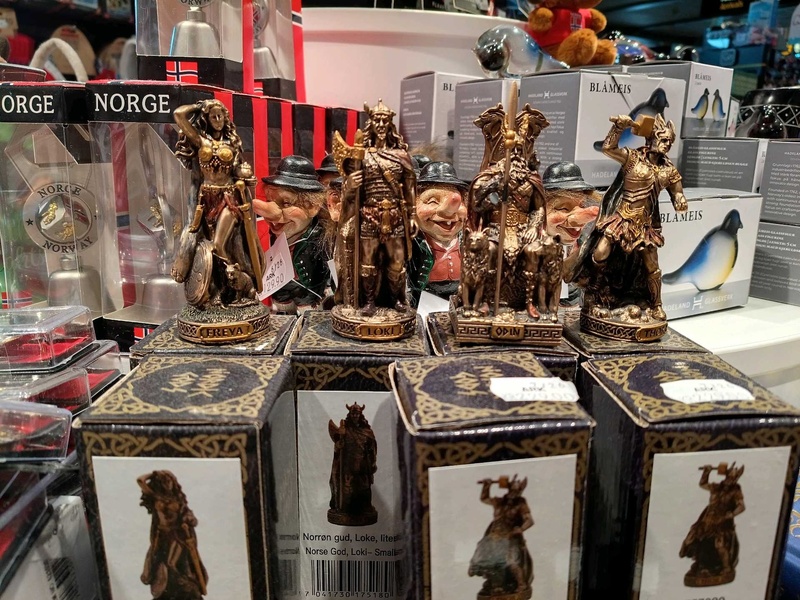
Bronze finish figurine of Loki, the Norse god of mischief and trickery. Depicts Loki with horned helmet, holding a long axe and spear, draped in a cloak with a wolf and serpent motifs. For sale at Gardemoen Airport.
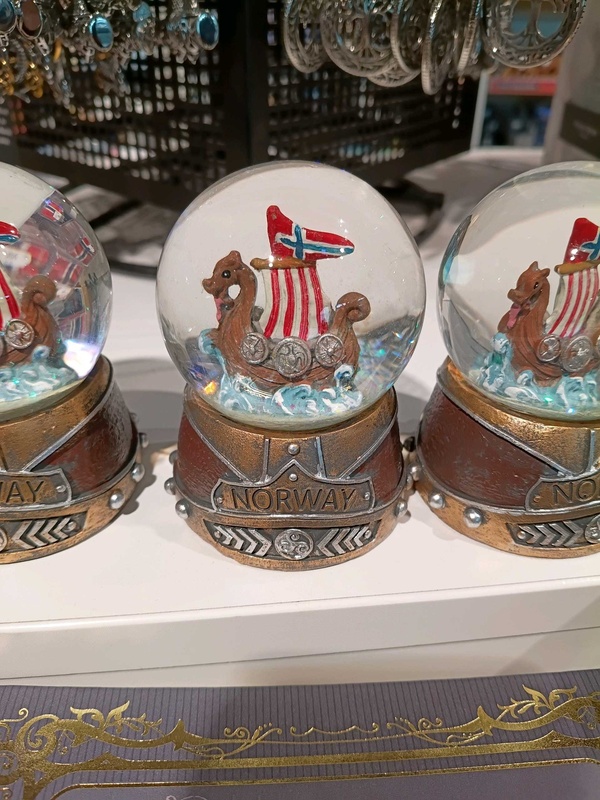
Snow globe featuring a possibly hand-painted resin Viking longship with a red-and-white striped sail, a Norwegian flag, and an embossed base labeled "Norway". For sale at Gardemoean airport.
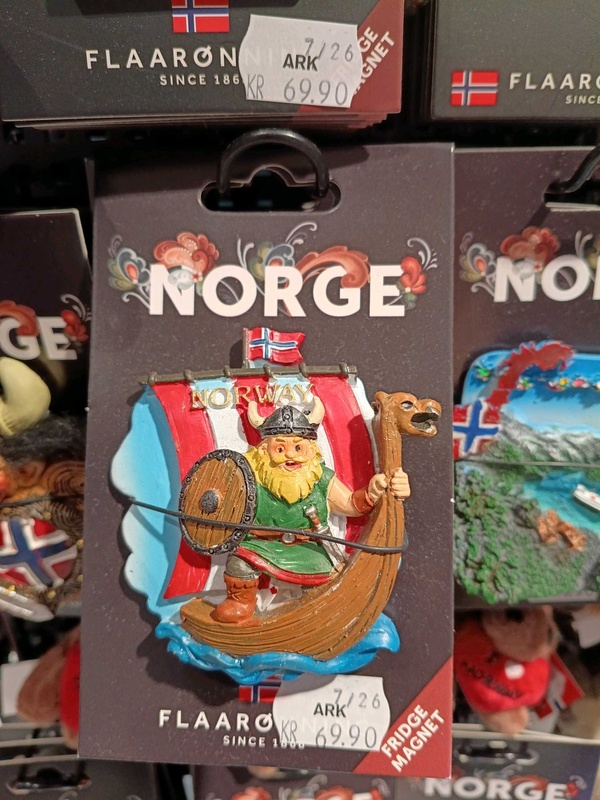
Norway souvenir fridge magnet features a cartoon-style horned Viking in a traditional longship decorated with the Norwegian flag and "Norge" written at the top. For sale at Gardemoen Airport.
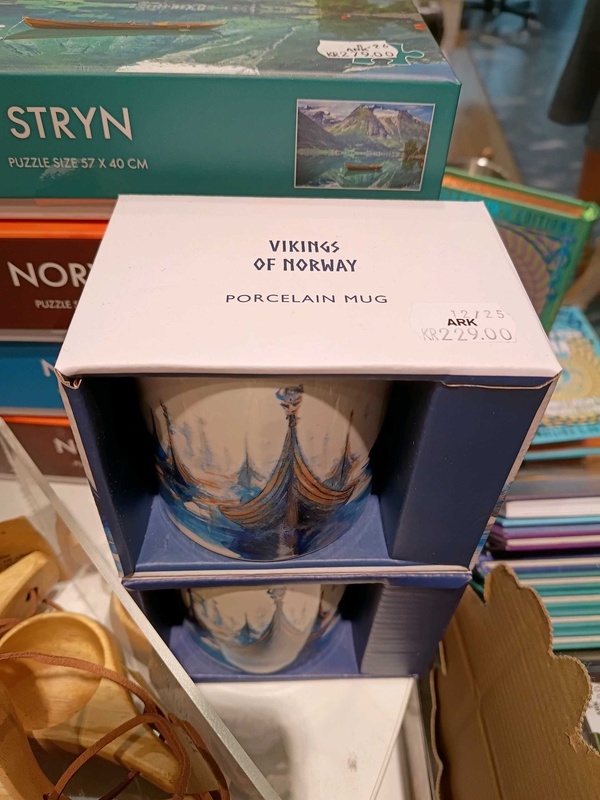
The Vikings of Norway porcelain mug features an artistic illustration of traditional Viking longships navigating blue and white ocean waves. For sale at Gardemoen airport.
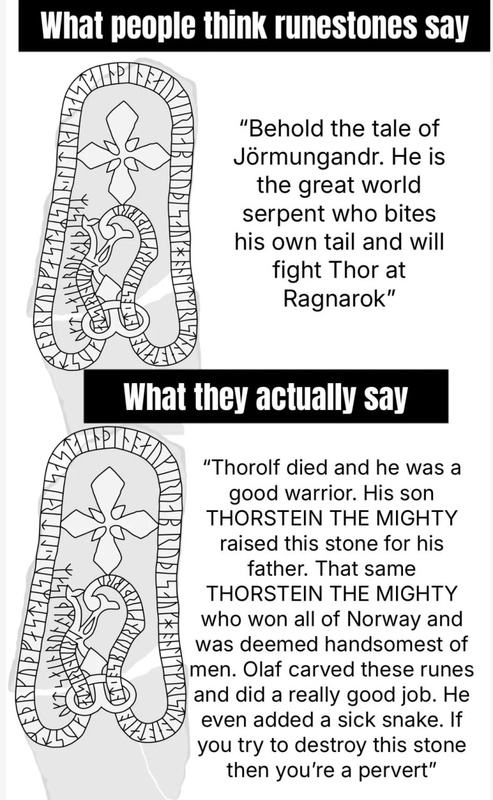
This meme shows that while people expect ancient Viking runestones to tell epic mythological stories about gods and monsters, they mostly just contain ordinary, vain, or funny everyday messages.
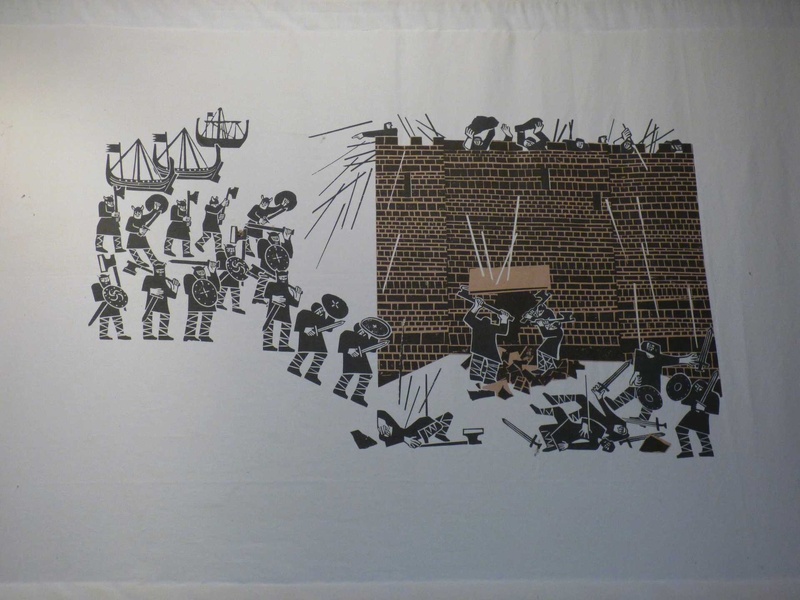
Artwork depicting the Norwegian attack on Rothesay castle in 1230, where the Norwegians managed to hew part of the wall away with their battle axes. Displayed in Rothesay castle itself as part of a series showing the castles history.
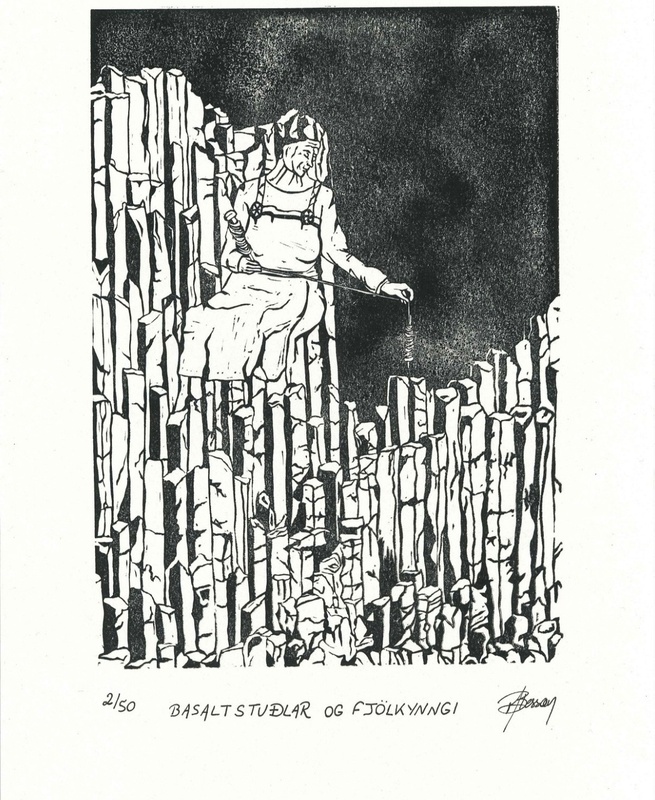
Basaltstuðlar og fjölkynngi (basalt columns and sorcery). Created by Marie Sophie Besson (https://www.instagram.com/marie.giboulee.art/) using linocut printmaking technique. The integration of Iceland's natural landscape with a figure apparently practising seiðr suggests a connection to broader Viking heritage. References to seiðr are common in saga and eddic literature, often focusing on its practice by both appropriate and controversial figures.
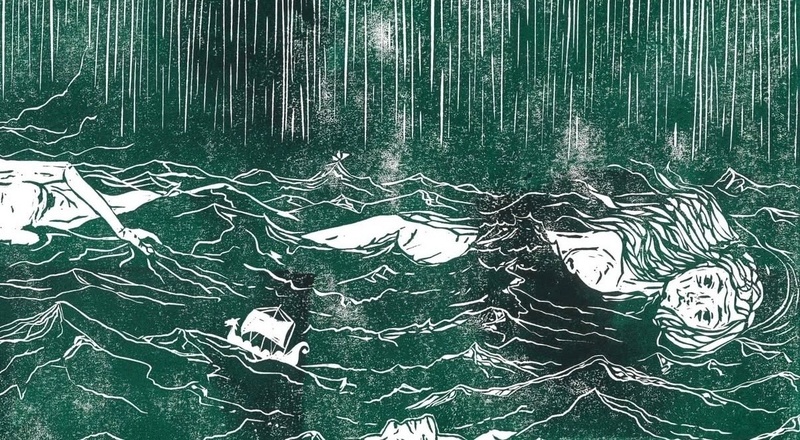
Svalar unnir, dætur Ránar (black waves, daughters of Rán) . Created by Marie Sophie Besson (https://www.instagram.com/marie.giboulee.art/) using linocut printmaking technique. In Norse mythology, the Daughters of Seagoddess Rán (also known as the daughters of Ægir) are nine personifications of sea waves.
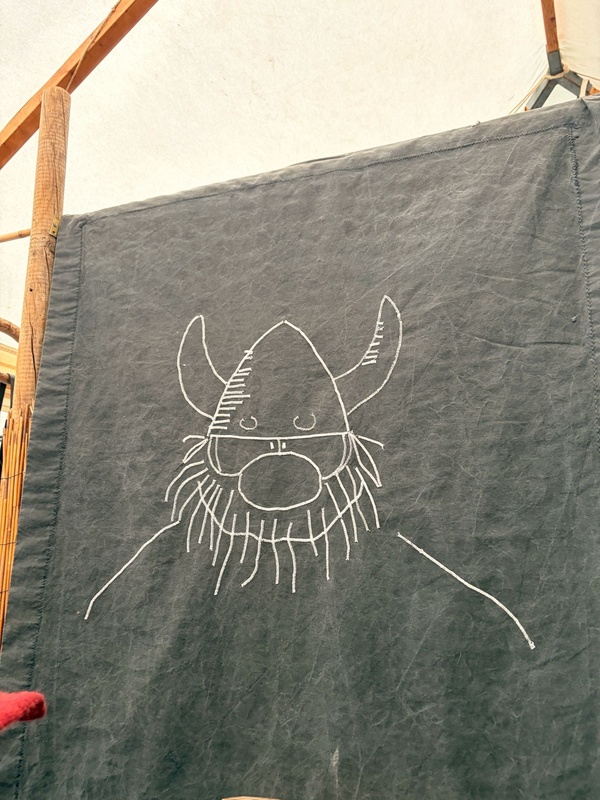
A white line-art embroidery or print of a stylized cartoon Viking depicted on a textured dark gray, fabric-like canvas background. The Viking is Hägar the Horrible, main character of the eponymous comic strips created by Dik Browne and launched in 1973. Seen at the Schlosshof Festival 2026 (https://www.schlosshof-festival.de/Startseite.html).
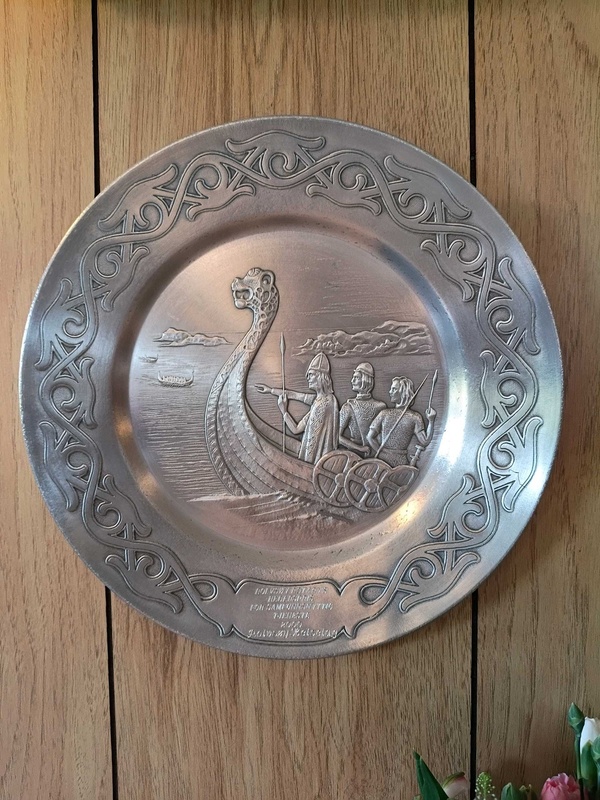
Decorative, circular pewter plate featuring a detailed relief engraving of a Viking longship and Norse warriors. The border contains a wide, continuous band of traditional Celtic or Norse knotwork loops around the rim.
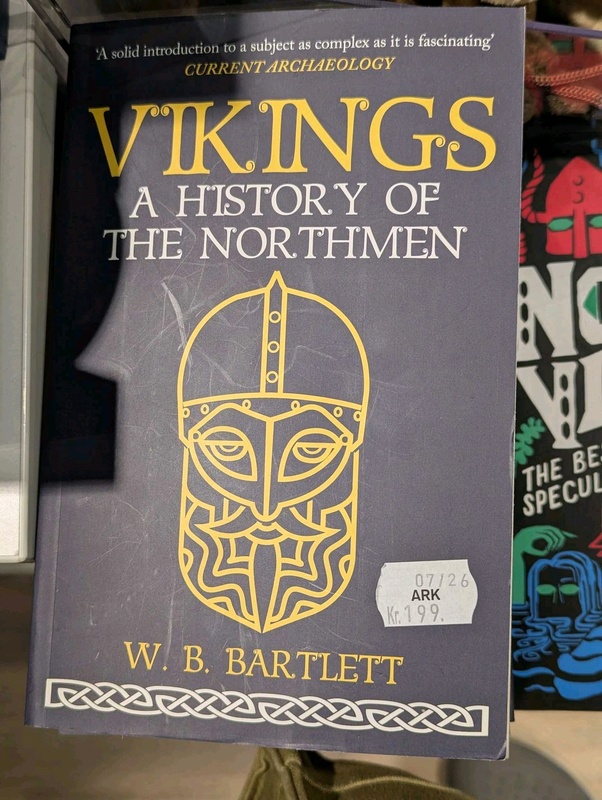
Vikings: A History of the Northmen by W. B. Bartlett (2019), a history of the Vikings, exploring their society, warfare, exploration and expansion across Europe and the wider medieval world.
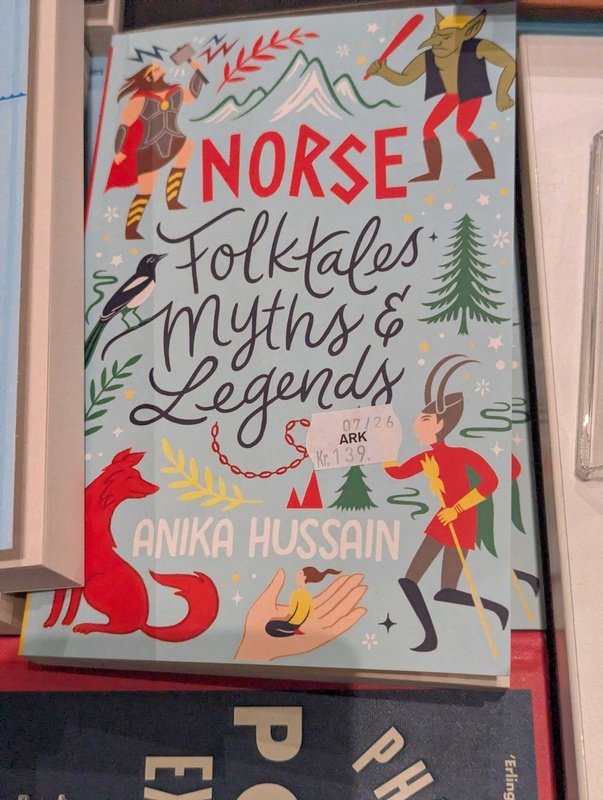
Norse Folktales, Myths & Legends by Anika Hussain (2022), an illustrated collection of traditional Norse folktales, myths and legends, introducing stories of gods, mythical beings and heroes from Norse tradition.
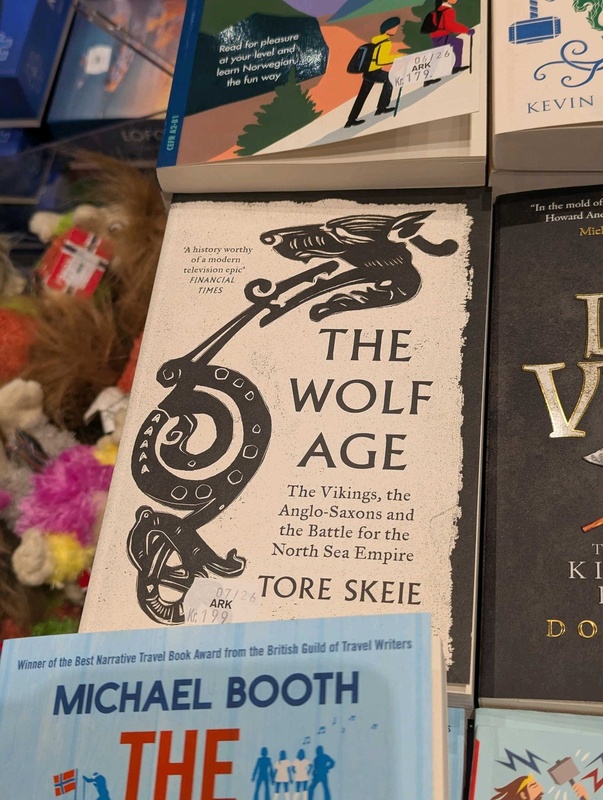
The Wolf Age: The Vikings, the Anglo-Saxons and the Battle for the North Sea Empire by Tore Skeie, a history of the struggle between Vikings and Anglo-Saxons for control of the North Sea world, focusing on the rulers, warriors and conflicts that shaped the eleventh century.
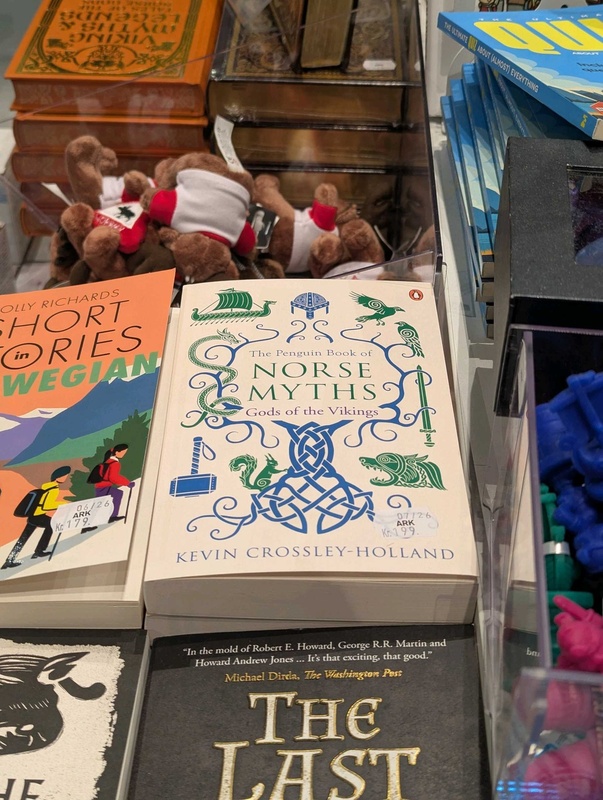
The Penguin Book of Norse Myths: Gods of the Vikings by Kevin Crossley-Holland, a collection and retelling of Norse myths, featuring stories of gods, giants, heroes and other figures from Norse mythology, originally published in 1980.