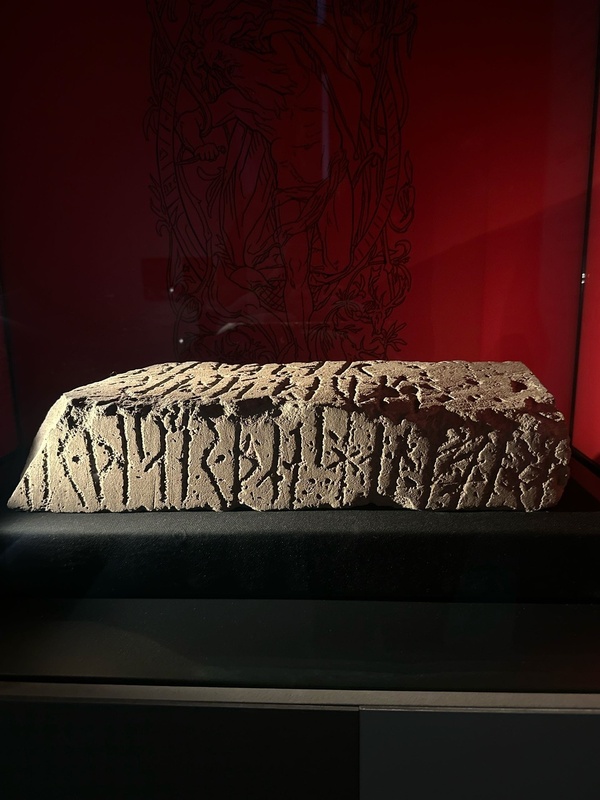
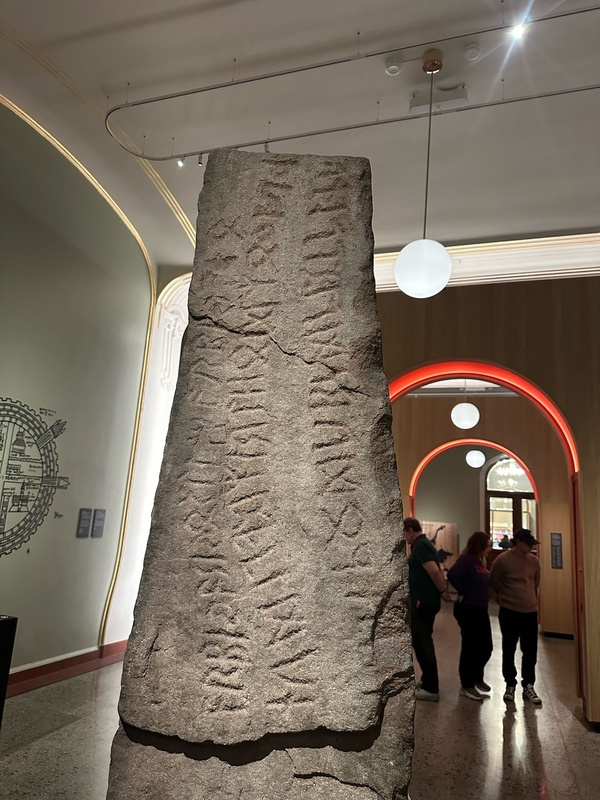
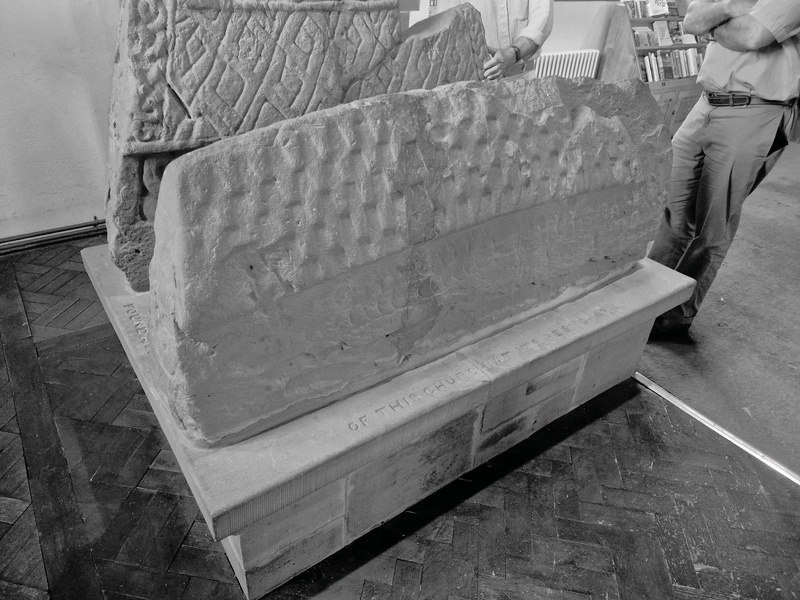
Klekkenstone, an 11th-century travel-runestone fragment on display at the Historisk museum in Oslo, Norway. Written in runic script, the surviving fragments of the inscription translate to:"...-in's son Skúli's son." / "... (carved) these (run)es when he travelled to ..."
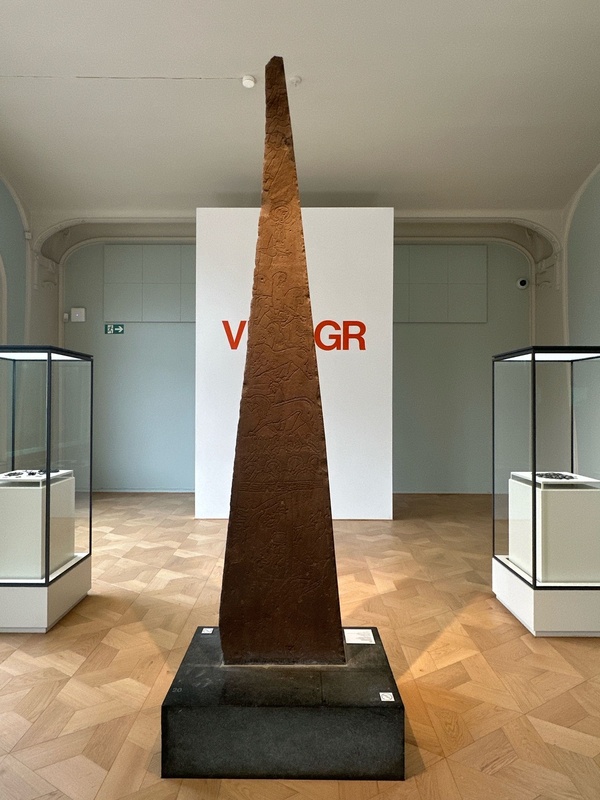
The Tune stone is an ancient monument from 200–450 CE that features one of the oldest Norwegian runic inscriptions written in the Elder Futhark. On display at Vikingr Oslo. Predates the Viking time period.
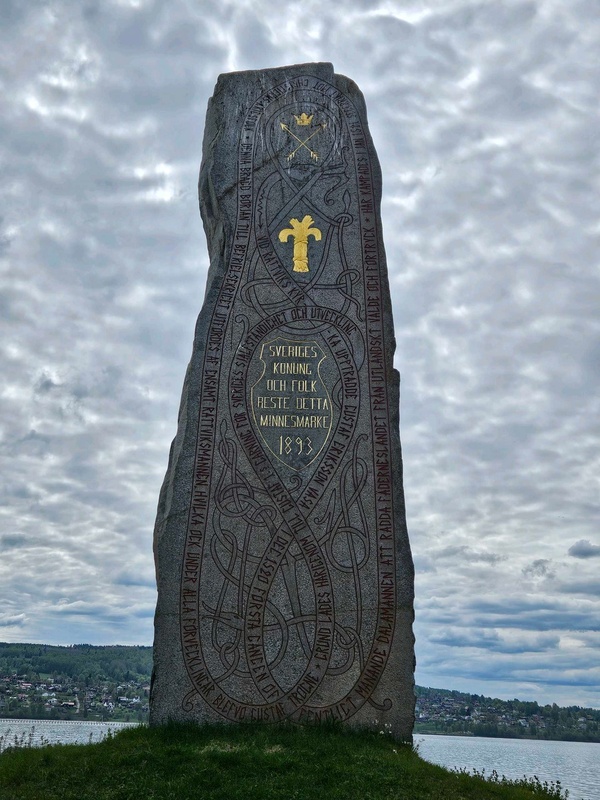
Modern runestone raised in 1893, and erected in memory of Gustav Vasa, who on this spot close to Rättvik church first urged the local lords to fight against the Danes in 1520. Roman text reads (in translation) THE KING AND PEOPLE OF SWEDEN ERECTED THIS MEMORIAL IN 1893.
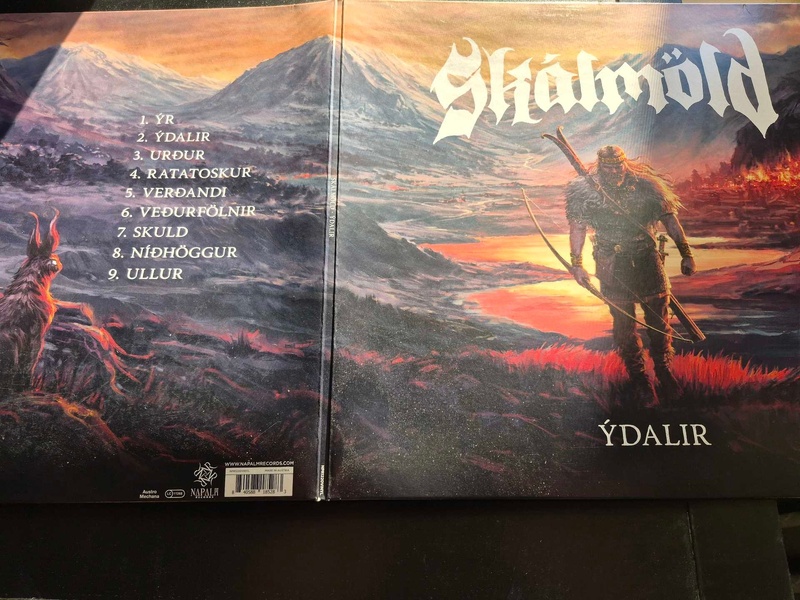
Skálmöld is an Icelandic Viking / folk metal band from Reykjavík. "Ýdalir" is their sixth studio album (2023). The cover art features a Viking warrior with long bow, sword and skis walking away from a burning village in a fjord. Songs in this album are named after mythologically significant items or beings.
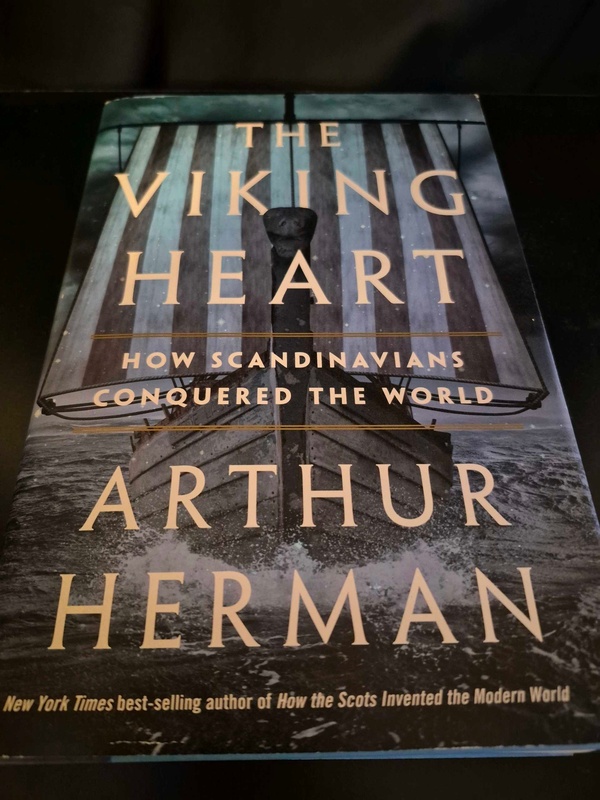
"The Viking Heart" by Arthur Herman melds historical narrative with archaeological and DNA research. The ends result is a book tracing the influence of Norse people on the West, all the way to the American Dream. The cover features a frontal view of a Viking ship sailing. The prow has a dragon head, the sail is striped in red and white.
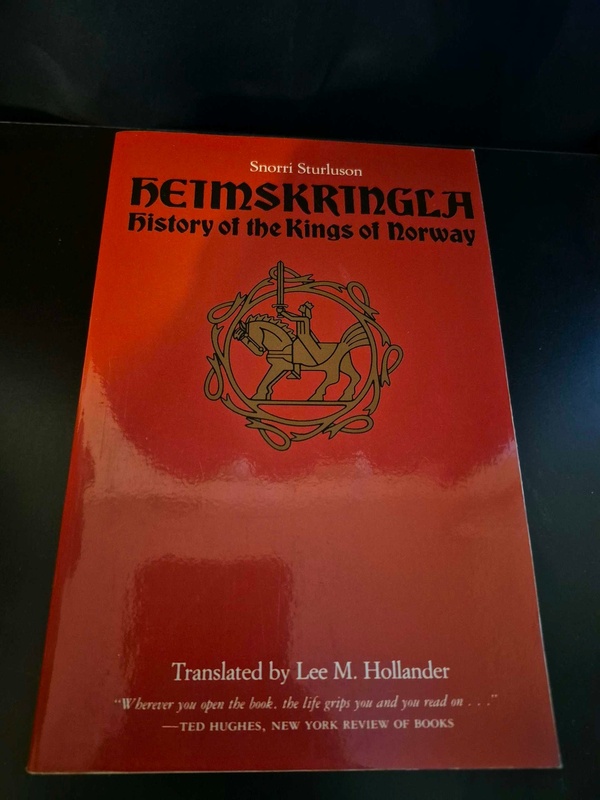
Heimskringla by Snorri Sturluson, translated by Lee M. Hollander. The cover features a king on horseback pointing his sword upwards, the motif is enclosed withhin a circular wreath.
Dynna stone- an 11th-century Viking Age runestone on display in the Museum of Cultural History (Historisk Museum) in Oslo. More information here: https://www.historiskmuseum.no/english/exhibitions/vikingr/index.html
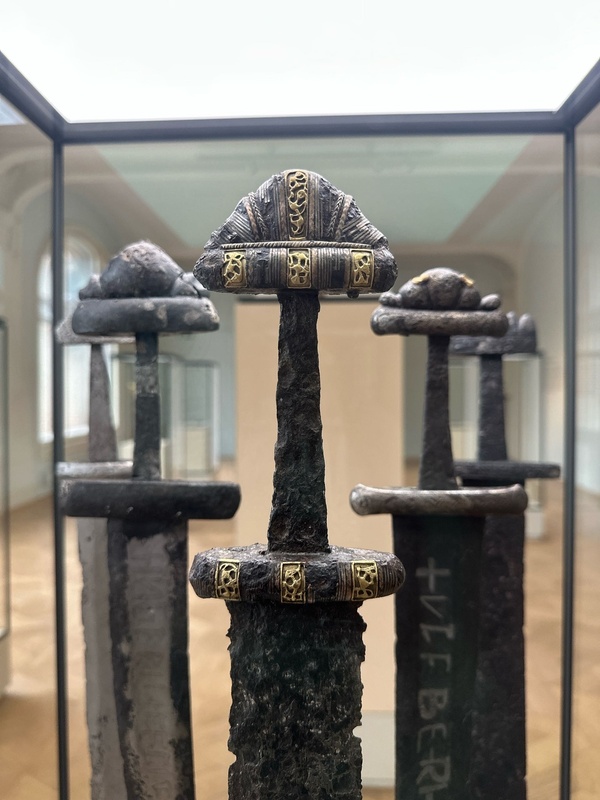
Viking Age swords featuring decorated hilts dating to the 8th century and discovered on the Steinvik farm in Norway. Currently on display the Museum of Cultural History at the University of Oslo, Norway
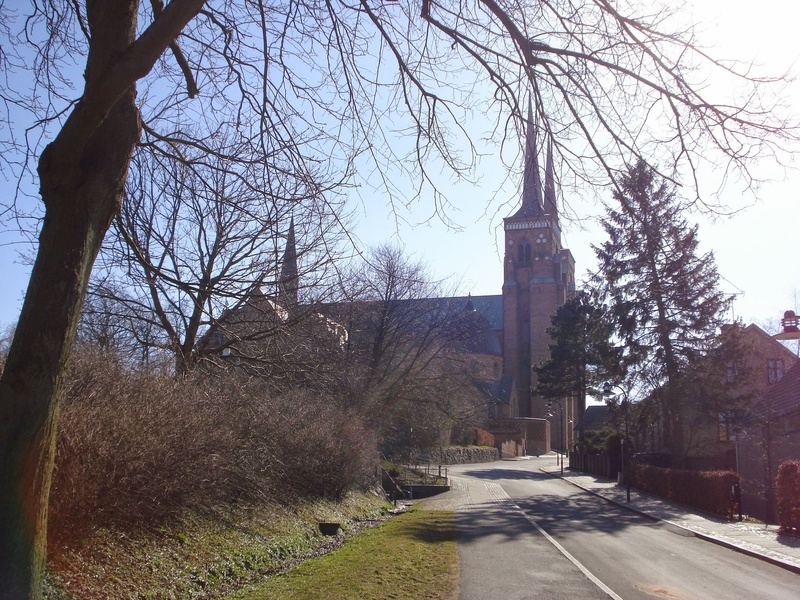
Roskilde Cathedral is part of the UNESCO World Heritage Site on the grounds that its architecture shows traces of 800 years of architectural styles, and that it was one of the earliest examples of a Gothic cathedral to be built in brick in a Scandinavian country. The cathedral also stands on the site of the Holy Trinity Church, a small stave church which Harald Bluetooth had commissioned around the year 960, marking its unbroken legacy as a site of worship from Viking times to the present day.
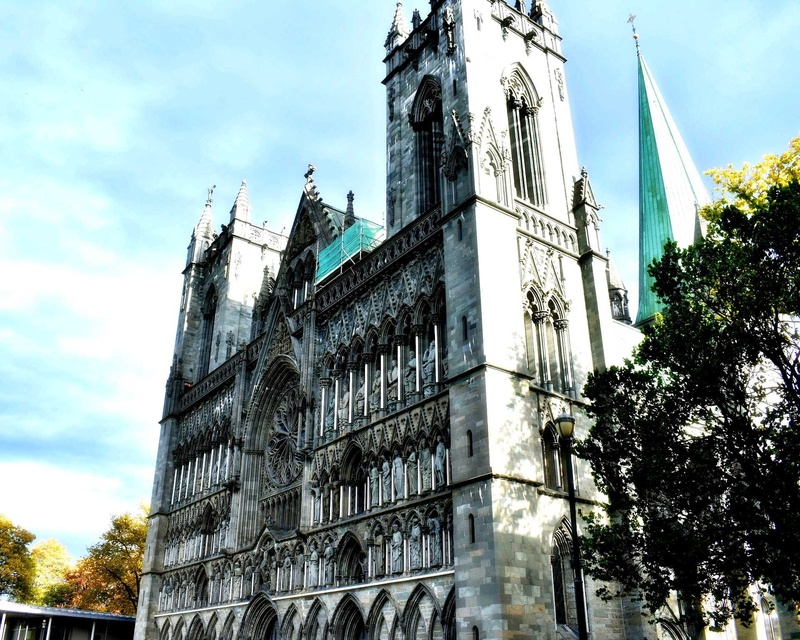
Nidaros Cathedral - Built over the burial site of the 11th century Viking ruler, King Olaf II Haraldsson, also known as Saint Olaf (reigned 1015 to 1028).
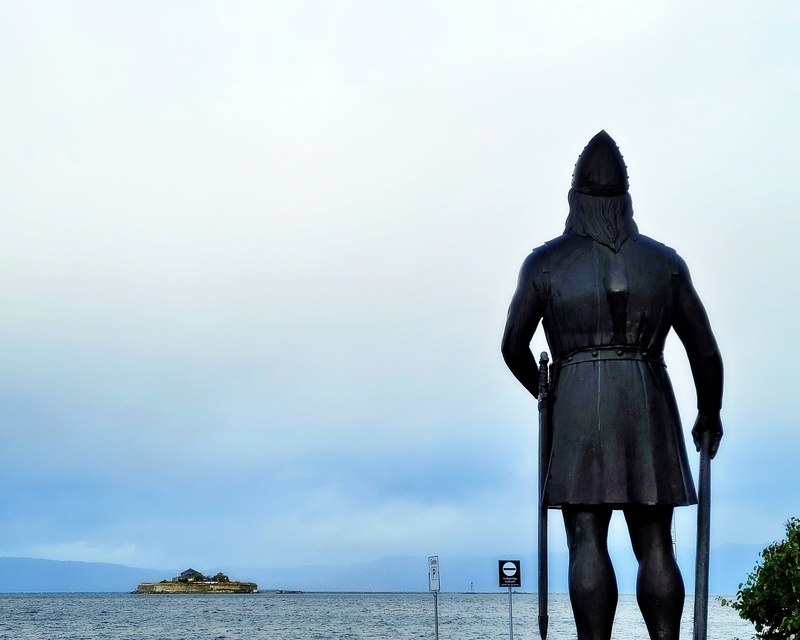
Monument to Leif Erikson in Trondheim, Norway by artist August Werner: a copy of the original 1962 Seattle World's Fair monument given to Trondheim by the Leif Ericson Society of Seattle, and unveiled in 1997.
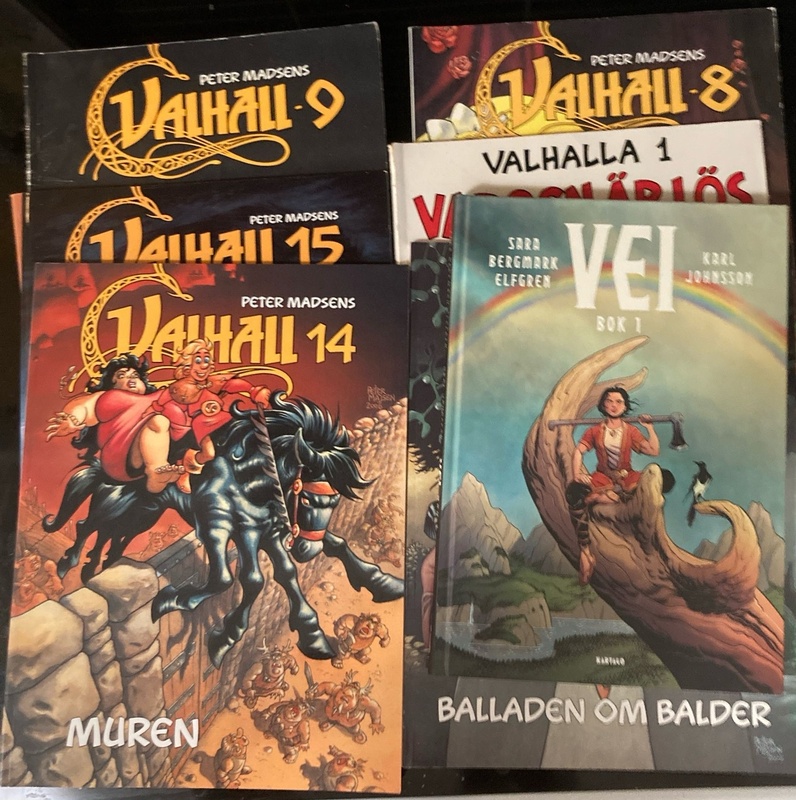
Viking Comics at the Swedish Book Fair. Pictured are some volumes from the Danish "Valhalla" series by Peter Madsen & Henning Kure, and the first volume of the Swedish "Vei" by Sara Bergmark Elfgren & Karl Johnsson.
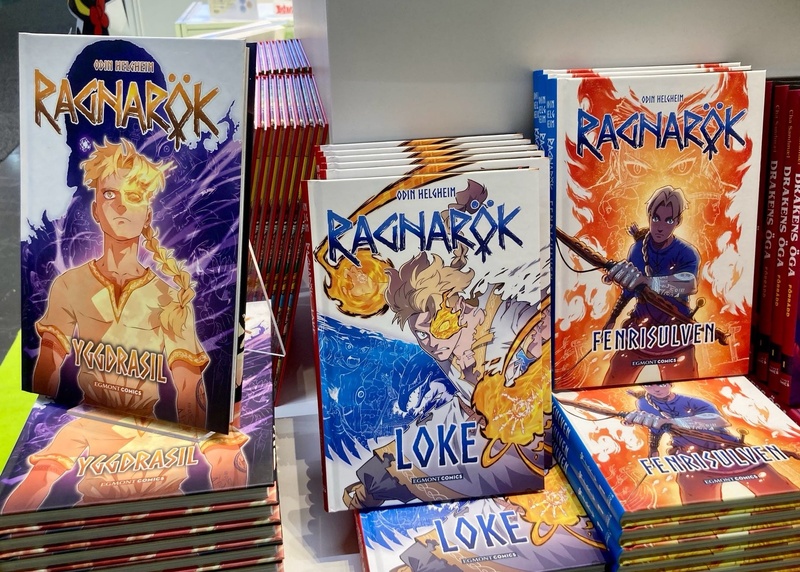
Norwegian Viking inspired Comics at the Swedish Book Fair: three volumes of Ragnarok by Odin Helgheim. The volumes depicted are "Yggdrasil", "Loke" (Loki), "Fenrisulven" (Fenrir).
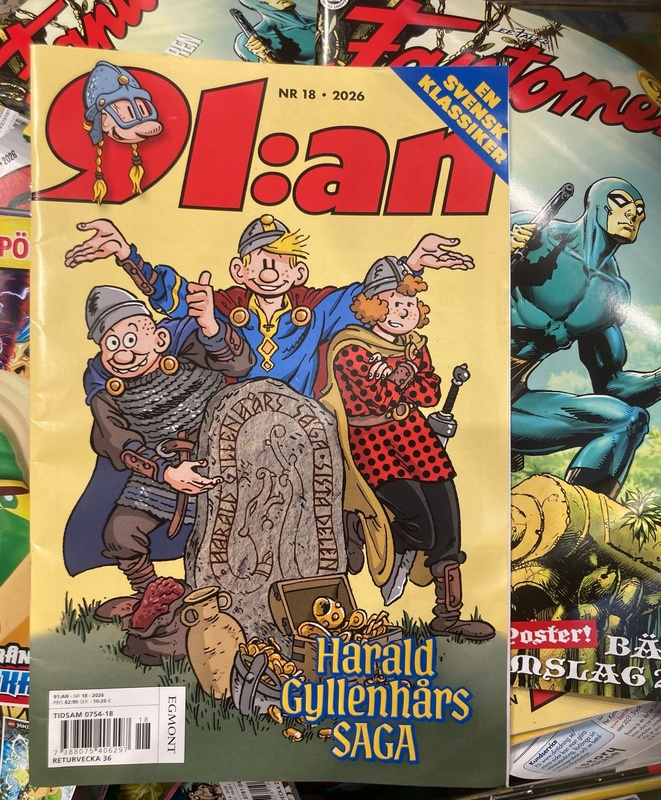
Viking inspired Comic book at the Swedish Book Fair. Cover of "91:an Harald Gyllenhårs Saga" (Saga of Harald Golden hair) by Patrik Norrman. The cover depicts three Vikings, including the titular Harald, a hoard and a rune stone. The inscription uses a runic-inspired font to spell "Harald Gyllenhårs Saga - sista delen" (Saga of Harald Golden hair - last chapter).
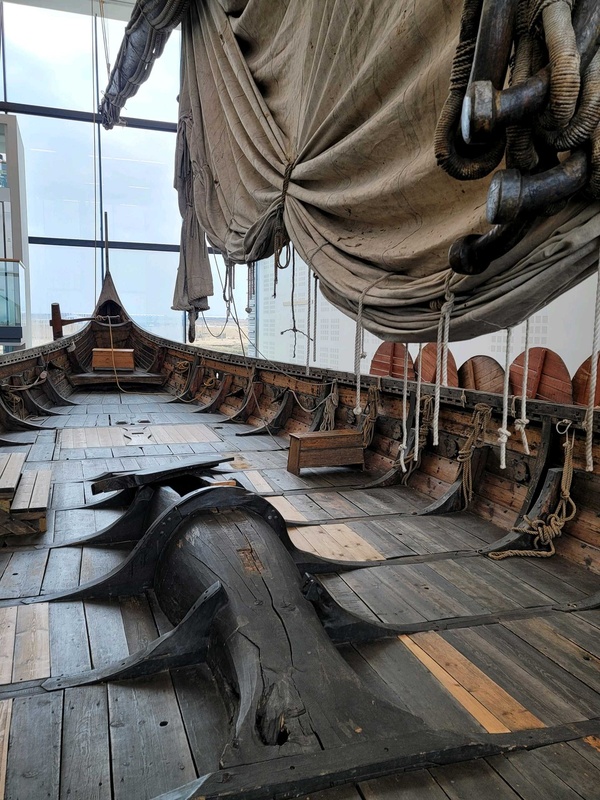
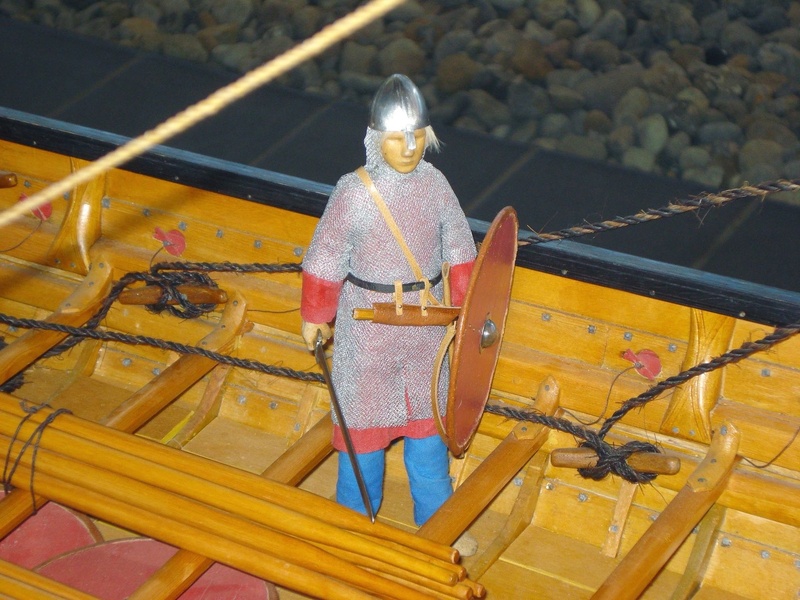
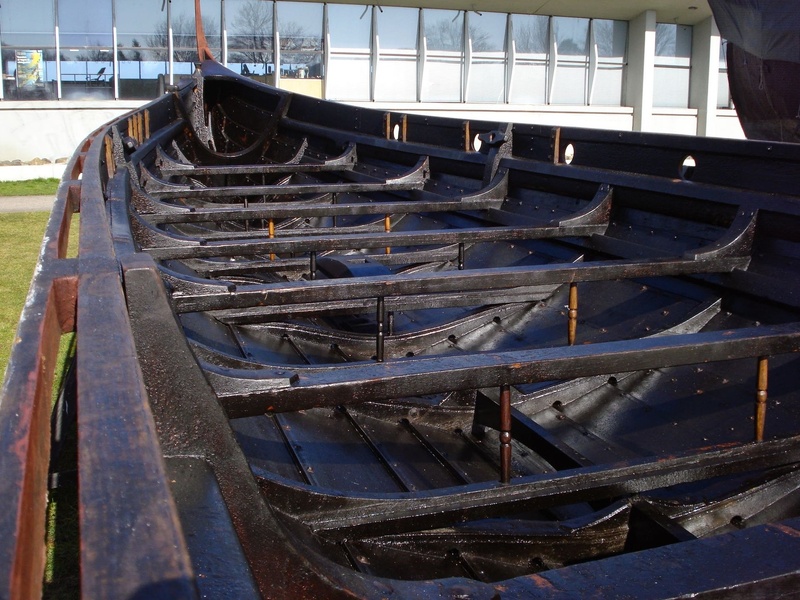
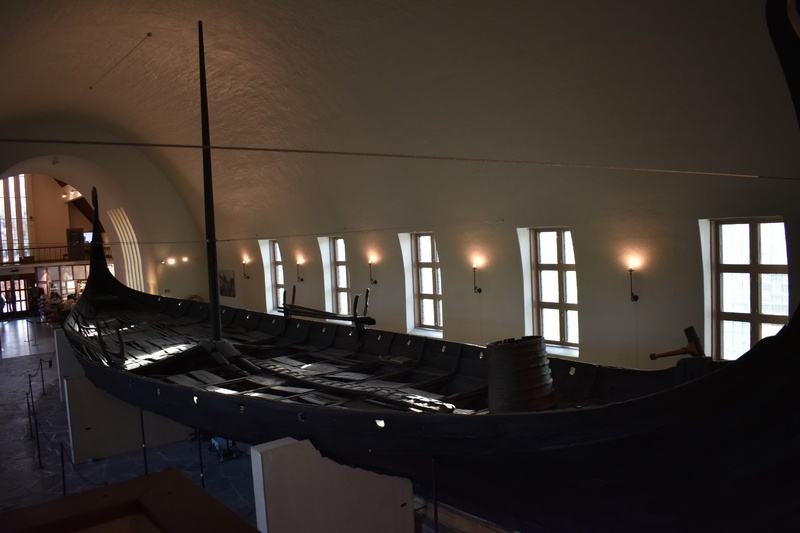
Part of the inside of a Viking ship at the Roskilde Viking Ship Museum. This is a reconstruction of a war ship (possibly a leidang ship) from ~1040 which was found in Roskilde in 1962. The replica was made out of oak, pine and ash in 1991.
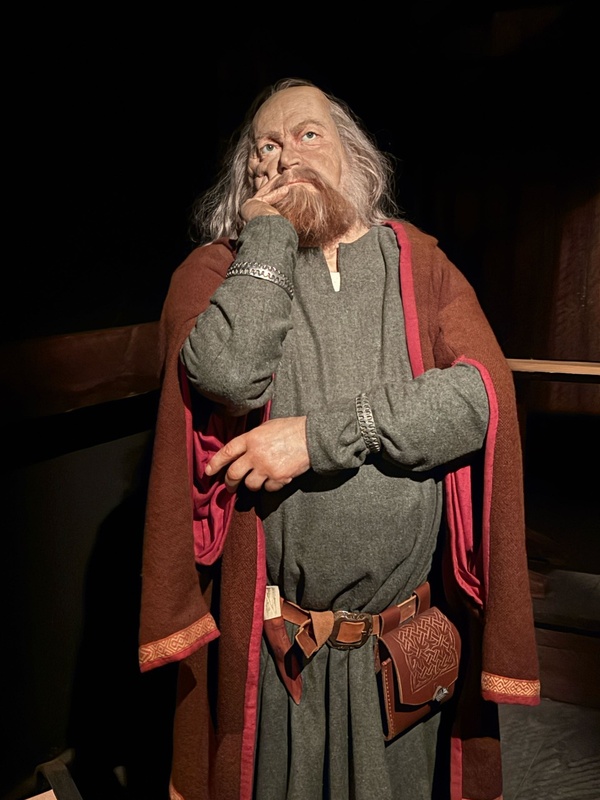
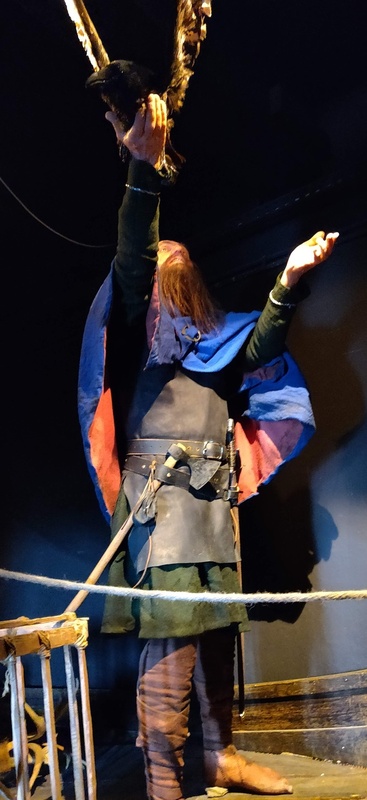
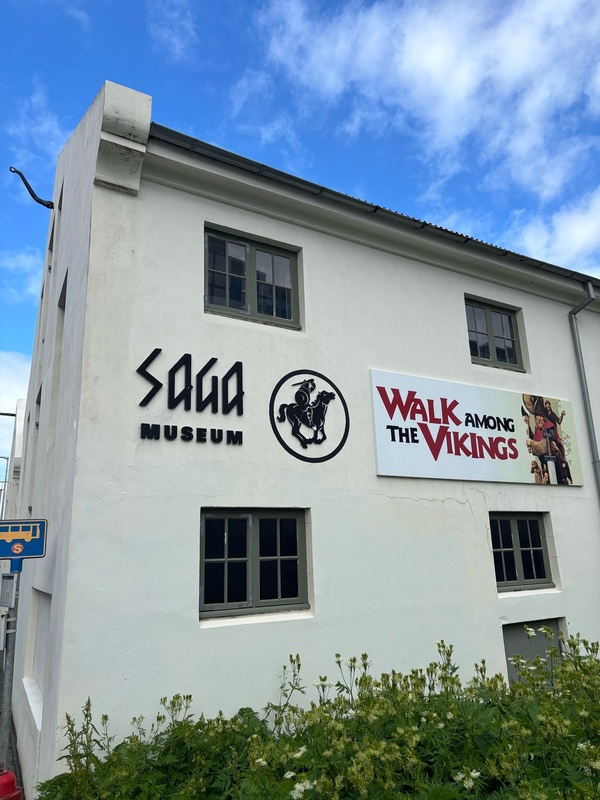
Wax figure of Hrafna-Flóki Vilgerðarson as featured in the Saga Museum in Reykjavík, Iceland. Hrafna-Flóki (raven Flóki) got his appellative when he sent out three ravens to help him find his way to Iceland. His story is recorded in Landnámabók.
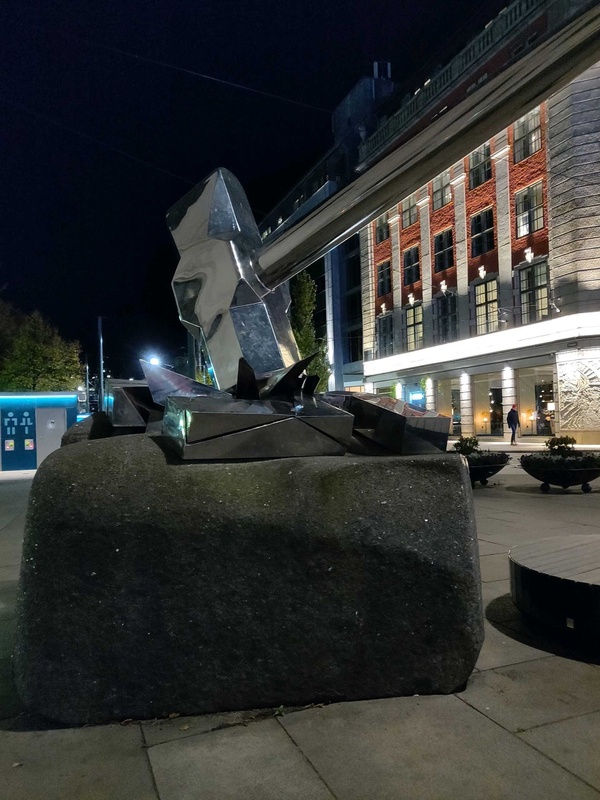
Knus nazismen (Crush Nazism) statue, often mistaken for Thor's hammer, outside Oslo Sentralstasjonen (Norway). By artist Bjørn Melbye Gulliksen, it celebrates the WWII resistance movement and specifically the Osvald Group (Osvaldgruppen).
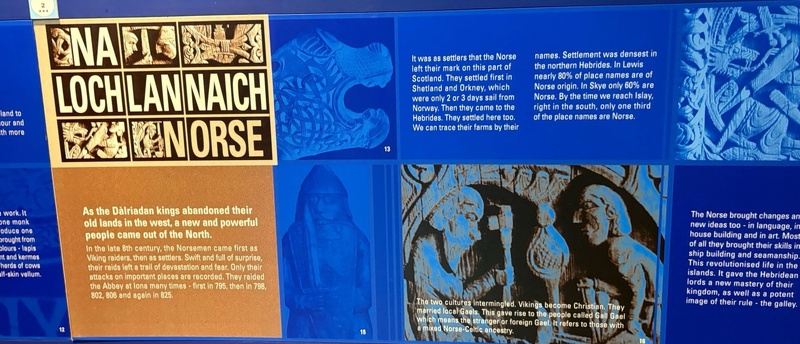
A museum exhibit display titled "Na Lochlannaich / Norse" detailing the history of Viking raids and Norse history on Isles of Scotland from the Museum of the Isles, Armadale Castle, Skye UK.
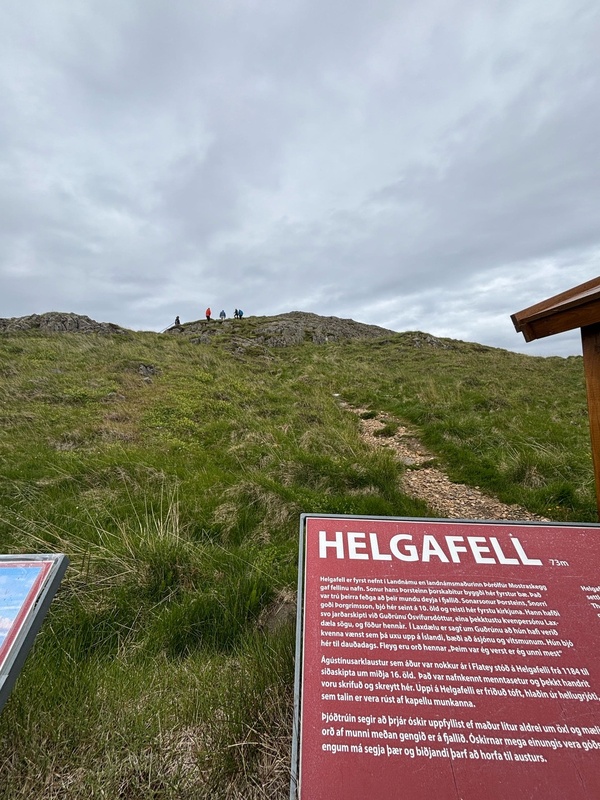
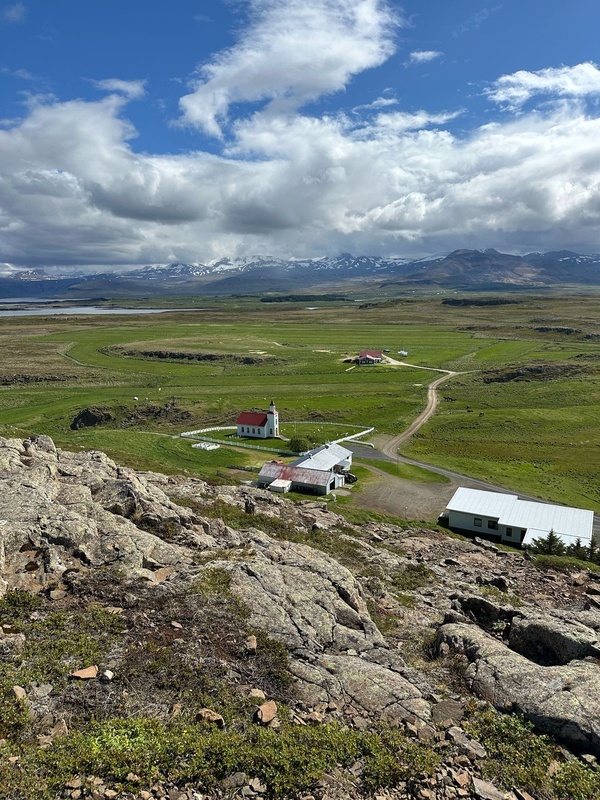
Helgafell, rising 73 meters on the Snæfellsnes Peninsula, is a sacred Icelandic mountain steeped in Norse mythology, Christian heritage, and local folklore. It is prominently featured in the Eyrbyggja Saga.
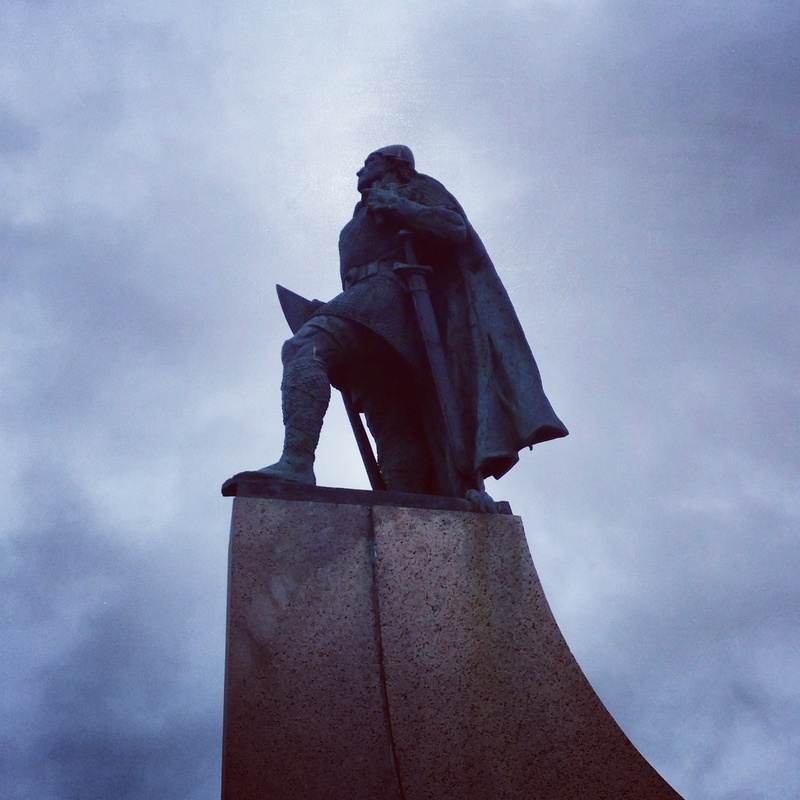
Statue of Leif Erikson in Reykjavik, outside Hallgrimskirkja. Made by American artist Alexander Stirling Calder in 1930, on commission from the US Government as a gift to Iceland to celebrate 1000 years of the Icelandic parliament.
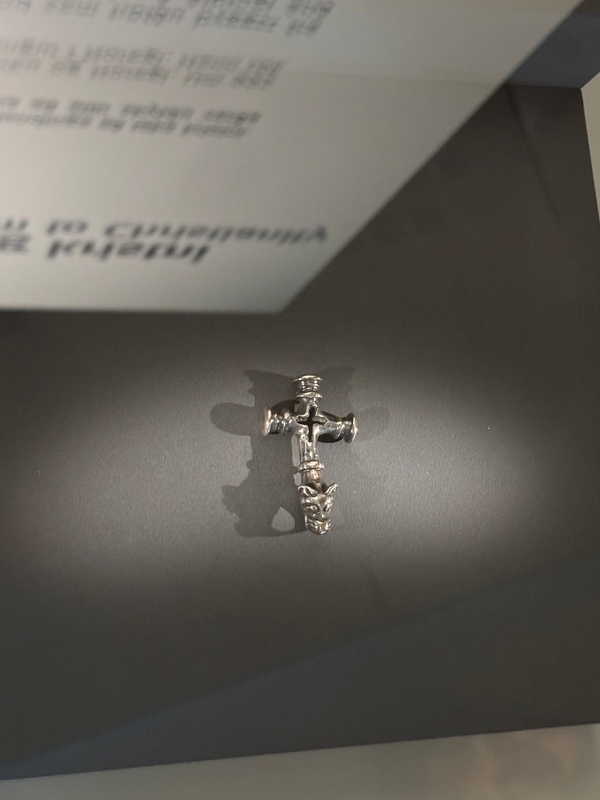
The Wolf Cross, Foss, Iceland - housed at the National Museum of Iceland. This unique tenth-century artefact may depict a cross or a Thor's hammer, or arise from a period in which the lines between the two faiths were blurred.
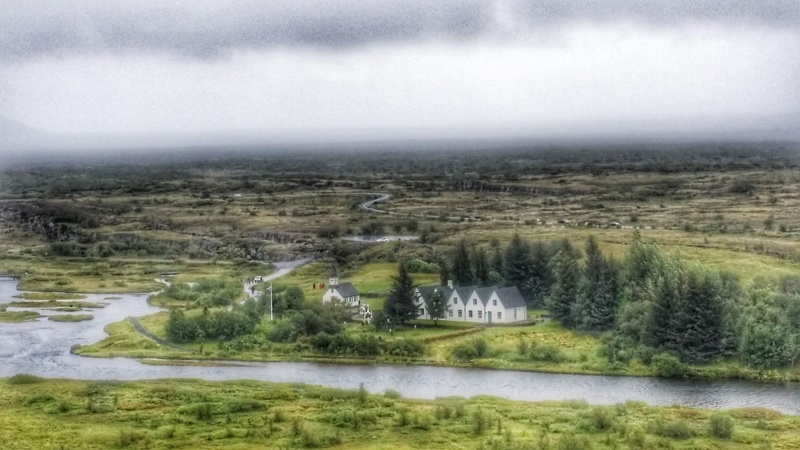
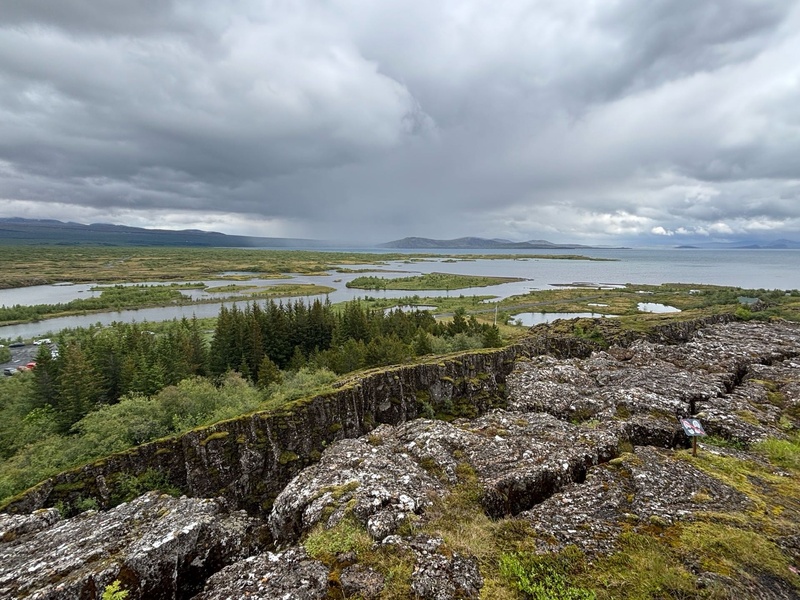
Þingvellir- Þingvellir (Thingvellir) a historically significant as the founding site of the Alþingi (Althing), one of the world's oldest national parliamentary institutions.
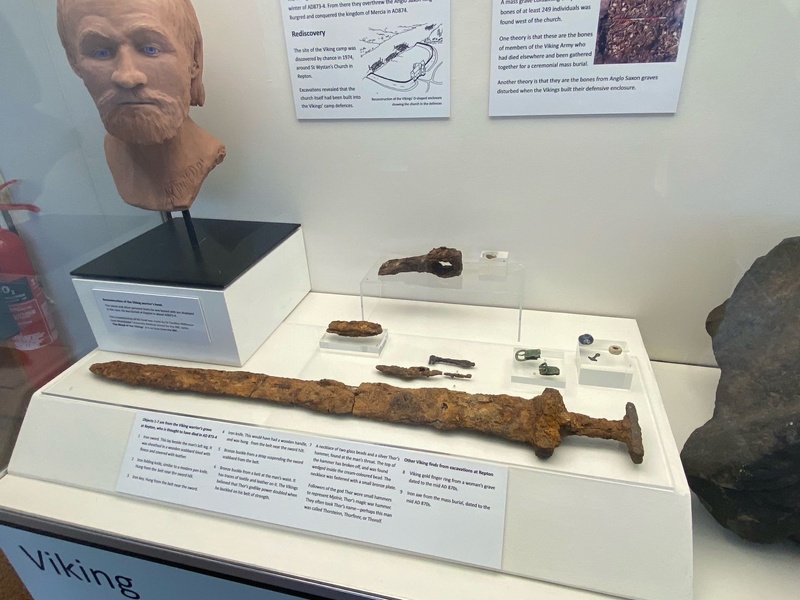
The display showcases archaeological finds from a Viking warrior's grave excavated at Repton. Finds shown on photo are an iron sword, iron folding knife, iron key, iron knife, bronze buckle, glass beads, silver Thor's hammer, gold finger ring and an iron axe.
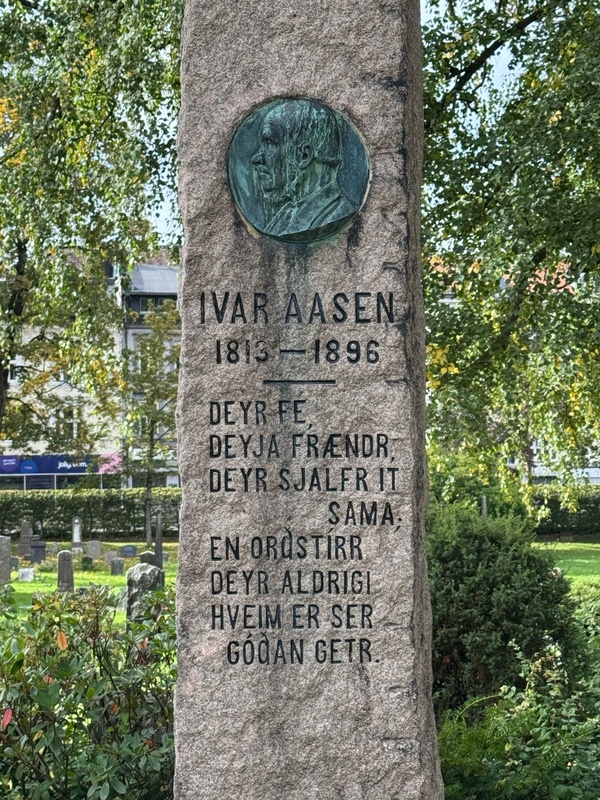
Grave of Ivar Aasen, philologist and establisher of Nynorsk. Excerpt from the Hávamál poem. Deyr fe, deyja frændr, deyr sjálfr it sama; en orðstírr deyr aldri, hveim er sér góðan getr." (Cattle die, kinsmen die, and one dies the same oneself; but the reputation of one who earns a good one never dies).
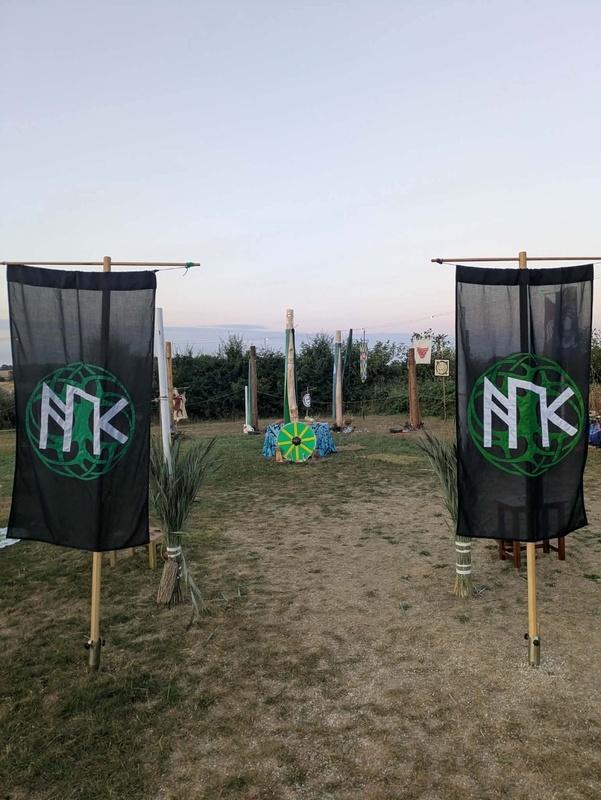
An image of the Vé, a sacred space used for worship, at Asatru UK's Friggsmoot, August 2026. The flags include the Asatru's logo, where the letters resemble an "A" (such as the Ansuz rune ᚨ), a "U" (Uruz ᚢ), and a "K" (Kaunazᚲ), spelling out the organization's acronym, AUK. These are Elder Futhark runes.
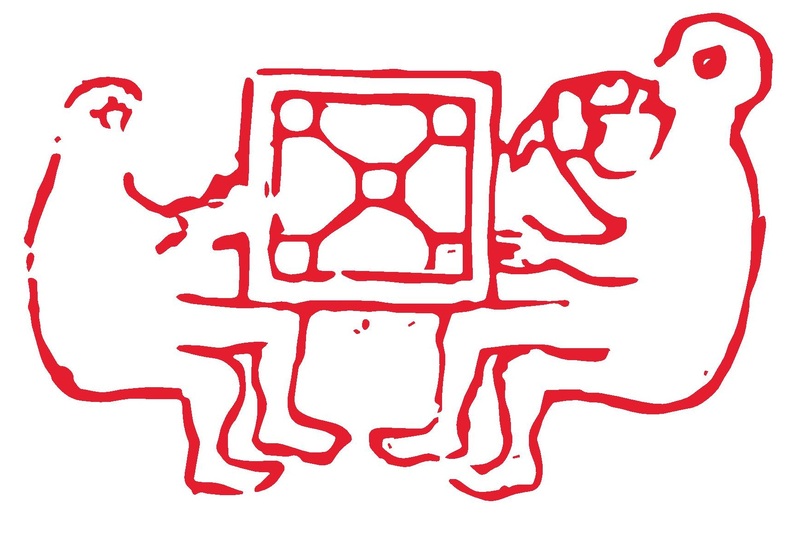
Image produced by Anne-Kathrin Schoerner for the Conference 'Rediscovering the Vikings: Reception, Recovery, Englagement' at University College Cork, 25-26 November 2016 (Organised by the World-Tree Project). The hnefatafl players are based on an image on the (replica) of the Viking Age Rune stone Gs 19 outside Ockelbo church, Gästrikland, Sweden
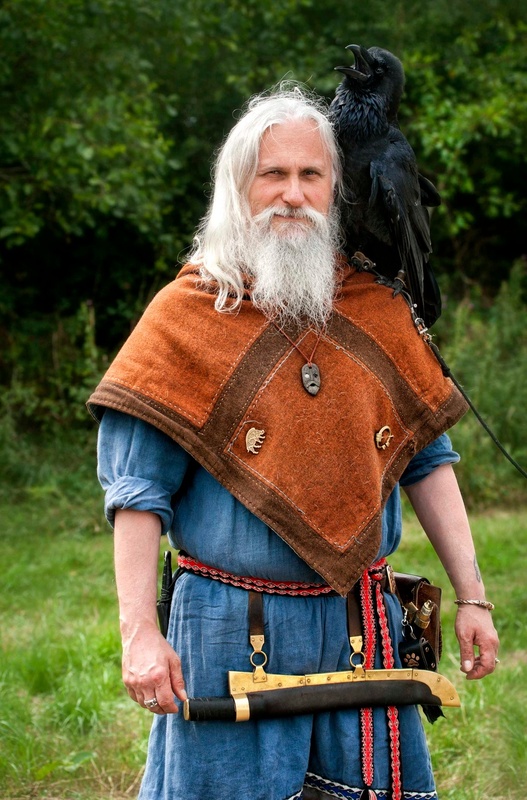
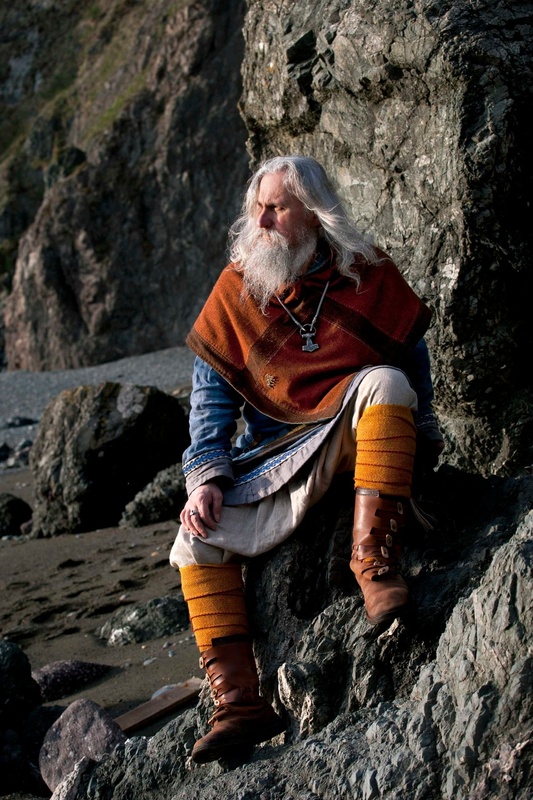
The image shows a reenactor (Bart the Viking) dressed in a Viking-inspired historical reenactment outfit, featuring a rust-orange possibly woolen cloak or over-mantle, a blue linen tunic, light-colored trousers, yellow leg wraps and leather boots. The person is also wearing a mjolnir pendant around their neck.
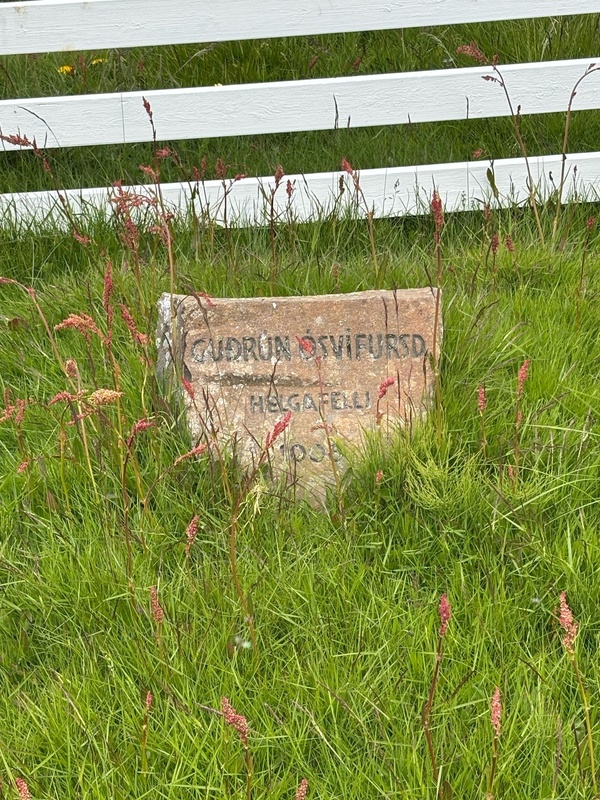
Gravestone marking the proposed burial site of Guðrún Ósvífrsdóttir at Helgafell (Iceland). Guðrún is the protagonist of Laxdæla saga, and a folk hero in Iceland.