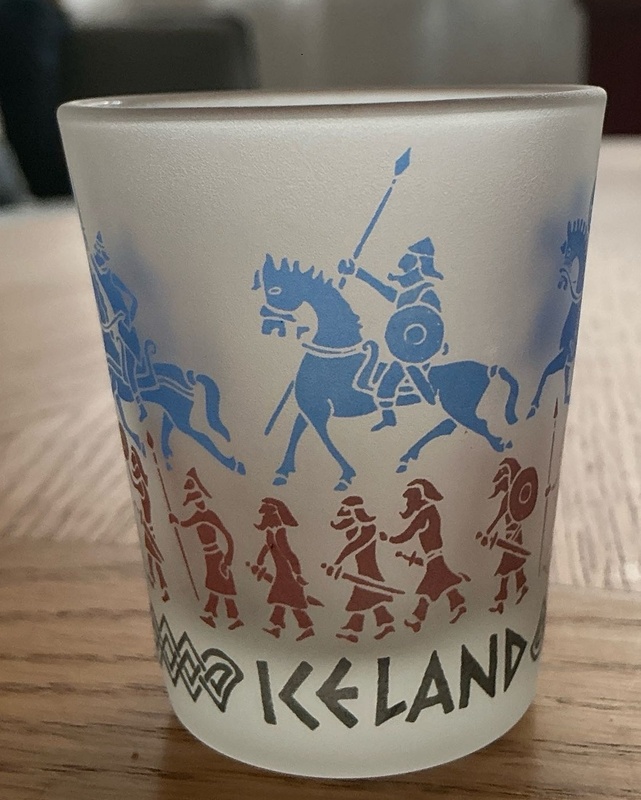
Frosted shot glass with patterns including Vikings on horses and warrior Vikings holding shields, swords and spears. Inscription says "Iceland" with a runic inspired print and pattern.
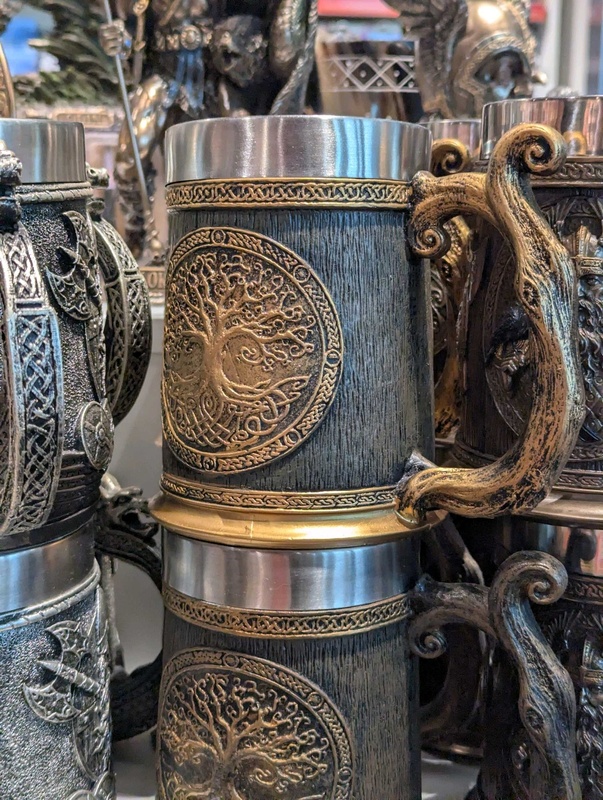
A tankard featuring Yggdrasil, the World Tree, as the central motif. The design draws on imagery from Norse mythology, with detailed branches and roots representing the tree that connects the Nine Worlds. The handle is shaped as a tree branch.
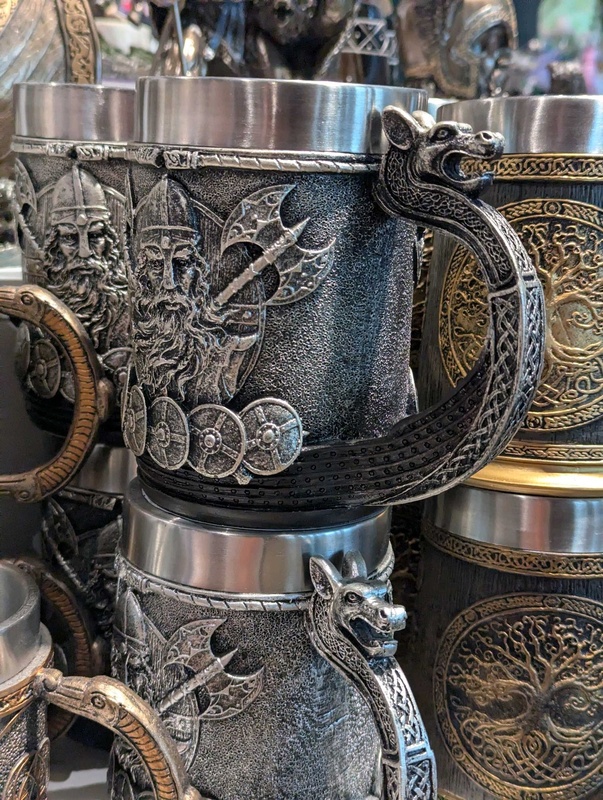
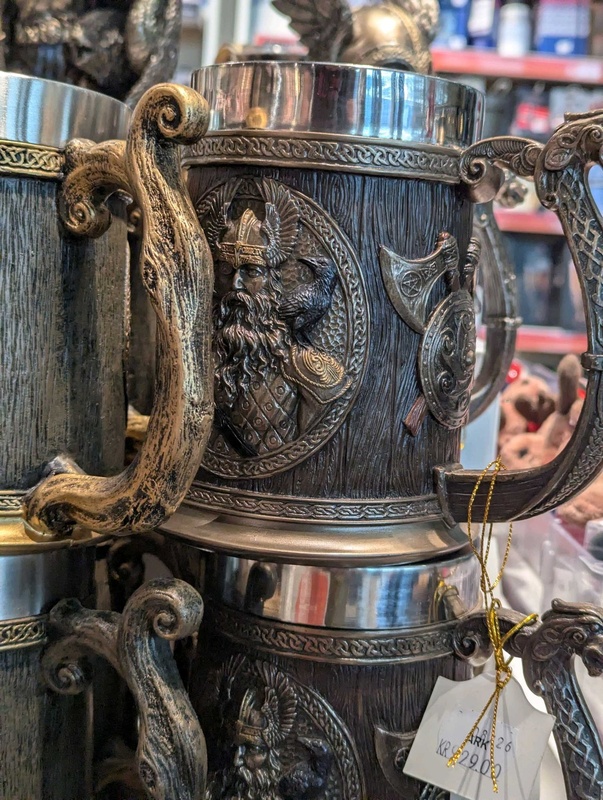
A wooden-style tankard featuring a bas-relief of Odin with the ravens Hugin and Munin resting on his shoulders. The design includes a dragon-shaped handle and a shield decorated with two crossed axes, drawing on motifs commonly associated with Norse mythology and Viking art.
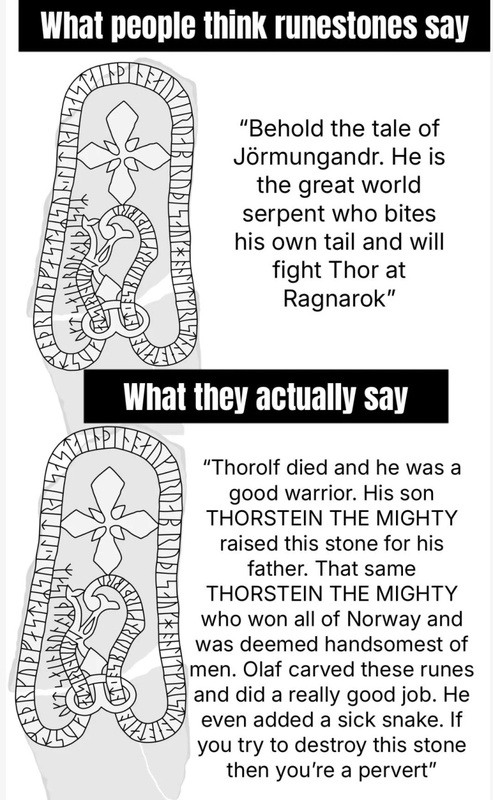
This meme shows that while people expect ancient Viking runestones to tell epic mythological stories about gods and monsters, they mostly just contain ordinary, vain, or funny everyday messages.
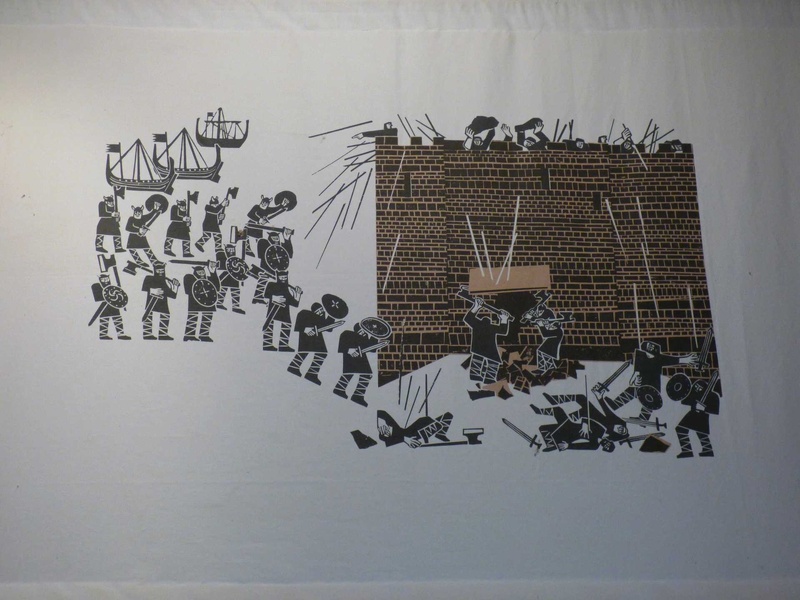
Artwork depicting the Norwegian attack on Rothesay castle in 1230, where the Norwegians managed to hew part of the wall away with their battle axes. Displayed in Rothesay castle itself as part of a series showing the castles history.
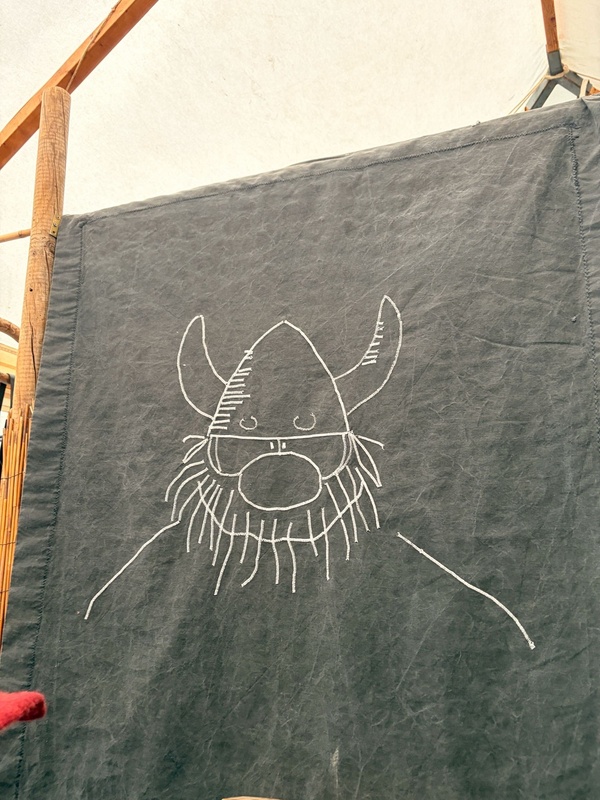
A white line-art embroidery or print of a stylized cartoon Viking depicted on a textured dark gray, fabric-like canvas background. The Viking is Hägar the Horrible, main character of the eponymous comic strips created by Dik Browne and launched in 1973. Seen at the Schlosshof Festival 2026 (https://www.schlosshof-festival.de/Startseite.html).
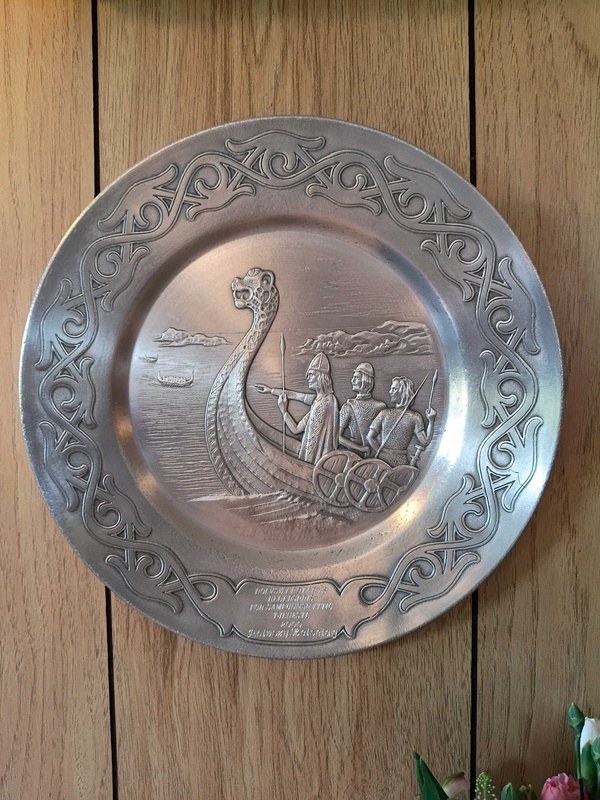
Decorative, circular pewter plate featuring a detailed relief engraving of a Viking longship and Norse warriors. The border contains a wide, continuous band of traditional Celtic or Norse knotwork loops around the rim.
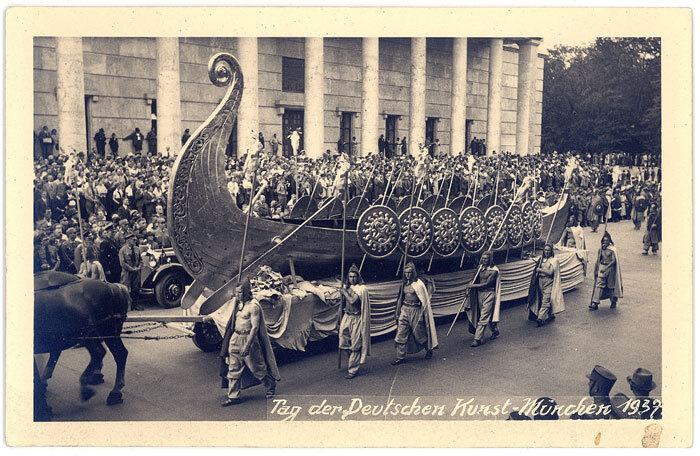
A historical photograph of a parade outside the Haus der Kunst in Munich, Germany, part of the 'Day of German Art' celebration organised by the Nazi regime.
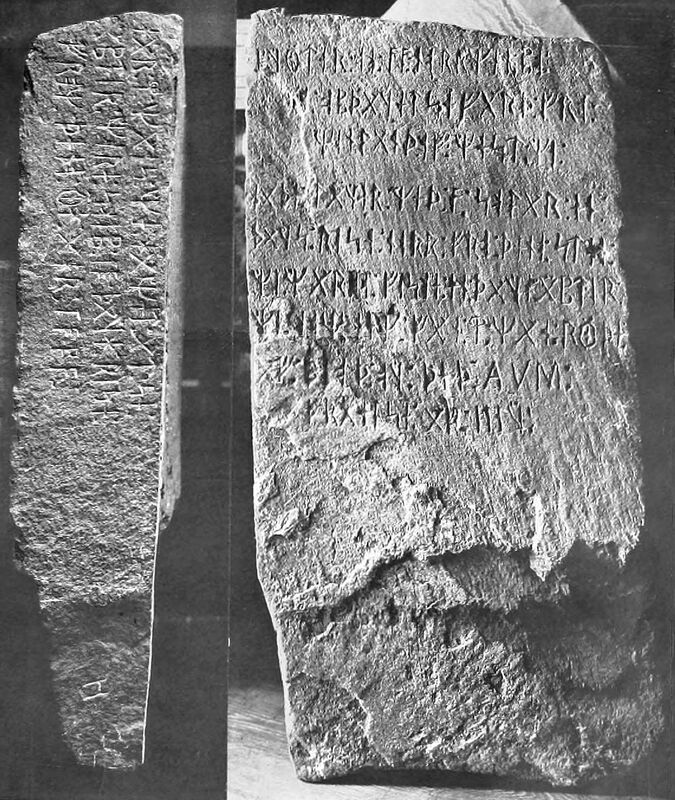
Images of the two carved faces of the Kensington Runestone, from George Flom's short book "The Kensington Rune-Stone : an address" (Illinois State Historical Society, 1910)
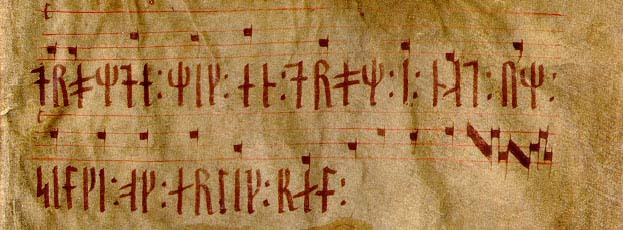
Detail of a page of the Codex_Runicus, containing the oldest recorded music in Scandinavia, with the text Drømde mik æn drøm i nat, um silki ok ærlik pæl